Daily Generative AI Brief — October 10, 2026
Published: October 10, 2026
Coverage period: September 5–October 9, 2026
IN THIS EDITION · 6 ARTICLES / 2 VIDEOS / 2 PODCASTS
Choose what matters to your work
- Build a reusable Agent Skill with a guarded, testable procedureArticle · about 8 min source read
- Instinct's real-world agent tests expose the missing-prerequisite problemArticle · about 6 min source read
- Oracle turns specialist knowledge into repeatable AI-assisted workArticle · about 7 min source read
- Copilot Studio separates apps, deterministic workflows and agentsArticle · about 6 min source read
- Asana's browser-agent tests show why stable context can slash costsArticle · about 7 min source read
- Anthropic's OSS Scanner puts human triage behind AI-found flawsArticle · about 6 min source read
- Build custom site annotations with ChatGPTVideo · 2:35
- Build Your First AI Agent in 10 Minutes — No CodingVideo · 9:42
- The Most Important Trends Showing Up in New AI ProductsPodcast · 28:00
- Switching Models Shouldn't Mean Starting Over | Walrus Protocol's Kimberly LoganPodcast · 38:00
1. Build a reusable Agent Skill with a guarded, testable procedure
Focus: Agents for Everyone
Date: October 8, 2026
Topics: agent skills, reusable workflow prompts, tool permissions, procedural memory, human approval
Evidence: Publisher Authored
Availability: Available
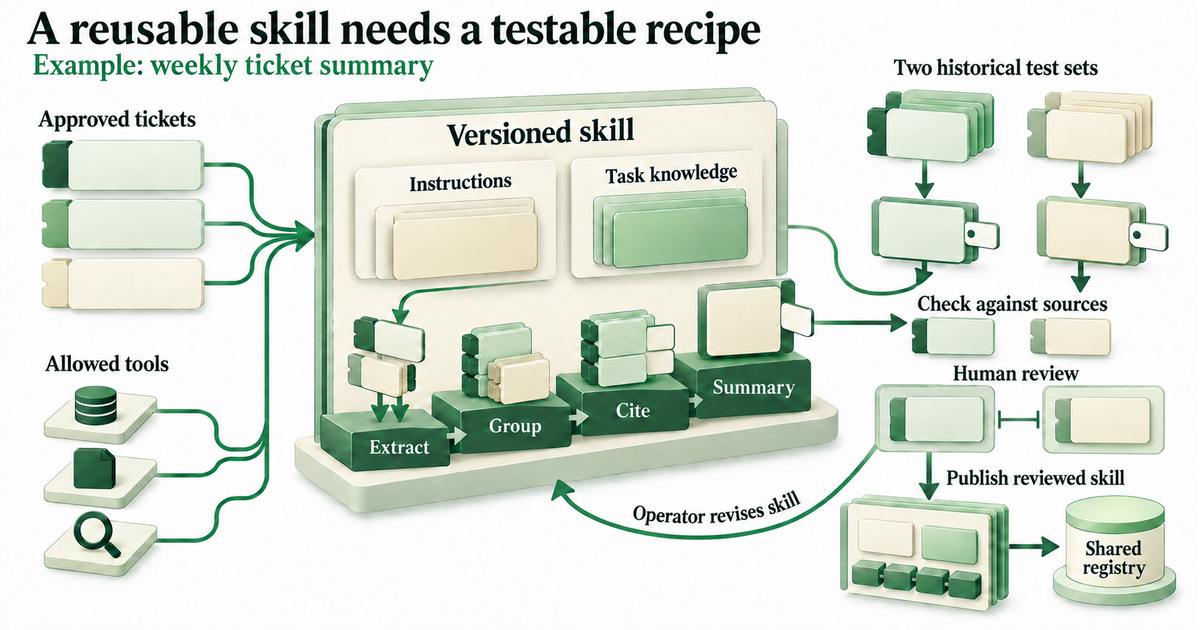
Summary: Google's October 8 Gemini at Work announcement gives a concrete mechanism for turning an ad-hoc AI request into a reusable Agent Skill. A skill is a modular prompt containing instructions, task knowledge and a multi-step procedure; the platform describes personal, shared-company and global skill libraries along with a governed tool registry. That means a recurring task should specify more than a clever sentence. For example, a weekly customer-issue summary skill can define an eligible input folder, allowed support-data fields, the sequence for grouping recurring issues, a rule to cite exact ticket references, a fixed output template and a final human approval point. The agent can retrieve appropriate authorized tools and repeat the procedure while session, semantic, procedural and episodic memory support different forms of continuity. A sensible operator would first run the skill against two historical ticket sets, compare its grouped findings with source records, remove unauthorized actions and only then publish a versioned shared skill. This is a practical how-to follow-on to the prior Brief's announcement coverage—not a second claim that Gemini Skills were launched again on October 10. Google describes these capabilities, but availability, permissions and reliability vary by organization.
Why it matters: Readers can create a minimal reusable skill specification today: name and trigger; intended users; required and prohibited data; ordered steps; tool allowlist; source-citation rule; output schema; escalation condition; review owner; and version. Test it against realistic successes and edge cases before putting it in a team registry. The transferable idea is controlled procedural reuse, independent of whether the particular Google agent is enabled in one's organization.
Source: Welcome to Gemini at Work 2026: Introducing the Gemini agent
2. Instinct's real-world agent tests expose the missing-prerequisite problem
Focus: Agents for Everyone
Date: October 9, 2026
Topics: personal AI agents, task completion, calendar automation, privacy permissions, missing prerequisites
Evidence: Publisher Authored
Availability: Available
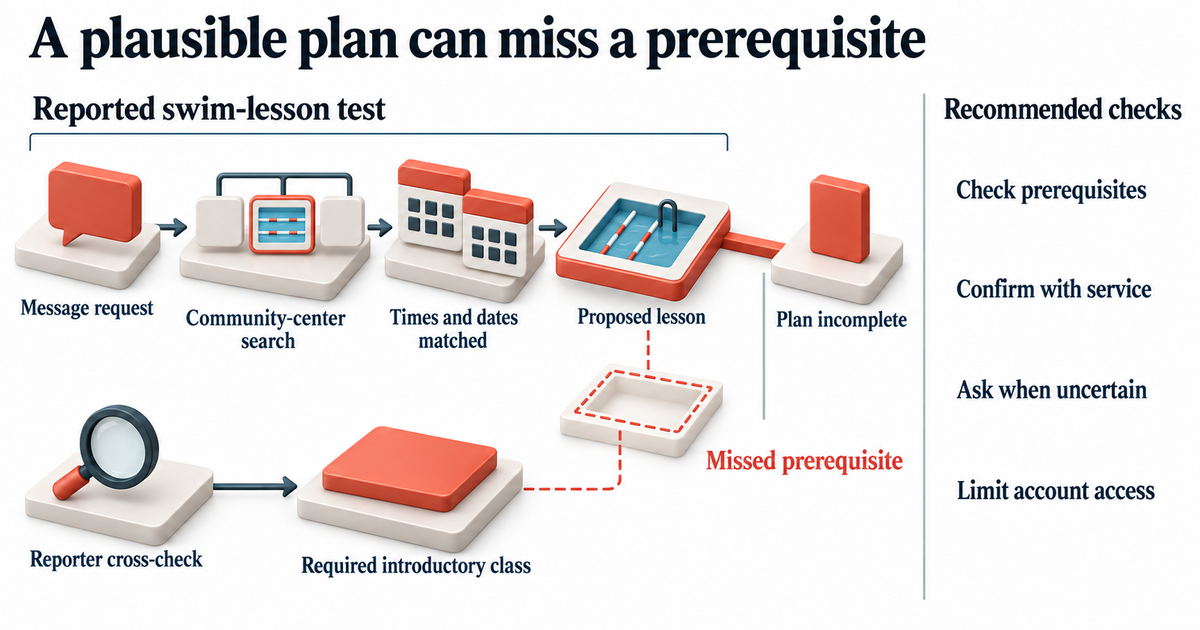
Summary: In an October 9 first-person trial, The Verge tested Instinct, a messaging-based assistant that can act through connected personal services. Rather than judging an agent by a single perfect demo, the reporter asked it to handle actual chores. It could coordinate through messages and connected calendars, attempt appointment or return processes, and move ordinary errands forward. But the swim-lesson example exposed a central failure: an apparent appointment plan can omit a prerequisite that must happen before the booking is genuinely useful. That distinction separates a plausible next message from a completed real-world task. The article also surfaces practical concerns about which personal accounts an agent can access, whether an invitation or waitlist allows a user to try the product, and whether commercial incentives will shape agent recommendations. The testing is a limited personal account, not an independent statistically powered reliability study. It is useful precisely because it makes the gap between agent intention, externally confirmed action and user-visible evidence obvious.
Why it matters: Before handing an assistant calendar, purchases or contacts, define the completion receipt in ordinary language: what system must confirm, what prerequisites must be satisfied, what should trigger a question, and which actions always require approval. Give the agent the least sensitive access it needs. A useful pilot measures missed prerequisites and unauthorized actions as carefully as successful tasks. A coherent conversation is not proof that a service has been booked or a purchase completed.
Source: Instinct was the buzziest AI agent around — can it survive Muse?
3. Oracle turns specialist knowledge into repeatable AI-assisted work
Focus: Applied Generative AI for Knowledge Workers
Date: October 8, 2026
Topics: knowledge work, recruiting workflows, business ontology, text-to-SQL, enterprise context
Evidence: Publisher Authored
Availability: Available
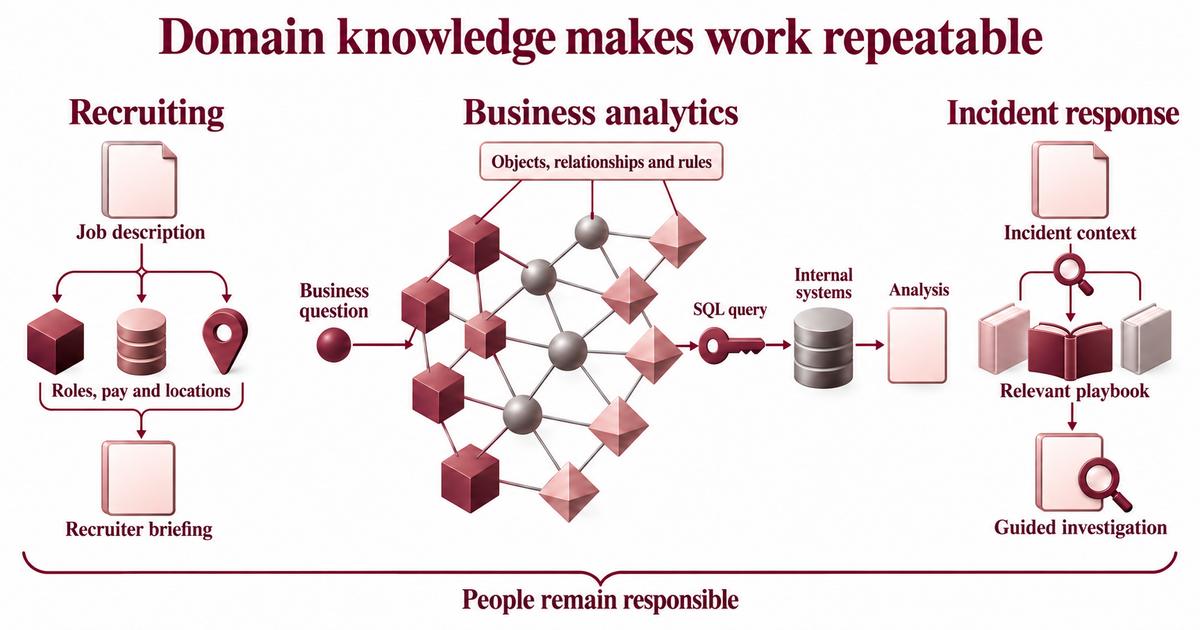
Summary: OpenAI's Oracle customer study describes how domain knowledge, tools and human review are combined into repeatable workplace procedures. In recruiting, a job description feeds a talent-market-intelligence workflow that compares roles, looks at compensation and assesses talent pools by geography. Oracle's hiring lead says preparation that previously took two to four days can now be done in about 15 to 20 minutes; that is a customer-reported case, not an independent controlled trial. The Oracle Applications Lab team also describes an ontology of company entities, relationships and rules that lets business users ask questions in plain language and have Codex translate their intent into appropriate SQL and reports. In operations, institutional playbooks and specialist expertise form context for incident investigation instead of requiring an employee to know where everything is stored. The connecting thread is not a new chat interface: inputs are typed by business purpose, data lives in an authoritative system, output formats are predictable, and employees remain responsible for use of sensitive data and decisions. The case illustrates several possible patterns without proving that every organization will achieve the same speed-up.
Why it matters: Teams evaluating enterprise AI should identify a specific expensive preparatory task, inventory authoritative data and policy, and define what evidence a reviewer needs to trust the result. For recruiting, preserve market sources and date ranges; for analytics, validate the generated query against approved metrics; for incidents, check the retrieved playbook version before acting. Measure preparation time and error corrections together, not simply adoption.
Source: How Oracle turns days of work into minutes with ChatGPT and Codex
4. Copilot Studio separates apps, deterministic workflows and agents
Focus: Applied Generative AI for Knowledge Workers
Date: October 7, 2026
Topics: Copilot Studio, low-code business applications, agent hooks, enterprise governance, release testing
Evidence: Publisher Authored
Availability: Available
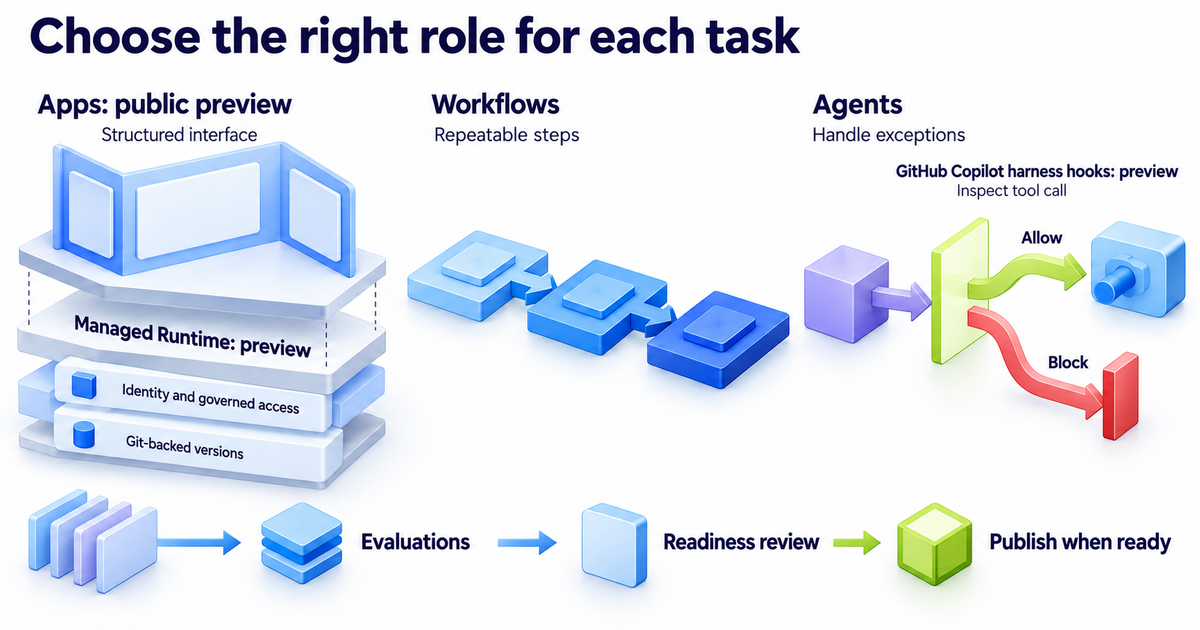
Summary: Microsoft's October 7 Copilot Studio roundup describes an approach in which the useful business solution is not always the agent itself. Makers describe an outcome, users, data and actions; Copilot Studio can generate a draft application alongside workflows and agents. In Microsoft's onboarding example, the app gives people a controlled interface, the workflow handles deterministic steps, and the agent answers exceptions or unfamiliar questions. That division limits the burden on probabilistic reasoning. The announcement introduces apps and the Copilot Managed Runtime in public preview, with identity, hosted execution, governed data access, Git-backed versioning and administration capabilities. It also describes event-triggered hooks for Copilot-harness agents in preview, so certain controls can run consistently before or after relevant actions. Grounding, tests and review features add separate ways to verify suitability before wider deployment. Because this is a roundup of September functionality published on October 7, publication date must not be confused with feature launch timing; preview availability and generally available elements differ.
Why it matters: An effective agent rollout needs three maps: the parts requiring a human interface, the steps that can be reliably encoded, and the questions or exceptions that truly need adaptive reasoning. Before exposing a draft app to colleagues, define access scope, pre-action checks, expected outcomes and failure-state tests. Review preview versus GA status and service entitlements before making an implementation commitment. A polished app demo is not the same as an approved production workflow.
5. Asana's browser-agent tests show why stable context can slash costs
Focus: Technical AI Engineering
Date: October 9, 2026
Topics: browser agents, prompt caching, context retention, evaluation design, model operating cost
Evidence: Publisher Authored
Availability: Available
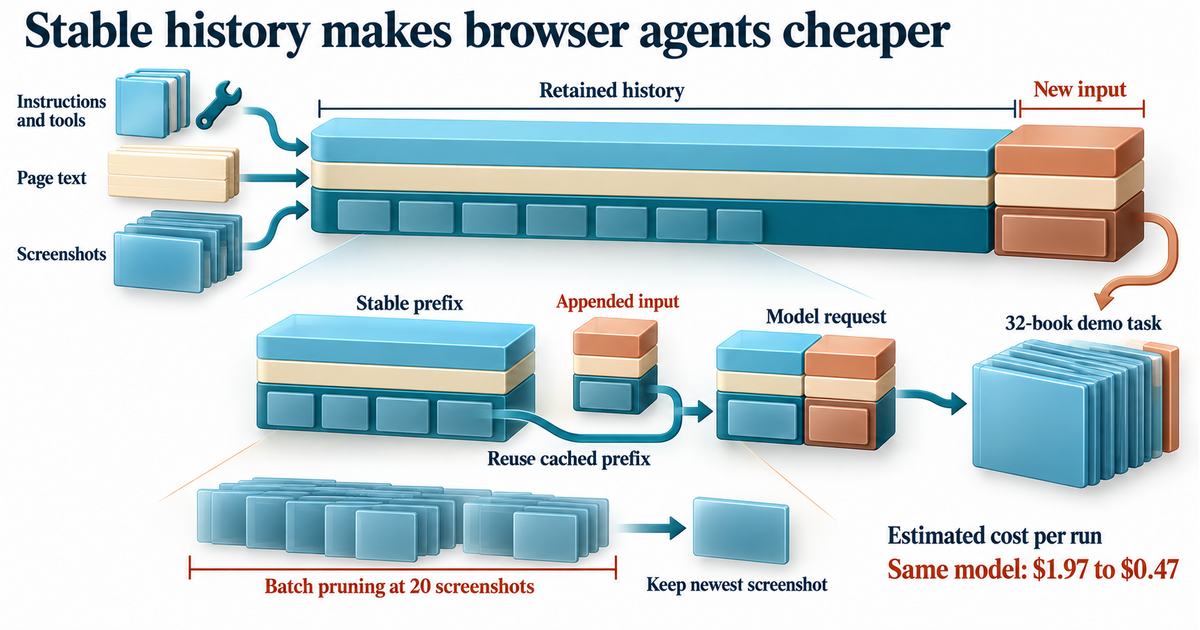
Summary: Asana's StackAI browser agent repeatedly builds requests from a growing trail of pages, screenshots and tool results. Its existing cache covered fixed instructions but not that changing history, so an expensive part of each step was sent again. In a 144-run experiment across four models, the team compared two history budgets with six caching and screenshot-handling policies. Holding more page history and pruning screenshots in batches—rather than continually rewriting the whole context—preserved stable input prefixes that could be reused by a prompt cache. The chosen policy retained as many as 20 screenshots before trimming to the newest image. On GPT-6.1 Sol, the larger-history configuration with that policy reduced estimated model cost from $1.97 to $0.47 per run. Versus the previous production setup on a different model, the optimized Sol workflow was reported as 76 times cheaper and approximately five times faster, taking roughly four minutes. The test collected six fields from each of 32 demonstration-catalog books, not arbitrary internet work. Its baseline included capped or unfinished runs, and the cost figures reflect a particular workload and providers' pricing—not a universal agent-performance ranking.
Why it matters: The design lesson is that context management is part of systems engineering, not merely prompt style. Measure which parts of the history change, cache stable prefixes, change trimming only at intentional boundaries and keep enough evidence to avoid repeat browsing. Compare cost, elapsed time and task completion together; a superficially cheaper configuration that loses needed context can increase retries and error rates. Treat the reported 76-fold figure as a case result, not a forecast for another application.
Source: Asana cuts model costs 76x in browser tests with GPT-6.1 Sol
6. Anthropic's OSS Scanner puts human triage behind AI-found flaws
Focus: Technical AI Engineering
Date: October 8, 2026
Topics: AI-assisted security, open source, human validation, coordinated disclosure, workflow triage
Evidence: Publisher Authored
Availability: Available
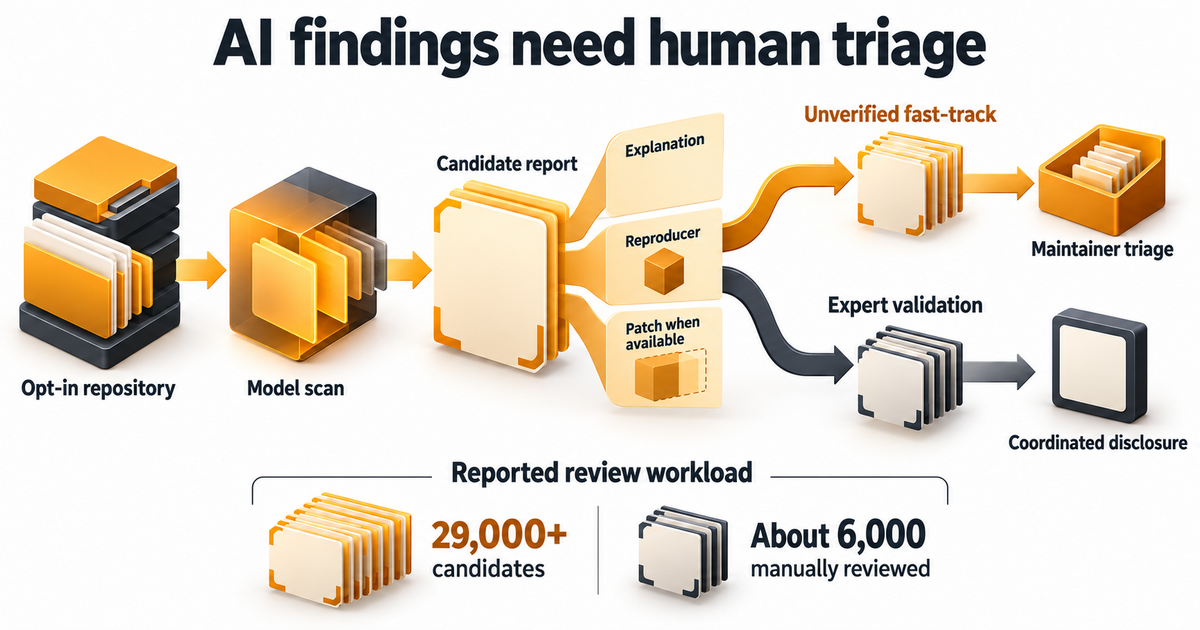
Summary: Anthropic's Frontier Red Team introduced OSS Scanner as a free, opt-in vulnerability-finding service for qualifying open-source maintainers. Its models can inspect code and produce candidate weaknesses, supporting detail and proposed patches, but candidate generation and trusted security disclosure are not the same thing. Anthropic reports identifying more than 29,000 candidate vulnerabilities during earlier scanning and manually reviewing roughly 6,000; those totals describe an enormous triage workload, not 29,000 confirmed exploitable flaws or a measured precision rate. The service offers maintainers a choice: request unverified candidate reports sooner and do their own triage, or use the established coordinated disclosure route for human-verified findings. The announcement notes that nearly 5,000 unvalidated reports had already been sent to maintainers who explicitly asked for the bulk findings. The key architecture is an evidence and responsibility boundary. An LLM can expand coverage and suggest reproductions; maintainers still have to reproduce, judge severity, decide whether a patch is safe and coordinate disclosure. This is not a warrant for publishing exploits or accepting an automated patch unreviewed.
Why it matters: Open-source teams need a receipt-and-queue process before turning on automated security discovery. Require opt-in scope, confidentiality, reproducible evidence, issue deduplication, human validation and disclosure ownership. Track how often findings become confirmed remediations and how much reviewer effort they consume, rather than treating number of generated reports as success. Projects with limited triage capacity may benefit more from the slower verified route.
Source: Launching an opt-in vulnerability-finding service for open-source software
Worth Watching
7. General
Build custom site annotations with ChatGPT
Open the permanent video page
Channel: OpenAI (official channel)
Date: October 7, 2026
Duration: 2:35
Format: Video
Summary: OpenAI's short official tutorial shows how to request custom site annotations in ChatGPT and use them to direct attention to exact areas of a page rather than describing the layout from memory. The demonstrated workflow helps a knowledge worker anchor editing or review notes to visible context. The 2:35 runtime and October 7 identity were corroborated from the official channel and a separate video index in the preceding verified Compiler media checkpoint; this edition did not replay the complete footage.
Why it matters: A scoped visual annotation is more testable than a vague instruction to improve a website. Use the tutorial to practice naming the exact area, desired effect and acceptance criteria, and verify the resulting change against the page.
Source: Watch on YouTube
8. Agents for Everyone
Build Your First AI Agent in 10 Minutes — No Coding
Open the permanent video page
Channel: The Tech Girl
Date: September 5, 2026
Duration: 9:42
Format: Video
Summary: A 9:42 practical no-code tutorial walks through constructing a daily AI news research agent with Claude Cowork, giving it a narrow goal and allowed tools, reviewing the first output, saving results to Google Drive and scheduling subsequent reports. Chapters distinguish a genuinely multi-step agent from a single chatbot answer, with a closing warning about granting app and account access. The program description and chapter timestamps were inspected on the indexed creator video page, rather than claiming direct playback.
Why it matters: The walkthrough pairs well with today's reusable-skills article: constrain inputs and permissions, specify an output artifact, review one run, then consider repeat scheduling only after evaluating reliability. It is educational, not an instruction to activate another Compiler producer.
Source: Watch on YouTube
Worth Listening — Podcasts
9. The Most Important Trends Showing Up in New AI Products
Open the permanent podcast page
Show: The AI Daily Brief
Host / guest: Not listed
Focus: Agents for Everyone
Date: October 8, 2026
Duration: 28:00
Topics:
Summary: Nathaniel Whittemore connects several seemingly disconnected product announcements into three structural trends: multi-model agent harnesses, competition at the low-cost model end, and product/interface differentiation once frontier intelligence is more widely available. The source page surveys Hermes and open-agent distribution, expensive infrastructure financing, Claude Haiku 5.5, GrokBot routing beyond a single model family and the emerging prominence of interactive interfaces. Its analysis argues that enterprise spending evidence and switching costs may matter as much as a single benchmark release. Sponsor placements and the host's interpretation are not independent measurements; the podcast is most useful as a thesis to test against primary product documents and independent usage data.
Why it matters: For an AI adoption roadmap, track portability of procedures, cost per validated outcome, interface quality and vendor lock-in separately. The episode provides a market-wide context for Asana's cost study and the practical Agent Skills workflow.
Connection to the brief: For an AI adoption roadmap, track portability of procedures, cost per validated outcome, interface quality and vendor lock-in separately. The episode provides a market-wide context for Asana's cost study and the practical Agent Skills workflow.
Coverage: Selected for this edition.
Listen / watch: The AI Daily Brief
10. Switching Models Shouldn't Mean Starting Over | Walrus Protocol's Kimberly Logan
Open the permanent podcast page
Show: Chain of Thought
Host / guest: Not listed
Focus: Agents for Everyone
Date: October 7, 2026
Duration: 38:00
Topics:
Summary: Host Conor Bronsdon interviews Walrus Foundation product lead Kimberly Logan about preserving AI agent memory when switching models or agent harnesses. The discussion distinguishes dumping old chats from preserving structured, selectively accessible, portable experience. Questions include storage provenance, verifiable retrieval, ownership of remembered preferences and the costs of context migration. It also raises the possibility that decentralized storage could enable durable memory without requiring one assistant provider, while providing no independent proof that Walrus's implementation solves every data governance problem. The episode is sponsored by Walrus and the interviewee's product assertions should be treated as claims. Its full show notes and transcript were checked in the previous day's verified media evidence; an audio listen-through is not claimed.
Why it matters: Anyone building a long-lived personal or team agent should separate task procedures, permissions and durable context from model-vendor identity. This complements today's Agent Skills recipe: version the procedure and make its source data portable and auditable.
Connection to the brief: Anyone building a long-lived personal or team agent should separate task procedures, permissions and durable context from model-vendor identity. This complements today's Agent Skills recipe: version the procedure and make its source data portable and auditable.
Coverage: Selected for this edition.
Listen / watch: Chain of Thought
Emerging AI Watchlist
3 new today · 2 updated · 22 carried forward.
New today:
- History-aware browser-agent cost controls
- AI-generated open-source security findings at maintainer scale
- Prerequisite and proof-of-completion checks for personal agents
Updated today:
- Governed low-code agent deployment
- Enterprise source-grounded AI work
Carried forward: 22
Archived / dropped recently: None
Help choose what we investigate next. Explore emerging ideas and tell us which interest you.
Editorial takeaway
The design lesson is that context management is part of systems engineering, not merely prompt style. Measure which parts of the history change, cache stable prefixes, change trimming only at intentional boundaries and keep enough evidence to avoid repeat browsing. Compare cost, elapsed time and task completion together; a superficially cheaper configuration that loses needed context can increase retries and error rates. Treat the reported 76-fold figure as a case result, not a forecast for another application.