Instinct's real-world agent tests expose the missing-prerequisite problem
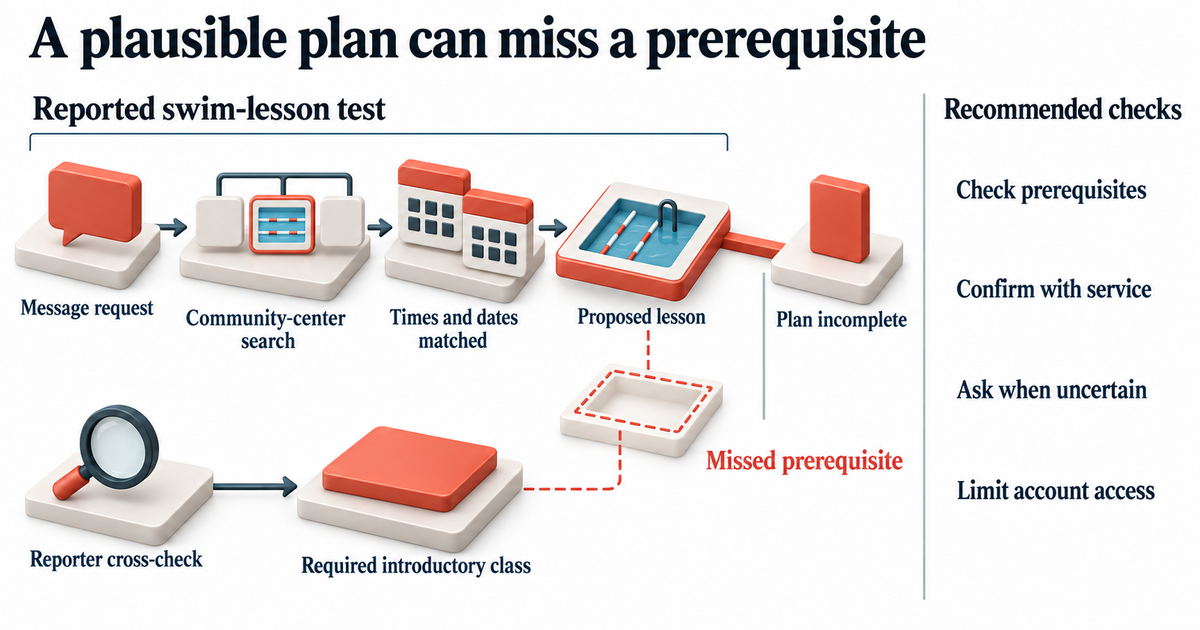
In an October 9 first-person trial, The Verge tested Instinct, a messaging-based assistant that can act through connected personal services. Rather than judging an agent by a single perfect demo, the reporter asked it to handle actual chores. It could coordinate through messages and connected calendars, attempt appointment or return processes, and move ordinary errands forward. But the swim-lesson example exposed a central failure: an apparent appointment plan can omit a prerequisite that must happen before the booking is genuinely useful. That distinction separates a plausible next message from a completed real-world task. The article also surfaces practical concerns about which personal accounts an agent can access, whether an invitation or waitlist allows a user to try the product, and whether commercial incentives will shape agent recommendations. The testing is a limited personal account, not an independent statistically powered reliability study. It is useful precisely because it makes the gap between agent intention, externally confirmed action and user-visible evidence obvious.
Instinct's real-world agent tests expose the missing-prerequisite problem
Focus: Agents for Everyone Date: October 9, 2026 Topics: personal AI agents, task completion, calendar automation, privacy permissions, missing prerequisites Evidence: Publisher Authored Availability: Available
Summary: In an October 9 first-person trial, The Verge tested Instinct, a messaging-based assistant that can act through connected personal services. Rather than judging an agent by a single perfect demo, the reporter asked it to handle actual chores. It could coordinate through messages and connected calendars, attempt appointment or return processes, and move ordinary errands forward. But the swim-lesson example exposed a central failure: an apparent appointment plan can omit a prerequisite that must happen before the booking is genuinely useful. That distinction separates a plausible next message from a completed real-world task. The article also surfaces practical concerns about which personal accounts an agent can access, whether an invitation or waitlist allows a user to try the product, and whether commercial incentives will shape agent recommendations. The testing is a limited personal account, not an independent statistically powered reliability study. It is useful precisely because it makes the gap between agent intention, externally confirmed action and user-visible evidence obvious.
Why it matters: Before handing an assistant calendar, purchases or contacts, define the completion receipt in ordinary language: what system must confirm, what prerequisites must be satisfied, what should trigger a question, and which actions always require approval. Give the agent the least sensitive access it needs. A useful pilot measures missed prerequisites and unauthorized actions as carefully as successful tasks. A coherent conversation is not proof that a service has been booked or a purchase completed.