Daily Generative AI Brief — September 30, 2026
Published: September 30, 2026
Coverage period: 24-hour primary window ending at 2026-09-30T23:12:21.330-05:00; recency fallback used for reviewed items outside the primary window.
IN THIS EDITION · 6 ARTICLES / 2 VIDEOS / 2 PODCASTS
Choose what matters to your work
- Gemini Skills turn repeated instructions into reusable team proceduresArticle · about 6 min source read
- Asana’s coachable agents make roles, memory, and permissions visibleArticle · about 12 min source read
- OpenAI pairs small-business AI workflows with local human coachingArticle · about 5 min source read
- Anthropic’s buying agent shifts sales reps toward higher-value conversationsArticle · about 8 min source read
- OpenShell puts enforceable permissions outside the agentArticle · about 9 min source read
- ProvenanceGuard checks whether an MCP agent cited the right source, not just a true factArticle · about 8 min source read
- Meet the all new Codex CloudVideo · 3:24
- Introducing dots, always-on agents built to handle everything.Video · 2:28
- #243: GPT-6 Sol and Luna, Opus 5.5, the New Microsoft Copilot, Jensen Huang vs. AI Doomers & Introducing AI ScorePodcast
- The right way to prepare future workers for AIPodcast
1. Gemini Skills turn repeated instructions into reusable team procedures
Focus: Agents for Everyone
Date: September 30, 2026
Topics: Agent Skills, Gemini, reusable instructions, SKILL.md, operating knowledge
Evidence: Official Primary Source
Availability: Published
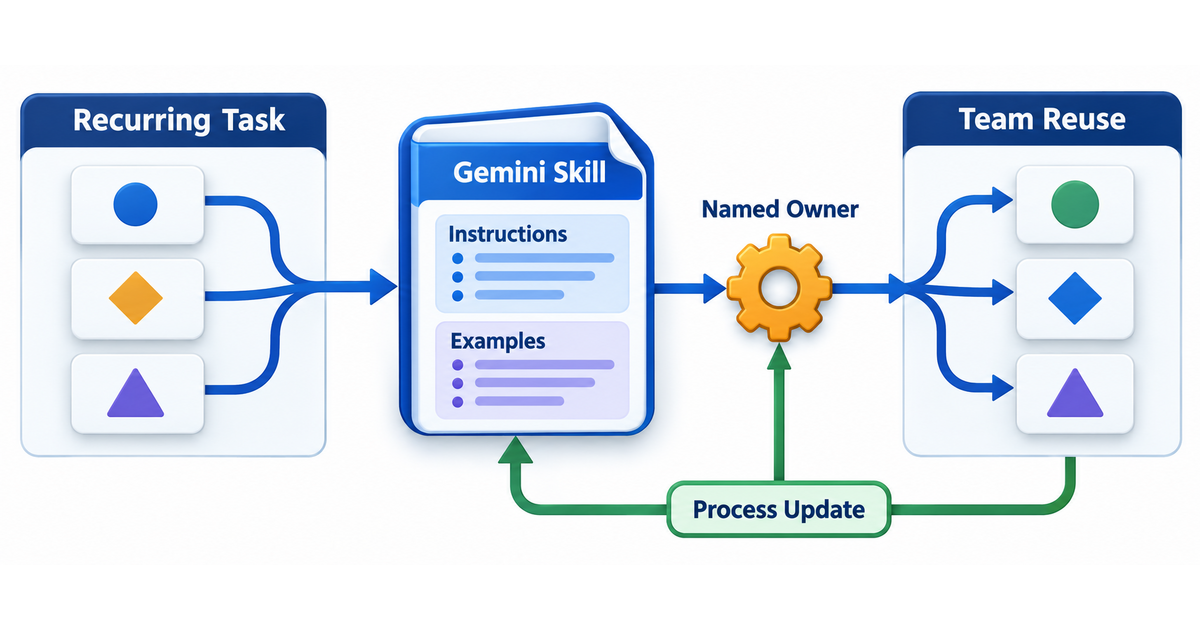
Summary: Google Workspace announced reusable Gemini skills for the Gemini app and Workspace and says they will eventually replace Gems for task-specific instructions. Skills let users save custom instructions for recurring work instead of rebuilding the same prompt each time, with a transition path for existing Gems.
Why it matters: This is a practical Agent Skills pattern for nontechnical teams: capture a repeatable procedure once, maintain it like operating knowledge, and reuse it across similar tasks. The value comes from consistency and ownership, not from making every request longer or more complicated.
What to do now — Package one recurring team task as a maintained Skill: Choose a narrow task such as applying brand voice or preparing a vendor review, write the steps and examples once, assign an owner, and schedule a review whenever the underlying process or policy changes.
Source: Gemini Skills turn repeated instructions into reusable team procedures
2. Asana’s coachable agents make roles, memory, and permissions visible
Focus: Agents for Everyone
Date: September 29, 2026
Topics: AI teammates, permissions, shared memory, Asana, human-agent teams
Evidence: Official Primary Source
Availability: Published
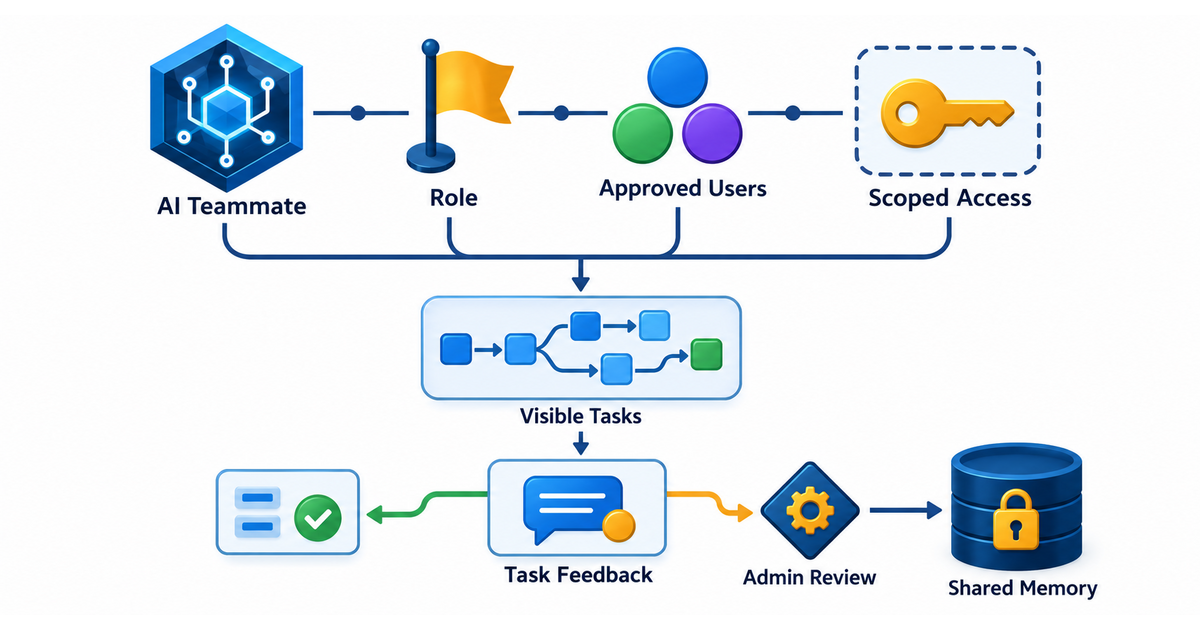
Summary: Anthropic’s Asana case study describes AI teammates that work inside Asana’s existing work graph with named roles, visible tasks, scoped permissions, pre-built skills, integrations, and shared memory. Asana separates everyday feedback from permanent memory changes, which are reserved for administrators and editors.
Why it matters: Nontechnical teams need a way to understand what an agent is responsible for, what it can access, and who can change its behavior. Treating an agent like a governed teammate makes role boundaries and durable memory visible instead of burying them in an opaque automation.
What to do now — Write a one-page job description for one AI teammate: Define the agent’s role, approved projects and data, actions it may take, who can use it, who can change permanent memory, and where its work will stay visible before expanding it to more people.
Source: Asana’s coachable agents make roles, memory, and permissions visible
3. OpenAI pairs small-business AI workflows with local human coaching
Focus: Applied Generative AI for Knowledge Workers
Date: September 30, 2026
Topics: small business, AI adoption, workflow coaching, knowledge work, training
Evidence: Official Primary Source
Availability: Published
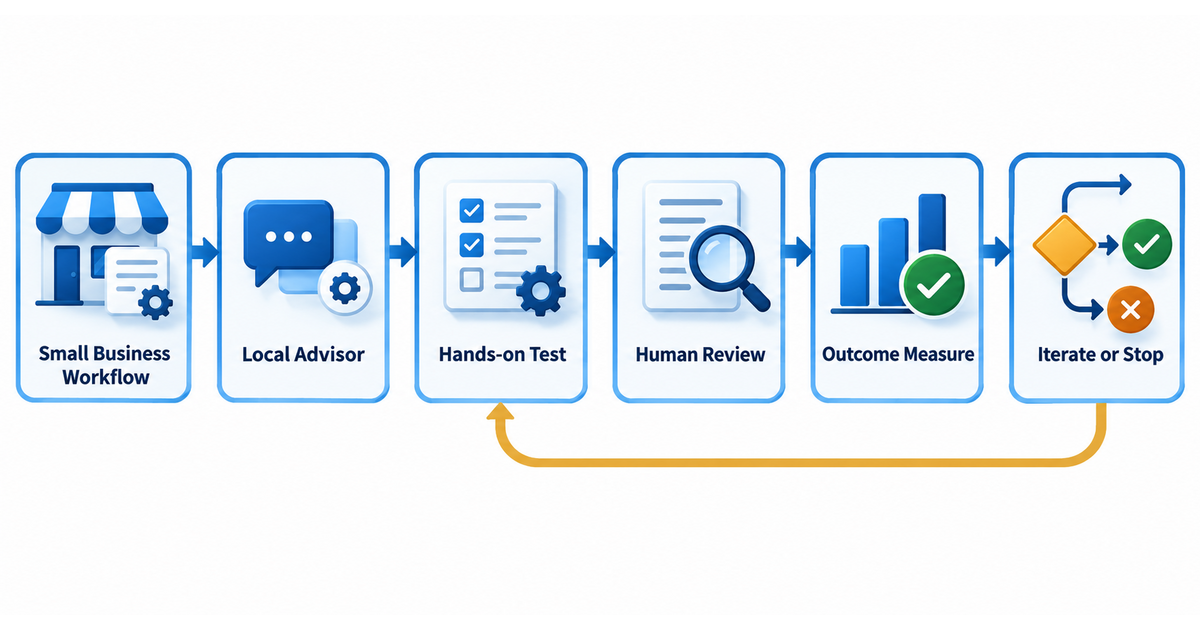
Summary: OpenAI announced a partnership with America’s SBDC that will train roughly 150 advisors and bring hands-on workshops, follow-up help, and reusable guides to small businesses. A companion report describes owners using AI for finance, supply chain, legal work, marketing, competitive pricing, research, and outreach.
Why it matters: For small teams, the adoption bottleneck is often deciding where AI belongs in the workflow and how to judge whether it helped. Pairing concrete task examples with trusted local advisors turns generative AI adoption into a coached operating change rather than a self-serve software trial.
What to do now — Choose one weekly workflow and measure it with a human coach: Pick a recurring task such as pricing research, outreach, or compliance preparation, define the expected output and review owner, run the workflow for several cycles, and compare time, quality, and follow-through.
Source: OpenAI pairs small-business AI workflows with local human coaching
4. Anthropic’s buying agent shifts sales reps toward higher-value conversations
Focus: Applied Generative AI for Knowledge Workers
Date: September 30, 2026
Topics: sales agents, human escalation, Claude Managed Agents, workflow redesign, feedback loops
Evidence: Official Primary Source
Availability: Published
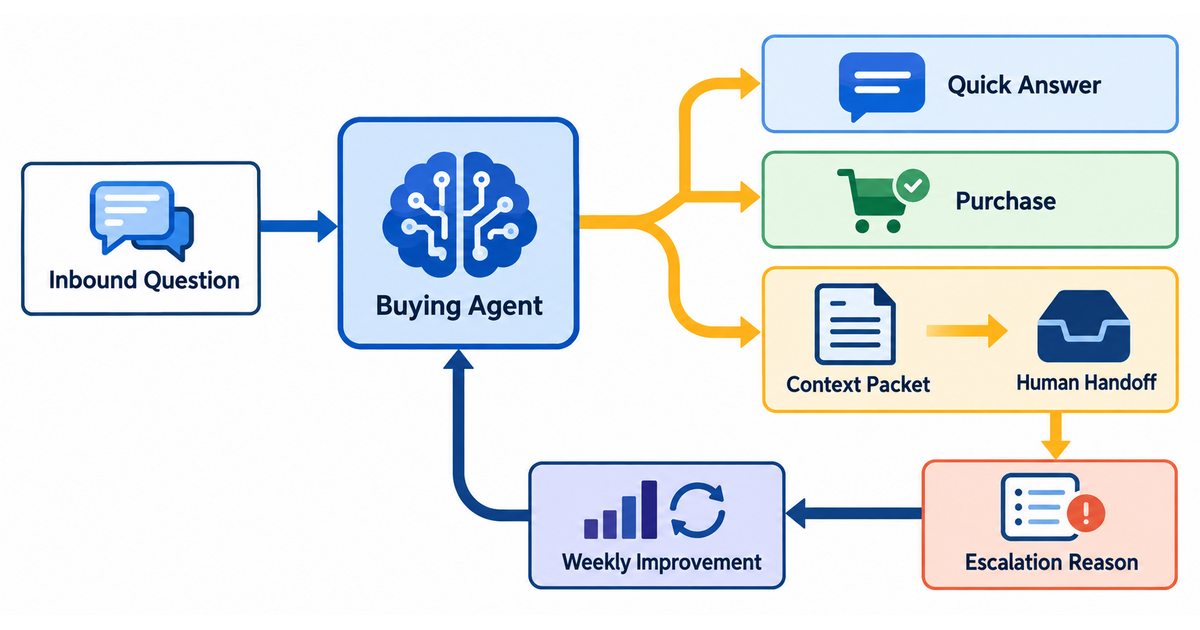
Summary: Anthropic says its Claude Managed Agents buying agent now handles thousands of inbound conversations a day, answers routine plan and policy questions, and either completes a purchase, hands a complex case to a representative with context, or gives a quick answer. The company reports stronger opportunity conversion and faster closes for escalated leads.
Why it matters: The important pattern is role design rather than chatbot volume. The agent absorbs repetitive questions, preserves a human path for complex work, and turns escalation reasons into a feedback queue, allowing specialists to spend more time where judgment and persuasion matter.
What to do now — Treat every human escalation as training data for the workflow: Instrument one customer-facing agent so each handoff records why the agent stopped, then review those reasons weekly to decide whether to improve the agent, change the self-service path, or keep the task human.
Source: Anthropic’s buying agent shifts sales reps toward higher-value conversations
5. OpenShell puts enforceable permissions outside the agent
Focus: Technical AI Engineering
Date: September 28, 2026
Topics: agent runtime, permissions, sandboxing, credential isolation, formal policy
Evidence: Official Primary Source
Availability: Published
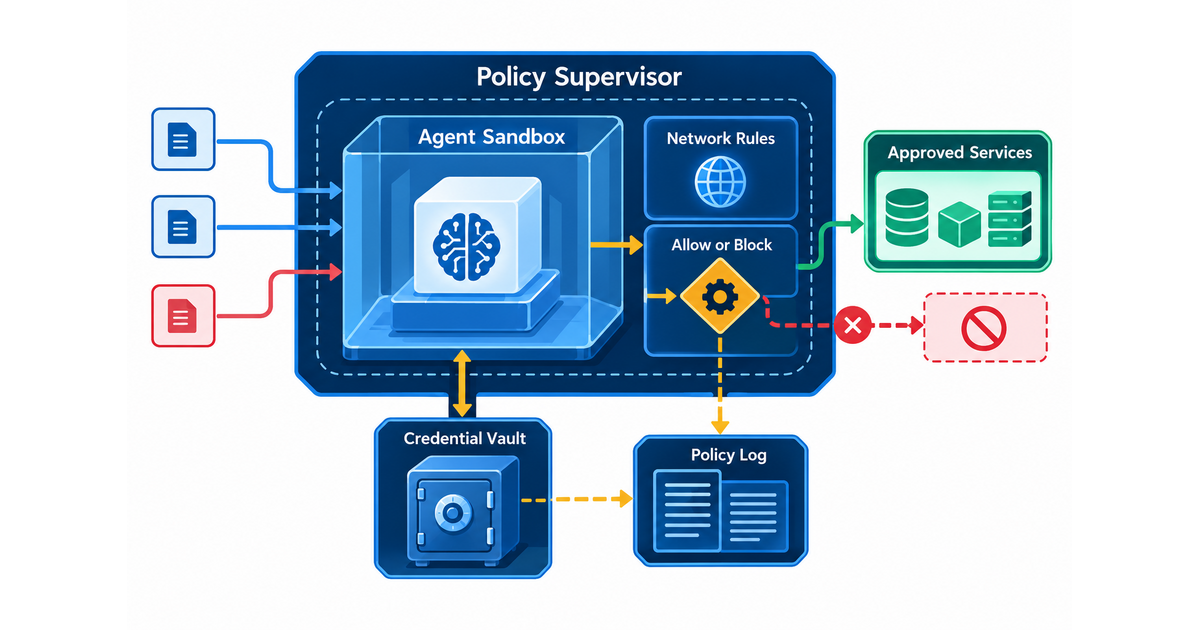
Summary: NVIDIA describes OpenShell 0.1.0 as an open-source runtime that can wrap existing agents with sandboxed execution, service controls, credential isolation, network policy, and formal policy analysis. Its examples show the runtime allowing read operations while blocking writes and keeping real credentials outside the agent workload.
Why it matters: Long-running agents become more useful as they gain access to files, services, credentials, and production systems, but that also raises the cost of mistakes. External runtime controls give engineering teams a way to constrain what an agent can actually do without relying on the agent to police itself.
What to do now — Put one existing agent behind deny-by-default runtime controls: Choose a bounded coding or operations workflow, allow only the services and actions it needs, log every denial, and review whether the policy blocks unsafe actions without preventing legitimate work.
Source: OpenShell puts enforceable permissions outside the agent
6. ProvenanceGuard checks whether an MCP agent cited the right source, not just a true fact
Focus: Technical AI Engineering
Date: September 29, 2026
Topics: MCP, provenance, agent evaluation, source attribution, verification
Evidence: Official Primary Source
Availability: Published
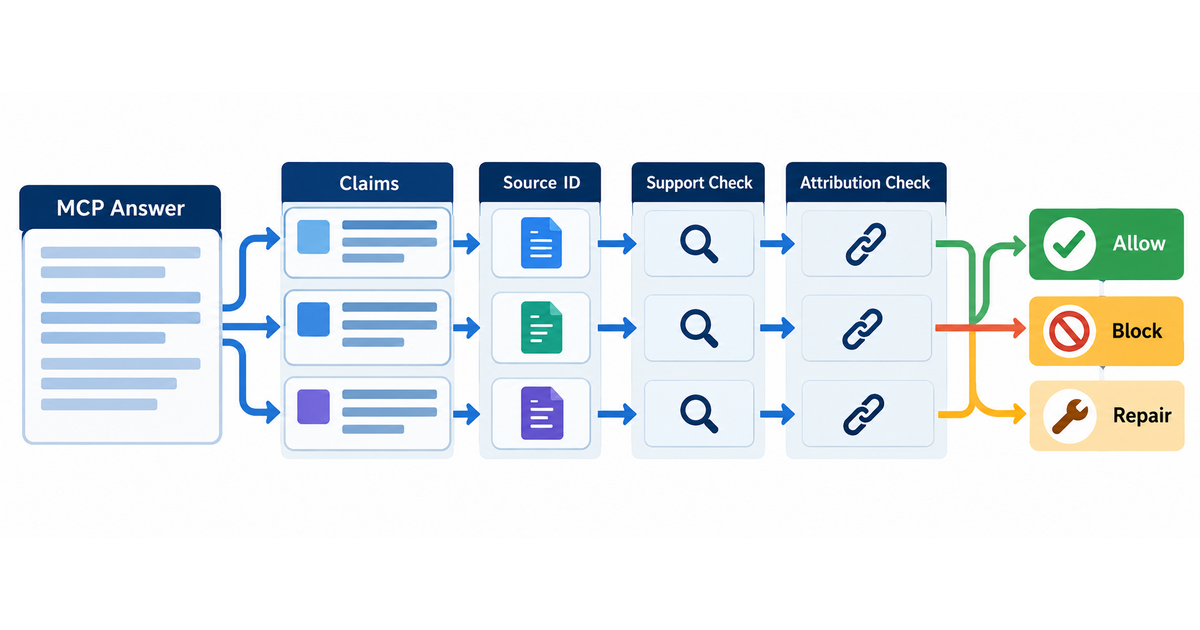
Summary: A Hugging Face team article presents ProvenanceGuard, a post-generation verification layer for multi-tool MCP agents. It preserves source identity through claim decomposition, source routing, support checks, attribution checks, and allow-or-block decisions instead of collapsing all tool outputs into one anonymous evidence pool.
Why it matters: An agent can state a fact that is present somewhere in its evidence while attributing it to the wrong record or tool. For engineering teams building multi-source agents, claim-to-source verification is a separate release gate from ordinary factuality and can matter in regulated or data-sensitive workflows.
What to do now — Add source identity to one multi-tool agent evaluation: Capture the tool and source ID behind each important claim, then test whether the answer attributes that claim to the same source rather than merely finding support somewhere in the pooled context.
Source: ProvenanceGuard checks whether an MCP agent cited the right source, not just a true fact
Worth Watching
7. General
Meet the all new Codex Cloud
Open the permanent video page
Channel: OpenAI
Date: September 29, 2026
Runtime: 3:24
Format: Video
Summary: A compact product demo of persistent cloud development environments, mobile steering, shared setup, and code-review workflows.
Why it matters: Directly complements the locked developer-workflow and managed-agent coverage without reopening story selection.
Source: Watch on OpenAI
8. Agents for Everyone
Introducing dots, always-on agents built to handle everything.
Open the permanent video page
Channel: OpenAI
Date: September 29, 2026
Runtime: 2:28
Format: Video
Summary: A two-and-a-half-minute introduction to always-on agents, their cloud-computer model, and the user-control framing.
Why it matters: A concise nontechnical companion to the edition’s agent and workplace-team stories.
Source: Watch on OpenAI
Worth Listening — Podcasts
9. #243: GPT-6 Sol and Luna, Opus 5.5, the New Microsoft Copilot, Jensen Huang vs. AI Doomers & Introducing AI Score
Open the permanent podcast page
Show: The Artificial Intelligence Show
Host / guest: Paul Roetzer and Mike Kaput
Focus: Applied Generative AI for Knowledge Workers
Date: September 29, 2026
Duration: 91:00 · No episode time limit
Topics: AI model economics, Microsoft Copilot, agent adoption
Summary: A same-day discussion of model reliability, per-task economics, Copilot changes, and practical adoption implications.
Why it matters: Adds operational interpretation for knowledge workers evaluating model and workflow changes.
Connection to the brief: Supports practical evaluation of the edition’s model, workflow, and workplace-agent developments.
Coverage: Selected from the locked September 30 bounded media review; no downstream media rediscovery or substitution.
Evidence: Practitioner analysis. Official show notes are dated September 29, 2026; Apple Podcasts identifies episode 243, publication at 09:00 UTC, and a 1h31m runtime.
Listen / watch: Apple Podcasts · Official show notes
10. The right way to prepare future workers for AI
Open the permanent podcast page
Show: The Big View
Host / guest: Peter Thal Larsen
Focus: Agents for Everyone
Date: September 29, 2026
Duration: 45:00 · No episode time limit
Topics: future of work, AI education, critical thinking
Summary: Daniel Susskind explains why narrow future-proofing is unreliable and why literacy, numeracy, and critical thinking remain durable foundations.
Why it matters: Provides a source-diverse, nontechnical perspective on preparing people for AI-mediated work.
Connection to the brief: Balances product news with concrete workforce preparation and judgment.
Coverage: Selected from the locked September 30 bounded media review; no downstream media rediscovery or substitution.
Evidence: Practitioner analysis. Reuters dates the episode September 29, 2026 at 05:02 UTC; Apple Podcasts lists it as the latest episode with a 45-minute runtime.
Listen / watch: Reuters · Apple Podcasts · Spotify
Emerging AI Watchlist
1 new today · 3 updated · 13 carried forward.
New today:
- Source-aware verification for tool-using agents
Updated today:
- Agent safeguards tailored to the task
- Reusable agent skills become observable
- Agents that persist across sessions
Carried forward:
- Collaborative vibe coding
- Repairable AI-generated 3D designs
- Restoring images after repeated AI edits
- Language models that also predict concepts
- Turning agent memory into compact plans
- Building 3D worlds through recursive code
- Smaller model memory through selective precision
- AI adoption measured at the feature level
- AI harness engineering becomes a first-class layer
- Agentic workloads move toward measured edge inference
- Model lifecycle governance for AI products
- Agents that overclaim task completion
- Decision models emerge as a separate AI systems layer
Help choose what we investigate next. Explore emerging ideas and tell us which interest you.
Editorial takeaway
The strongest pattern in this edition is operationalization: useful generative AI is moving from isolated answers toward governed systems with explicit runtime controls, source-aware verification, reusable skills, human escalation, and role-based memory.