← Daily Brief for September 30, 2026
Asana’s coachable agents make roles, memory, and permissions visible
Focus: Agents for Everyone
Date: September 29, 2026
Topics: AI teammates, permissions, shared memory, Asana, human-agent teams
Evidence: Official Primary Source
Availability: Published
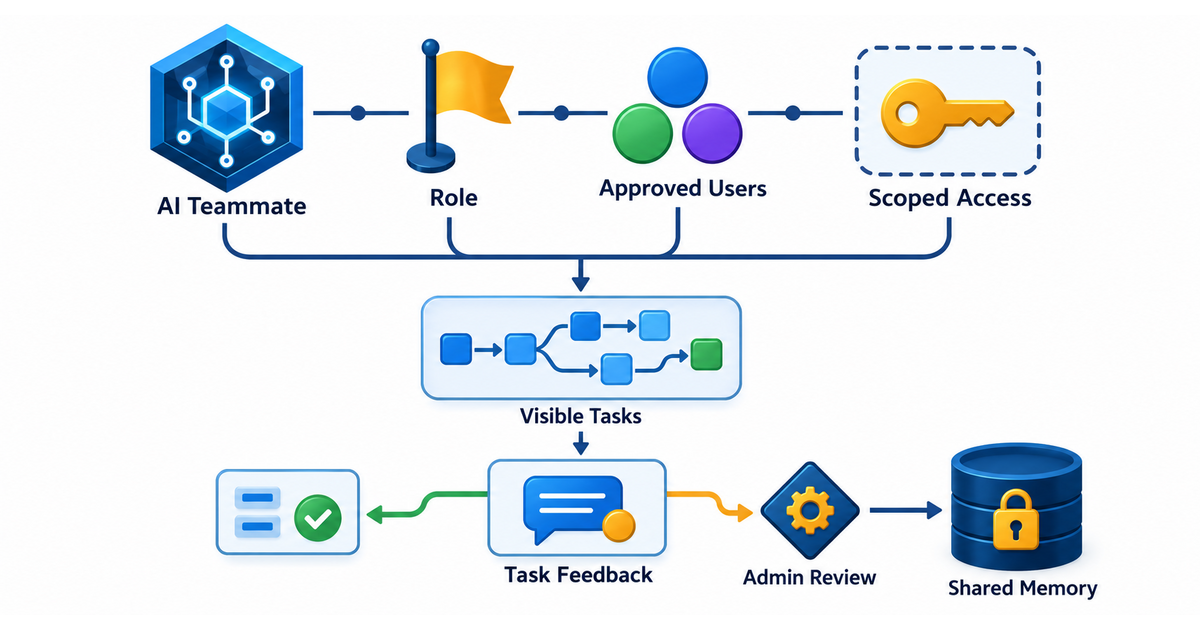
Summary: Anthropic’s Asana case study describes AI teammates that work inside Asana’s existing work graph with named roles, visible tasks, scoped permissions, pre-built skills, integrations, and shared memory. Asana separates everyday feedback from permanent memory changes, which are reserved for administrators and editors.
Why it matters: Nontechnical teams need a way to understand what an agent is responsible for, what it can access, and who can change its behavior. Treating an agent like a governed teammate makes role boundaries and durable memory visible instead of burying them in an opaque automation.
What to do now
Write a one-page job description for one AI teammate: Define the agent’s role, approved projects and data, actions it may take, who can use it, who can change permanent memory, and where its work will stay visible before expanding it to more people.
Source: Asana’s coachable agents make roles, memory, and permissions visible