Daily Generative AI Brief — September 16, 2026
Published: September 16, 2026
Coverage period: 24-hour primary window ending September 16, 2026 at 07:15 America/Chicago; five selected stories are inside the primary window. One Recency fallback missed the cutoff by 15 minutes after no second qualifying fresh non-technical-agent candidate survived the gates.
IN THIS EDITION · 6 ARTICLES / 0 VIDEOS / 1 PODCAST
Choose what matters to your work
- Google moves agent security from syntax checks to runtime intent controlsArticle · about 15 min source read
- Cloudflare scopes teammate, CI, and agent access to individual WorkersArticle · about 9 min source read
- Gemini 3.8 Live keeps reasoning and using tools while conversation continuesArticle · about 9 min source read
- Copilot now suggests values for repository governance taxonomiesArticle · about 2 min source read
- Salesforce AIforce brings governed data and actions to conversational interfacesArticle · about 7 min source read
- Anthropic’s skills marketplace adds governed Informatica catalog discoveryArticle · Source reading time unavailable
- General videoVideo · No qualifying selection
- Agent Skills videoVideo · No qualifying selection
- Even Other AI Labs Are Rallying Around Anthropic’s Slowdown ProposalPodcast
1. Google moves agent security from syntax checks to runtime intent controls
Focus: Technical AI Engineering
Date: September 15, 2026
Topics: agent security, runtime governance, semantic policy, anomaly detection
Evidence: Official Documentation
Availability: General Availability
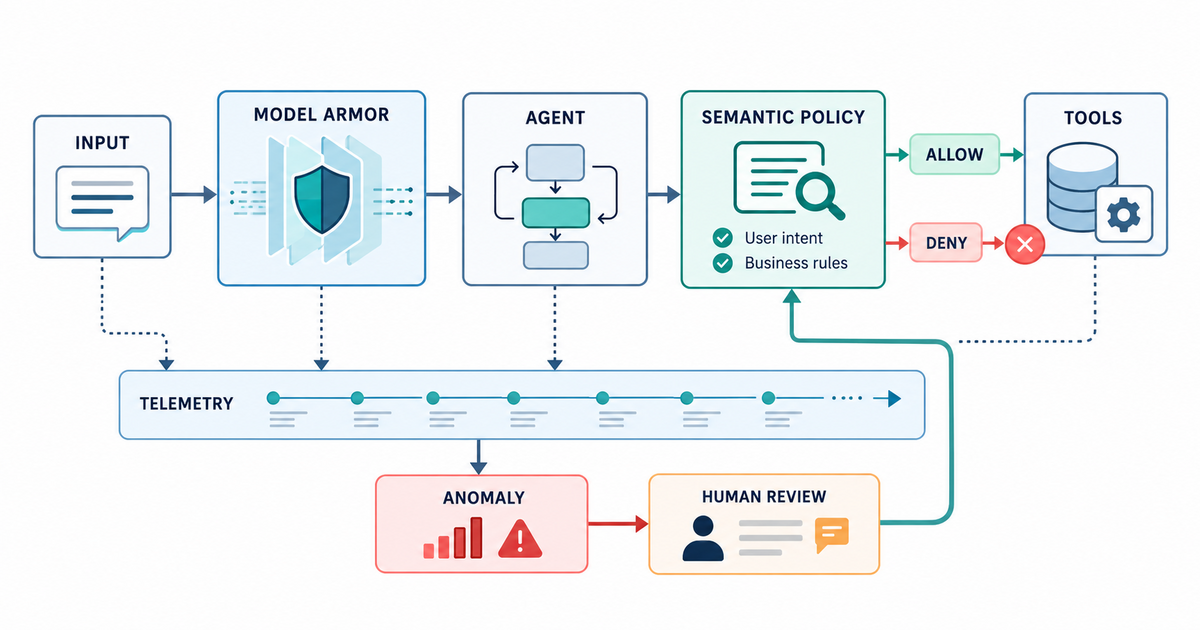
Summary: Google published a reference architecture for moving agent safeguards outside application code and into the Gemini Enterprise Agent Platform. Agent Gateway combines Model Armor at ingress and egress, natural-language Semantic Governance Policies before tool execution, and Agent Anomaly Detection across sessions; the companion repository includes local simulators and deterministic tests.
Why it matters: The design separates payload screening, intent authorization and multi-turn behavior monitoring instead of treating prompt injection as the only failure mode. Google’s examples and detector confidence values are explicitly illustrative, so teams still need their own threat models, policy tests, false-positive review and human escalation paths before production use.
What to do now — Threat-model one tool action: Choose one irreversible tool call, then specify ingress screening, intent policy, session anomaly signals and a human escalation before testing the reference pattern.
Source: Build zero-trust AI agents that judge intent, not just syntax
2. Cloudflare scopes teammate, CI, and agent access to individual Workers
Focus: Technical AI Engineering
Date: September 15, 2026
Topics: least privilege, agent deployment, CI security, serverless governance
Evidence: Official Announcement
Availability: General Availability
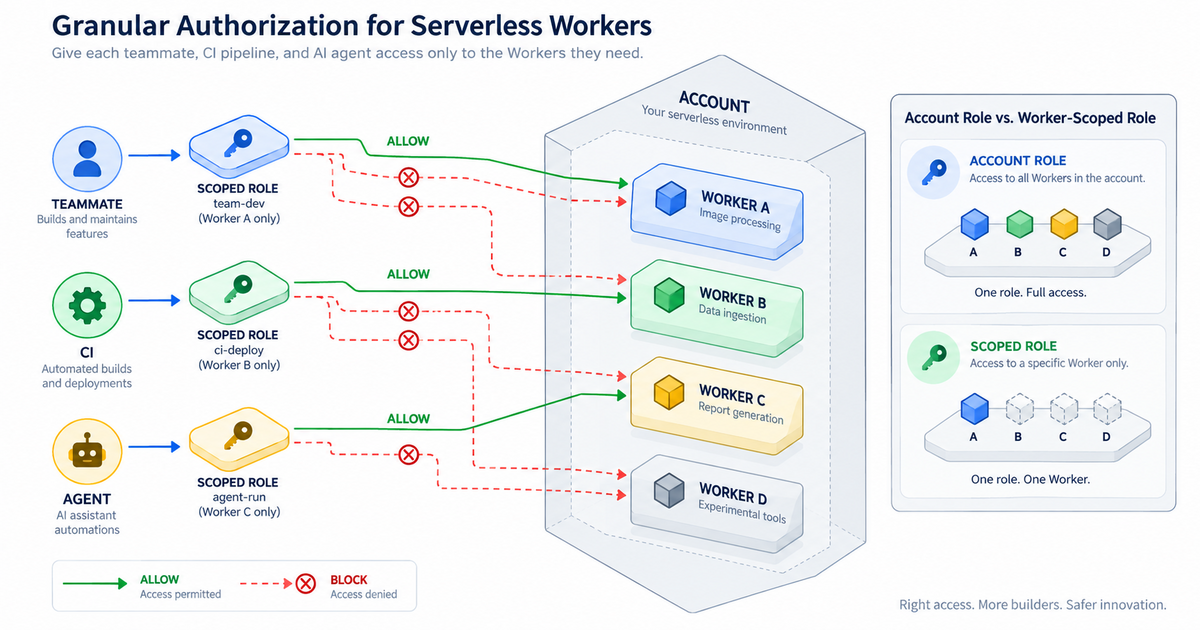
Summary: Cloudflare introduced Worker-scoped authorization so account owners can grant a teammate, CI system or AI agent access to specific Workers instead of the whole account. The model separates account-wide and Worker-scoped roles and supports narrower build, deploy and management paths.
Why it matters: Deployment agents are safer when their credentials cannot reach unrelated applications. This reduces blast radius and makes separation of duties easier to audit, but least privilege still depends on correct role design, token handling, logs and periodic access review; scoped authorization does not validate the code an agent deploys.
What to do now — Narrow one deployment credential: Inventory the Workers reachable by one CI or agent token, then replace account-wide access with the smallest Worker-scoped role that still completes the job.
Source: Give every teammate and agent the right level of access to your Workers
3. Gemini 3.8 Live keeps reasoning and using tools while conversation continues
Focus: Applied Generative AI for Knowledge Workers
Date: September 15, 2026
Topics: live voice, multimodal work, background reasoning, tool use
Evidence: Official Announcement
Availability: General Availability
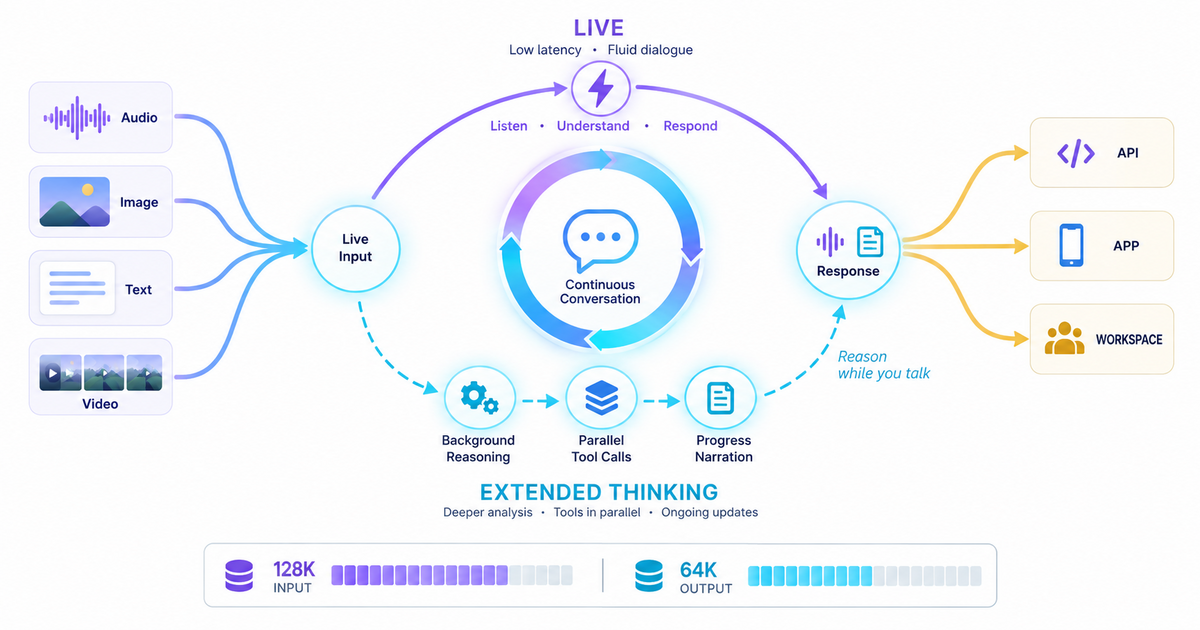
Summary: Google released Gemini 3.8 Live for low-latency dialogue and Gemini 3.8 Live Extended Thinking for more complex, multi-step work. The models accept audio, images, video and text; Extended Thinking can continue background reasoning and asynchronous tool calls while maintaining spoken interaction. Google lists API, app, AI Studio, Cloud, Search and Workspace distribution paths.
Why it matters: Continuous voice plus visual context could make coaching, live research, troubleshooting and iterative creation less stop-and-start. The model card documents broad distribution and safety work, but Google-reported benchmarks do not substitute for testing interruption handling, tool state, privacy, latency, cost and factual reliability in the actual workflow.
What to do now — Pilot one live review loop: Try a bounded task where voice, a shared visual and one reversible tool call interact; record interruptions, state errors and review effort before expanding scope.
Source: Introducing Gemini 3.8 Live and 3.8 Live Extended Thinking
4. Copilot now suggests values for repository governance taxonomies
Focus: Applied Generative AI for Knowledge Workers
Date: September 15, 2026
Topics: metadata governance, repository rulesets, taxonomy design, human review
Evidence: Official Changelog
Availability: Public Preview
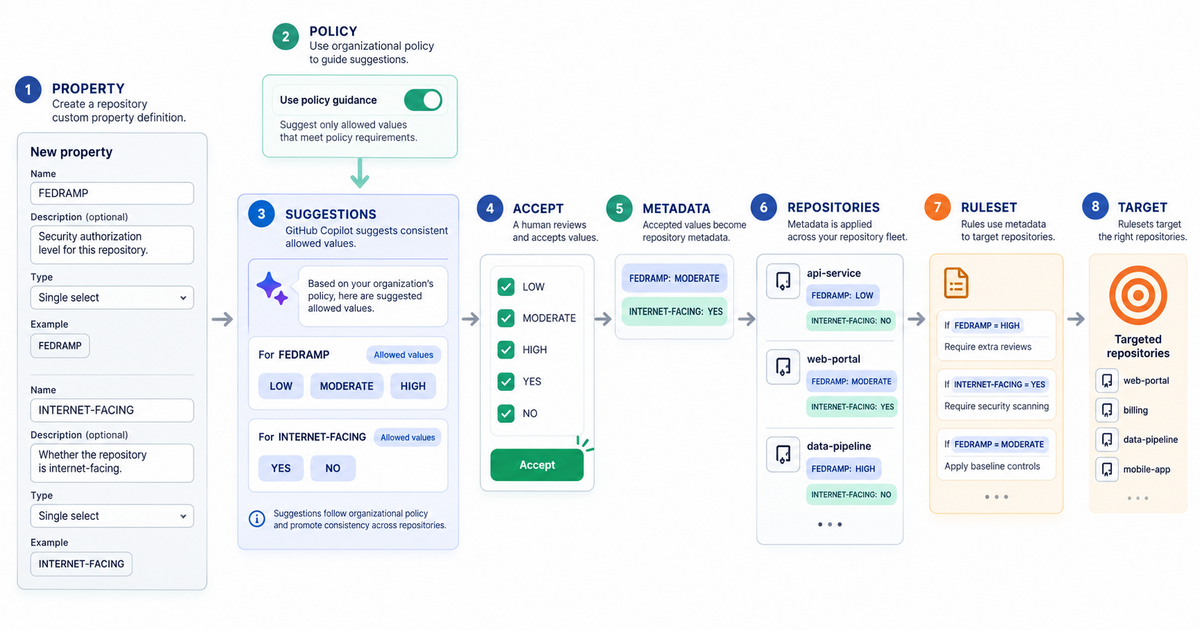
Summary: GitHub Copilot can now suggest allowed values while enterprise and organization owners define repository custom properties. Accepted values become governance metadata that can scope repository rulesets; owners can control the feature with a dedicated Copilot policy. The feature is a public preview for Copilot Business and Enterprise.
Why it matters: A consistent taxonomy is prerequisite infrastructure for fleet-wide governance, reporting and automation. Suggestions may accelerate the blank-page step, but administrators remain responsible for semantics, duplicates, compliance meaning and downstream rules; accepting plausible values without review can standardize the wrong categories faster.
What to do now — Review a five-property taxonomy: Draft five properties, compare Copilot’s proposed values with existing policy language, and approve only definitions that have a clear owner and downstream rule.
Source: GitHub Copilot suggests custom properties definitions
5. Salesforce AIforce brings governed data and actions to conversational interfaces
Focus: Agents for Non-Technical People
Date: September 15, 2026
Topics: no-code interfaces, enterprise context, permissions, agent actions
Evidence: Official Announcement
Availability: Announced
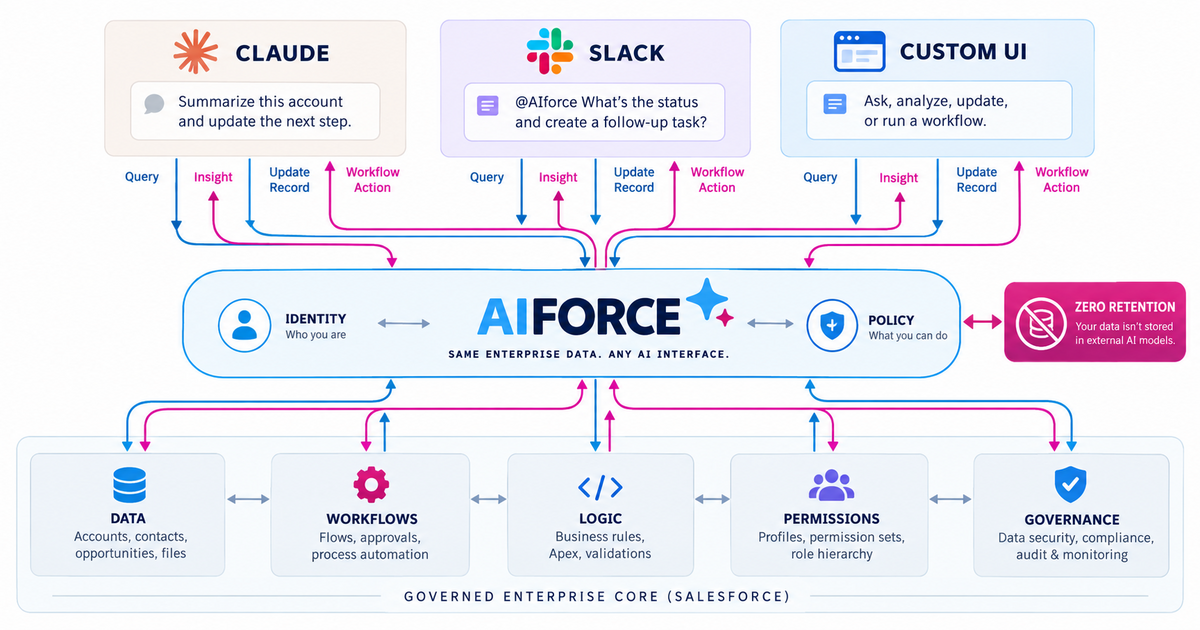
Summary: Salesforce announced AIforce, an interface layer intended to expose Salesforce data, workflows, business logic, semantics, permissions and actions inside Claude, Slack, Lightning and custom interfaces. Users can ask questions, update records, trigger workflows or describe a live interface while requests remain subject to existing Salesforce permissions and rules.
Why it matters: For non-technical users, the important shift is from navigating fixed screens to describing the view or action they need. The announcement is vendor-reported and availability varies by surface, so teams should verify product access, permission inheritance, auditability, data-retention terms and human approval for consequential writes before treating the interface as production-ready.
What to do now — Map one governed action: Choose one read and one reversible update, identify the Salesforce permission and business rule behind each, and require an audit trail plus confirmation before wider use.
Source: Salesforce Unveils AIforce, Bringing the Full Power of Its Platform to Any Interface
6. Anthropic’s skills marketplace adds governed Informatica catalog discovery
Focus: Agents for Non-Technical People
Date: September 16, 2026
Topics: Agent Skills, catalog grounding, data governance, safe use
Evidence: Official Documentation
Availability: General Availability
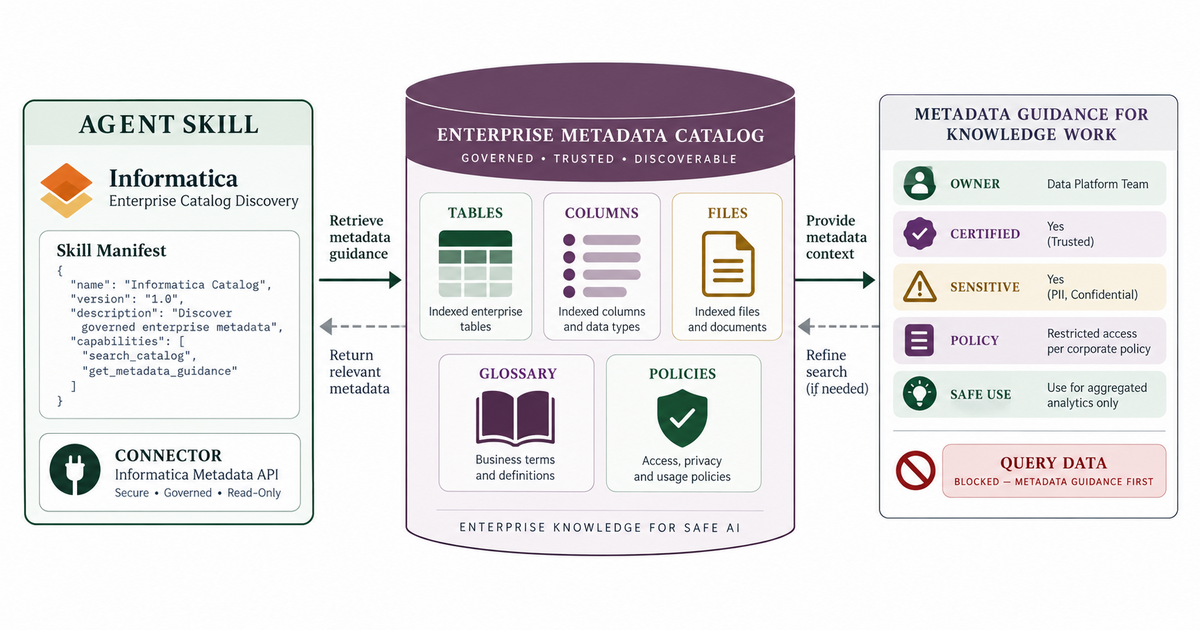
Summary: A verified Anthropic repository commit added Informatica’s plugin to the knowledge-work marketplace. The Agent Skill is designed to find tables, columns, files, glossary terms and policies in Informatica’s enterprise catalog, then report ownership, certification, sensitivity and applicable policy before data is queried. It requires an Informatica IDMC tenant and Catalog Discovery connector.
Why it matters: This is a concrete reusable-skill pattern for grounding an agent in governance metadata before it touches enterprise data. The commit verifies marketplace inclusion, not deployment quality or universal access; organizations still need connector configuration, permission review, catalog quality checks and human judgment about whether the returned guidance authorizes use.
What to do now — Test metadata before data: Ask the skill for one asset’s owner, certification, sensitivity and policy; compare every field with the catalog before allowing any downstream query.
Source: Informatica Catalog Discovery
Worth Watching
7. General
No unused, directly relevant general AI video with an independently verified runtime of 10:00 or less was found. Official searches surfaced long replays, previously used clips, or pages without exact runtime evidence; no 10:01–20:00 fallback was needed.
8. Agents for Non-Technical People
No unused, directly relevant non-technical-agent video with an independently verified runtime of 10:00 or less was found. Searches of official OpenAI, Google, Salesforce and YouTube surfaces produced unverified clips, previously used items, or long sessions, so the slot remains empty.
Worth Listening — Podcast
9. Even Other AI Labs Are Rallying Around Anthropic’s Slowdown Proposal
Open the permanent podcast page
Show: The AI Daily Brief
Host / guest: Nathaniel Whittemore
Focus: Applied Generative AI for Knowledge Workers
Date: September 14, 2026
Duration: 37:00 · No episode time limit
Topics: frontier model pacing, independent evaluation, AI governance, evidence quality
Summary: Nathaniel Whittemore examines the emerging debate over frontier-model pacing and third-party evaluation, including public reactions from major AI leaders and competing safety, competition and incentive arguments.
Why it matters: The episode offers a current map of the governance debate and makes it easier to separate concrete proposals—such as independent evaluators with privileged access—from broader rhetoric.
Connection to the brief: It complements today’s technical controls by asking who should verify frontier systems and how operational evidence should inform governance beyond product-level safeguards.
Coverage: Selected inside the preferred preceding-48-hour window after checking registered publisher catalogs and prior podcast identities.
Evidence: Practitioner analysis. The publisher’s September 14 episode page verifies the title, show context and publication date; Apple Podcasts independently lists a 37-minute runtime.
Listen / watch: Publisher episode and transcript · Apple Podcasts
Emerging AI Watchlist
Help choose what we investigate next. Explore emerging ideas and tell us which interest you.
Editorial takeaway
The common thread is governed reach: the best new systems do more only when identity, context, policy, telemetry and human review remain attached to the action. Treat conversational convenience as an interface improvement—not permission to skip verification.