← Daily Brief for September 29, 2026
Microsoft Research’s Quine links biological models, tools, literature, and scientists in one research harness
Focus: Technical AI Engineering
Date: September 29, 2026
Topics: AI for science, multimodal world models, research agents, biology, tool orchestration
Evidence: Official Primary Source
Availability: Published
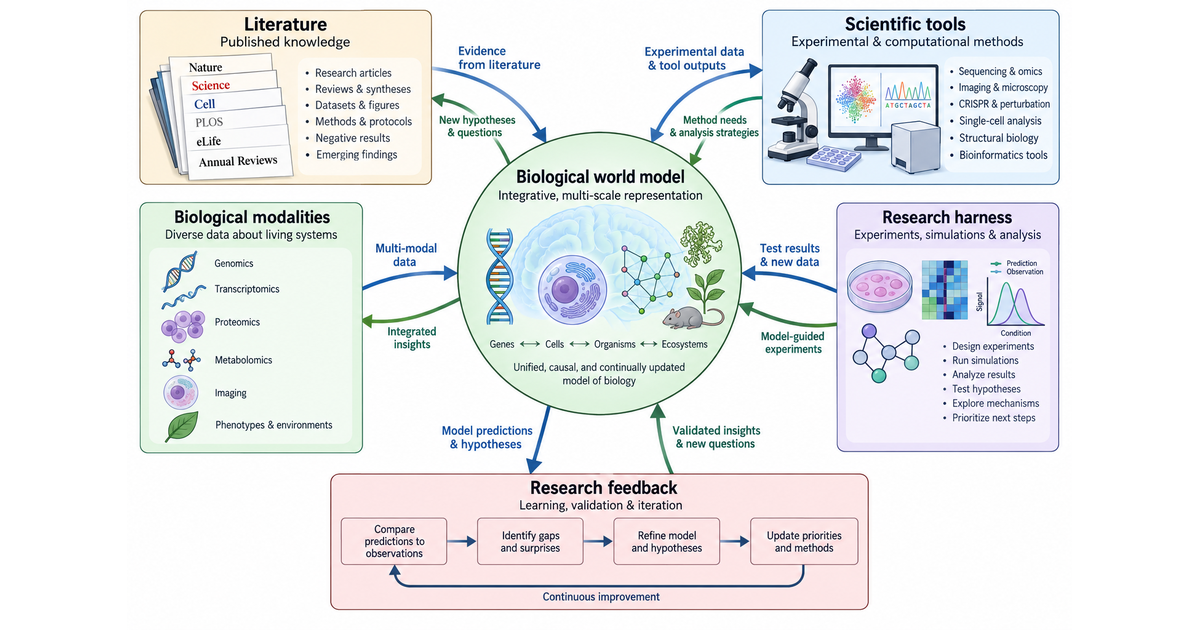
Summary: Microsoft Research introduced Quine as an early-stage research effort to build a multimodal world model of biology together with an interactive harness connecting models, scientific tools, literature, and researchers. A Quine Fellows program is intended to give scientists access to the system and generate scientific feedback from real research use.
Why it matters: The architecture points beyond single-model scientific assistants. Complex research domains may benefit more from systems that coordinate representations, external tools, literature, and expert feedback than from asking one model to answer every question from its internal knowledge.
What to do now
Watch how integrated scientific AI systems are evaluated: Track whether systems like Quine publish evidence on hypothesis quality, tool-use reliability, researcher oversight, and reproducibility, because integration breadth alone does not demonstrate scientific value.