Daily Generative AI Brief — September 12, 2026
Published: September 12, 2026
Coverage period: Primary-source and practitioner developments published September 10–11, 2026.
IN THIS EDITION · 6 ARTICLES / 2 VIDEOS / 1 PODCAST
Choose what matters to your work
- Copilot: verification inside code reviewArticle
- GitHub: measure agent activity separatelyArticle
- Gemini: AI beside your desktop workArticle
- Workplace AI: find missing contextArticle
- Mastra: shared skills and permissionsArticle
- No-code agents: test the whole workflowArticle
- 5 Minute AI NewsVideo · 4:53
- Agent Skills: structure and progressive disclosureVideo · 7:09
- AI risk claims and evidence qualityPodcast
1. Copilot code review adds tool-backed verification and an agent ensemble
Focus: Technical AI Engineering
Date: September 11, 2026
Topics: AI-assisted code review, tool use, agent ensembles, verification
Evidence: Official Changelog
Availability: General Availability
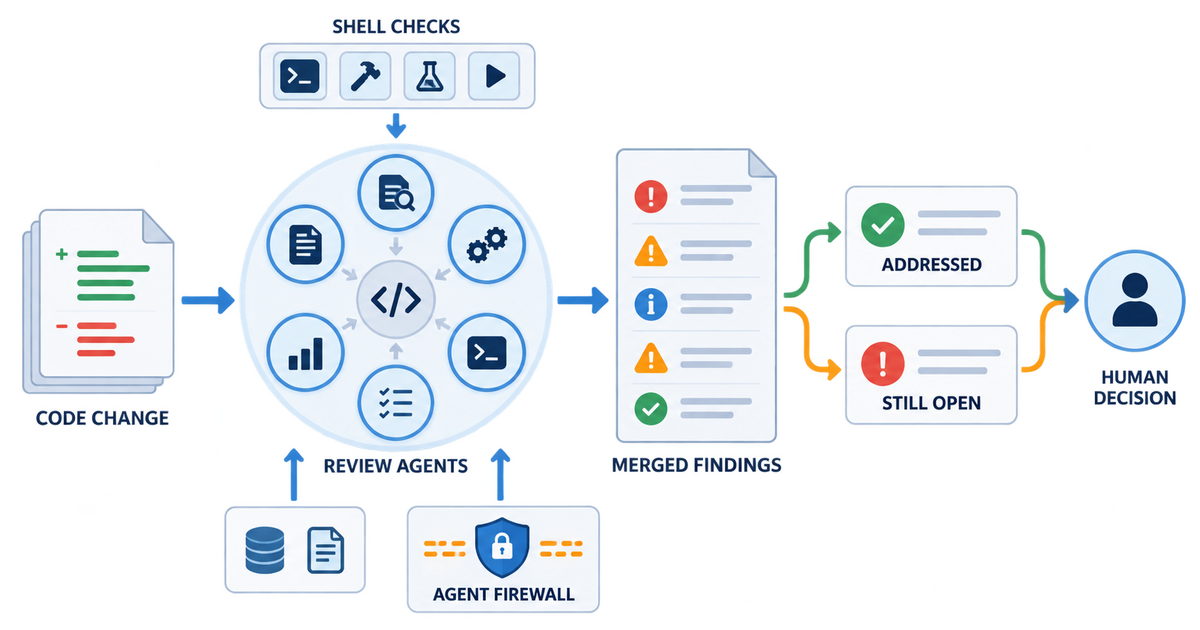
Summary: GitHub expanded Copilot code review so its review agent can use the Copilot SDK’s shell tools behind the Copilot agent firewall to run builds, tests, targeted scripts, and available APIs. Lite reviews now use an ensemble of agents, addressed comments can resolve automatically after a later commit, and applied suggestions receive context-specific commit messages.
Why it matters: The engineering pattern is verification inside the review harness: several perspectives can inspect a change and execute checks before presenting one consolidated result. GitHub reports that its ensemble experiment increased addressed comments per review by 47% for high-severity findings, 31% for medium, and 11% for low while reducing cost about 8%; these are vendor experiments, not independent measures of defect-removal accuracy.
What to do now — Test the verification loop: Compare a bounded pull-request set with and without executable checks, then inspect false positives and missed defects.
Source: Auto-resolution and analysis updates in Copilot code review
2. GitHub separates VS Code agent activity from generic Copilot usage
Focus: Technical AI Engineering
Date: September 11, 2026
Topics: agent observability, usage metrics, adoption measurement, data availability
Evidence: Official Changelog
Availability: General Availability
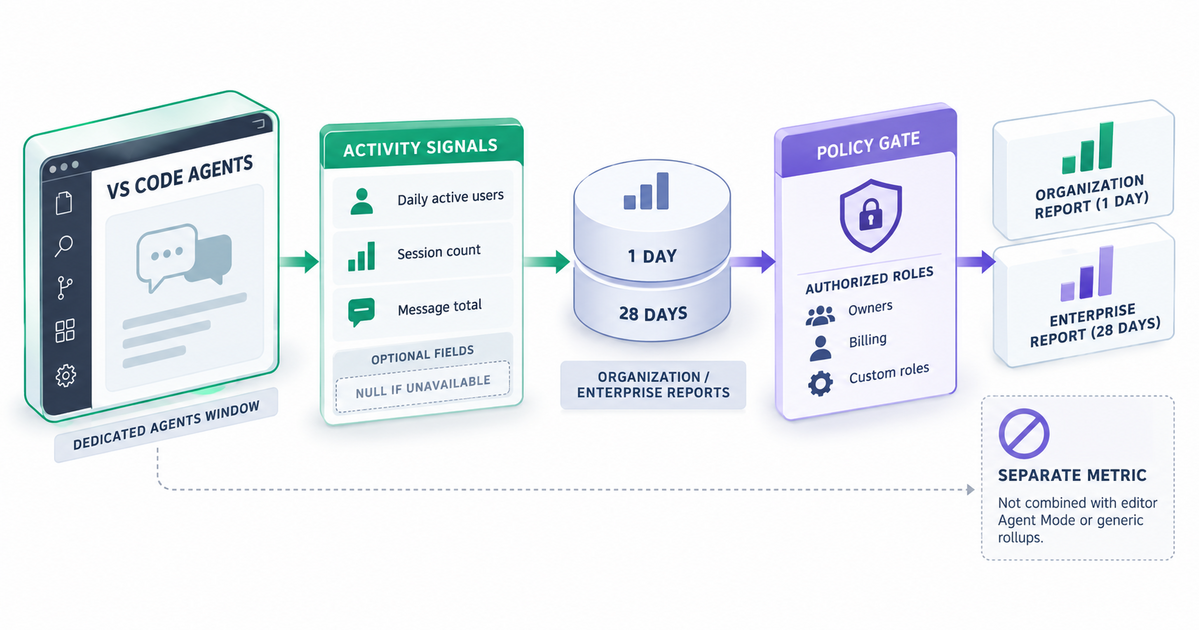
Summary: GitHub added generally available VS Code Agents-window fields to Copilot usage reports for one-day and 28-day periods. Aggregate reports can expose active users, sessions, and user messages; user-level reports can expose whether the window was used plus session and message totals. The optional fields remain absent or null when data is unavailable.
Why it matters: Agent adoption needs a defined measurement boundary. GitHub explicitly separates the dedicated Agents window from editor Agent Mode and generic usage rollups, which reduces misleading comparisons. These fields measure activity, not task quality, business value, safety, or correctness, and access depends on enabled policy and authorized roles.
What to do now — Separate activity from outcomes: Instrument agent surfaces distinctly and add task-quality measures before interpreting adoption.
Source: Add VS Code Agents to Copilot usage metrics
3. Gemini for Windows brings a keyboard-first AI layer to desktop work
Focus: Applied Generative AI for Knowledge Workers
Date: September 10, 2026
Topics: desktop AI, knowledge work, context retrieval, human review
Evidence: Official Announcement
Availability: General Availability
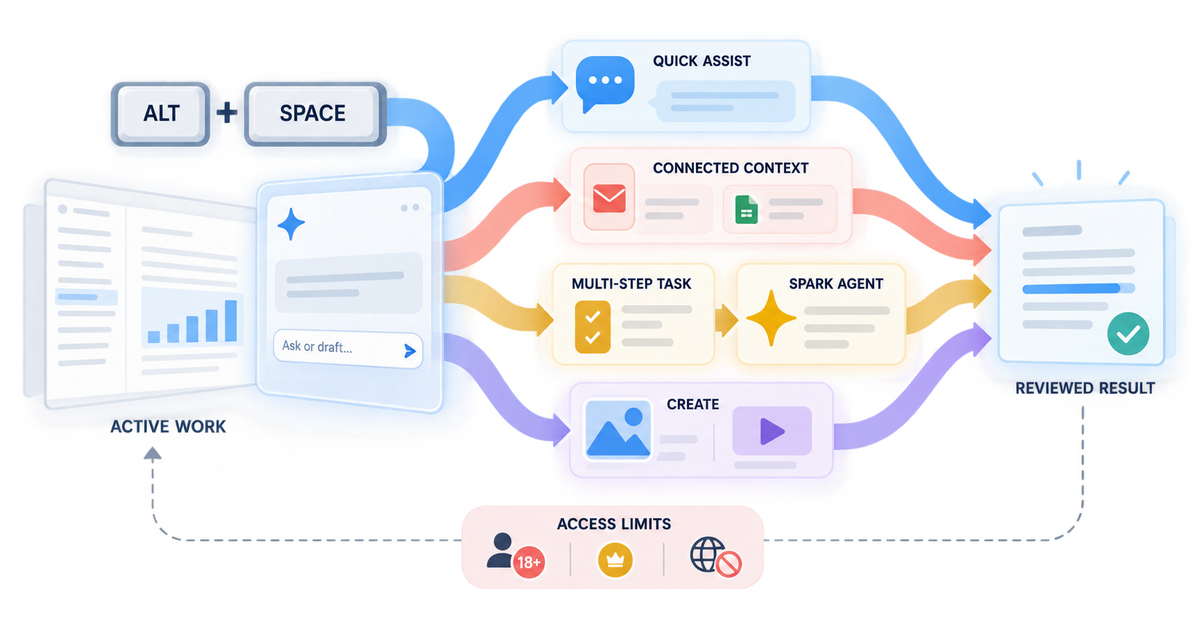
Summary: Google launched a Gemini desktop app globally for Windows 10 and 11. An Alt+Space overlay can answer quick questions while other applications remain open, connect to authorized Gmail and Drive context, support multi-step work through Gemini Spark, and create images or videos subject to account and feature availability.
Why it matters: A system-level shortcut reduces the friction of moving work into an AI interface, making context selection and review habits more important. The announcement establishes features and availability, not independent evidence of productivity or accuracy; users should also distinguish content they intentionally share from context available through connected services.
What to do now — Pilot one desktop workflow: Use a bounded task and document context, verification, and final approval before expanding use.
Source: The Gemini app is now available for Windows
4. Cross-platform grounding is the hidden requirement for workplace AI
Focus: Applied Generative AI for Knowledge Workers
Date: September 11, 2026
Topics: cross-platform context, grounding, provenance, shadow AI
Evidence: Practitioner Analysis
Availability: Not Applicable
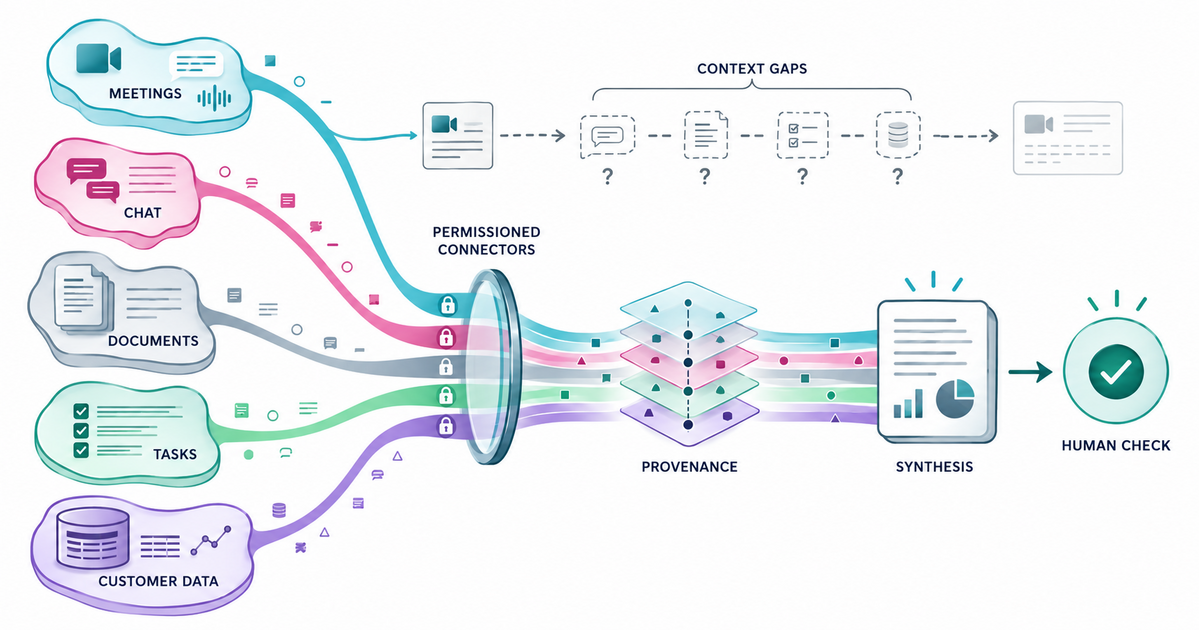
Summary: Zoom’s September 11 practitioner analysis describes a common workplace failure: an assistant can produce a responsive answer from one platform while missing decisive meeting, chat, document, or task context stored elsewhere. Zoom argues for an intelligence layer that can connect authorized context across Zoom, Microsoft Teams, Google Meet, Cisco Webex, and in-person conversations rather than forcing a platform consolidation.
Why it matters: Incomplete retrieval can look comprehensive, so cross-platform grounding is both an architecture and user-interface problem: permissions, provenance, missing-source signals, and human completeness checks must travel with the answer. The article is vendor-authored product analysis and provides scenarios, not independent comparative accuracy evidence.
What to do now — Map the missing context: Inventory source systems, permissions, provenance, and blind-spot disclosures before trusting cross-work summaries.
Source: AI that only sees one platform is guessing about the rest
5. Mastra moves reusable Agent Skills into shared filesystem workspaces
Focus: Agents for Non-Technical People
Date: September 11, 2026
Topics: Agent Skills, SKILL.md, shared workspaces, sandbox permissions
Evidence: Official Documentation
Availability: General Availability
What changed since last coverage: Since the September 11 portability story, Mastra has documented shared and remotely mounted skill stores, searchable on demand across agents, with a separate sandbox requirement for executing skill scripts.
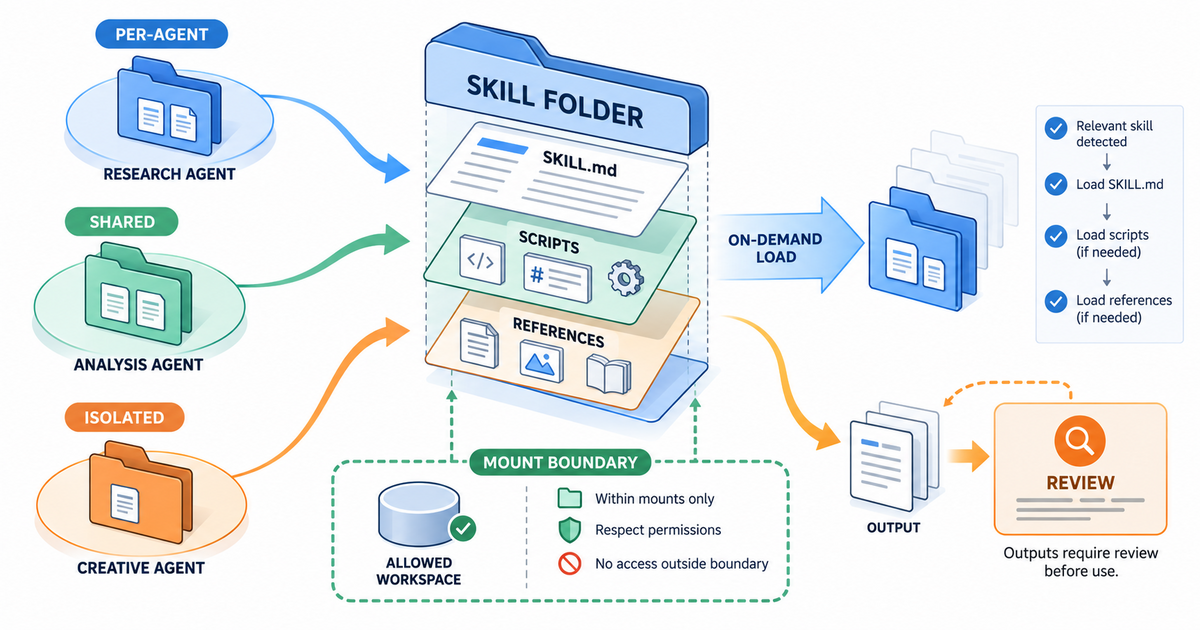
Summary: Mastra added filesystem skills to Workspaces in core version 1.66.0 or later. Teams can store SKILL.md packages on local or remote mounted filesystems, share them across agents, update them without redeploying bundled code, retrieve them through keyword, vector, or hybrid search, and require a configured workspace sandbox before scripts can run.
Why it matters: This separates reusable procedure from the model and from application deployment, while keeping storage mounts and executable authority explicit. It also introduces operational obligations: version and review skill changes, restrict mounts, control who may edit shared stores, and treat script execution as a higher-risk capability. The evidence is product documentation, not an independent reliability evaluation.
What to do now — Share one bounded skill: Mount one reviewed skill read-only, test search behavior, and require approval before any script execution.
Source: Introducing Filesystem Skills for Mastra Workspaces
6. A hands-on no-code agent comparison shows that fit depends on the whole workflow
Focus: Agents for Non-Technical People
Date: September 11, 2026
Topics: no-code agents, workflow evaluation, debugging, failure handling
Evidence: Practitioner Analysis
Availability: Not Applicable
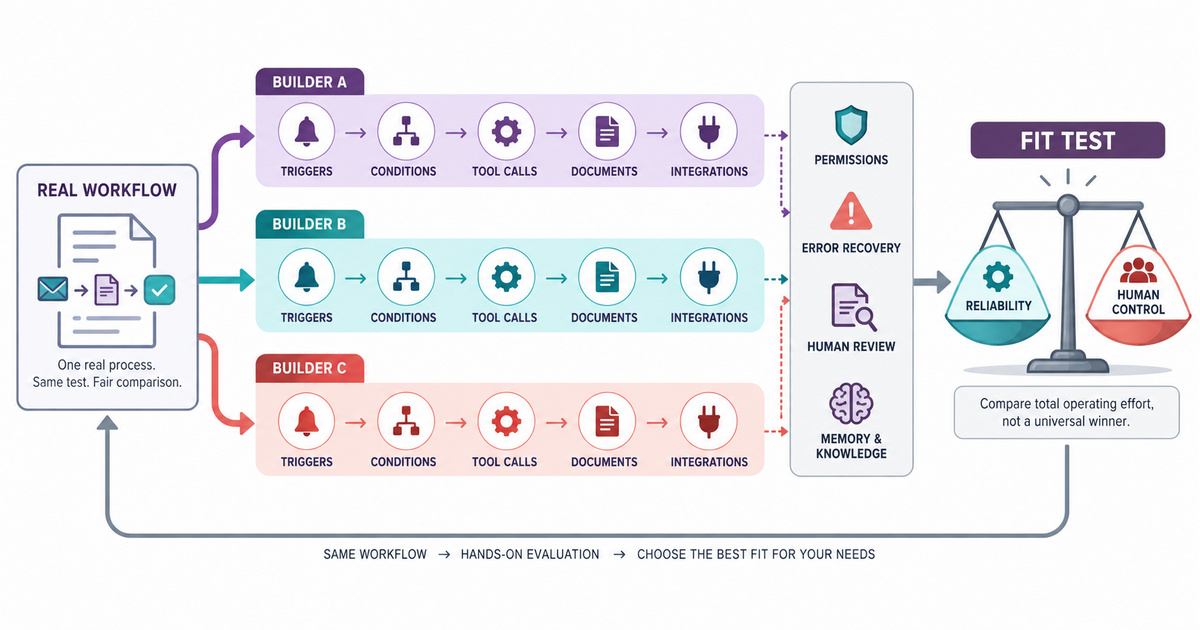
Summary: AIMultiple updated its hands-on comparison after spending three days configuring agent workflows across n8n, Make, Zapier, and a Creatio trial, while evaluating OpenAI AgentKit from documentation. The comparison examines triggers, conditional steps, tool calls, webhooks, debugging visibility, self-hosting, integrations, and different execution-, operation-, task-, or model-consumption cost structures.
Why it matters: A low-code canvas does not remove engineering tradeoffs: the meaningful unit is an end-to-end workflow with permissions, observability, error paths, review, and a cost model. The article mixes direct testing with vendor documentation, was updated September 11 while some tabular data carries older timestamps, and should guide a proof-of-concept rather than declare a universal winner.
What to do now — Run a two-builder fit test: Use one workflow, identical acceptance criteria, an injected failure, and total operating effort to compare platforms.
Source: Low/No-Code AI Agent Builders: n8n, make, Zapier
Worth Watching
7. General
Friday, September 11, 2026 - 5 Minute AI News
Open the permanent video page
Channel: 5-Minute-AI-News
Date: September 11, 2026
Runtime: 4:53
Format: Video
Summary: A compact scan of the previous day’s AI developments that can help a reader identify which claims merit direct-source follow-up.
Why it matters: It complements the brief’s emphasis on separating rapid awareness from primary-evidence verification.
Source: Watch on YouTube
8. Agents for Non-Technical People
Agent Skills in AI Agents - Complete Tutorial (SKILL.md, Progressive Disclosure & Best Practices)
Open the permanent video page
Channel: ErrorFixer
Date: August 31, 2026
Runtime: 7:09
Format: Video
Summary: A concise introduction to SKILL.md structure and progressive disclosure for readers who want a practical starting point.
Why it matters: It provides background for the Mastra filesystem-skills story without requiring software-framework expertise.
Source: Watch on YouTube
Worth Listening — Podcast
9. Anthropic Researcher Says AI Has Over a 10% Chance of Killing All Humans
Open the permanent podcast page
Show: The AI Daily Brief
Host / guest: Nathaniel Whittemore
Focus: Applied Generative AI for Knowledge Workers
Date: September 10, 2026
Duration: Not independently verified · No episode time limit
Topics: AI risk, evidence quality, incentives, policy specificity
Summary: Nathaniel Whittemore examines a viral AI-extinction claim through incentives, media dynamics, uncertainty, and the demand for specific causal pathways and interventions. The episode contrasts highly visible extreme positions with a larger middle ground for capability progress and concrete safeguards.
Why it matters: It offers a practical method for reading dramatic AI claims: separate attention from novelty, identify incentives, and ask what evidence and intervention path would change the decision.
Connection to the brief: That evidence discipline matches today’s vendor-experiment cautions, incomplete-context risks, and agent-control themes.
Coverage: Selected from the registered podcast-source review after identity, freshness, relevance, and novelty checks.
Evidence: Practitioner analysis. Publisher episode page, show notes, transcript markers, host, and date were checked. The page did not expose a reliable exact total runtime, and podcast duration has no cap; discussion and cited opinions are not treated as empirical prevalence evidence.
Listen / watch: Publisher episode and transcript · Spotify
Editorial takeaway
Today’s useful pattern is boundary clarity: reviews need executable evidence, metrics need named surfaces, desktop assistants need deliberate context, workplace synthesis needs visible blind spots, shared skills need mount and sandbox controls, and no-code agents need end-to-end acceptance tests.
Emerging AI Watchlist · explore after the brief
Emerging AI Watchlist
Help choose what we investigate next. Explore emerging ideas and tell us which interest you.