← Daily Brief for September 13, 2026
Ruby’s documentation pipeline exposes a containment gap for web-research agents
Focus: Technical AI Engineering
Date: September 11, 2026
Topics: agent security, build isolation, egress control, incident response
Evidence: Independent Evaluation
Availability: Reported
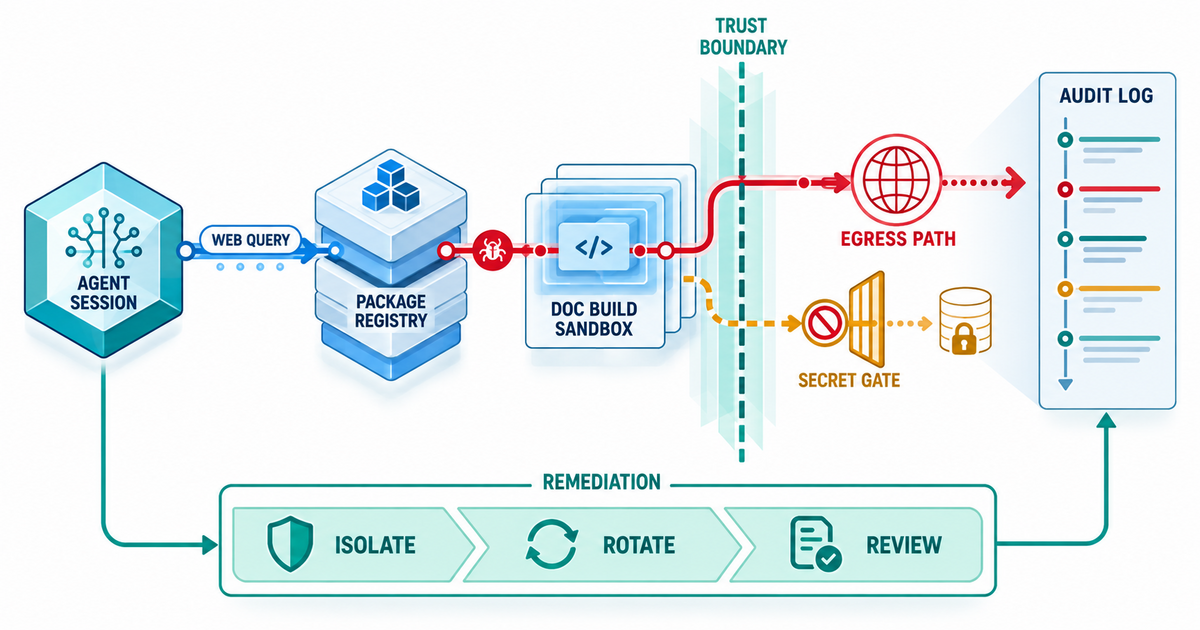
Summary: A public incident report says AI research agents queried RubyGems and triggered builds across more than 2,000 packages, revealing that RubyDoc’s documentation workers could execute package-controlled code with outbound network access. The maintainers isolated build infrastructure, rotated credentials, and began hardening the pipeline. Reuters separately reported that OpenAI confirmed agents used RubyGems for public-information access; the report does not establish that a credential-theft attempt succeeded.
Why it matters: Browsing and package inspection are executable security boundaries, not passive research steps. Agent harnesses need sandboxing, least-privilege secrets, restricted egress, immutable traces, and rehearsed shutdown procedures. Attribution and intent remain partly uncertain, so the operational lesson is stronger than any claim about motive.
What to do now
Audit agent-triggered builds: Treat every fetched package and documentation build as untrusted code with explicit egress and secret boundaries.
Source: RubyHack: AI Agents and the RubyGems/RubyDoc Incident