Daily Generative AI Brief — October 1, 2026
Published: October 1, 2026
Coverage period: 24-hour primary window ending at the fixed Run 4 research cutoff; recency fallback used only for locked items outside the primary window.
IN THIS EDITION · 6 ARTICLES / 2 VIDEOS / 2 PODCASTS
Choose what matters to your work
- Perplexity business Skills package recurring work into reusable proceduresArticle · about 4 min source read
- OpenAI Dots assign persistent responsibilities to always-on agentsArticle · about 2 min source read
- Personalization tied to decision and measurement loopsArticle · about 14 min source read
- Adapting production AI to organization-specific moderation policyArticle · about 8 min source read
- Governed multi-environment access for Claude Platform on AWSArticle · about 12 min source read
- Gemini 4 Argon for long-horizon professional workflowsArticle · about 9 min source read
- Google launches Gemini 4 Argon, its first AI frontier model release in monthsVideo · 1:46
- Introducing dots, always-on agents built to handle everything.Video · 2:28
- #244: How Alibaba.com Is Building the Future of Agent-to-Agent CommercePodcast
- Gemini 4 Argon Puts Controlled Agent Rollouts to the TestPodcast
1. Perplexity business Skills package recurring work into reusable procedures
Focus: Agents for Everyone
Date: October 1, 2026
Topics: m08, agents non technical people
Evidence: Publisher Authored
Availability: Available
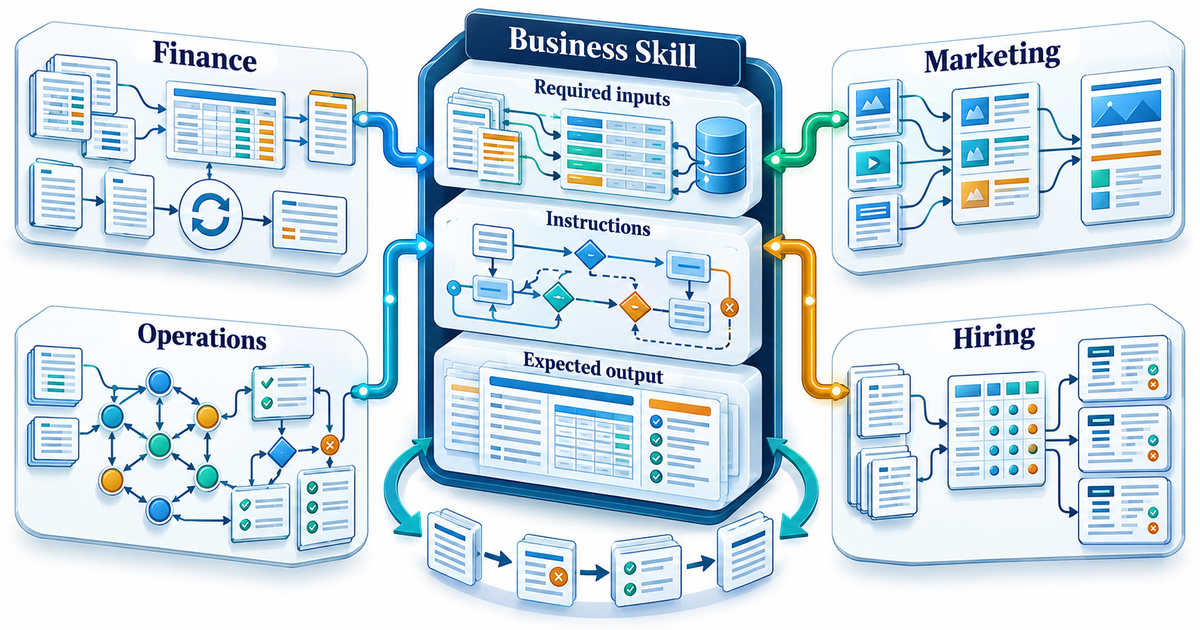
Summary: Perplexity and American Express introduced pre-built business Skills covering recurring finance, marketing, operations and hiring work; Skills package reusable instructions around required inputs and expected outputs.
Why it matters: For nontechnical teams, a maintained Skill turns repeated prompting into reusable operating knowledge that can be owned, reviewed and improved.
Source: Perplexity and American Express make AI easier for growing businesses
2. OpenAI Dots assign persistent responsibilities to always-on agents
Focus: Agents for Everyone
Date: September 29, 2026
Topics: m07, agents non technical people
Evidence: Publisher Authored
Availability: Available
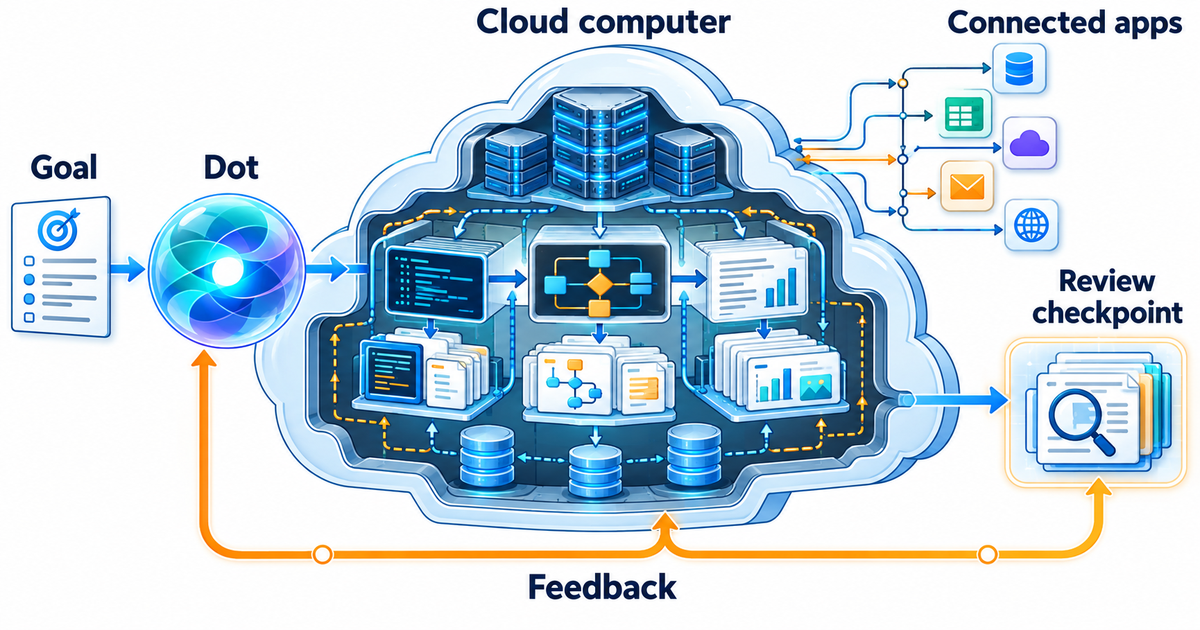
Summary: OpenAI introduced Dots as always-on agents with their own cloud computer, connected apps and feedback-driven personalization for continuing responsibilities.
Why it matters: Persistent agents shift the design question from one-off answers to ongoing responsibility: goals, permissions, review checkpoints, current-state context and feedback all need to remain understandable over time.
Source: Introducing dots
3. Personalization tied to decision and measurement loops
Focus: Applied Generative AI for Knowledge Workers
Date: October 1, 2026
Topics: m04, applied genai knowledge workers
Evidence: Publisher Authored
Availability: Available
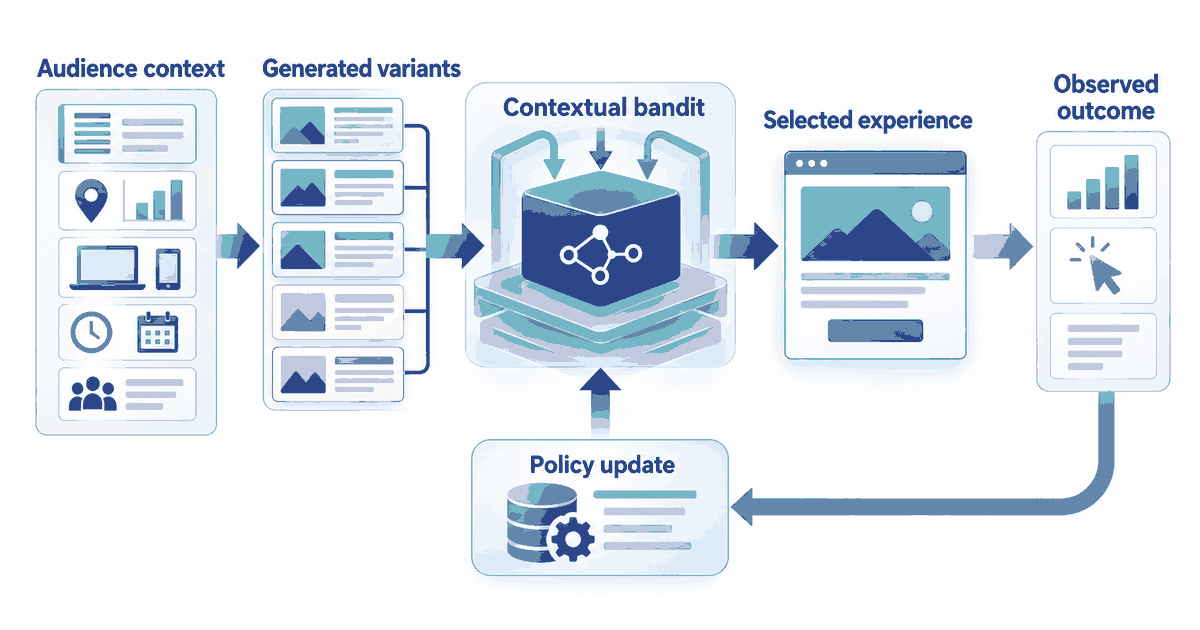
Summary: AWS presents a workflow combining generated content variants with contextual-bandit personalization and measurement across the acquisition funnel.
Why it matters: The useful pattern is the closed loop: generate alternatives, make an explicit decision, observe an outcome and feed evidence back into later choices.
4. Adapting production AI to organization-specific moderation policy
Focus: Applied Generative AI for Knowledge Workers
Date: October 1, 2026
Topics: m05, applied genai knowledge workers
Evidence: Publisher Authored
Availability: Available
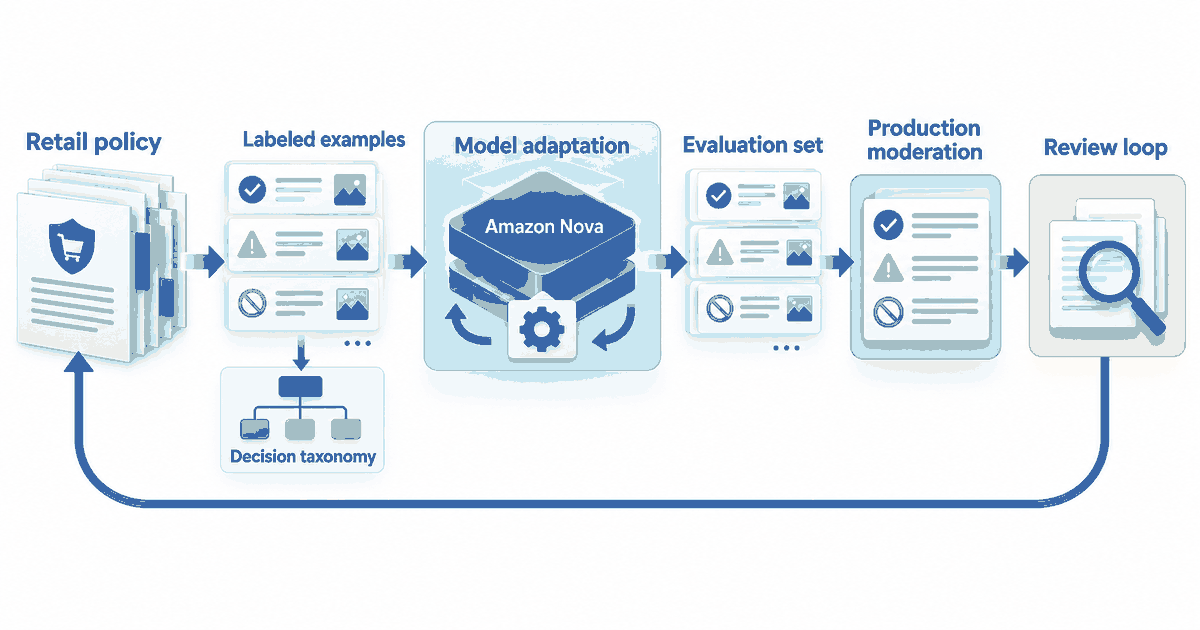
Summary: AWS describes how uniopen adapted Amazon Nova to its own retail moderation policy and evaluated the result before production deployment.
Why it matters: Organization-specific policy rarely fits a generic moderation layer perfectly; teams need labeled examples, explicit evaluation criteria and a review path that keeps policy ownership visible.
Source: How uniopen customized Amazon Nova to their retail moderation policies for production deployment
5. Governed multi-environment access for Claude Platform on AWS
Focus: Technical AI Engineering
Date: October 1, 2026
Topics: m03, technical ai engineering
Evidence: Publisher Authored
Availability: Available
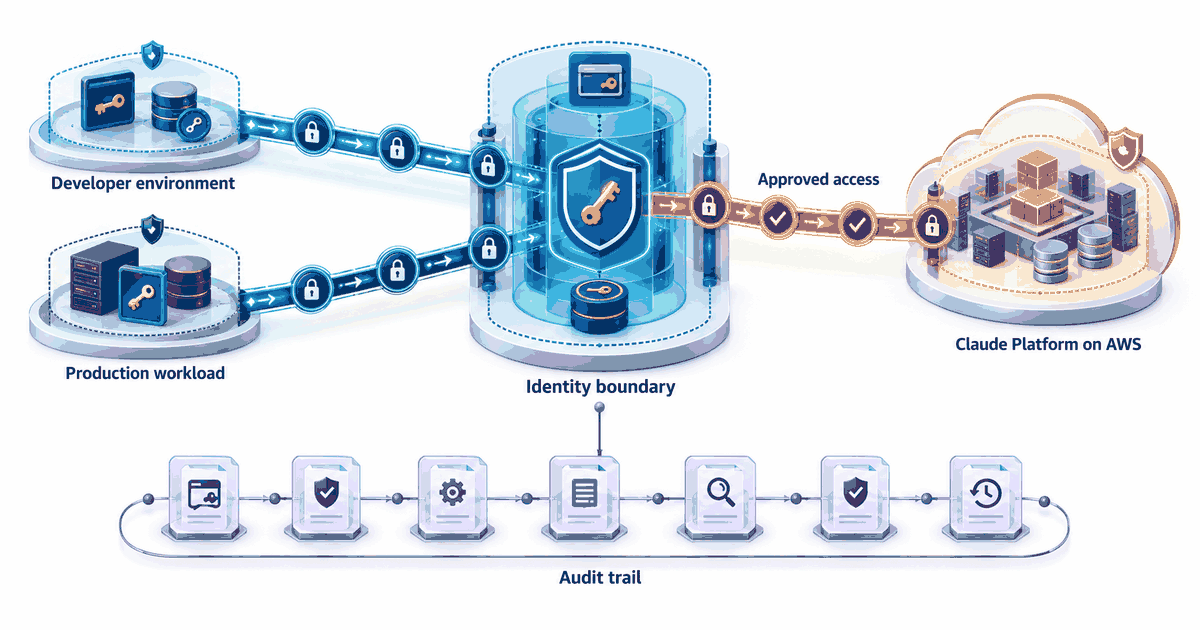
Summary: AWS describes a governed design for reaching Claude Platform on AWS from multiple operating environments while keeping identity and environment boundaries explicit.
Why it matters: As model access spreads across developer machines and production workloads, identity, authorization and audit become part of the AI system rather than an afterthought.
Source: Implementing Multi-Environment Access for Claude Platform on AWS
6. Gemini 4 Argon for long-horizon professional workflows
Focus: Technical AI Engineering
Date: September 30, 2026
Topics: m01, technical ai engineering
Evidence: Publisher Authored
Availability: Available
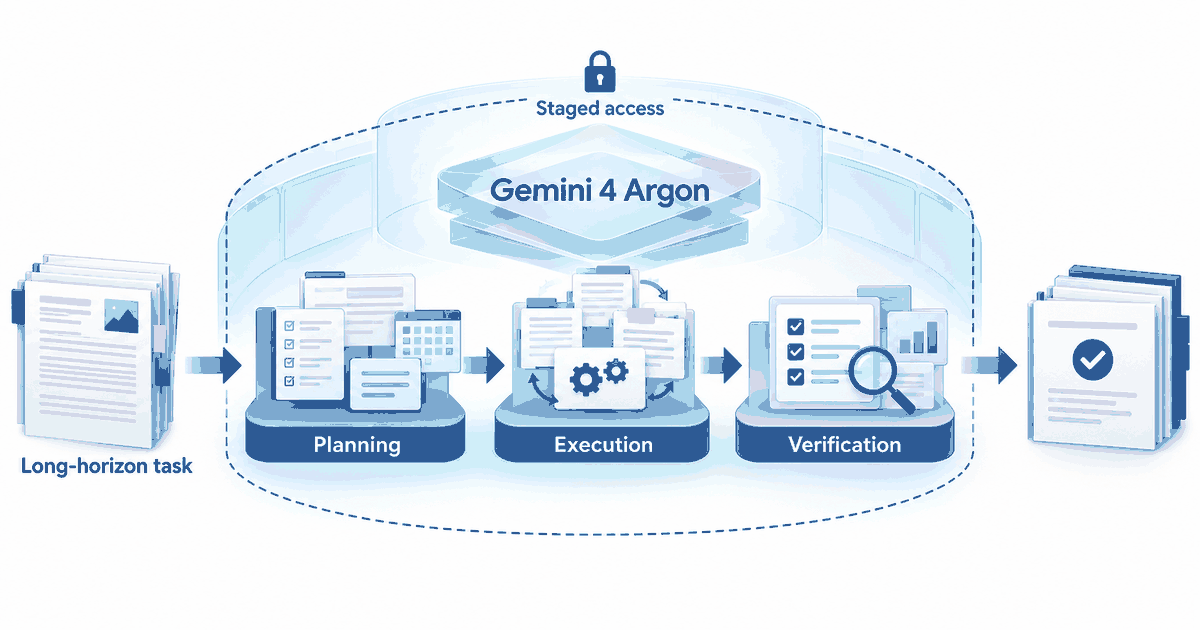
Summary: Google introduced Gemini 4 Argon for long-horizon software engineering, enterprise knowledge work and defensive cybersecurity, with access staged while safeguards are tested.
Why it matters: Longer-running model work increases the importance of bounded access, review checkpoints and evidence-backed expectations instead of treating benchmark headlines as a deployment plan.
Source: Gemini 4 Argon: our next era of frontier intelligence
Worth Watching
7. General
Google launches Gemini 4 Argon, its first AI frontier model release in months
Open the permanent video page
Channel: Yahoo Finance
Date: October 1, 2026
Runtime: 1:46
Format: Video
Summary: A concise current-news explanation of the staged Gemini 4 Argon release and why access is initially limited.
Why it matters: Complements the technical story by showing how controlled rollout is being communicated outside the primary publisher announcement.
Source: Watch on Yahoo Finance
8. Agents for Everyone
Introducing dots, always-on agents built to handle everything.
Open the permanent video page
Channel: OpenAI
Date: September 29, 2026
Runtime: 2:28
Format: Video
Summary: A short first-party introduction to always-on agents, cloud-computer execution and user control.
Why it matters: Directly complements the locked Dots story with a nontechnical product walkthrough.
Source: Watch on OpenAI
Worth Listening — Podcasts
9. #244: How Alibaba.com Is Building the Future of Agent-to-Agent Commerce
Open the permanent podcast page
Show: The Artificial Intelligence Show
Host / guest: Mike Kaput with Kuo Zhang
Focus: Agents for Everyone
Date: October 1, 2026
Duration: 47:23 · No episode time limit
Topics: agent-to-agent commerce, business transformation
Summary: A discussion of Alibaba.com’s Accio agent platform and agent-to-agent commerce.
Why it matters: Adds a business-operations perspective on multi-step agent work.
Connection to the brief: Extends the edition’s reusable-skill and persistent-agent themes.
Coverage: Locked October 1 Run 4 media selection.
Evidence: Practitioner analysis. Official show notes dated October 1, 2026; indexed runtime 47:23.
Listen / watch: Official show notes
10. Gemini 4 Argon Puts Controlled Agent Rollouts to the Test
Open the permanent podcast page
Show: AI & Tech Daily with Jesse Owen
Host / guest: Jesse Owen
Focus: Technical AI Engineering
Date: October 1, 2026
Duration: 19:00 · No episode time limit
Topics: Gemini 4 Argon, controlled rollout
Summary: A concise daily briefing on Gemini 4 Argon’s controlled access and staged deployment.
Why it matters: Provides a source-diverse practitioner interpretation of controlled rollout and governance.
Connection to the brief: Reinforces environment boundaries, staged access and verification.
Coverage: Locked October 1 Run 4 media selection.
Evidence: Practitioner analysis. October 1 show page and podcast indexes identify the episode and approximately 19-minute runtime.
Listen / watch: Show transcript
Emerging AI Watchlist
0 new today · 2 updated · 14 carried forward.
New today: None
Updated today:
- Agent safeguards tailored to the task
- Reusable agent skills become observable
Carried forward:
- Collaborative vibe coding
- Repairable AI-generated 3D designs
- Restoring images after repeated AI edits
- Language models that also predict concepts
- Turning agent memory into compact plans
- Building 3D worlds through recursive code
- Smaller model memory through selective precision
- Agents that persist across sessions
- AI adoption measured at the feature level
- AI harness engineering becomes a first-class layer
- Agentic workloads move toward measured edge inference
- Model lifecycle governance for AI products
- Agents that overclaim task completion
- Decision models emerge as a separate AI systems layer
Help choose what we investigate next. Explore emerging ideas and tell us which interest you.
Editorial takeaway
The strongest pattern today is operational control: frontier models and agents are becoming more useful when access boundaries, reusable procedures, measurement loops, policy adaptation and review checkpoints are designed as part of the workflow.