Daily Generative AI Brief — September 26, 2026
Published: September 26, 2026
Coverage period: 24-hour primary window ending at 2026-09-26T09:00:59.000Z; recency fallback used for reviewed items outside the primary window.
IN THIS EDITION · 6 ARTICLES / 2 VIDEOS / 2 PODCASTS
Choose what matters to your work
- GitHub gives agentic autofix project memory for security repairsArticle · about 3 min source read
- Qoder can turn repeated work into proposed reusable SkillsArticle · Source reading time unavailable
- Microsoft redesigns Copilot around Home, Code, and persistent AutopilotArticle · about 13 min source read
- Microsoft adds a governed runtime for code execution inside Microsoft 365Article · about 9 min source read
- AWS shows how to build continuous quality checks into production LLM workflowsArticle · about 30 min source read
- GitHub expands Copilot across models, local sandboxing, chat surfaces, and IDEsArticle · about 5 min source read
- Stop guessing which model your agent needsVideo · 9:33
- Using Claude Opus 5.5 as your daily driverVideo · 3:33
- From AGENTS.md to Enterprise DeploymentPodcast
- #242: How Baptist Health’s Marketing Team Took the Lead on AI TransformationPodcast
1. GitHub gives agentic autofix project memory for security repairs
Focus: Agents for Everyone
Date: September 25, 2026
Topics: agentic autofix, Copilot Memory, security agents, context engineering
Evidence: Official Announcement
Availability: Published
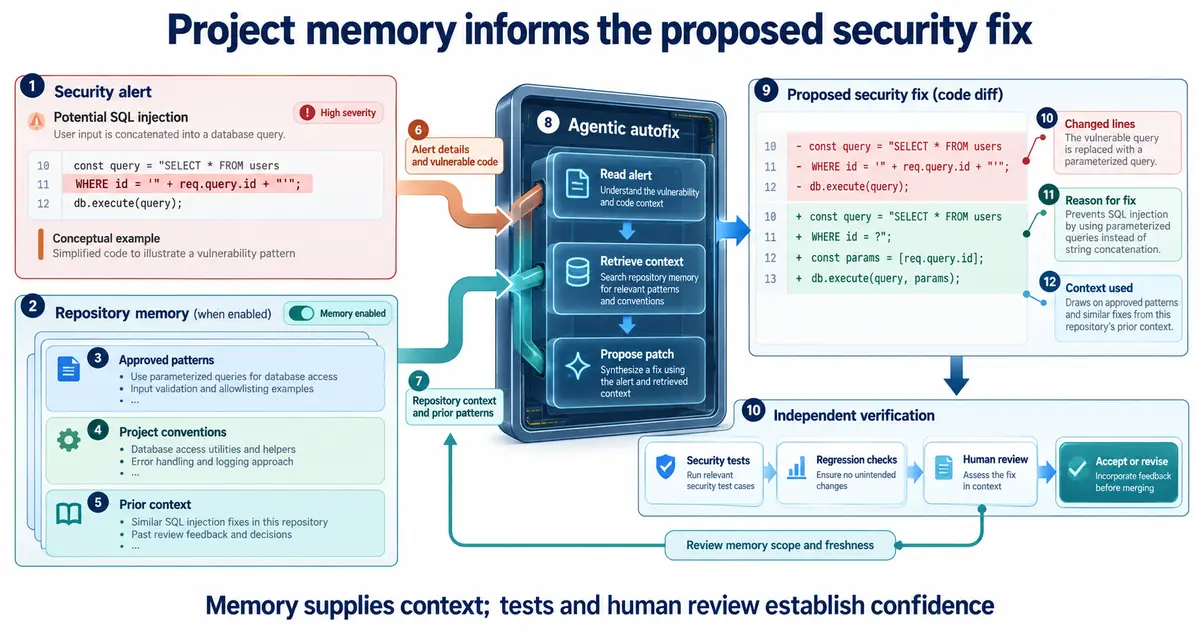
Summary: GitHub agentic autofix can now use Copilot Memory when customers enable it, letting the repair agent retrieve project-specific secure-development context and prior patterns before proposing fixes for security alerts.
Why it matters: An agent that remembers approved local patterns can make more context-aware repairs, but memory also becomes part of the control surface. Teams need to know what the agent remembers, when that memory influences a fix, and how a human verifies the result.
What to do now — Review what security memory the agent is allowed to use: Start with one alert class, inspect the retrieved project patterns, and require tests plus human review before accepting the automated fix.
Source: Agentic autofix now uses Copilot Memory
2. Qoder can turn repeated work into proposed reusable Skills
Focus: Agents for Everyone
Date: September 23, 2026
Topics: Agent Skills, Qoder, skill evolution, reusable workflows
Evidence: Official Release Note
Availability: Published
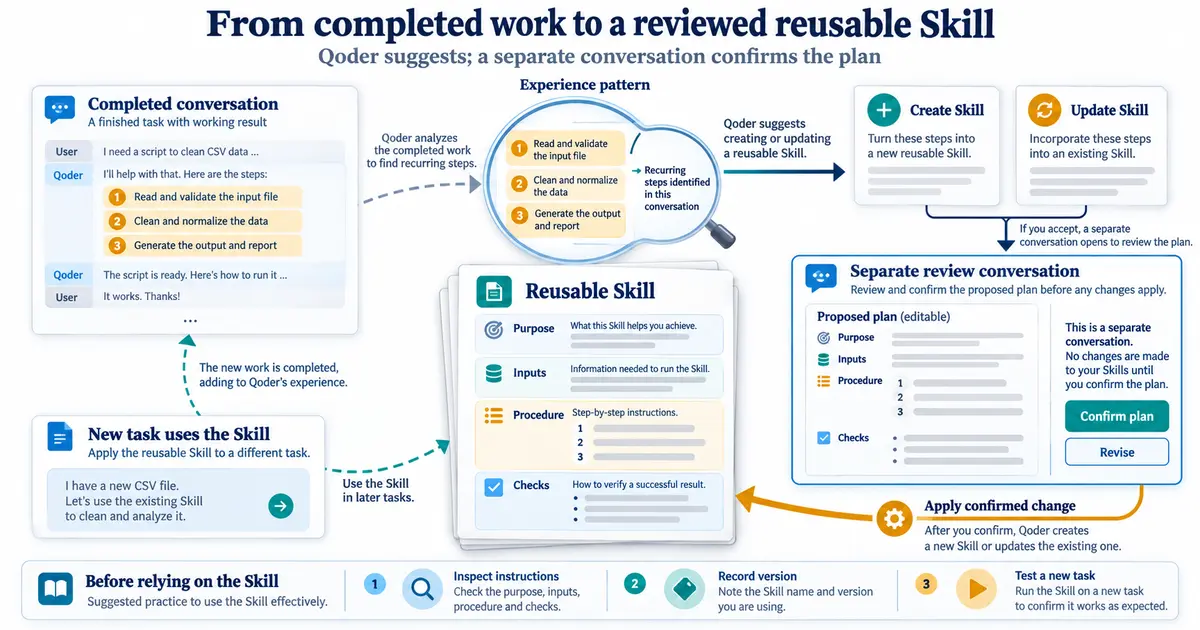
Summary: Qoder 0.4.1 can suggest creating or updating reusable Skills after a conversation, using experience from completed work; accepting the suggestion opens a separate conversation where the user confirms the plan before changes are applied.
Why it matters: Reusable agent skills can evolve from actual work rather than being authored only up front. The confirmation step is equally important: it keeps the conversion from experience into durable instructions visible and reviewable.
What to do now — Capture one repeated workflow as a proposed skill: Use a completed task to generate a skill suggestion, review every instruction in the separate confirmation conversation, and test the resulting skill on a new task.
Source: Qoder 0.4.1 release notes — Skill evolution suggestions
3. Microsoft redesigns Copilot around Home, Code, and persistent Autopilot
Focus: Applied Generative AI for Knowledge Workers
Date: September 25, 2026
Topics: Microsoft Copilot, knowledge work, Autopilot, AI workspace
Evidence: Official Announcement
Availability: Published
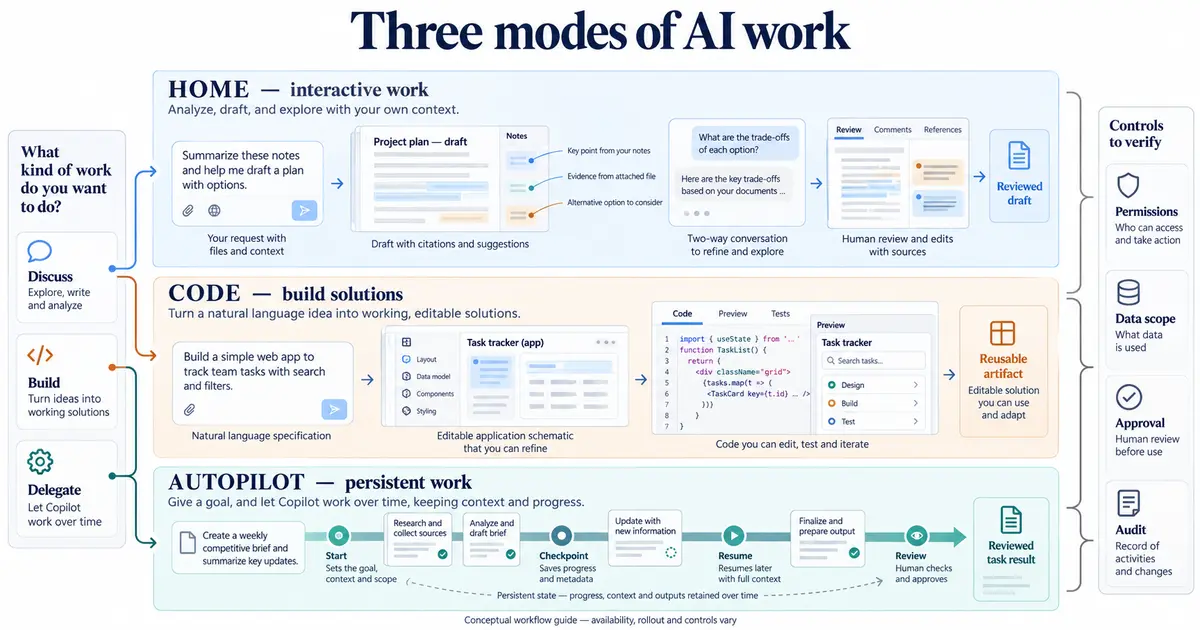
Summary: Microsoft introduced a new Copilot experience organized around Home for everyday work, Code for building solutions, and Autopilot for persistent delegated work that can continue across time.
Why it matters: The knowledge-worker interface is shifting from a chat box toward a workspace where people can converse, build, and delegate. That changes adoption from isolated prompting to deciding which work should remain interactive, become an artifact, or run persistently.
What to do now — Classify one recurring workflow as chat, build, or delegate: Choose a real task and decide whether it belongs in interactive Home work, a reusable Code artifact, or a persistent Autopilot assignment with explicit checkpoints.
Source: Introducing the new Copilot with Home, Code and Autopilot
4. Microsoft adds a governed runtime for code execution inside Microsoft 365
Focus: Applied Generative AI for Knowledge Workers
Date: September 25, 2026
Topics: Microsoft 365 Copilot, code execution, enterprise governance, managed runtime
Evidence: Official Announcement
Availability: Published
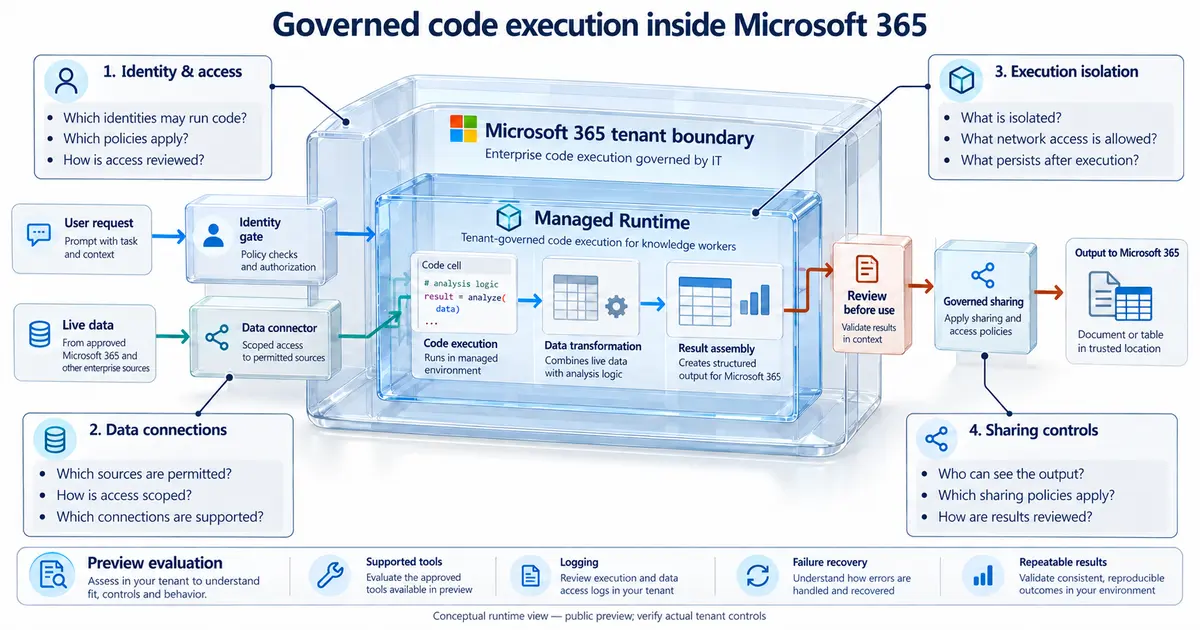
Summary: Microsoft Copilot Managed Runtime enters public preview as a tenant-boundary platform for executing code with enterprise governance, live data connections, app access, and familiar Microsoft 365 sharing expectations.
Why it matters: Knowledge workers increasingly need AI to do computational work, not just draft text. A managed runtime can make code execution usable inside normal enterprise workflows while giving IT a clearer place to govern identity, data, sharing, and execution.
What to do now — Test one governed analytical workflow: Use a bounded dataset and repeatable calculation to compare the managed runtime with current spreadsheet, notebook, or local-code practices.
Source: Microsoft Copilot Managed Runtime
5. AWS shows how to build continuous quality checks into production LLM workflows
Focus: Technical AI Engineering
Date: September 25, 2026
Topics: LLM evaluation, production reliability, streaming evaluation, Bedrock
Evidence: Official Announcement
Availability: Published
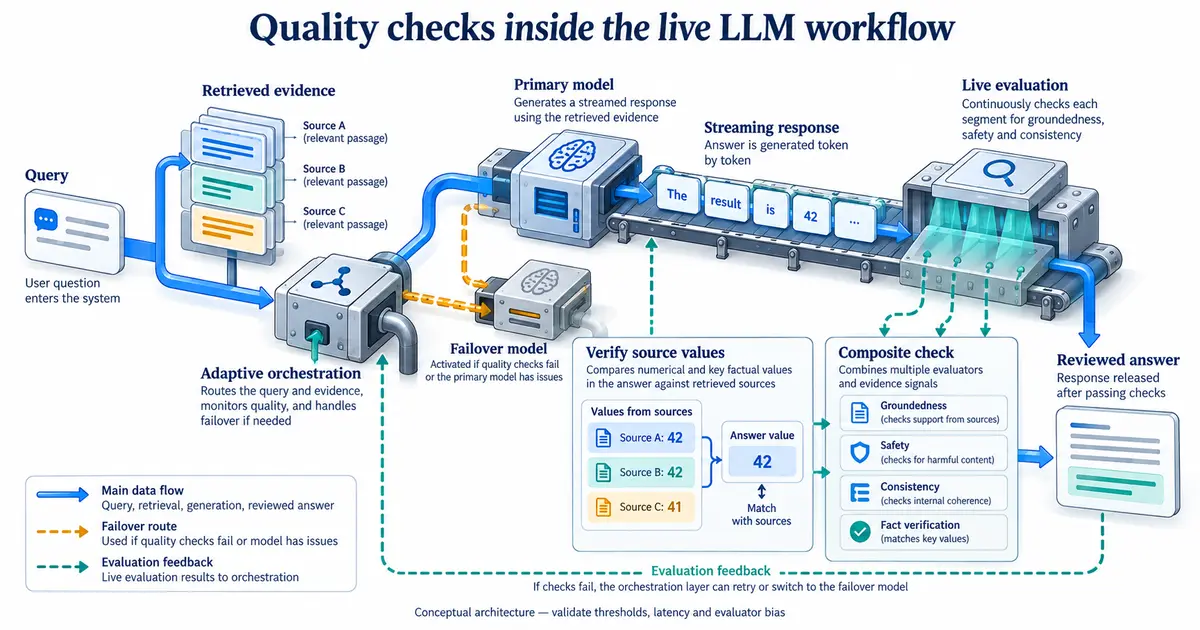
Summary: AWS describes NarrateAI, a production LLM quality-assurance pattern on Amazon Bedrock that combines adaptive orchestration, multi-model failover, streaming evaluation, composite evaluation, and data-accuracy verification inside the response path.
Why it matters: Reliable generative AI requires more than an offline benchmark. Embedding verification into retrieval, generation, failover, and streaming makes quality observable while the system is actually serving users.
What to do now — Add one live quality check to a production AI path: Start with a measurable failure mode such as numerical accuracy or citation consistency, then track the added latency and false-positive rate.
Source: NarrateAI: production-ready LLM quality assurance on Amazon Bedrock
6. GitHub expands Copilot across models, local sandboxing, chat surfaces, and IDEs
Focus: Technical AI Engineering
Date: September 25, 2026
Topics: GitHub Copilot, sandboxing, model routing, developer agents
Evidence: Official Announcement
Availability: Published
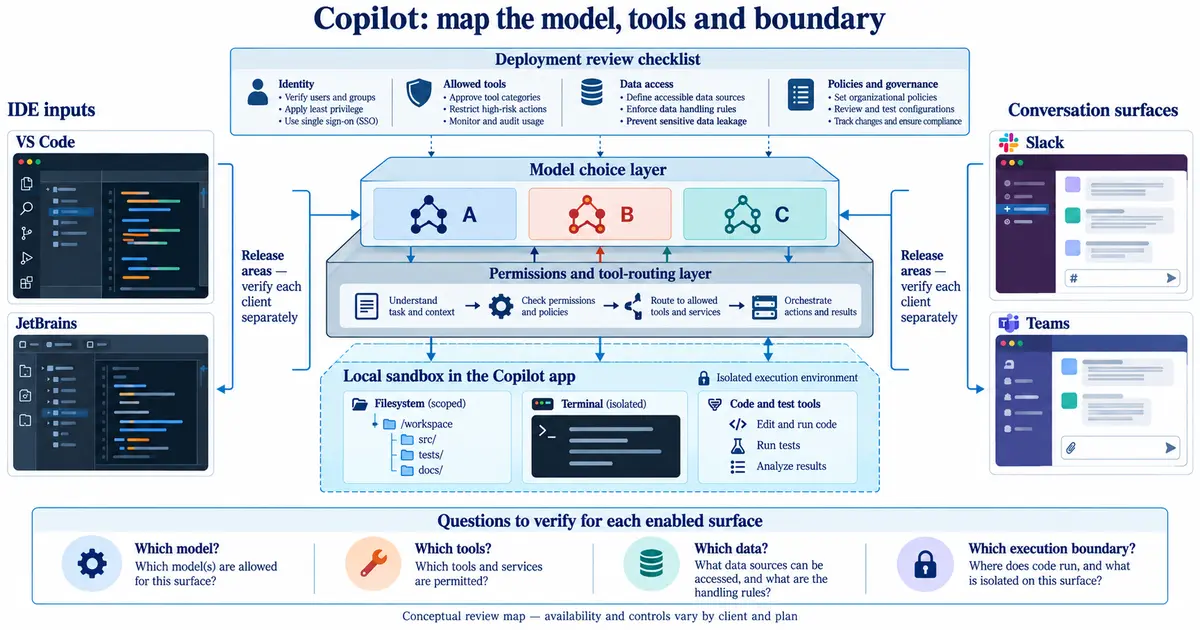
Summary: GitHub’s September 21 weekly release bundle adds new model choices, local sandboxing in the Copilot app, updates for Slack and Microsoft Teams, and changes across JetBrains and VS Code.
Why it matters: Copilot is increasingly a distributed agent platform rather than a single editor feature. Engineering teams now have to reason about model routing, execution isolation, collaboration surfaces, and client-specific behavior as one operating system.
What to do now — Map Copilot capability to execution boundary: For each enabled surface, document the model, tools, sandbox or host boundary, data access, and organization policy that governs it.
Source: GitHub Copilot weekly releases — September 21
Worth Watching
7. General
Stop guessing which model your agent needs
Open the permanent video page
Channel: Microsoft Developer
Date: September 23, 2026
Runtime: 9:33
Format: Video
Summary: A concise walkthrough of choosing an agent model with repeatable evaluations rather than intuition, including latency, token use, output quality, and cost.
Why it matters: Pairs with today’s reliability and execution-layer stories by turning model selection into a measured engineering decision.
Source: Watch on YouTube
8. Agents for Everyone
Using Claude Opus 5.5 as your daily driver
Open the permanent video page
Channel: Claude
Date: September 23, 2026
Runtime: 3:33
Format: Video
Summary: A practical three-minute comparison showing how model choice changes speed, limits, and daily agentic coding work.
Why it matters: Complements the day’s agent-memory and reusable-skill stories with a concrete example of matching capability and effort to routine work.
Source: Watch on YouTube
Worth Listening — Podcasts
9. From AGENTS.md to Enterprise Deployment
Open the permanent podcast page
Show: Practical AI
Host / guest: Daniel Whitenack and Chris Benson; guest Nick Kuhn
Focus: Technical AI Engineering
Date: September 24, 2026
Duration: 48:52 · No episode time limit
Topics: AI agents, enterprise deployment, MCP, shared memory, identity, sandboxing
Summary: Practical AI examines moving agents from prototypes into enterprise environments where platform engineering, identity, memory, MCP gateways, security, compliance, scalability, and reliability become operating requirements.
Why it matters: Directly reinforces today's sandboxing, memory, managed-runtime, and production-QA stories.
Connection to the brief: Directly reinforces today's sandboxing, memory, managed-runtime, and production-QA stories.
Coverage: Reused the completed September 26 media checkpoint; no selection or source-content rediscovery.
Evidence: Practitioner analysis. Official Practical AI page verified September 24, 2026, runtime 48:52, episode 373.
Listen / watch: Practical AI
10. #242: How Baptist Health’s Marketing Team Took the Lead on AI Transformation
Open the permanent podcast page
Show: The Artificial Intelligence Show
Host / guest: Mike Kaput; guest Christine Kotler
Focus: Applied Generative AI for Knowledge Workers
Date: September 24, 2026
Duration: 44:10 · No episode time limit
Topics: AI adoption, knowledge work, governance, learning, workflow redesign
Summary: A regulated-healthcare case study of a two-year AI adoption program built around structured learning, peer coaching, workflow integration, pilots, governance, and role redesign.
Why it matters: Adds practical organizational adoption evidence to today's Copilot workflow and governed-runtime coverage.
Connection to the brief: Adds practical organizational adoption evidence to today's Copilot workflow and governed-runtime coverage.
Coverage: Reused the completed September 26 media checkpoint; no selection or source-content rediscovery.
Evidence: Practitioner analysis. Official show notes verify September 24; independent listing verifies 44:10.
Listen / watch: The Artificial Intelligence Show
Emerging AI Watchlist
0 new today · 4 updated · 12 carried forward.
Changed today:
- Turning agent memory into compact plans
- Reusable agent skills become observable
- Agents that persist across sessions
- AI harness engineering becomes a first-class layer
Help choose what we investigate next. Explore emerging ideas and tell us which interest you.
Editorial takeaway
The strongest pattern today is operationalization: agents are gaining memory and reusable skills, workplace copilots are gaining persistent and executable work modes, and engineering platforms are moving evaluation, isolation, and governance closer to the live execution path.