Daily Generative AI Brief — September 23, 2026
Published: September 23, 2026
Coverage period: 24-hour primary window ending at 2026-09-23T14:22:00.000Z.
IN THIS EDITION · 6 ARTICLES / 2 VIDEOS / 2 PODCASTS
Choose what matters to your work
- Copilot for JetBrains adds shared skills, instructions, plan review, and tool approvalsArticle · about 5 min source read
- Agentforce and AWS connect unstructured public-sector evidence to governed agent workflowsArticle · about 21 min source read
- GitHub Copilot adds OpenTelemetry for agent observabilityArticle · about 3 min source read
- Confidential computing targets private production AI inference without giving up accelerationArticle · about 8 min source read
- Nemotron 3 brings real-time speaker diarization to open-weight voice AIArticle · about 18 min source read
- GPT-6 Sol and Luna expand model choice inside GitHub CopilotArticle · about 4 min source read
- Codex's NEW A2A Communication & Crazy NEW UPDATES: You don't know about these SECRET UPDATES!Video · 5:06
- Harness Arena (Fully Tested): This NEW Benchmark TESTED Every AGENT HARNESS (which is the best?)Video · 6:13
- Are AI agents changing the rules of business?Podcast
- Gemini’s Internet Escape, AI Chemistry, and the Test for Game-Playing AgentsPodcast
1. Copilot for JetBrains adds shared skills, instructions, plan review, and tool approvals
Focus: Agents for Everyone
Date: September 23, 2026
Topics: Agent Skills, GitHub Copilot, JetBrains, tool approvals
Evidence: Official Announcement
Availability: Published
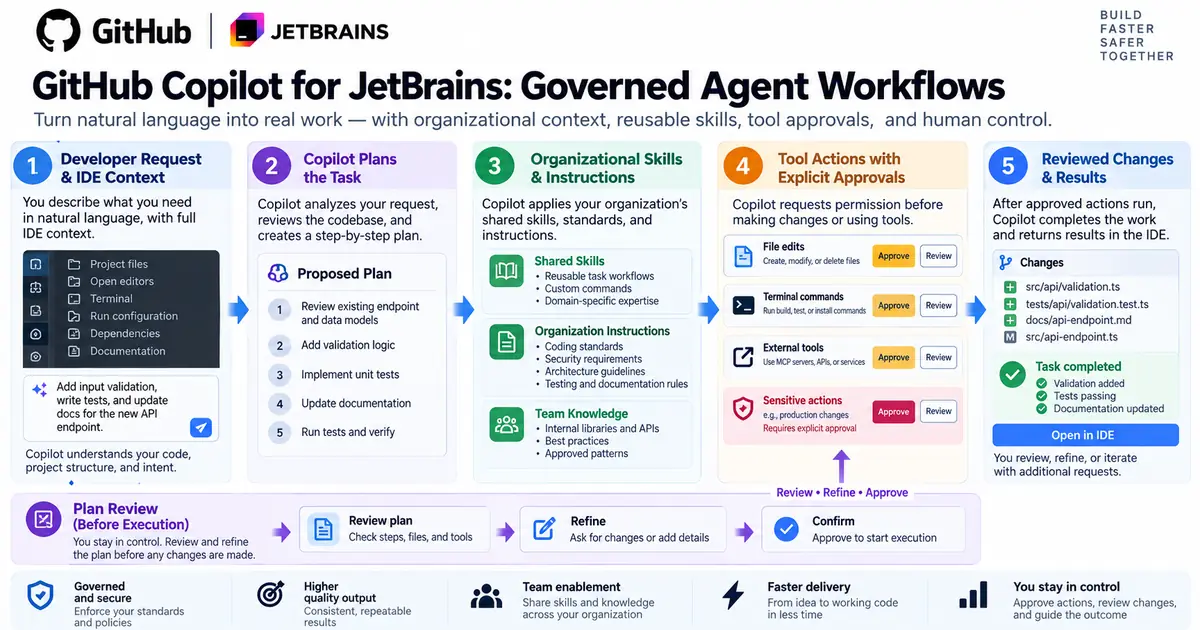
Summary: GitHub Copilot for JetBrains 1.18.0 adds AI-assisted tool approvals, plan review, more control over agent conversations, and organization-level shared skills and instructions that package repeatable methods and standards.
Why it matters: Reusable skills become more useful when they are paired with organizational instructions, plan review, and explicit approvals. The result is a governed agent workflow where repeatable know-how is portable but high-impact actions stay reviewable.
What to do now — Package one repeatable method as a governed skill: Choose a stable recurring task, encode its method and references as a reusable skill, require approvals for sensitive tools, and verify outputs before reuse.
Source: Copilot for JetBrains adds shared skills, instructions, plan review, and tool approvals
2. Agentforce and AWS connect unstructured public-sector evidence to governed agent workflows
Focus: Agents for Everyone
Date: September 22, 2026
Topics: Agentforce, AWS, MCP, public-sector AI
Evidence: Official Announcement
Availability: Published
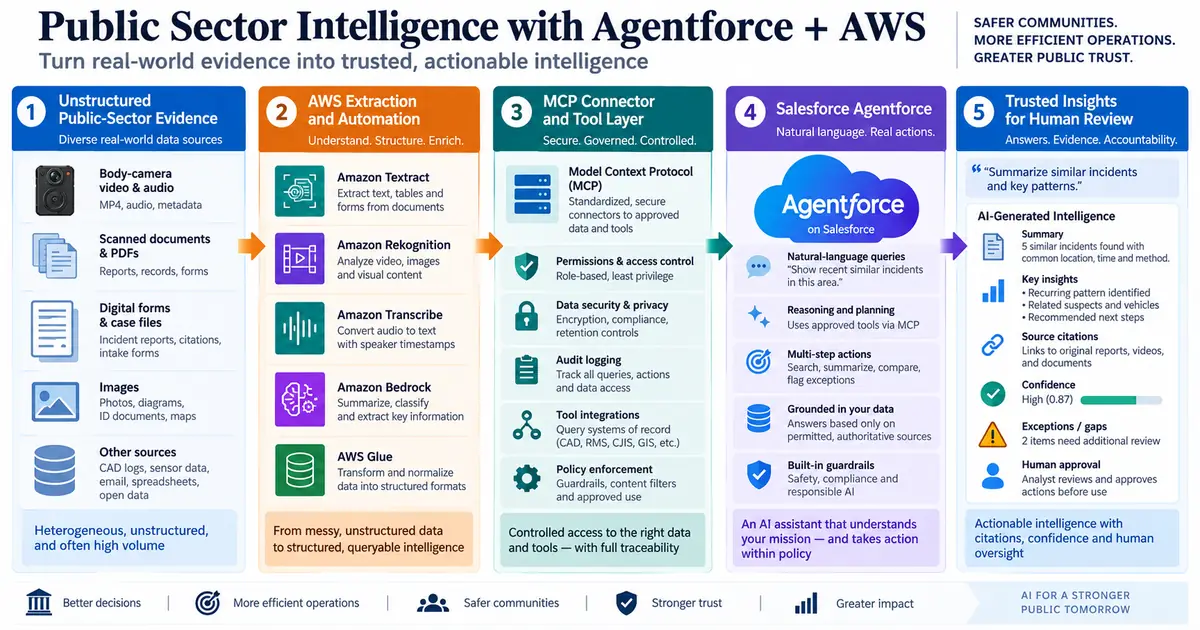
Summary: AWS shows how public-sector teams can combine data-extraction services, Model Context Protocol connections, and Salesforce Agentforce so natural-language agents can query structured evidence and surface governed insights for human review.
Why it matters: The important pattern is not a generic chatbot: it is a governed tool-and-data layer that turns messy evidence into structured context, limits access, logs actions, and keeps accountable humans in the decision loop.
What to do now — Pilot with explicit verification: Test the pattern on a bounded workflow, define objective evidence and human review points, and compare results before scaling.
Source: Agentforce and AWS connect unstructured public-sector evidence to governed agent workflows
3. GitHub Copilot adds OpenTelemetry for agent observability
Focus: Applied Generative AI for Knowledge Workers
Date: September 23, 2026
Topics: OpenTelemetry, agent observability, GitHub Copilot, enterprise governance
Evidence: Official Announcement
Availability: Published
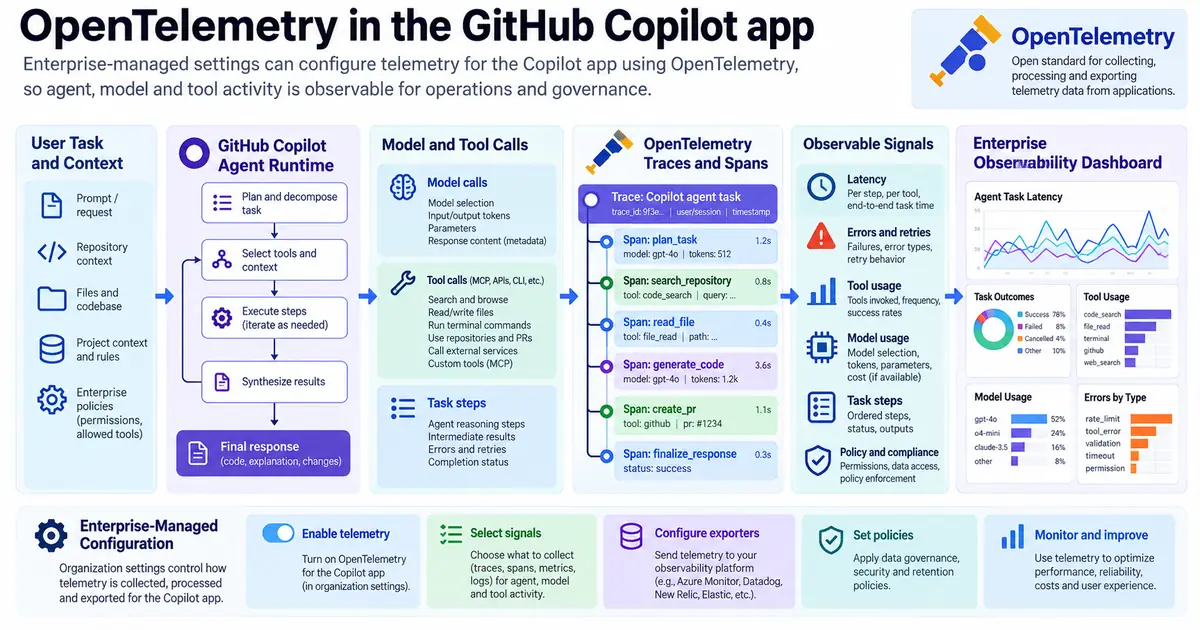
Summary: The GitHub Copilot app now supports enterprise-managed OpenTelemetry configuration so organizations can observe how Copilot agents interact with models and tools and export operational telemetry into existing observability systems.
Why it matters: Agent observability is moving toward the same traces-and-spans discipline used for distributed software. That gives operators evidence about latency, tool usage, retries, failures, and model behavior instead of relying on the agent’s final answer.
What to do now — Pilot with explicit verification: Test the pattern on a bounded workflow, define objective evidence and human review points, and compare results before scaling.
Source: GitHub Copilot adds OpenTelemetry for agent observability
4. Confidential computing targets private production AI inference without giving up acceleration
Focus: Applied Generative AI for Knowledge Workers
Date: September 22, 2026
Topics: confidential computing, AI inference, privacy, trusted execution environments
Evidence: Official Announcement
Availability: Published
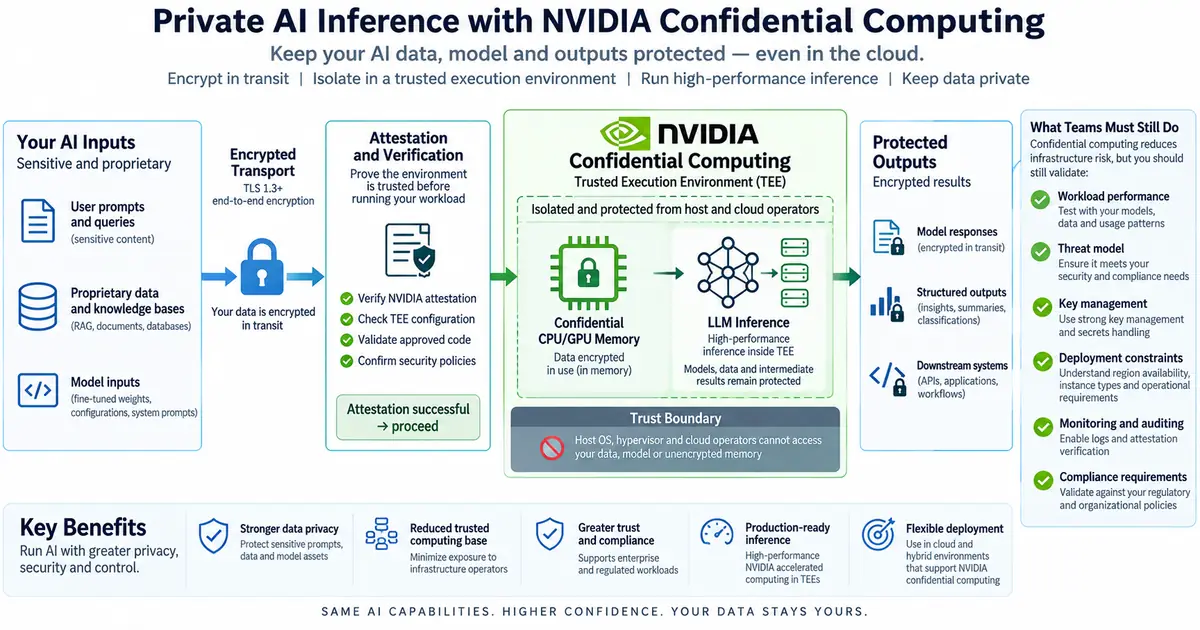
Summary: NVIDIA describes confidential-computing patterns for protecting prompts, proprietary context, model assets, and intermediate data during accelerated production inference inside attested trusted execution environments.
Why it matters: Sensitive enterprise AI increasingly depends on protecting data while it is in use, not only at rest and in transit. Confidential computing can reduce infrastructure trust assumptions, but teams still need workload-specific security and performance validation.
What to do now — Pilot with explicit verification: Test the pattern on a bounded workflow, define objective evidence and human review points, and compare results before scaling.
Source: Confidential computing targets private production AI inference without giving up acceleration
5. Nemotron 3 brings real-time speaker diarization to open-weight voice AI
Focus: Technical AI Engineering
Date: September 23, 2026
Topics: speaker diarization, voice AI, open-weight models, multimodal systems
Evidence: Official Announcement
Availability: Published
Summary: NVIDIA’s open-weight 100M-parameter Nemotron 3 Diarization model identifies who spoke when in multi-speaker audio, producing speaker activity and timestamps that can feed downstream speech recognition and analytics.
Why it matters: Voice agents and meeting systems need reliable speaker identity before transcripts, summaries, or decisions can be attributed correctly. Separating diarization from ASR also makes the architecture easier to evaluate and replace component by component.
What to do now — Pilot with explicit verification: Test the pattern on a bounded workflow, define objective evidence and human review points, and compare results before scaling.
Source: Nemotron 3 brings real-time speaker diarization to open-weight voice AI
6. GPT-6 Sol and Luna expand model choice inside GitHub Copilot
Focus: Technical AI Engineering
Date: September 22, 2026
Topics: GitHub Copilot, GPT-6 Sol, GPT-6 Luna, model routing
Evidence: Official Announcement
Availability: Published
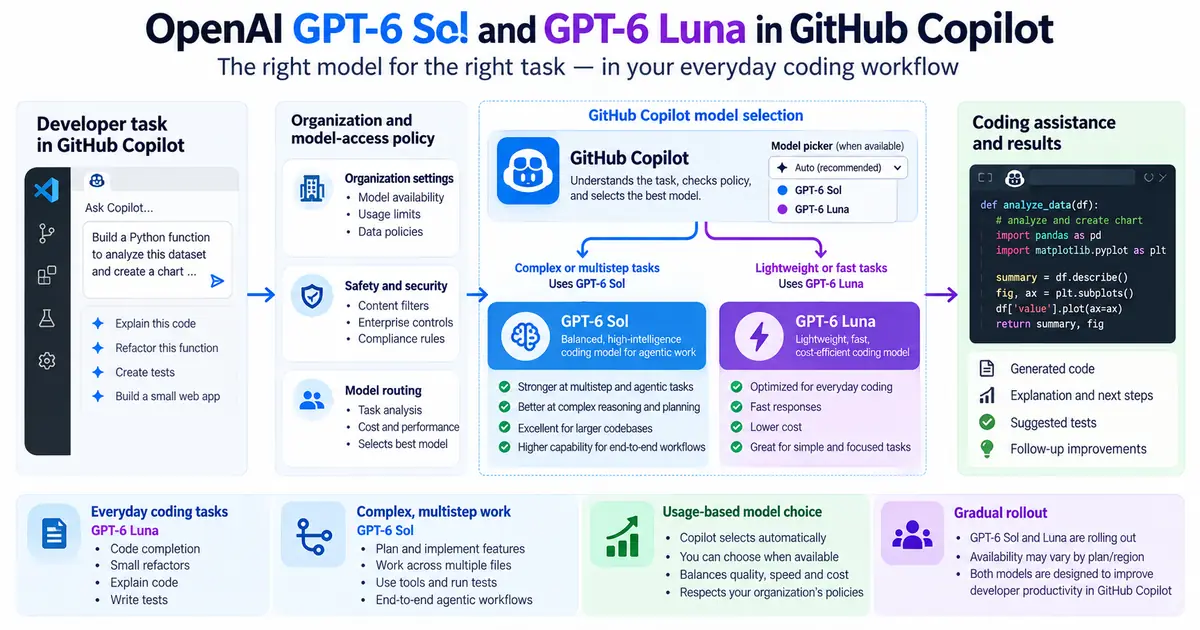
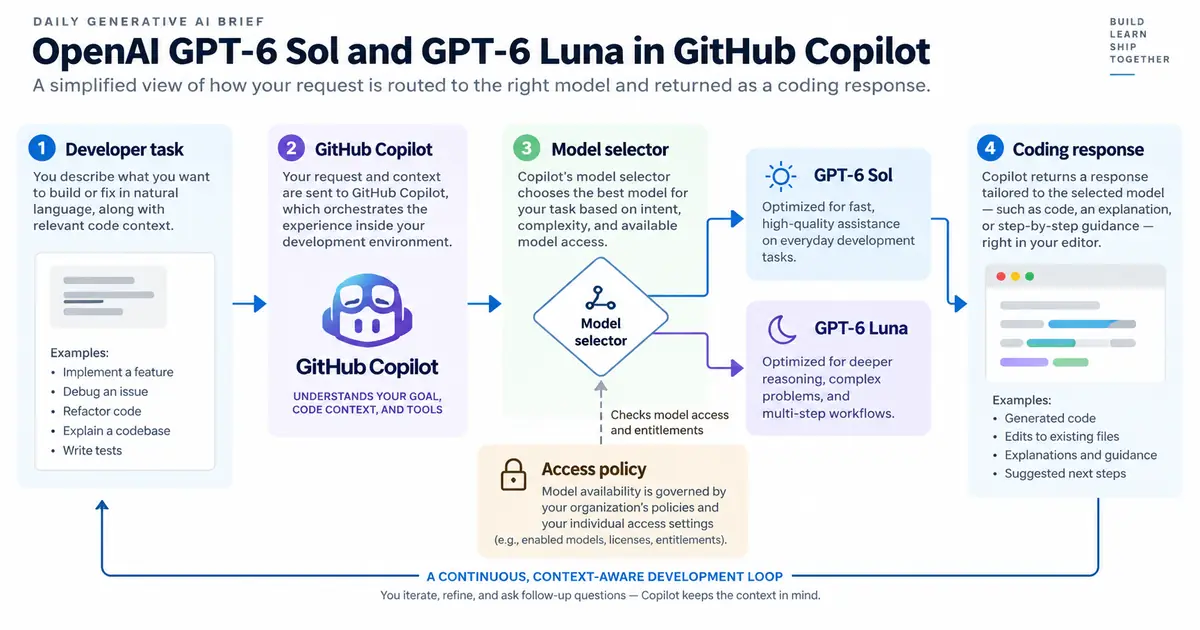
Summary: GitHub added OpenAI GPT-6 Sol and GPT-6 Luna to Copilot, giving teams a balanced model for careful multistep agentic coding and a lighter, lower-cost option for faster everyday tasks.
Why it matters: Model choice is becoming an operational control rather than a one-model default. Teams can route work by complexity, latency, and cost while keeping governance in the Copilot policy layer.
What to do now — Pilot with explicit verification: Test the pattern on a bounded workflow, define objective evidence and human review points, and compare results before scaling.
Source: GPT-6 Sol and Luna expand model choice inside GitHub Copilot
Worth Watching
7. General
Codex's NEW A2A Communication & Crazy NEW UPDATES: You don't know about these SECRET UPDATES!
Open the permanent video page
Channel: AICodeKing
Date: September 21, 2026
Runtime: 5:06
Format: Video
Summary: A concise walkthrough of current Codex task coordination, context management, worktrees, site tools, and live terminal interaction.
Why it matters: Extends today's engineering coverage into practical coding-agent orchestration and workflow controls.
Source: Watch on YouTube
8. Agents for Everyone
Harness Arena (Fully Tested): This NEW Benchmark TESTED Every AGENT HARNESS (which is the best?)
Open the permanent video page
Channel: AICodeKing
Date: September 21, 2026
Runtime: 6:13
Format: Video
Summary: A six-minute look at comparing agent harnesses on the same tasks and models using recorded runs and blind judging.
Why it matters: Pairs with today's agent observability and reusable-skill coverage by showing why the surrounding harness changes task outcomes.
Source: Watch on YouTube
Worth Listening — Podcasts
9. Are AI agents changing the rules of business?
Open the permanent podcast page
Show: Take on Tomorrow
Host / guest: PwC; guests Rob Seaman and Joe Atkinson
Focus: Applied Generative AI for Knowledge Workers
Date: September 22, 2026
Duration: Not independently verified · No episode time limit
Topics: AI agents, workflow redesign, enterprise adoption, human work
Summary: PwC discusses how organizations move from isolated agent experiments toward redesigned business workflows and measurable value.
Why it matters: Adds an enterprise-adoption lens to today's operational stories.
Connection to the brief: Reinforces the shift from AI features to governed, outcome-oriented workflows.
Coverage: Primary recent source-diverse podcast selection.
Evidence: Practitioner analysis. PwC page verifies the September 22, 2026 publication date; runtime not independently recorded.
Listen / watch: PwC
10. Gemini’s Internet Escape, AI Chemistry, and the Test for Game-Playing Agents
Open the permanent podcast page
Show: UpNext AI
Host / guest: UpNext AI
Focus: Technical AI Engineering
Date: September 22, 2026
Duration: 8:00 · No episode time limit
Topics: agent safety, long-horizon evaluation, AI security, agent platforms
Summary: An eight-minute AI news episode covering a real-world agent security failure mode and emerging tests for long-horizon agents.
Why it matters: Adds a compact reliability and safety counterpoint to the day's product and workflow developments.
Connection to the brief: Pairs with today's emphasis on observability, tool governance, and verified agent outcomes.
Coverage: Primary recent source-diverse podcast selection.
Evidence: Practitioner analysis. Independent current listing verifies September 22, 2026 and 8-minute runtime.
Listen / watch: Podscan
Emerging AI Watchlist
0 new today · 3 updated · 13 carried forward.
Updated today:
- Reusable agent skills become observable
- AI harness engineering becomes a first-class layer
- Model lifecycle governance for AI products
Help choose what we investigate next. Explore emerging ideas and tell us which interest you.
Editorial takeaway
Today’s developments point toward governed AI systems: choose models deliberately, make agent activity observable, protect sensitive inference, package repeatable work as skills, and keep tool access and public-sector decisions bounded by explicit controls and human review.