Daily Generative AI Brief — September 21, 2026
Published: September 21, 2026
Coverage period: 24-hour primary window ending at 2026-09-21T14:28:00.000Z; recency fallback used for reviewed items outside the primary window.
IN THIS EDITION · 6 ARTICLES / 2 VIDEOS / 2 PODCASTS
Choose what matters to your work
- AWS packages domain methodology into 38 open-source Agent SkillsArticle · about 25 min source read
- AWS redesigns AgentCore runtime for elastic scale and faster agent startsArticle · about 19 min source read
- Microsoft links AI-ready infrastructure with workforce readiness in IndiaArticle · about 10 min source read
- IBM finds a gap between AI supervision needs and employee prioritiesArticle · about 7 min source read
- GitHub sets an October deadline for several Copilot modelsArticle · about 3 min source read
- Copilot code review adds clearer progress and smarter suggestion handlingArticle · about 5 min source read
- NVIDIA PAIR Connects Your Computers for Local AIVideo · 1:06
- Anthropic’s CEO: How to Build a 1 Person Business with ClaudeVideo · 11:40
- Inside China's AI racePodcast
- AI Doom Backlash Arrives, Anthropic & OpenAI IPO Outlook, Frontier Business Momentum SlowsPodcast
1. AWS packages domain methodology into 38 open-source Agent Skills
Focus: Agents for Everyone
Date: September 16, 2026
Topics: Agent Skills, domain expertise, healthcare AI, reusable workflows
Evidence: Official Announcement
Availability: Published
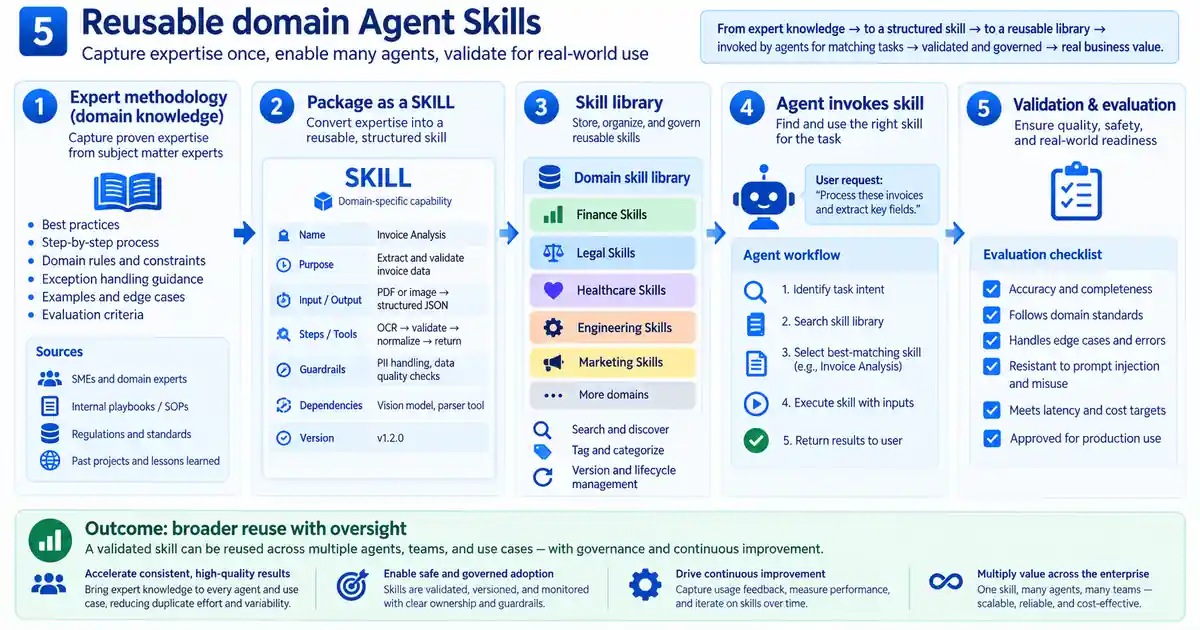
Summary: AWS describes a collection of 38 open-source Agent Skills across 11 healthcare and life-sciences domains, using structured skill files to give agents reusable domain methods and reporting a 410-prompt evaluation with strong win rates.
Why it matters: This is a concrete example of the Agent Skills pattern moving beyond generic productivity tasks. Reusable skill packages can encode domain methods, checks, and procedures so an agent does not have to rediscover expert practice from scratch on every request.
What to do now — Package one domain method: Choose one stable expert procedure, encode its instructions and checks as a reusable skill, and evaluate it against representative tasks before wider use.
Source: Improving HCLS AI reasoning with open-source agent skills
2. AWS redesigns AgentCore runtime for elastic scale and faster agent starts
Focus: Agents for Everyone
Date: September 18, 2026
Topics: agents, managed runtime, scaling, latency
Evidence: Official Announcement
Availability: Published
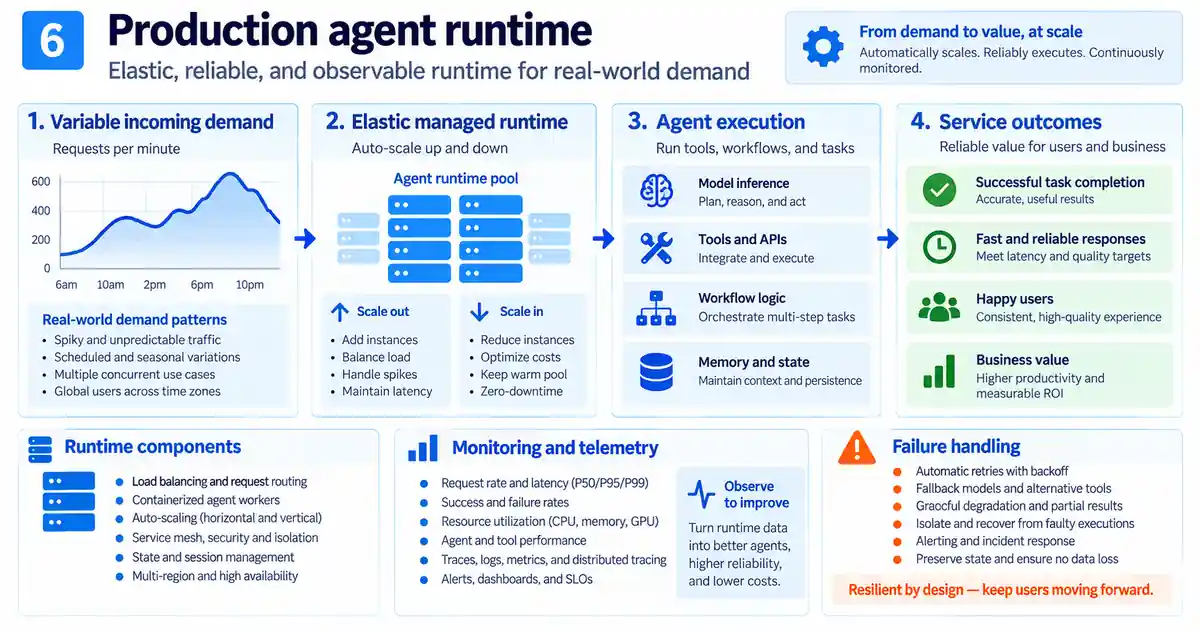
Summary: AWS details changes to the AgentCore managed runtime aimed at elastic scaling, optimized resource use, and consistently faster starts for deployed agents, addressing infrastructure behavior that becomes visible once agents move into production workloads.
Why it matters: For non-technical leaders, agent reliability depends on the runtime as much as on the model. Slow starts, scaling limits, and operational friction can determine whether an agent feels dependable enough to become part of a business process.
What to do now — Define runtime service levels: For any production agent, document acceptable startup latency, concurrency, failure handling, and scale behavior instead of evaluating only answer quality.
Source: The new AgentCore runtime: Elastic, optimized, and consistently fast starts
3. Microsoft links AI-ready infrastructure with workforce readiness in India
Focus: Applied Generative AI for Knowledge Workers
Date: September 21, 2026
Topics: enterprise AI, workforce readiness, cloud infrastructure, AI adoption
Evidence: Official Announcement
Availability: Published
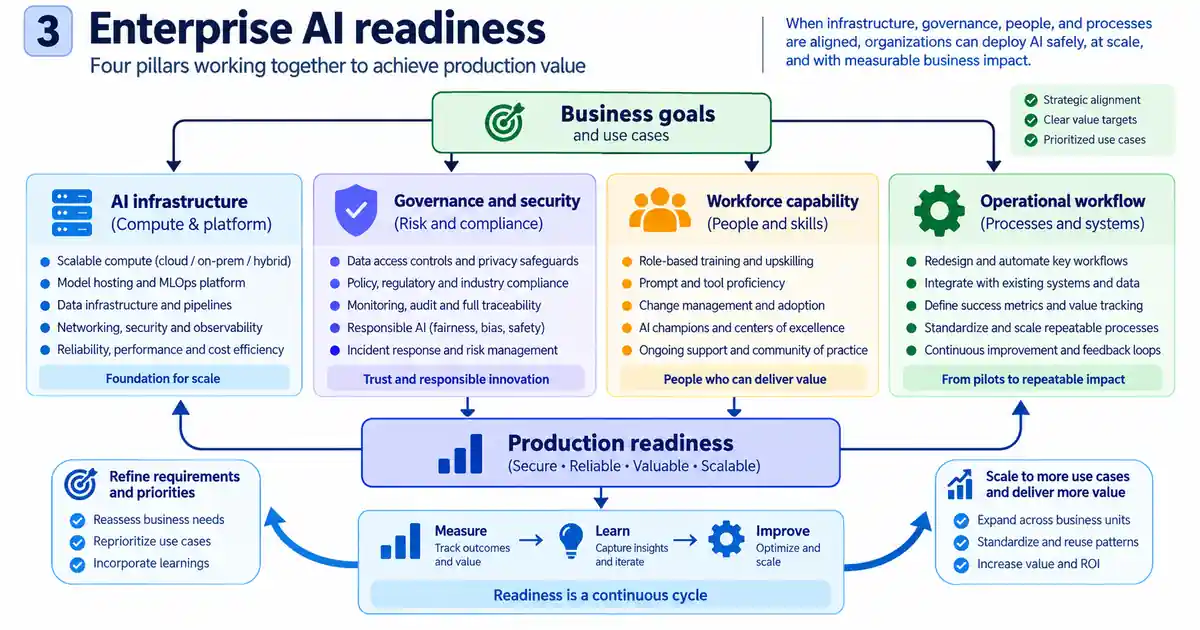
Summary: Microsoft says its India datacenter regions are now AI-enabled and highlights workforce training at national scale, pairing infrastructure availability with the skills needed to move enterprise AI from pilots into operational use.
Why it matters: Knowledge-worker adoption depends on more than access to models. Infrastructure, governance, organizational readiness, and employee capability have to advance together if AI is going to become part of normal business operations.
What to do now — Check readiness as a system: Assess whether your AI program has aligned infrastructure, governance, training, and workflow redesign rather than treating model access as the only dependency.
Source: Microsoft expands AI-ready capabilities and workforce readiness across India
4. IBM finds a gap between AI supervision needs and employee priorities
Focus: Applied Generative AI for Knowledge Workers
Date: September 21, 2026
Topics: AI workforce, critical thinking, human oversight, AI literacy
Evidence: Official Announcement
Availability: Published
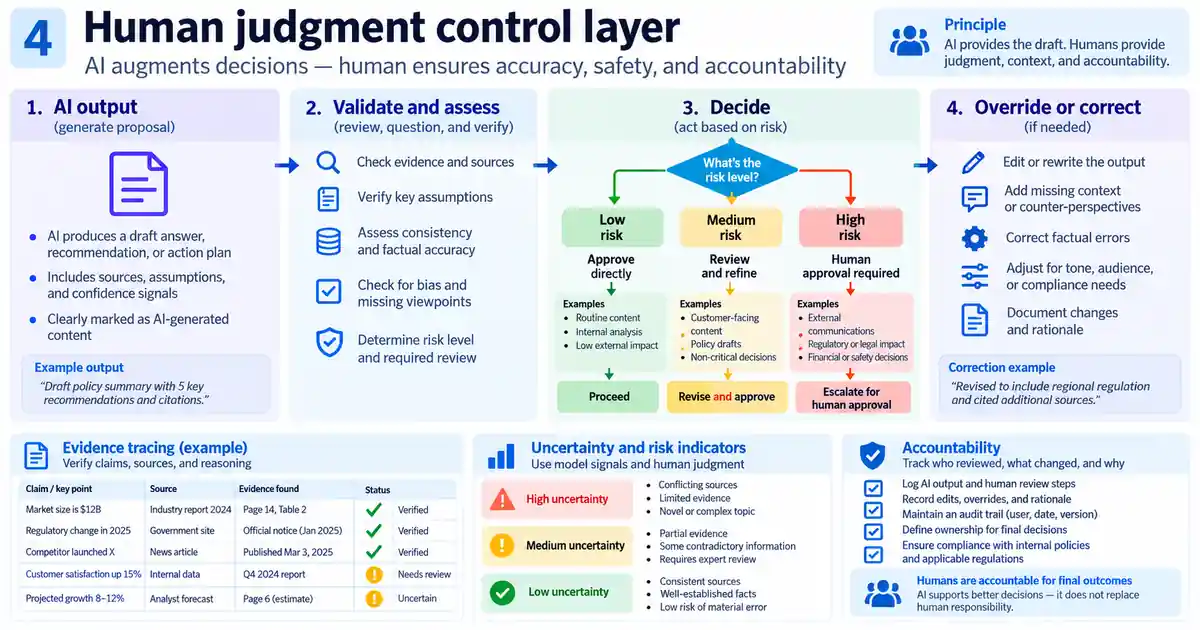
Summary: IBM reports that 71% of surveyed CHROs identify the ability to supervise, validate, and override AI outputs as a critical workforce skill, while only 29% of employees rank judgment as important, alongside concerns about skills erosion.
Why it matters: Organizations may be scaling AI faster than they are building the human judgment needed to use it responsibly. The practical challenge is to make verification, escalation, and override behavior part of everyday work rather than abstract AI training.
What to do now — Teach verification, not just prompting: Add exercises that require employees to challenge AI outputs, validate evidence, recognize uncertainty, and know when to override or escalate.
Source: New IBM CHRO Study: AI Puts Critical Thinking at the Center of Workforce Priorities
5. GitHub sets an October deadline for several Copilot models
Focus: Technical AI Engineering
Date: September 18, 2026
Topics: Copilot, model lifecycle, deprecation, developer workflow
Evidence: Official Announcement
Availability: Published
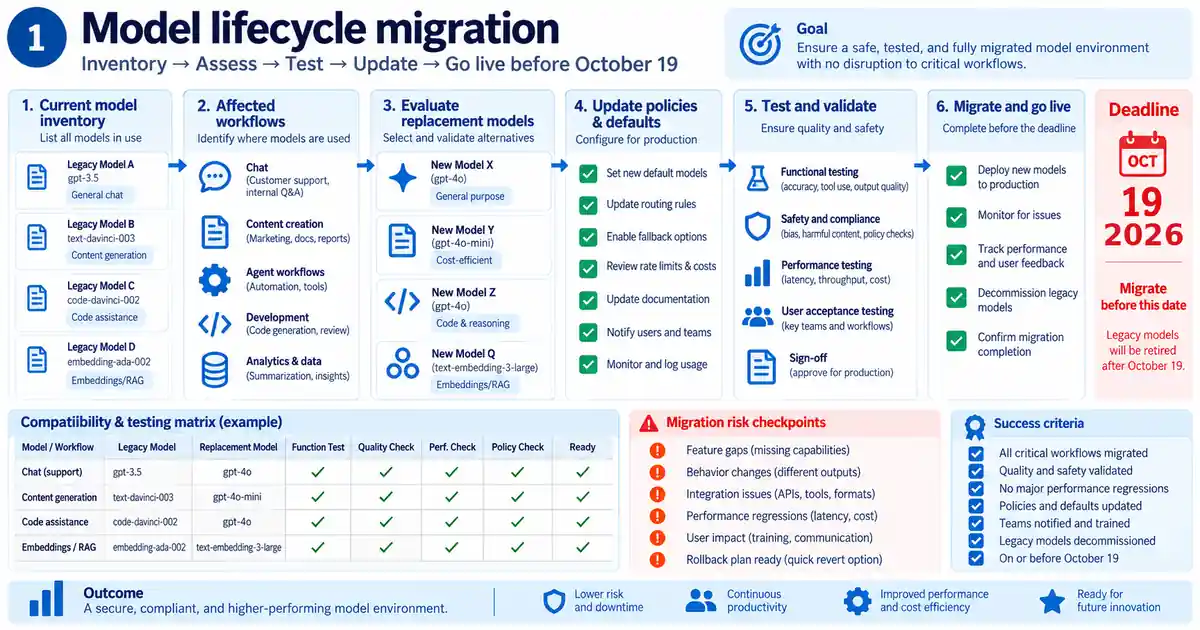
Summary: GitHub says selected models will be removed from Copilot experiences on October 19, creating a concrete migration deadline for teams that depend on model-specific behavior in chat, edits, agent mode, or completions.
Why it matters: Model deprecations are operational changes, not just catalog cleanup. Teams need to identify workflows tied to retiring models, test alternatives, and update guidance before the cutoff turns a routine platform change into broken developer workflows.
What to do now — Test replacement models now: Inventory any Copilot workflows that depend on the retiring models and compare supported alternatives before the October 19 cutoff.
Source: Upcoming deprecation of selected GitHub Copilot models in mid-October
6. Copilot code review adds clearer progress and smarter suggestion handling
Focus: Technical AI Engineering
Date: September 18, 2026
Topics: Copilot, code review, software engineering, AI-assisted development
Evidence: Official Announcement
Availability: Published
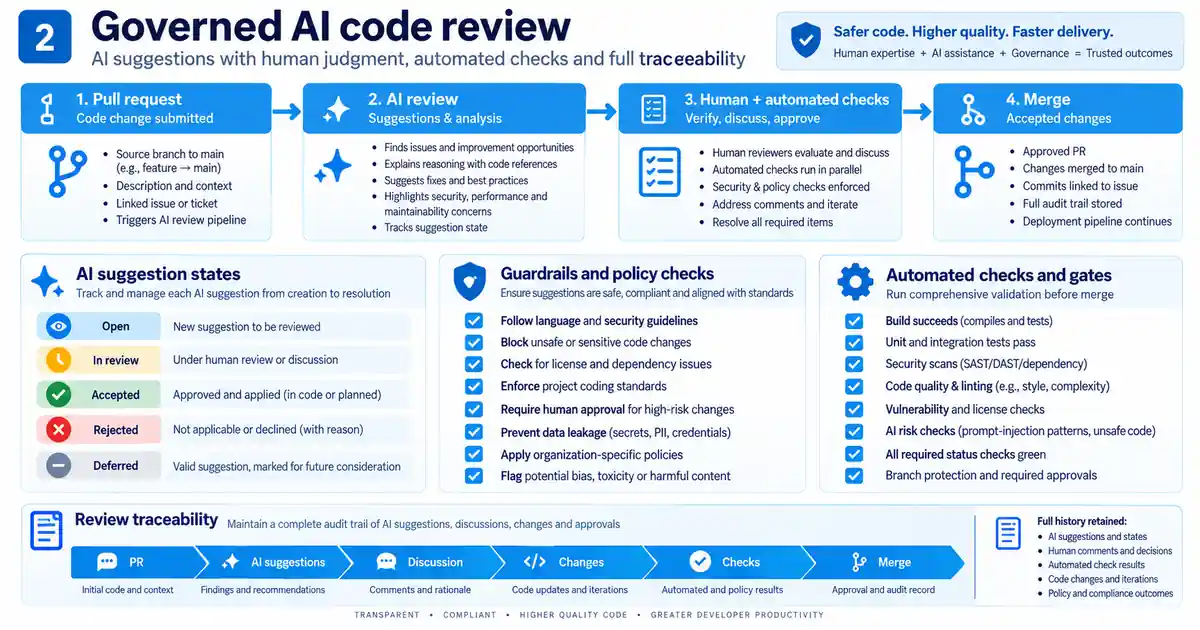
Summary: GitHub updated Copilot code review with clearer visibility into review progress, more intelligent auto-resolution of suggestions, and generated commit messages when developers accept batches of proposed changes.
Why it matters: AI-assisted review is moving from isolated comments toward a more stateful review workflow. Better progress visibility and suggestion lifecycle handling can reduce review friction, but teams still need controls for what gets accepted and how changes are verified.
What to do now — Evaluate the review workflow: Test the updated review experience on representative pull requests and confirm that accepted suggestions still pass the same human and automated checks.
Source: Copilot code review: An improved review experience
Worth Watching
7. General
NVIDIA PAIR Connects Your Computers for Local AI
Open the permanent video page
Channel: Matthew Berman
Date: September 18, 2026
Runtime: 1:06
Format: Video
Summary: A one-minute look at software that links multiple local computers so AI workloads can share compute across machines.
Why it matters: Pairs with today’s production-runtime story by showing how AI infrastructure is becoming more distributed and workload-aware.
Source: Watch on YouTube
8. Agents for Everyone
Anthropic’s CEO: How to Build a 1 Person Business with Claude
Open the permanent video page
Channel: Nate Herk | AI Automation
Date: September 18, 2026
Runtime: 11:40 · Longer selection today: no suitable video of 10 minutes or less was found.
Format: Video
Summary: A practical look at how Claude can support a highly automated one-person business, including repeatable work across software, sales, and support.
Why it matters: Complements today’s Agent Skills and managed-runtime stories by showing the user-facing end state of reusable AI workflows.
Source: Watch on YouTube
Worth Listening — Podcasts
9. Inside China's AI race
Open the permanent podcast page
Show: Reuters On Assignment
Host / guest: Reuters
Focus: Technical AI Engineering
Date: September 19, 2026
Duration: Not independently verified · No episode time limit
Topics: AI competition, chips, distillation, AI safeguards
Summary: Reuters correspondents examine China’s AI industry, including deployment strategy, chip access, distillation, export controls, and the difficulty of comparing national AI progress.
Why it matters: It gives readers a broader systems view of AI capability and infrastructure beyond individual model releases.
Connection to the brief: Complements today’s engineering stories by showing how compute, deployment, and policy shape AI systems.
Coverage: Primary 48-hour podcast window; source-diverse from Big Technology Podcast.
Evidence: Practitioner analysis. Reuters verifies the September 19 publication date. Independent duration listings conflict, so runtime is intentionally left unpinned rather than inventing precision.
Listen / watch: Reuters
10. AI Doom Backlash Arrives, Anthropic & OpenAI IPO Outlook, Frontier Business Momentum Slows
Open the permanent podcast page
Show: Big Technology Podcast
Host / guest: Alex Kantrowitz
Focus: Applied Generative AI for Knowledge Workers
Date: September 19, 2026
Duration: 67:57 · No episode time limit
Topics: AI safety, frontier labs, AI economics, governance
Summary: Alex Kantrowitz and Ranjan Roy discuss the backlash to recent AI-risk claims, frontier-lab economics, IPO expectations, transparency, and signs that AI business momentum may be changing.
Why it matters: The episode adds a business and governance lens to the operational engineering changes covered elsewhere in the brief.
Connection to the brief: Pairs with today’s focus on production maturity by asking what accountability, economics, and evidence should look like as AI systems become more capable.
Coverage: Primary 48-hour podcast window; source-diverse from Reuters On Assignment.
Evidence: Practitioner analysis. Independent current podcast listings verify the September 19 publication date and a 1:07:57 runtime.
Listen / watch: Tapesearch
Emerging AI Watchlist
0 new today · 2 updated · 13 carried forward.
Updated today:
- Reusable agent skills become observable
- AI harness engineering becomes a first-class layer
Help choose what we investigate next. Explore emerging ideas and tell us which interest you.
Editorial takeaway
Today’s edition focuses on the operating discipline around AI: managing model lifecycle changes, making AI-assisted code review governable, aligning infrastructure with workforce readiness, strengthening human judgment, packaging reusable domain expertise as Agent Skills, and treating agent runtime behavior as part of production quality.