Daily Generative AI Brief — September 19, 2026
Published: September 19, 2026
Coverage period: 24-hour primary window ending at 2026-09-19T12:03:00.000Z; recency fallback used for reviewed items outside the primary window.
IN THIS EDITION · 6 ARTICLES / 2 VIDEOS / 2 PODCASTS
Choose what matters to your work
- Copilot code review adds clearer progress and smarter batch suggestionsArticle · about 5 min source read
- GitHub schedules selected Copilot model deprecations for October 19Article · about 3 min source read
- Copilot impact dashboard now exposes feature engagementArticle · about 4 min source read
- Microsoft codifies lessons from hundreds of internal AI transformation effortsArticle · about 16 min source read
- GitHub adds agent skills and customizations to Copilot CLI usage metricsArticle · about 4 min source read
- Salesforce explains why long-horizon agents need persistence across sessionsArticle · about 11 min source read
- ChatGPT Privacy: What Not to Share and When to Double-CheckVideo · 1:40
- Control AI Agents from Anywhere: 7 Open-Source ToolsVideo · 5:16
- The AI Challenges Businesses Are Actually Focused On Right NowPodcast
- Open Source AI 101: Why Local Models, Cheap APIs, and AI Agents Change EverythingPodcast
1. GitHub adds agent skills and customizations to Copilot CLI usage metrics
Focus: Agents for Everyone
Date: September 17, 2026
Topics: Agent Skills, Copilot CLI, agent metrics
Evidence: Official Announcement
Availability: Published
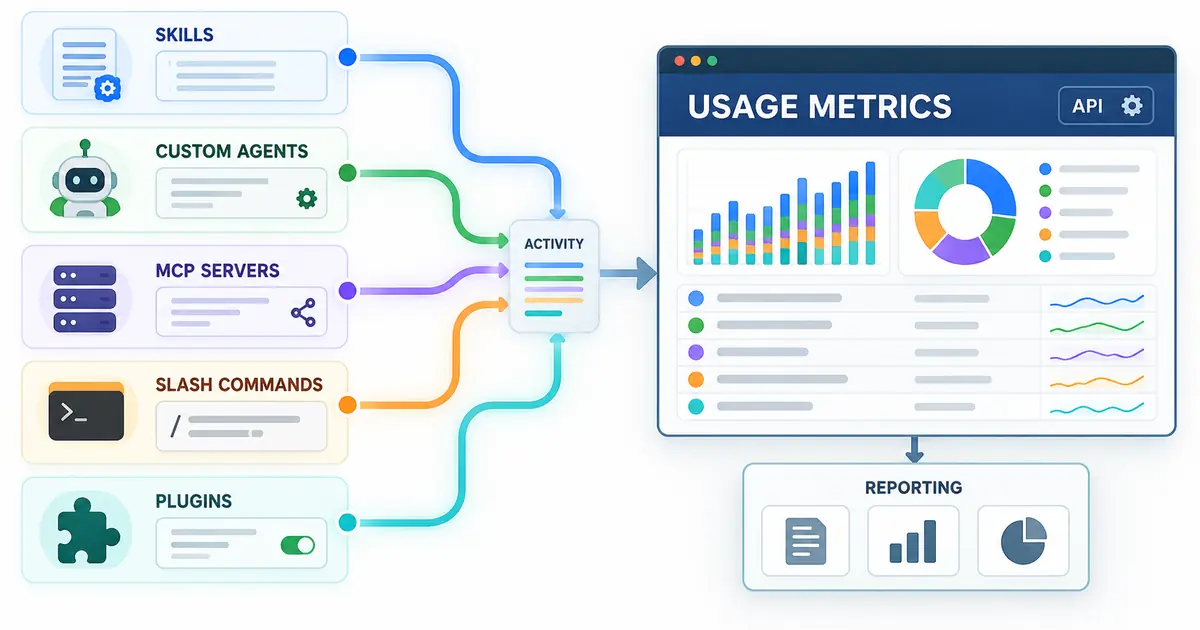
Summary: GitHub expanded Copilot CLI reporting with agentic activity metrics covering skills, custom agents, MCP servers, slash commands, and plugins.
Why it matters: Agent capabilities become easier to govern when organizations can observe which reusable skills and customizations are actually being used instead of treating the agent layer as an opaque configuration surface.
What to do now — Track reusable agent skills: Use the expanded metrics to see which skills, custom agents, MCP servers, commands, and plugins are actually used.
Source: GitHub adds agent skills and customizations to Copilot CLI usage metrics
2. Salesforce explains why long-horizon agents need persistence across sessions
Focus: Agents for Everyone
Date: September 16, 2026
Topics: agents, long-horizon, persistent work
Evidence: Official Announcement
Availability: Published
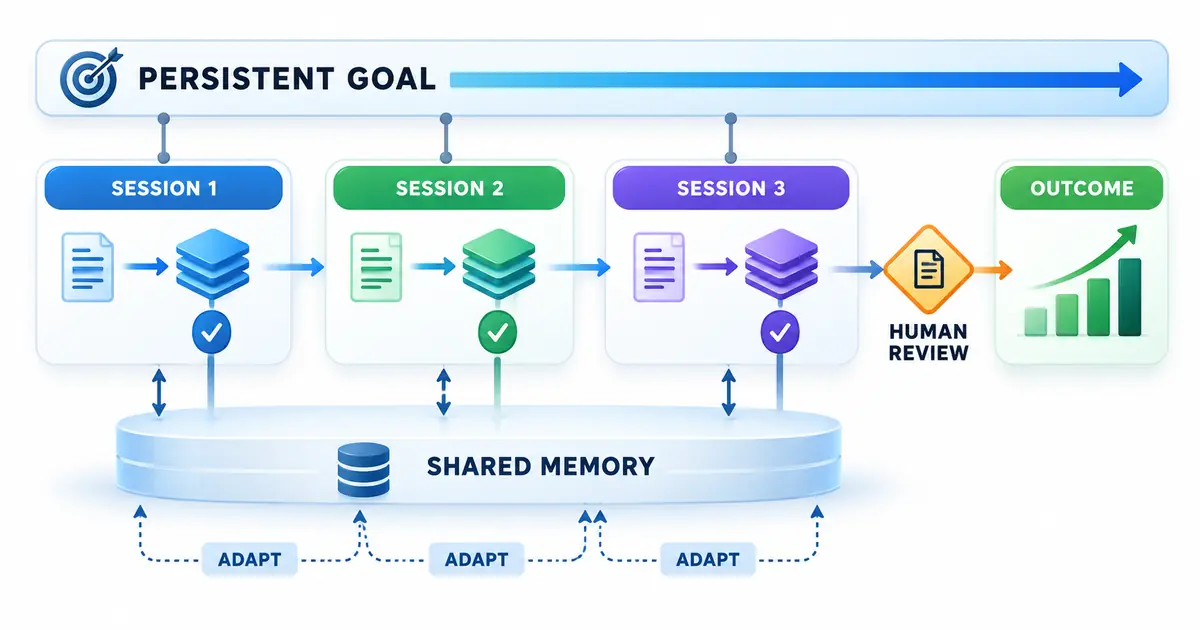
Summary: Salesforce describes long-horizon agents as systems that work with users toward goals over time, continue across multiple sessions, and adapt behavior as circumstances change.
Why it matters: For non-technical users, the important shift is from one-shot task automation to agents that maintain a goal, resume work, and adjust as new information arrives.
What to do now — Define persistent agent goals: For recurring work, specify the goal, checkpoints, changing inputs, and conditions that require human review.
Source: Salesforce explains why long-horizon agents need persistence across sessions
3. Copilot impact dashboard now exposes feature engagement
Focus: Applied Generative AI for Knowledge Workers
Date: September 17, 2026
Topics: Copilot, adoption, analytics
Evidence: Official Announcement
Availability: Published
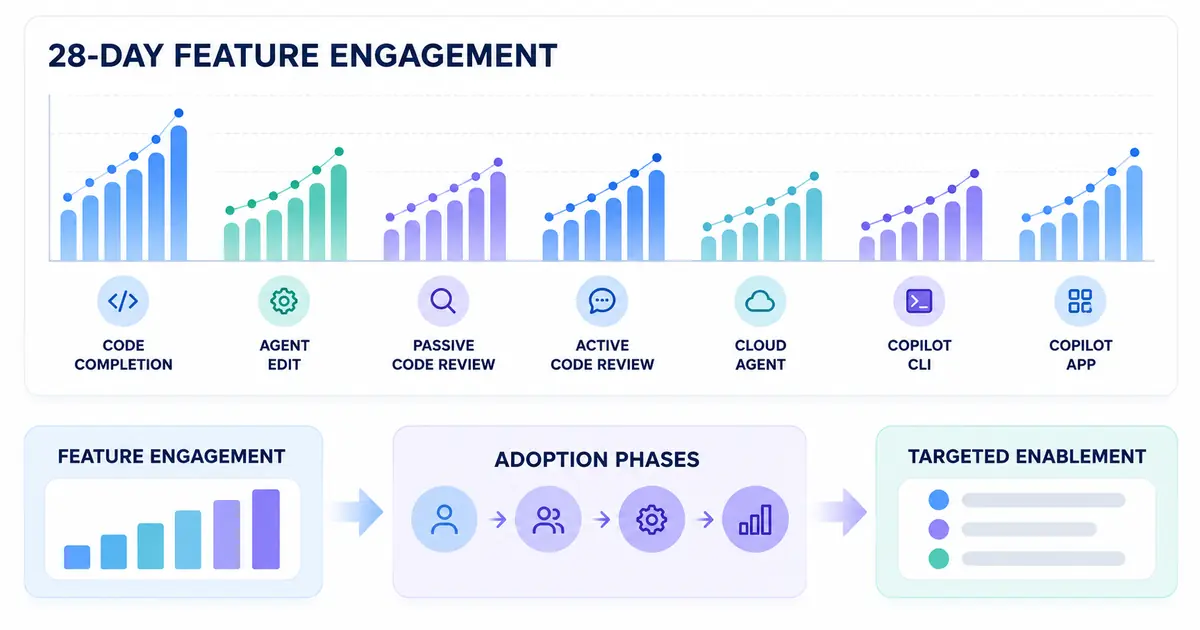
Summary: GitHub's Copilot impact dashboard now shows how many active users regularly use key Copilot features, helping enterprise administrators see which experiences are broadly adopted and which may need additional enablement.
Why it matters: AI adoption programs can move beyond license counts and inspect actual feature engagement, creating a better basis for training, rollout, and value-realization decisions.
What to do now — Review feature-level engagement: Use engagement data to distinguish widely adopted Copilot experiences from features that need targeted enablement.
Source: Copilot impact dashboard now exposes feature engagement
4. Microsoft codifies lessons from hundreds of internal AI transformation efforts
Focus: Applied Generative AI for Knowledge Workers
Date: September 17, 2026
Topics: AI transformation, knowledge work, enterprise adoption
Evidence: Official Announcement
Availability: Published
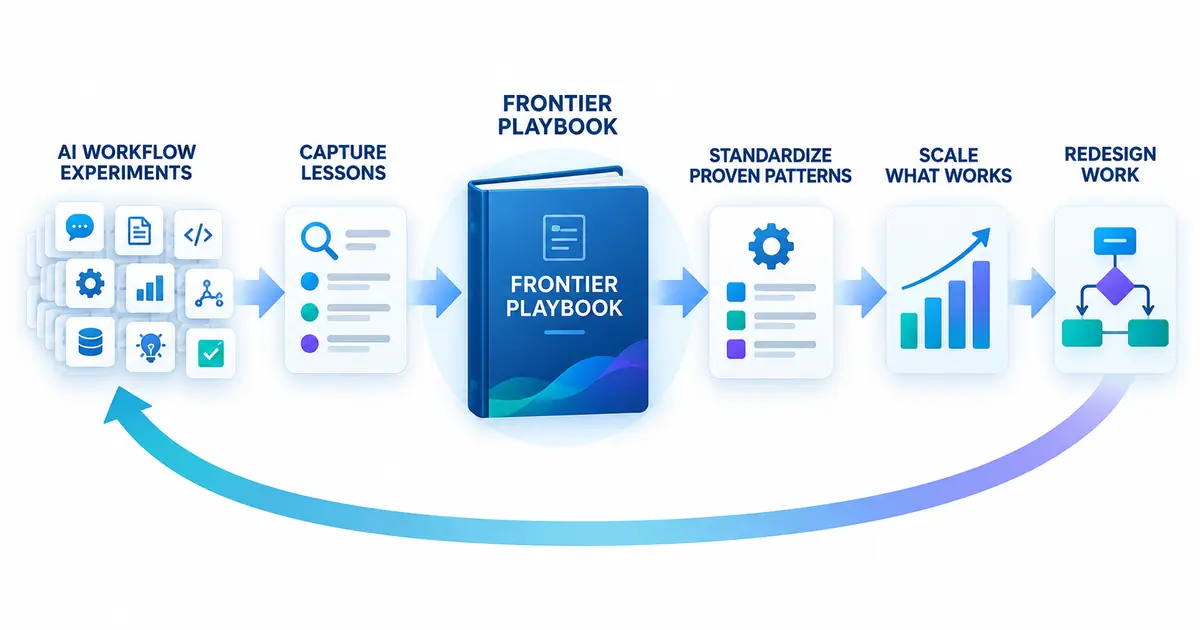
Summary: Microsoft says it has turned lessons from hundreds of internal AI transformation efforts into case studies and a Frontier Playbook designed to scale what worked, learn from failures, and redesign work around AI.
Why it matters: The account frames enterprise AI transformation as an operating-model problem: capture evidence from real deployments, standardize proven patterns, and continuously redesign workflows rather than treating AI as a one-time tool rollout.
What to do now — Build an internal AI playbook: Capture successful and failed workflow experiments so proven patterns can be reused across teams.
Source: Microsoft codifies lessons from hundreds of internal AI transformation efforts
5. Copilot code review adds clearer progress and smarter batch suggestions
Focus: Technical AI Engineering
Date: September 18, 2026
Topics: Copilot, code review, developer workflow
Evidence: Official Announcement
Availability: Published
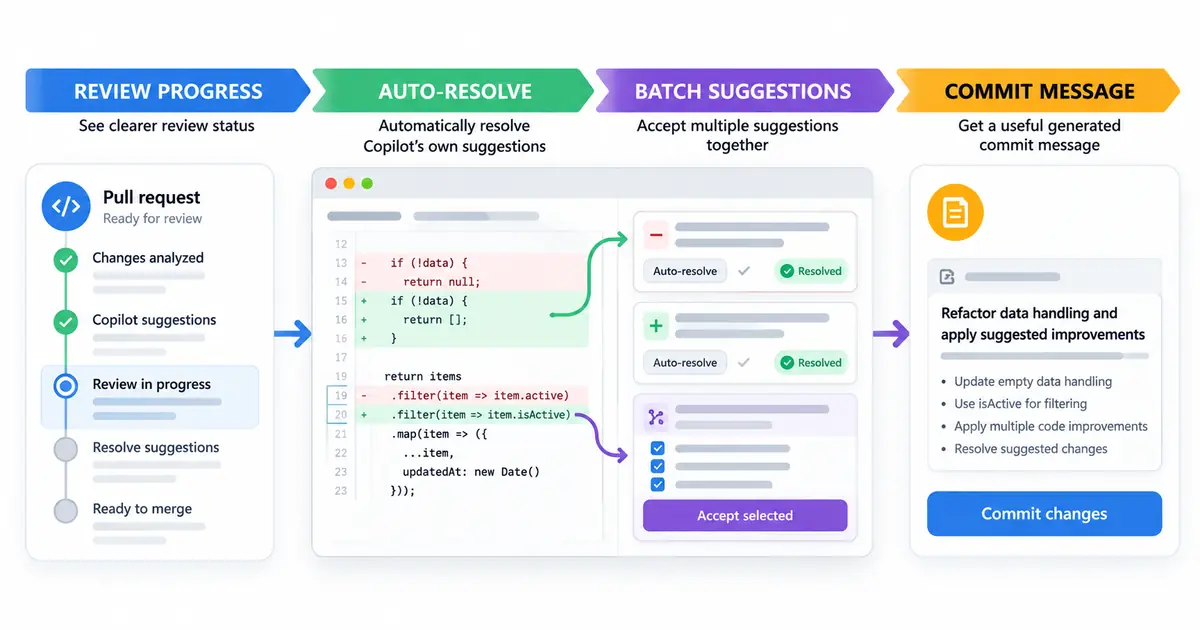
Summary: GitHub updated Copilot code review with a clearer view of review progress, smarter auto-resolution of its own suggestions, and useful commit messages when developers accept suggestions in batches.
Why it matters: The changes make AI-assisted review easier to follow and reduce friction when turning multiple review suggestions into committed code.
What to do now — Review the new code-review flow: Check whether clearer progress and batch commit messages reduce review overhead in active repositories.
Source: Copilot code review adds clearer progress and smarter batch suggestions
6. GitHub schedules selected Copilot model deprecations for October 19
Focus: Technical AI Engineering
Date: September 18, 2026
Topics: Copilot, models, deprecation
Evidence: Official Announcement
Availability: Published
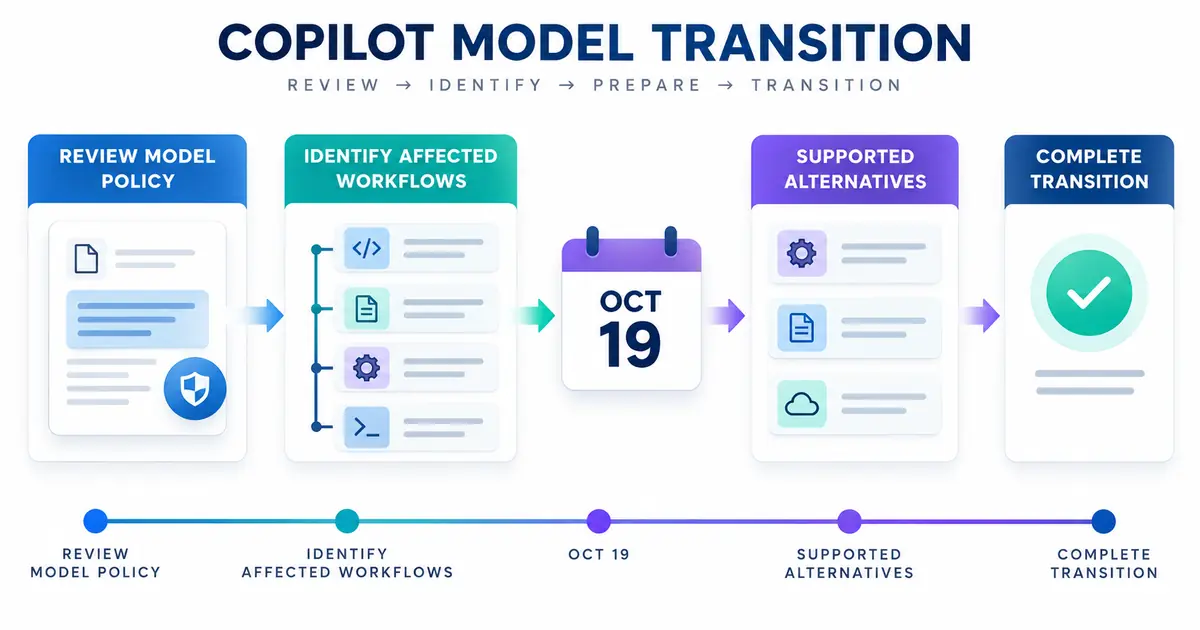
Summary: GitHub says selected models will be deprecated across Copilot experiences on October 19, 2026, and points administrators and users toward alternative models available through Copilot model policies and selectors.
Why it matters: Teams that pin workflows, guidance, or expectations to particular Copilot models need to check model policies and transition plans before the October cutoff.
What to do now — Audit Copilot model policies: Identify affected model choices and enable suitable alternatives before the October 19 deprecation date.
Source: GitHub schedules selected Copilot model deprecations for October 19
Worth Watching
7. General
ChatGPT Privacy: What Not to Share and When to Double-Check
Open the permanent video page
Channel: OpenAI Academy
Date: September 17, 2026
Runtime: 1:40
Format: Video
Summary: A concise official tutorial on minimizing sensitive data exposure and recognizing when an AI answer needs independent checking.
Why it matters: It reinforces the brief’s operational-maturity theme: useful AI workflows need explicit review boundaries, not just faster output.
Source: Watch on OpenAI Academy
8. Agents for Everyone
Control AI Agents from Anywhere: 7 Open-Source Tools
Open the permanent video page
Channel: HubMesh
Date: September 18, 2026
Runtime: 5:16
Format: Video
Summary: A five-minute scan of current open-source agent tools, including persistent-context, desktop-automation, verification, and multi-agent projects.
Why it matters: It gives readers concrete examples of the agent-control, context, and verification patterns behind today’s Agent Skills and long-horizon-agent stories.
Source: Watch on HubMesh
Worth Listening — Podcasts
9. The AI Challenges Businesses Are Actually Focused On Right Now
Open the permanent podcast page
Show: The AI Daily Brief
Host / guest: Nathaniel Whittemore
Focus: Agents for Everyone
Date: September 18, 2026
Duration: 30:06 · No episode time limit
Topics: agent security, model choice, data control, enterprise AI
Summary: Nathaniel Whittemore examines the AI concerns businesses are prioritizing in practice, including agent security, changing model choices, and control over enterprise data.
Why it matters: It provides a current business-side view of the governance and control issues that become more important as agents gain more autonomy and persistence.
Connection to the brief: Pairs with today’s Agent Skills metrics and long-horizon-agent stories by focusing on the organizational controls around agent deployment.
Coverage: Primary 48-hour podcast window; source-diverse from Everyday AI.
Evidence: Practitioner analysis. Apple Podcasts and independent podcast listings identify the episode as September 18, 2026, hosted by Nathaniel Whittemore, with a 30:06 runtime.
Listen / watch: Apple Podcasts
10. Open Source AI 101: Why Local Models, Cheap APIs, and AI Agents Change Everything
Open the permanent podcast page
Show: Everyday AI
Host / guest: Jordan Wilson
Focus: Applied Generative AI for Knowledge Workers
Date: September 18, 2026
Duration: 37:50 · No episode time limit
Topics: open-source AI, local models, AI agents, model economics
Summary: Jordan Wilson surveys the changing trade-offs between open and closed models, local deployment, API economics, and always-on agentic systems.
Why it matters: The episode gives knowledge workers and AI leaders a practical framework for deciding where local or open models may fit alongside frontier hosted models.
Connection to the brief: It complements today’s model-lifecycle and enterprise-transformation stories by framing model choice as an operating and cost decision rather than a one-time vendor choice.
Coverage: Primary 48-hour podcast window; source-diverse from The AI Daily Brief.
Evidence: Practitioner analysis. Buzzsprout lists September 18, 2026, Everyday AI episode 865, hosted by Jordan Wilson, runtime 37:50.
Listen / watch: Everyday AI
Emerging AI Watchlist
Help choose what we investigate next. Explore emerging ideas and tell us which interest you.
Editorial takeaway
Today's edition emphasizes operational maturity: clearer AI-assisted engineering workflows, measurable adoption, reusable agent skills, and agents that persist across longer-running work.