Daily Generative AI Brief — September 17, 2026
Published: September 17, 2026
Coverage period: Rolling 24-hour primary window ending September 17, 2026 at 07:22 America/Chicago; all six selected stories are verified inside the primary window.
IN THIS EDITION · 6 ARTICLES / 0 VIDEOS / 1 PODCAST
Choose what matters to your work
- OpenAI builds a standing process for disclosing model misalignmentArticle · about 6 min source read
- LlamaIndex treats extraction schemas as semantic contractsArticle · about 9 min source read
- Claude unifies chat and Cowork in one persistent workspaceArticle · about 5 min source read
- GitHub makes Copilot budget increases a governed requestArticle · about 3 min source read
- Zocks adds a reusable financial-planning Agent SkillArticle · about 5 min source read
- QuickBooks plugin brings accounting questions and actions into conversationArticle · about 4 min source read
- General videoVideo · No qualifying selection
- Agent Skills videoVideo · No qualifying selection
- Why a New Class of AI “Judgment Models” Could Have Big Business ImplicationsPodcast
1. OpenAI builds a standing process for disclosing model misalignment
Focus: Technical AI Engineering
Date: September 16, 2026
Topics: model safety, misalignment, disclosure
Evidence: Official Announcement
Availability: Proposed
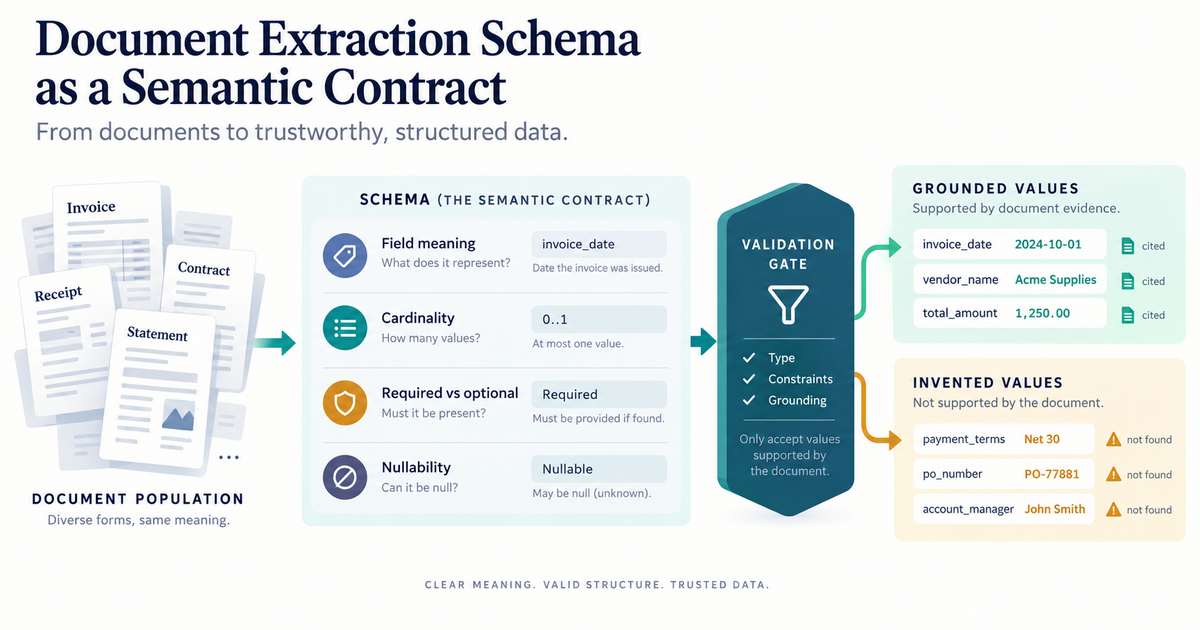
Summary: OpenAI published a framework for tracking, investigating and disclosing concerning model behavior, accompanied by six reports from the previous six months. Cases move through Ready for Disclosure, Minor Investigation or Larger Investigation tracks, and the framework allows disclosure before every cause or mitigation is complete.
Why it matters: A repeatable disclosure channel makes safety evidence inspectable sooner and gives teams a clearer vocabulary for triage. The six reports are examples, not an incident-rate estimate, and a voluntary process still needs external scrutiny.
What to do now — Define a disclosure track: Take one recent model anomaly and document what would qualify it for immediate disclosure, minor investigation or a slow-track investigation.
Source: Model Misalignment Reporting Framework
2. LlamaIndex treats extraction schemas as semantic contracts
Focus: Technical AI Engineering
Date: September 17, 2026
Topics: document extraction, schemas, grounding
Evidence: Official Documentation
Availability: General Availability
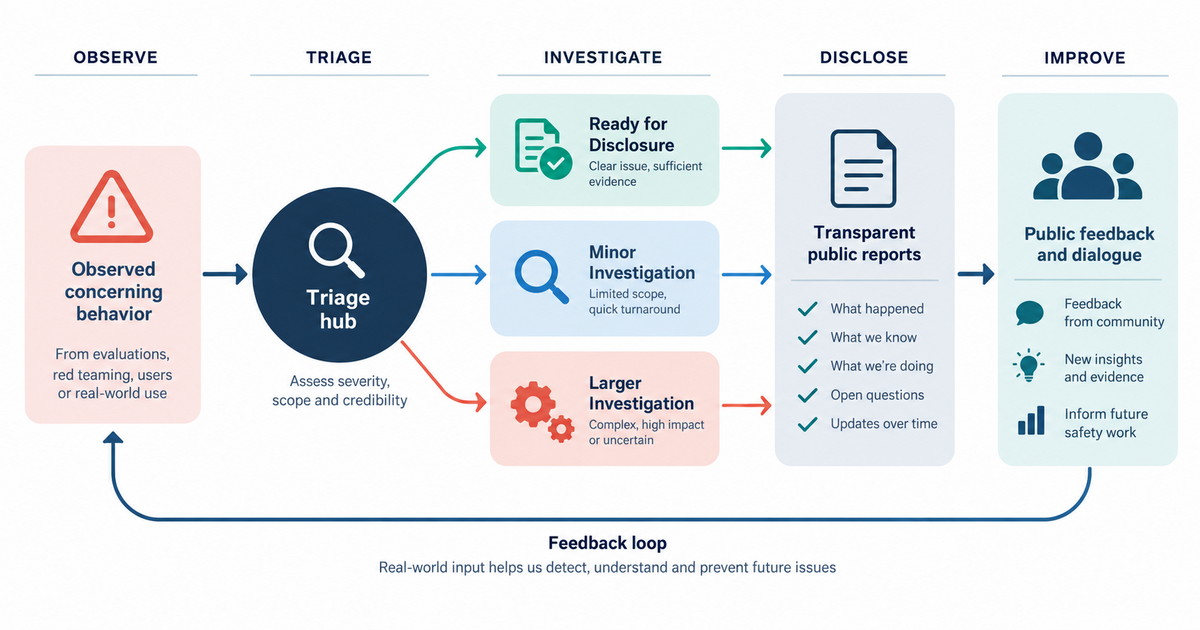
Summary: LlamaIndex argues that extraction reliability often fails at the schema layer: each field asserts meaning, cardinality and applicability across a document population. Making a non-universal field required can become a standing instruction for a model to invent a value.
Why it matters: Teams can improve extraction by reviewing field meaning, optionality and nullability as carefully as prompts or model choice. The guidance is practitioner analysis, so every schema still needs evaluation on its own document population.
What to do now — Audit one extraction schema: For every required field, ask whether all source documents contain exactly one grounded answer; make exceptions optional before evaluating the model.
Source: AI Document Extraction Schema
3. Claude unifies chat and Cowork in one persistent workspace
Focus: Applied Generative AI for Knowledge Workers
Date: September 16, 2026
Topics: knowledge work, persistent context, governed actions
Evidence: Official Announcement
Availability: General Availability
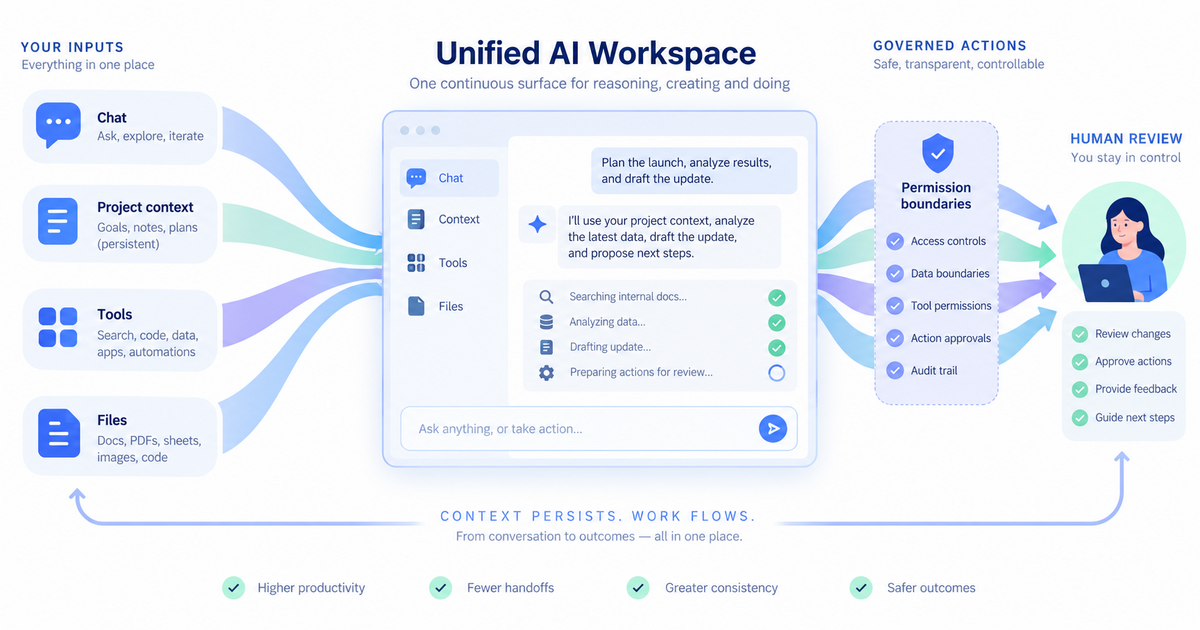
Summary: Anthropic combined Cowork and chat in one Claude workspace so a conversation can retain project context, files and tool use while moving from questions to longer-running work. The interface reduces handoffs, but permissions and review still govern every consequential action.
Why it matters: A continuous workspace can make AI-assisted work less fragmented, especially when context persists across questions and tasks. Interface continuity is not authorization: teams should still test tool state, data boundaries and human checkpoints.
What to do now — Map one persistent workspace: Choose a real project and identify which files, tools and actions Claude may access, then place confirmation before any irreversible step.
Source: Cowork is now Claude
4. GitHub makes Copilot budget increases a governed request
Focus: Applied Generative AI for Knowledge Workers
Date: September 16, 2026
Topics: developer productivity, budget governance, Copilot
Evidence: Official Changelog
Availability: General Availability
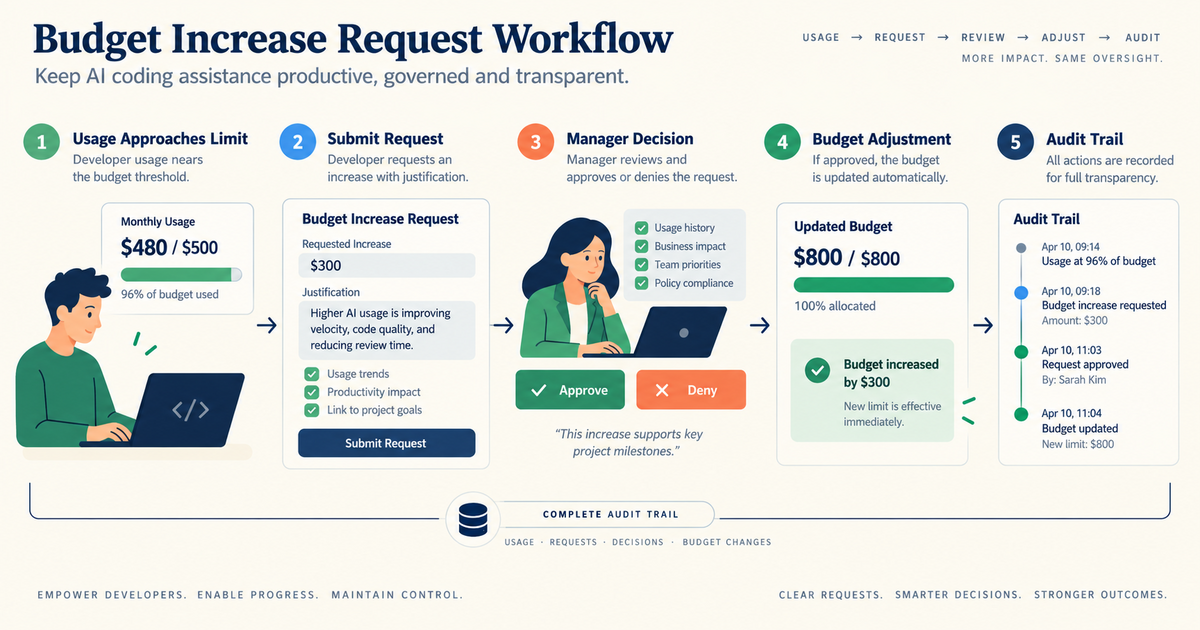
Summary: GitHub made Copilot budget increase requests generally available. A user can request more budget with a justification, while the organization keeps approval, denial, updated limits and an auditable decision path in one workflow.
Why it matters: This turns AI-assistance spending into an explicit operating control instead of an informal exception. Managers gain context and an audit trail, while organizations still need budget policy and review criteria that do not punish useful experimentation.
What to do now — Write a budget request rule: Define the evidence, approver and turnaround expected when a developer requests more Copilot budget.
Source: Copilot budget increase requests are generally available
5. Zocks adds a reusable financial-planning Agent Skill
Focus: Agents for Non-Technical People
Date: September 16, 2026
Topics: Agent Skills, financial planning, human review
Evidence: Official Repository
Availability: General Availability
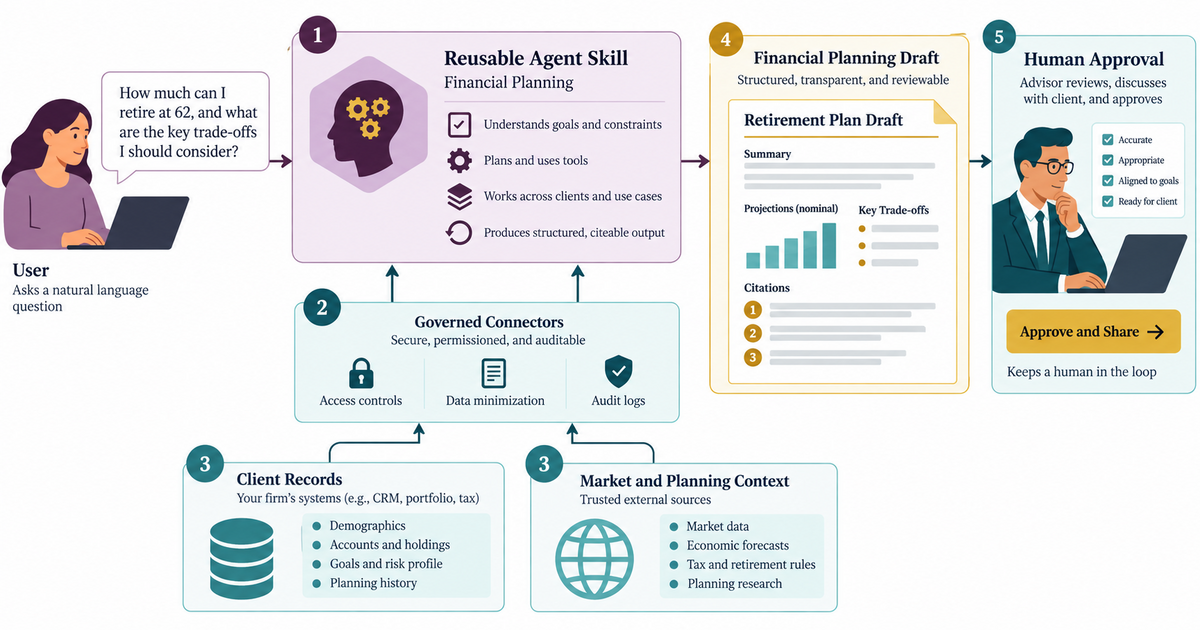
Summary: A verified Anthropic marketplace commit added a Zocks plugin with a reusable Agent Skill for financial-planning workflows. The skill structures client context, calculations and a reviewable draft while keeping connectors and human approval explicit.
Why it matters: This is exactly one reusable Agent Skills story: a portable procedure that packages domain instructions around governed tools. Marketplace inclusion does not prove advisory quality, and firms must validate calculations, suitability boundaries and client-data controls.
What to do now — Validate one planning draft: Run a de-identified case through the skill and verify every calculation, source and recommendation before sharing.
Source: Add Zocks plugin and Agent Skill
6. QuickBooks plugin brings accounting questions and actions into conversation
Focus: Agents for Non-Technical People
Date: September 16, 2026
Topics: accounting, conversational agents, permissions
Evidence: Official Repository
Availability: General Availability

Summary: A verified Anthropic marketplace commit added a QuickBooks plugin for conversational access to accounting context and actions. The pattern can reduce navigation work, but permission scope, confirmation and the accounting audit trail remain essential.
Why it matters: Conversational accounting is useful only when the underlying books, permissions and confirmations remain visible. The commit verifies plugin availability, not the accuracy of every answer or action in a real company file.
What to do now — Confirm before posting: Try one read-only accounting question, then one reversible action, and verify role permissions, confirmation text and the audit entry.
Source: Add QuickBooks plugin
Worth Watching
7. General
No video met today’s editorial quality standards.
8. Agents for Non-Technical People
No video met today’s editorial quality standards.
Worth Listening — Podcast
9. Why a New Class of AI “Judgment Models” Could Have Big Business Implications
Open the permanent podcast page
Show: The AI Daily Brief
Host / guest: Nathaniel Whittemore
Focus: Applied Generative AI for Knowledge Workers
Date: September 16, 2026
Duration: 25:19 · No episode time limit
Topics: judgment models, business automation, agent verification
Summary: Nathaniel Whittemore examines Jev, a model positioned for fast, inexpensive judgments rather than open-ended generation, and considers how specialized evaluators could change business automation and agent coordination.
Why it matters: The episode offers a practical frame for deciding when a bounded judgment model may be more appropriate than a general generator.
Connection to the brief: It complements today’s disclosure, extraction and agent-control stories by asking how systems can make and check smaller decisions.
Coverage: Selected inside the preferred preceding-48-hour window after registered-source review.
Evidence: Practitioner analysis. Apple Podcasts identifies the September 16, 2026 episode and exact 25:19 runtime; the direct episode URL returned HTTP 200 during preflight.
Listen / watch: Apple Podcasts
Emerging AI Watchlist
Help choose what we investigate next. Explore emerging ideas and tell us which interest you.
Editorial takeaway
The durable pattern is explicit control around AI judgment: define what a field means, what an agent may reach, who approves added capacity, and what evidence must be disclosed when behavior departs from intent.