Daily Generative AI Brief — September 15, 2026
Published: September 15, 2026
Coverage period: Verified developments published September 11–14, 2026; overnight primary-source volume was limited, so documented recency fallbacks were used where needed.
IN THIS EDITION · 6 ARTICLES / 2 VIDEOS / 1 PODCAST
Choose what matters to your work
- GitHub lets Copilot Auto balance cost, speed, and quality per promptArticle · about 1 min source read
- Microsoft publishes a draft control contract for MAI modelsArticle · about 6 min source read
- Anthropic connects Claude to financial-advisor workflowsArticle · about 5 min source read
- GitHub shows how marketing operations can run as reviewed codeArticle · about 11 min source read
- An open Agent Skills library adds verification gates and restartable workflowsArticle · about 15 min source read
- Salesforce’s Campaign Agent turns a marketing goal into a reviewed planArticle · about 4 min source read
- Use Writing Blocks with ChatGPT for TeachersVideo · 3:21
- Connect Apps with ChatGPT for TeachersVideo · 3:44
- GPT-6 Astra, NYC Bans AI in Schools, Trump Goes All-In on Data Centers & Lawyers Under Pressure to Pass on AI SavingsPodcast
1. GitHub lets Copilot Auto balance cost, speed, and quality per prompt
Focus: Technical AI Engineering
Date: September 14, 2026
Topics: model routing, cost controls, latency, AI-assisted development
Evidence: Official Changelog
Availability: General Availability
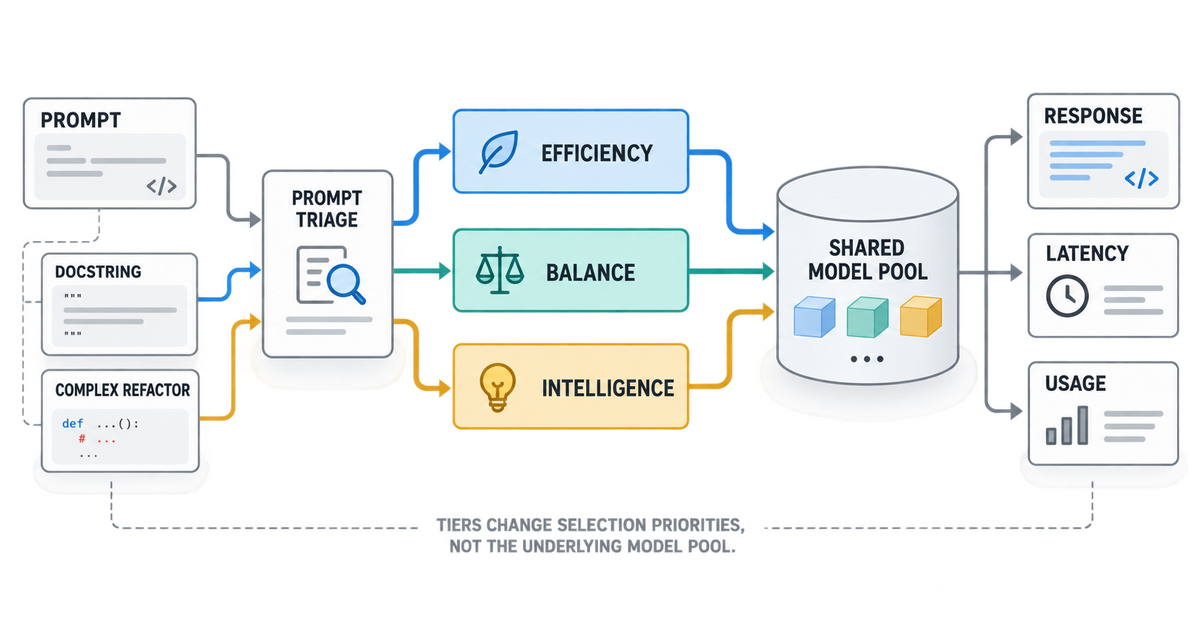
Summary: GitHub Copilot Auto now offers Efficiency, Balance, and Intelligence tiers. Auto evaluates each prompt and chooses from the same available model pool while weighting cost, quality, and response time differently. The feature is rolling out in Visual Studio Code, Copilot CLI, and the Copilot app.
Why it matters: This moves model routing from a hidden convenience toward an explicit engineering control. Teams can match routine work to lower-cost paths and reserve quality-first routing for harder tasks, but the tier is not a fixed-model guarantee: usage is billed according to the model Auto selects, and GitHub has not published an independent quality or cost comparison for the three settings.
What to do now — Benchmark all three tiers: Run the same routine and complex tasks through each tier, then compare usage, latency, review burden, and accepted output.
Source: Configure cost and quality in Copilot auto model selection
2. Microsoft publishes a draft control contract for MAI models
Focus: Technical AI Engineering
Date: September 14, 2026
Topics: model behavior, guardrails, human control, public consultation
Evidence: Official Announcement
Availability: Proposed
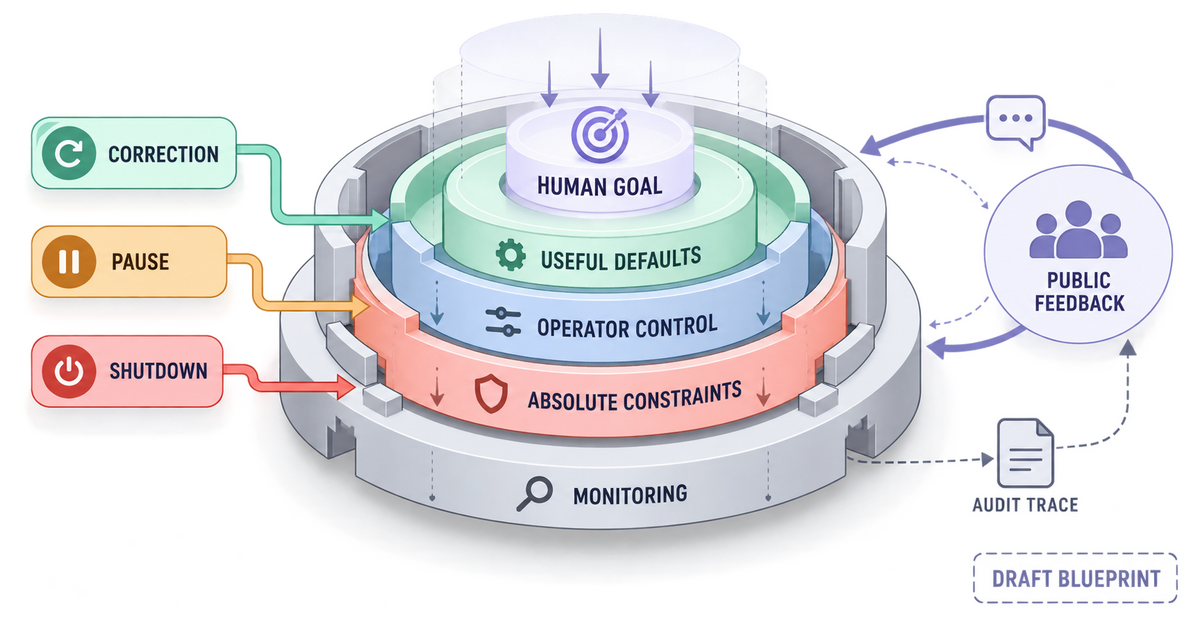
Summary: Microsoft AI published a draft Humanist AI Code of Conduct for a six-week public consultation. It describes intended model behavior, absolute constraints, operator-configurable defaults, uncertainty handling, evaluation, monitoring, and a requirement that MAI models remain subject to human interruption, correction, and shutdown.
Why it matters: The document is useful as an inspectable behavioral contract: teams can translate values into tests, escalation rules, and operational controls. Microsoft explicitly says the draft is not being used to train its models today, so it is a proposal and future governing document—not evidence that deployed systems already satisfy every stated behavior.
What to do now — Turn principles into tests: Choose one absolute constraint and one configurable default, then define measurable pass, fail, escalation, and shutdown behavior.
Source: Humanist AI in practice: A public consultation on our Code of Conduct for MAI Models
3. Anthropic connects Claude to financial-advisor workflows
Focus: Applied Generative AI for Knowledge Workers
Date: September 14, 2026
Topics: financial advice, data connectors, meeting preparation, human review
Evidence: Authoritative Reporting
Availability: Announced
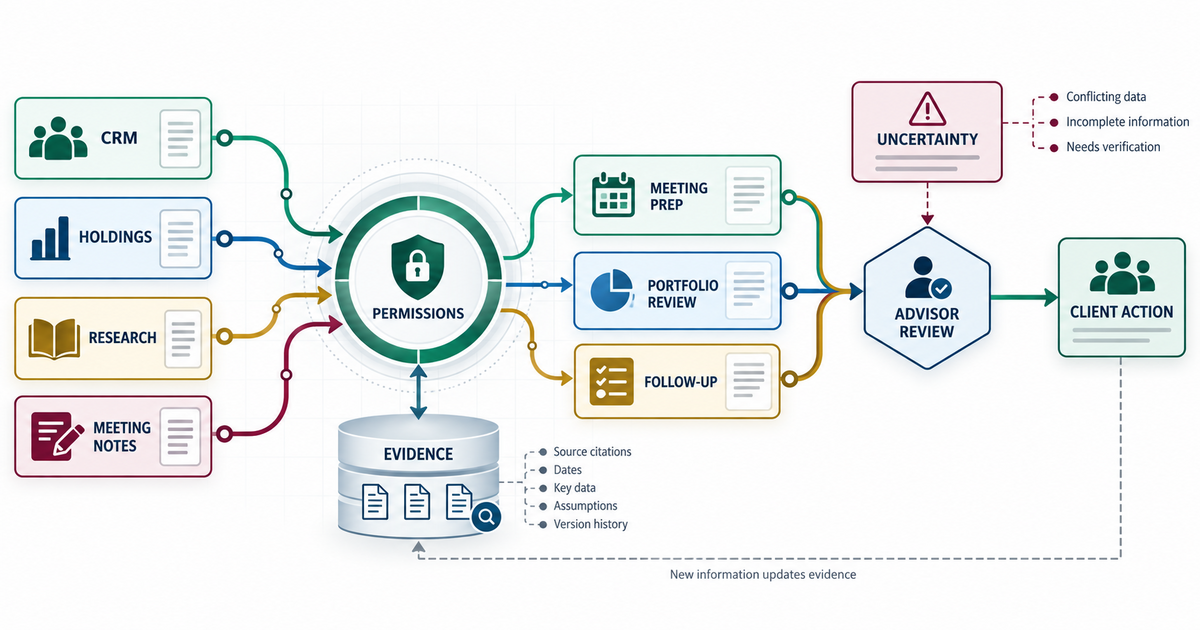
Summary: Anthropic launched Claude for Financial Advisors, a package that connects Claude to wealth-management data and software for tasks such as meeting preparation, portfolio review, and follow-up. Reuters reports that the offering is aimed at advisors rather than autonomous client-facing decision-making.
Why it matters: The practical shift is from generic chat to permissioned, workflow-specific assistance with relevant client and portfolio context. The launch does not remove fiduciary, suitability, privacy, or recordkeeping duties, and the available evidence is announcement reporting rather than an independent evaluation of accuracy, security, or advisor outcomes.
What to do now — Map the review boundary: For one advisory workflow, list approved sources, required citations, uncertainty labels, prohibited actions, and the accountable reviewer.
Source: Anthropic targets financial advisers with new Claude tool
4. GitHub shows how marketing operations can run as reviewed code
Focus: Applied Generative AI for Knowledge Workers
Date: September 11, 2026
Topics: marketing operations, workflow automation, human approval, failure handling
Evidence: Practitioner Analysis
Availability: Reported
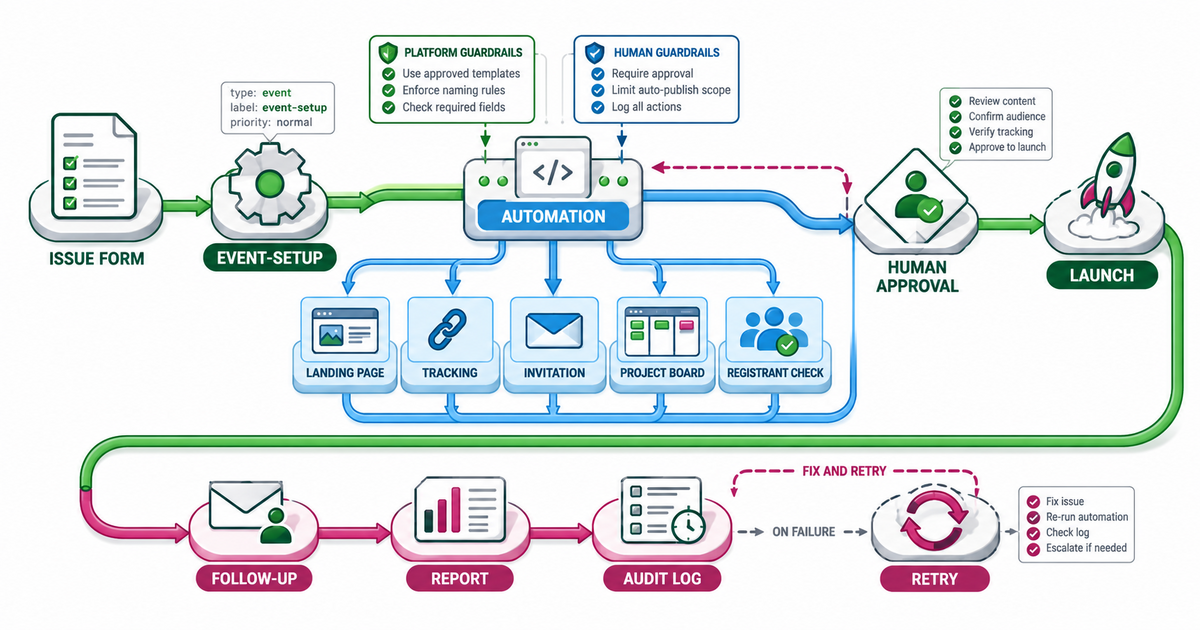
Summary: A GitHub marketing lead documents an event-operations system that treats an Issue as the unit of work, structured issue forms as inputs, labels as triggers, and GitHub Actions as the machinery. The workflow stages landing pages, tracking links, invitations, boards, registrant checks, follow-up, and reporting while retaining human and platform guardrails.
Why it matters: This is an unusually concrete knowledge-work automation pattern: write the process down, make inputs structured, keep the work record visible, and automate repetitive transitions. It is one practitioner implementation rather than a comparative study, and credentials, CRM writes, error paths, approvals, and maintenance still require explicit ownership.
What to do now — Automate one visible handoff: Start with a structured intake form and one reversible trigger, then add approval, logging, and retry before expanding the workflow.
Source: Marketing ops as code: Automating events from planning to follow-up on GitHub
5. An open Agent Skills library adds verification gates and restartable workflows
Focus: Agents for Non-Technical People
Date: September 11, 2026
Topics: Agent Skills, verification, restartable work, portable instructions
Evidence: Official Repository
Availability: General Availability
What changed since last coverage: This repository adds a 25-skill engineering library, nine lifecycle commands, restartable task boundaries, native adapters, and verification gates to the reusable Agent Skills pattern covered in prior editions.
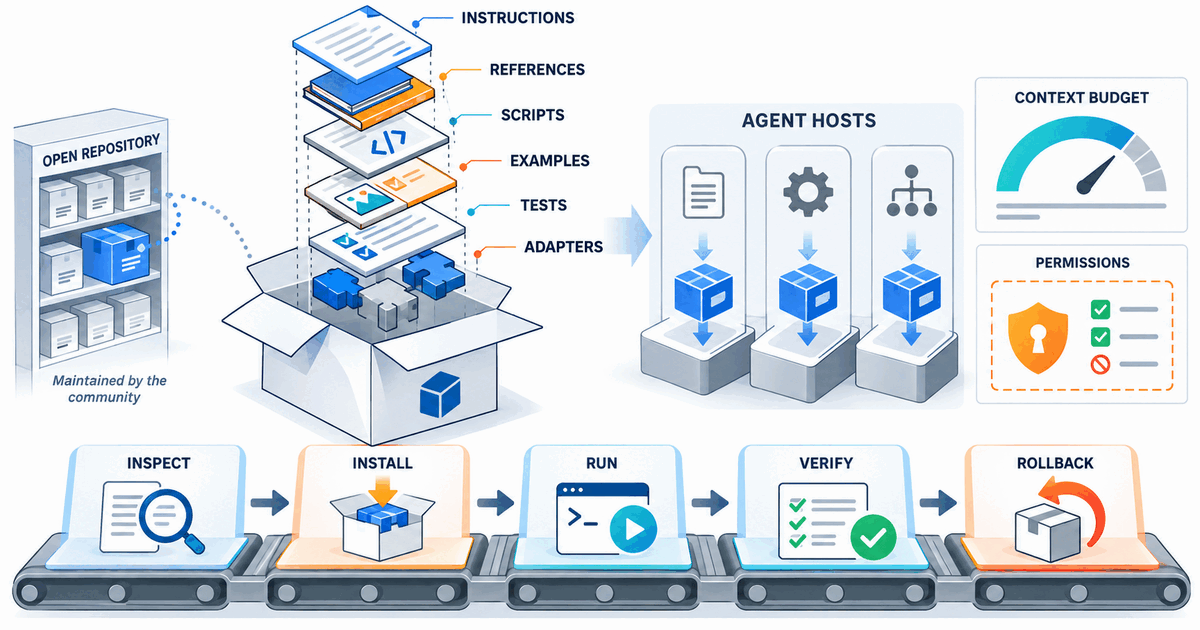
Summary: Addy Osmani’s open agent-skills repository packages 25 engineering skills and nine lifecycle commands for compatible coding agents. Recent updates added restartable task boundaries, native adapters, double-routing avoidance, and setup guidance for existing projects, while the repository emphasizes verification gates rather than treating generated work as complete by default.
Why it matters: For non-technical leaders, the useful idea is procedural reuse: a reviewed method can travel as instructions, references, scripts, examples, and tests. This is approved repeat coverage of the Agent Skills pattern because the repository adds a broad lifecycle library and restartable boundaries; community maintenance, portability, and included tests do not guarantee safety or equivalent behavior in every host.
What to do now — Pilot one bounded skill: Inspect its files and permissions, define a stopping point and acceptance checks, then run it on a reversible project with rollback ready.
Source: Production-grade Agent Skills for software engineering
6. Salesforce’s Campaign Agent turns a marketing goal into a reviewed plan
Focus: Agents for Non-Technical People
Date: September 14, 2026
Topics: campaign planning, personalization, human approval, marketing agents
Evidence: Official Announcement
Availability: Announced
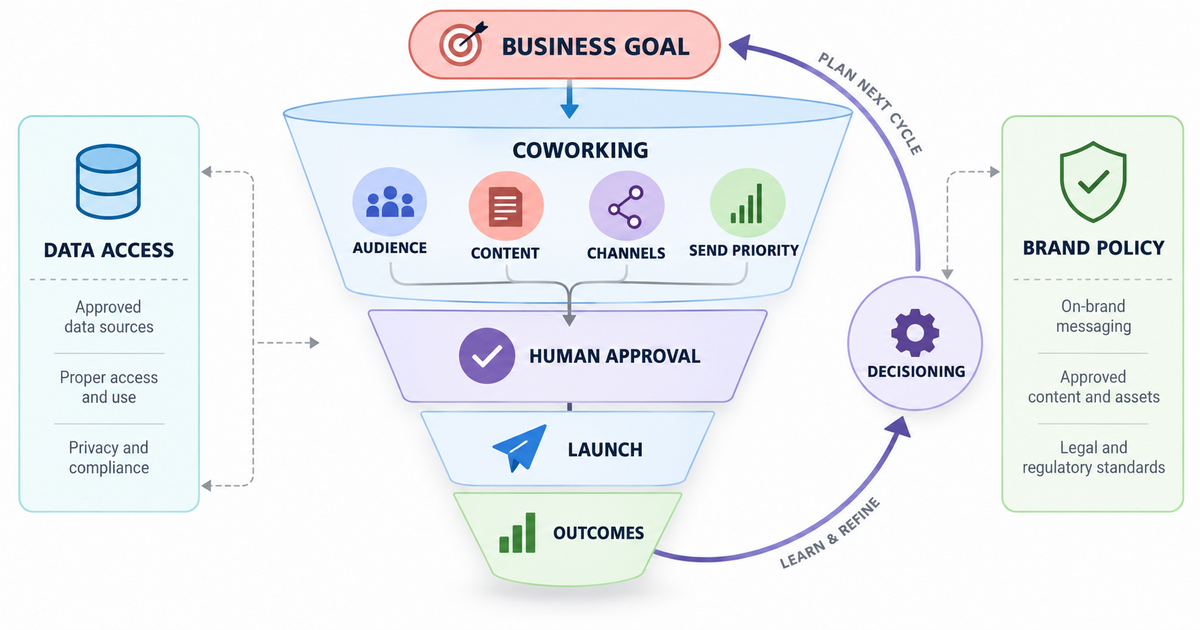
Summary: Salesforce announced Campaign Agent for Marketing Cloud Next. It is designed to turn a stated campaign goal into coordinated audience, content, channel, and send-priority work, with marketers reviewing and approving before launch. Salesforce describes coworking and decisioning phases and says general availability is planned for October.
Why it matters: The product makes a complex cross-channel workflow accessible through intent while keeping a person at the approval boundary. It is not generally available yet, and vendor descriptions do not establish lift, accuracy, brand safety, or data-governance performance; teams must verify which data, assets, channels, and actions the agent may use.
What to do now — Map one campaign safely: Define the goal, approved audience data, brand rules, channel owners, approval gate, and outcome measures before evaluating the October release.
Source: Introducing the Campaign Agent that turns goals into growth
Worth Watching
7. General
Use Writing Blocks with ChatGPT for Teachers
Open the permanent video page
Channel: OpenAI Academy
Date: September 11, 2026
Runtime: 3:21
Format: Video
Summary: A three-minute official example of turning source material into a structured handout, revising passages, and translating the result.
Why it matters: It complements today’s operations-as-code story by showing a small, reviewable content transformation for knowledge workers.
Source: Watch on OpenAI Academy
8. Agents for Non-Technical People
Connect Apps with ChatGPT for Teachers
Open the permanent video page
Channel: OpenAI Academy
Date: September 11, 2026
Runtime: 3:44
Format: Video
Summary: A concise official demonstration of connecting Gmail, reviewing unread messages, and drafting replies for human review.
Why it matters: It gives non-technical readers a bounded example of permissioned context and an approval-before-action workflow.
Source: Watch on OpenAI Academy
Worth Listening — Podcast
9. GPT-6 Astra, NYC Bans AI in Schools, Trump Goes All-In on Data Centers & Lawyers Under Pressure to Pass on AI Savings
Open the permanent podcast page
Show: The Artificial Intelligence Show
Host / guest: Paul Roetzer and Mike Kaput
Focus: Applied Generative AI for Knowledge Workers
Date: September 8, 2026
Duration: 87:30 · No episode time limit
Topics: professional work, AI literacy, services pricing, agent oversight
Summary: Paul Roetzer and Mike Kaput discuss GPT-6 Astra, school AI policy, professional-services pricing, education assessment, and practical agent use, with chapter timestamps and a full transcript.
Why it matters: The episode connects frontier capability claims to operating questions for schools, professional services, and everyday agent use while exposing the hosts’ interpretation for readers to assess.
Connection to the brief: Its discussion of AI-assisted professional work, education, pricing, and supervised computer use complements today’s governance and knowledge-work stories.
Coverage: Mandatory and core registered sources were checked. No eligible unused episode was verified in the preceding 48 hours; the documented seven-day boundary fallback was used.
Evidence: Practitioner analysis. The publisher page identifies September 8, 2026, Paul Roetzer and Mike Kaput as hosts, and a transcript ending at 1:27:30; podcasts have no duration cap.
Listen / watch: Publisher show notes and transcript
Emerging AI Watchlist
Help choose what we investigate next. Explore emerging ideas and tell us which interest you.
Editorial takeaway
Today’s through-line is explicit control: route models by task, translate values into testable boundaries, connect only approved evidence, automate visible state transitions, and keep accountable human review before consequential action.