Daily Generative AI Brief — October 24, 2026
Published: October 24, 2026
Coverage period: October 21–23, 2026
IN THIS EDITION · 6 ARTICLES / 2 VIDEOS / 2 PODCASTS
Choose what matters to your work
- Anthropic moves the Agent Skills standard into neutral Linux Foundation governanceArticle · about 5 min source read
- TK Elevator puts an evidence-grounded mobile agent beside 25,000 service techniciansArticle · about 7 min source read
- Google Cloud splits Claude deployment between managed features and stricter platform controlArticle · about 5 min source read
- Uber takes ChatGPT Work from a 1,000-person pilot to more than 30,000 employeesArticle · about 5 min source read
- AWS publishes a complete multi-turn reinforcement-learning pipeline for agentsArticle · about 12 min source read
- IBM keeps interpretability hooks compatible with high-performance vLLM executionArticle · about 7 min source read
- How business leaders budget for generative AIVideo · 9:18
- Achieving AI-readiness with hybrid cloudVideo · 9:04
- Anthropic, Google, Banks: The Agent Permission ProblemPodcast · 14:13
- The Recommendation Engine for Commodity Traders — Anekha Sokhal, MoshiPodcast · 27:00
1. Anthropic moves the Agent Skills standard into neutral Linux Foundation governance
Focus: Agents for Everyone
Date: October 22, 2026
Topics: Agent Skills, Open governance, Workflow templates
Evidence: Publisher Authored
Availability: Available
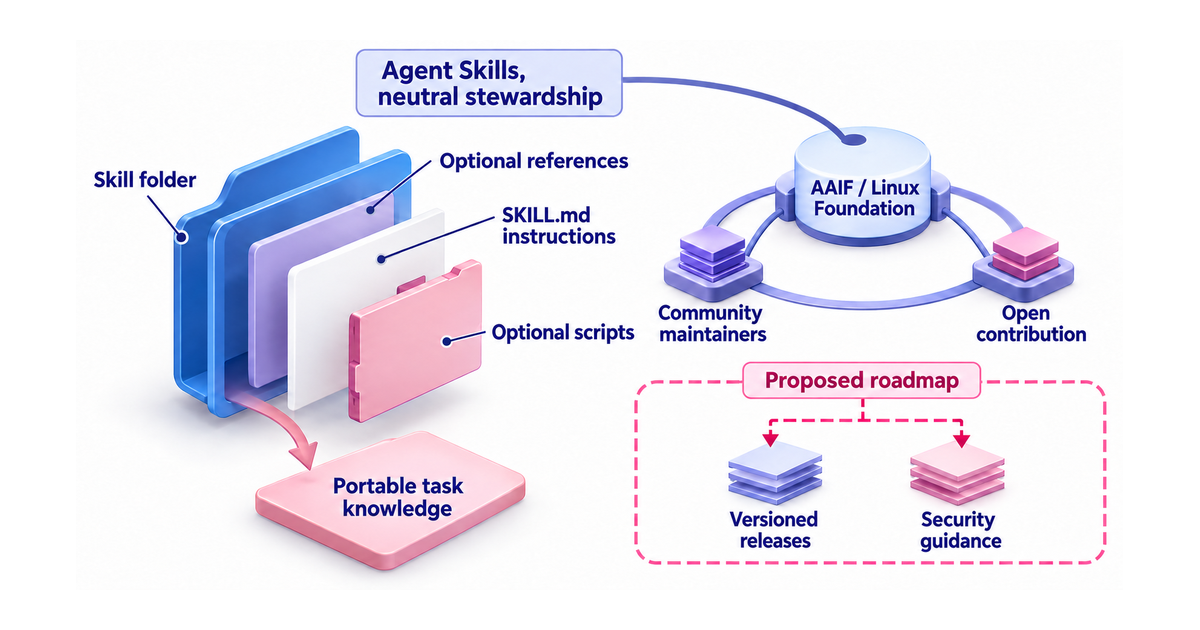
Summary: Anthropic has donated the Agent Skills specification, reference SDKs and repositories to the Linux Foundation’s Agentic AI Foundation. A Skill is a folder built around a plain-language SKILL.md file, with optional templates and references. Anthropic says more than 70 platforms support the format, while neutral governance will address versioning, security and interoperability.
Why it matters: You will learn a noncoding method for turning one repeated office workflow into a reviewed Skill: document instructions and outputs, test normal and adverse cases, assign ownership and a review date, then approve a version before reuse.
Source: Donating Agent Skills to the Agentic AI Foundation
2. TK Elevator puts an evidence-grounded mobile agent beside 25,000 service technicians
Focus: Agents for Everyone
Date: October 22, 2026
Topics: Field service, Mobile agents, Human oversight
Evidence: Publisher Authored
Availability: Available
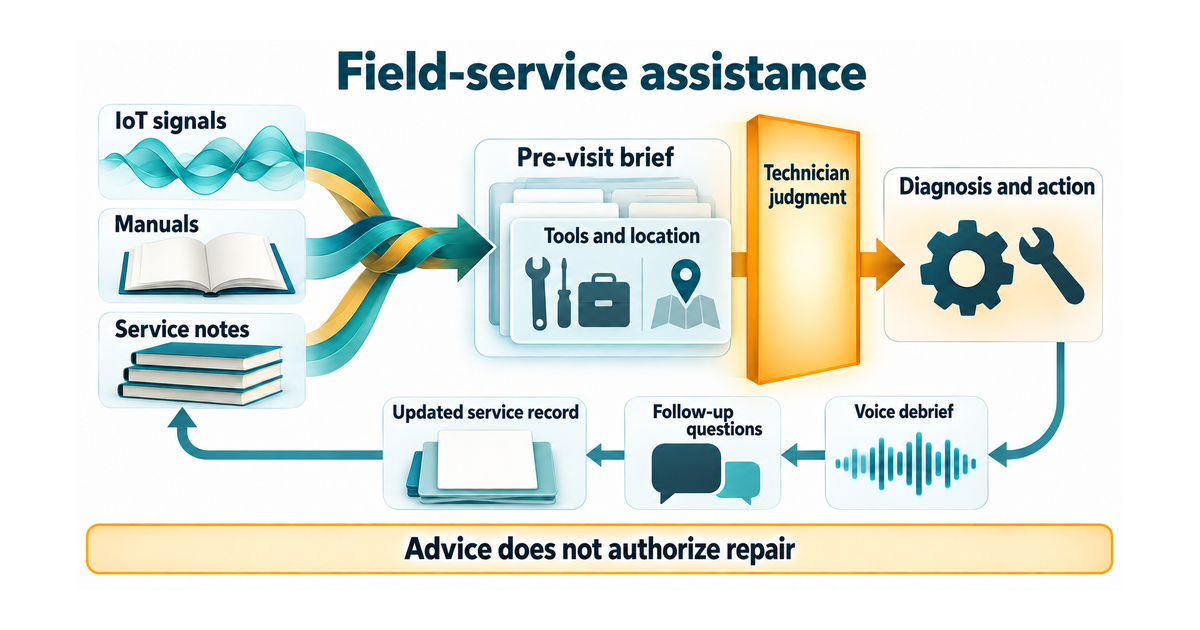
Summary: Microsoft and TK Elevator describe a mobile AI assistant for 25,000 service technicians maintaining 1.4 million units. Before a visit, it assembles tools, location details and likely issues from IoT data, manuals and notes. Afterward, a voice debrief gathers missing facts, while technicians retain responsibility for diagnosis and action.
Why it matters: You will learn how to structure a field-service workflow around pre-visit briefs, evidence retrieval, voice debriefs and human decision authority. The pattern helps operations leaders evaluate assistance that reduces search and documentation work without delegating safety-critical judgment.
Source: Data and AI agents give a lift to TK Elevator service technicians
3. Google Cloud splits Claude deployment between managed features and stricter platform control
Focus: Applied Generative AI for Knowledge Workers
Date: October 23, 2026
Topics: Claude deployment, Processor choice, Vertex governance
Evidence: Publisher Authored
Availability: Available
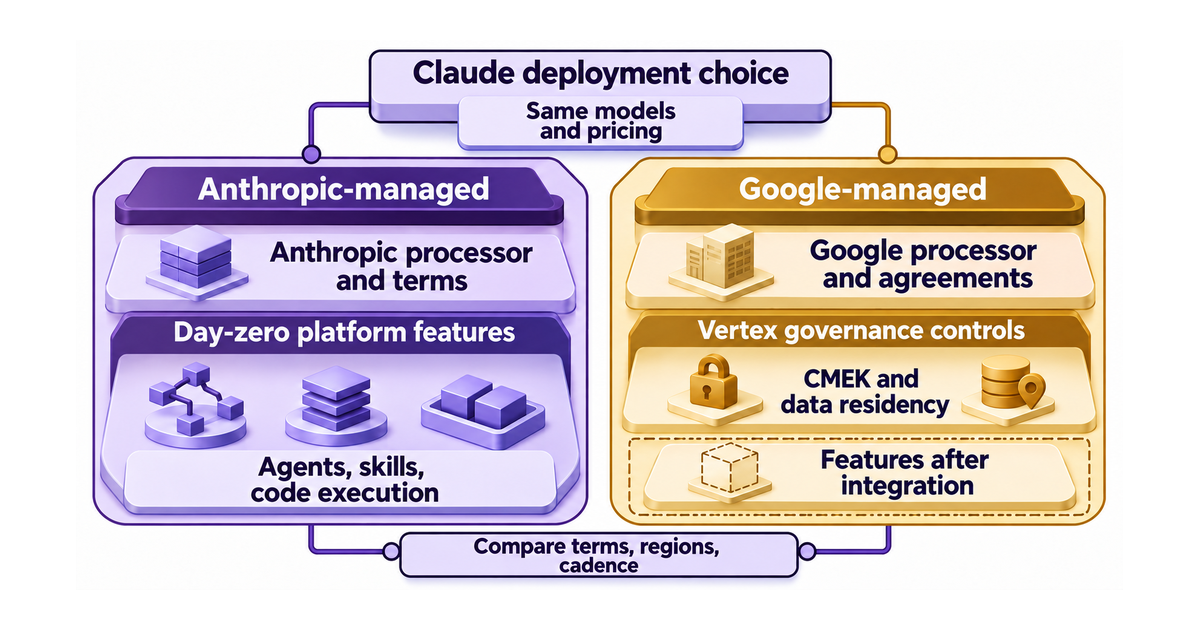
Summary: Google Cloud now offers Claude through two deployment paths: an Anthropic-managed experience with early access to agents, skills and code execution, and a Google-managed path with Vertex AI controls such as CMEK and data residency. Google says the same frontier models and pricing apply, while processors, terms and feature timing differ.
Why it matters: You will learn how to compare processor roles, contract terms, regional controls and feature cadence before choosing a deployment path. That checklist helps procurement, security and operations teams avoid treating identical model names as identical governance choices.
Source: Expanding Claude availability and deployment choice on Google Cloud
4. Uber takes ChatGPT Work from a 1,000-person pilot to more than 30,000 employees
Focus: Applied Generative AI for Knowledge Workers
Date: October 22, 2026
Topics: Enterprise rollout, Workplace connectors, Adoption metrics
Evidence: Publisher Authored
Availability: Available
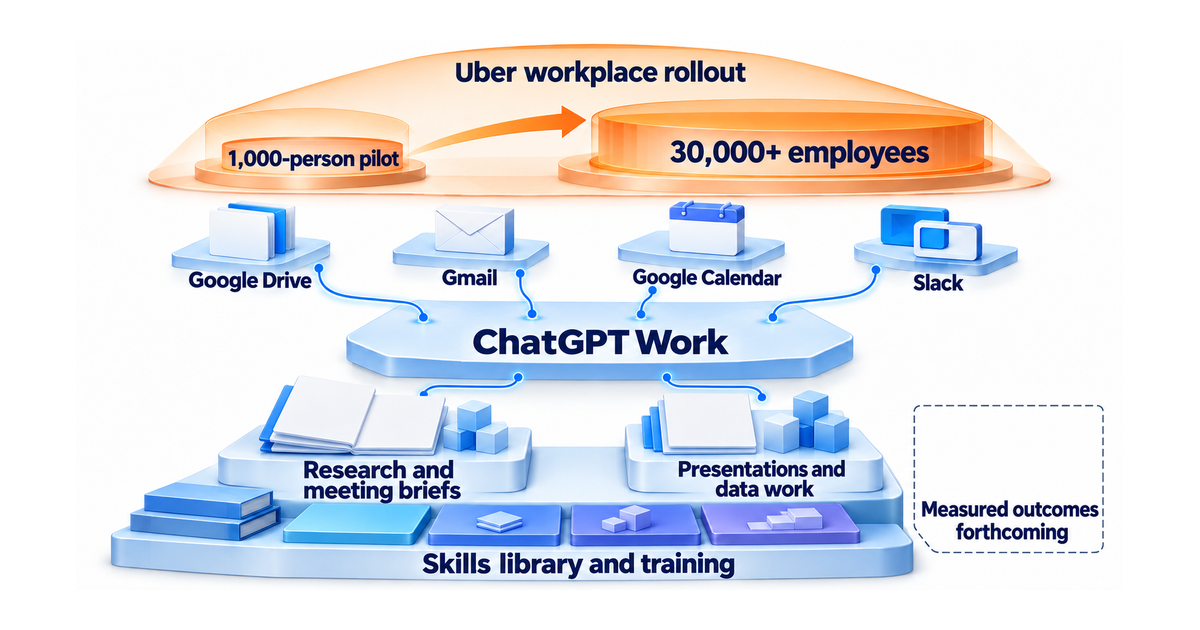
Summary: Uber is rolling ChatGPT Work out to more than 30,000 employees after a 1,000-person pilot. The deployment connects workplace tools including Google Drive, Gmail, Calendar and Slack, and supports research, briefs, presentations and data work. Uber is also building an internal skills library and role-specific training, while measurable outcome data remains forthcoming.
Why it matters: You will learn how a large employer moved from pilot access to organization-wide enablement using connectors, reusable skills and training. The account also highlights the missing measurement layer, giving leaders a concrete agenda for adoption, governance and outcome tracking.
Source: Uber brings ChatGPT Work to all employees with OpenAI
5. AWS publishes a complete multi-turn reinforcement-learning pipeline for agents
Focus: Technical AI Engineering
Date: October 23, 2026
Topics: Multi-turn RL, Outcome rewards, SageMaker training
Evidence: Publisher Authored
Availability: Available
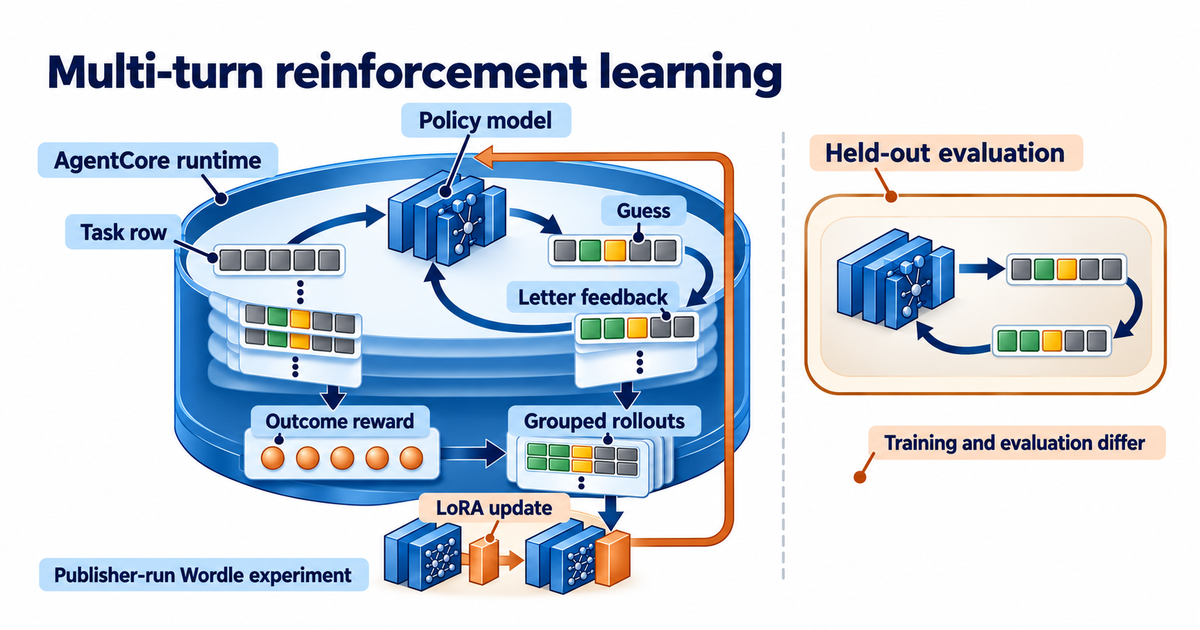
Summary: AWS shows a complete multi-turn reinforcement-learning pipeline for teaching GPT-OSS-20B to play Wordle on SageMaker AI. Its reported solve rate rose from 61% to 84% at default reasoning effort and from 15% to 69% at low effort, using outcome rewards, AgentCore execution and iterative rollout training.
Why it matters: You will learn how to frame an agent task, define outcome rewards, collect multi-turn rollouts and compare pretraining with post-training. The cost breakdown and failure modes help teams decide whether a bounded RL experiment is worth running.
Source: Multi-Turn Reinforcement Learning on Amazon SageMaker AI: A hands-on guide
6. IBM keeps interpretability hooks compatible with high-performance vLLM execution
Focus: Technical AI Engineering
Date: October 21, 2026
Topics: Runtime interpretability, Graph replay, Inference overhead
Evidence: Publisher Authored
Availability: Available
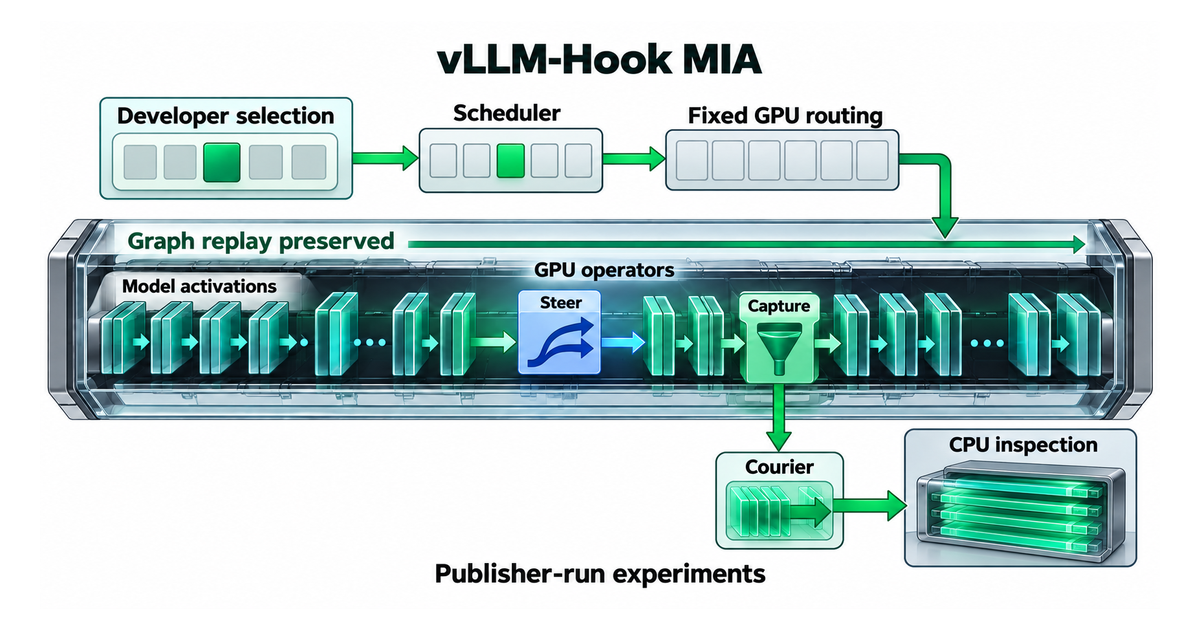
Summary: IBM Research introduces vLLM-Hook, a model-internals access layer that preserves vLLM graph replay while supporting activation inspection and steering. In publisher-run experiments, the team reports up to 20× lower instrumentation overhead than its predecessor, with roughly 2% overhead on small models and 6% on a 70-billion-parameter model.
Why it matters: You will learn where interpretability tooling can distort production inference and how graph-aware hooks reduce that penalty. The reported overhead ranges also provide a practical benchmark for deciding whether observability experiments belong in a serving-path evaluation.
Source: Toward fast AI interpretability and control
Worth Watching
7. General
How business leaders budget for generative AI
Open the permanent video page
Channel: IBM AI Academy
Date: December 19, 2024
Duration: 9:18
Format: Video
Summary: IBM researcher Anthony Marshall separates generative-AI spending that solves existing problems from investment in new capabilities. The lesson covers major cost buckets, common budgeting errors and research-backed practices used by stronger-performing organizations.
Why it matters: Leaders can turn a vague AI budget into an explicit portfolio: label operating and capability investments, identify recurring costs, connect each line to an outcome and stop funding pilots that cannot show a decision-useful measure.
Source: Watch on IBM AI Academy
8. Agents for Everyone
Achieving AI-readiness with hybrid cloud
Open the permanent video page
Channel: IBM AI Academy
Date: July 17, 2024
Duration: 9:04
Format: Video
Summary: IBM infrastructure CTO Hillery Hunter explains how fragmented environments make data and models hard to find and reuse. The lesson frames intentional hybrid cloud as an architecture decision for integrating data, AI workloads, operational agility and scalable deployment.
Why it matters: Teams can use the lesson as an architecture review: locate data and models, identify cross-environment friction, define placement constraints and decide which integration work must happen before scaling an AI workload.
Source: Watch on IBM AI Academy
Worth Listening — Podcasts
9. Anthropic, Google, Banks: The Agent Permission Problem
Open the permanent podcast page
Show: AI Signal Daily
Focus: Agents for Everyone
Date: October 22, 2026
Duration: 14:13
Summary: This episode connects portable Agent Skills, explicit bank permissions, isolated agent runtimes, human approval gates, executable rewards, policy checks, retrieval memory and inference economics. Its complete transcript distinguishes reported facts from the hosts’ judgments and repeatedly tests whether greater autonomy remains authorized, contained, measurable and affordable.
Why it matters: Readers get a concrete review frame for an agent proposal: name the identity, permission scope, containment boundary, approval point, success measure and recurring cost before granting more autonomy.
Coverage: Selected for this edition.
Listen / watch: AI Signal Daily
10. The Recommendation Engine for Commodity Traders — Anekha Sokhal, Moshi
Open the permanent podcast page
Show: Latent Space
Focus: Agents for Everyone
Date: October 22, 2026
Duration: 27:00
Summary: Anekha Sokhal explains Moshi’s attempt to turn fragmented commodity-market data and analyst routines into source-aware recommendations. The interview covers Bloomberg workflows, document extraction, trusted-source selection, task-oriented dashboards, customer discovery and the limits of automating decisions in high-stakes trading contexts.
Why it matters: Knowledge-work teams can borrow the source-selection and workflow-discovery method without copying the product claim: observe real decisions, identify trusted inputs, extract bounded evidence and keep a human accountable for consequential recommendations.
Coverage: Selected for this edition.
Listen / watch: Latent Space
Emerging AI Watchlist
1 new today · 1 updated · 35 carried forward. 2 archived / dropped recently.
New today:
- Multi-turn outcome-trained agents
Updated today:
- Governed agent skills require ownership and review cycles
Carried forward: 35
Archived / dropped recently:
- Consumer agent task permissions — The October 21 preview remains useful permission-design evidence but no longer warrants an active daily Watchlist position.
- Priority-aware inference operations — The October 20 llm-d release remains useful reference evidence but no longer warrants an active daily Watchlist position.
Help choose what we investigate next. Explore emerging ideas and tell us which interest you.
Editorial takeaway
You will learn how to frame an agent task, define outcome rewards, collect multi-turn rollouts and compare pretraining with post-training. The cost breakdown and failure modes help teams decide whether a bounded RL experiment is worth running.