← Daily Brief for November 2, 2026
Behavioral evals catch model changes provenance cannot
Focus: Technical AI Engineering
Date: October 30, 2026
Topics: Activation steering, Behavioral evals, Model provenance
Evidence: Publisher Authored
Availability: Available
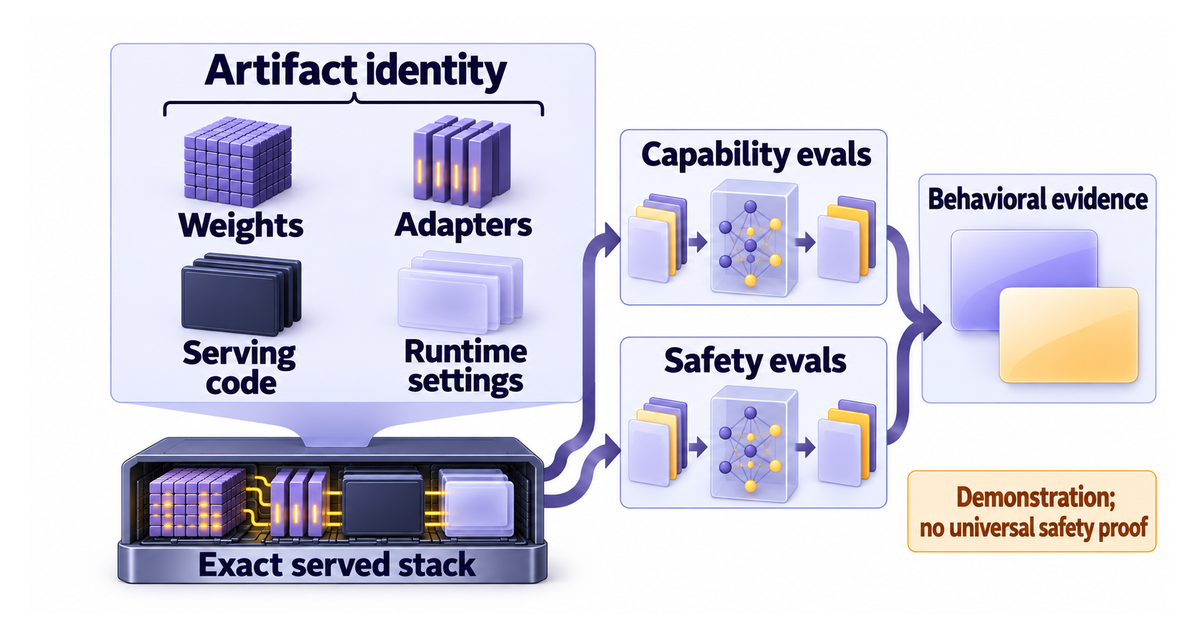
Summary: Arize tests activation steering that changes a small model’s refusal behavior while leaving much of its capability intact. The article maps how altered weights, adapters or serving code can bypass provenance checks. It argues that SBOMs and signatures establish identity, while paired safety and capability evaluations must test the exact served stack and runtime configuration.
Why it matters: Engineering teams can pin every artifact, record adapters and runtime settings, then run safety and capability checks together on the deployed combination. That catches behavioral drift a valid signature or component inventory cannot reveal.
Source: Evil Qwen and activation steering: why SBOMs aren’t enough