Daily Generative AI Brief — November 2, 2026
Published: November 2, 2026
Coverage period: October 27–30, 2026
IN THIS EDITION · 6 ARTICLES / 2 VIDEOS / 2 PODCASTS
Choose what matters to your work
- Client onboarding agents need governed case contextArticle · about 8 min source read
- A recommendation-audit Skill tests whether agents surface your workArticle · about 8 min source read
- Project ProtoStar asks scientists to publish AI-ready artifactsArticle · about 5 min source read
- Gemini now lets knowledge workers edit files inside the chatArticle · about 4 min source read
- NVIDIA maps a local voice-and-vision pipeline with NemotronArticle · about 9 min source read
- Behavioral evals catch model changes provenance cannotArticle · about 10 min source read
- How AI is breaking the internet (and what to do about it)Video · 12:41
- What AI industry leaders in Boston think of doomsday fearsVideo · 3:53
- Taking on ServiceNow: Coding Agents the Rest of UsPodcast · 38:00
- AI:AM: Carbon in the Arena, Mistral's Le Chonk, the Agent-Run Economy, Ferroelectric RAM + New HacksPodcast · 1:28:00
1. Client onboarding agents need governed case context
Focus: Agents for Everyone
Date: October 30, 2026
Topics: Case context, Evidence history, Human approval
Evidence: Publisher Authored
Availability: Available
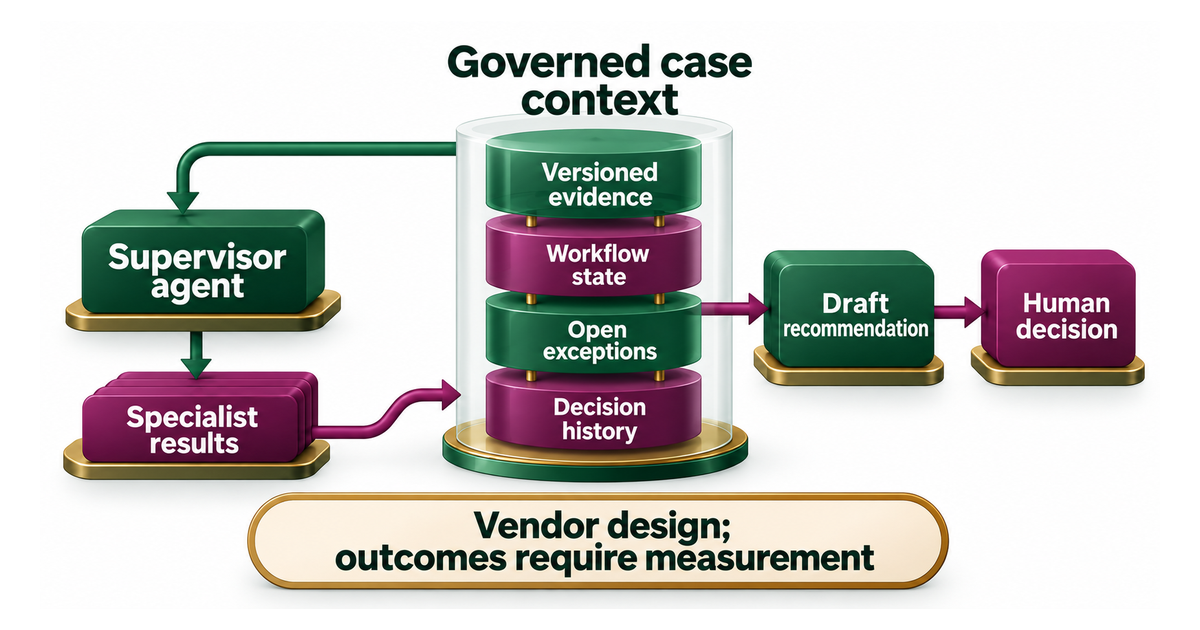
Summary: Databricks argues that wealth-management onboarding agents need a governed case context containing evidence, workflow state, exceptions and decision history. Its reference architecture coordinates specialized agents with human review and catalog controls, then measures the entire client journey. The design is vendor-authored guidance, not independent proof that the proposed stack improves outcomes.
Why it matters: Operations teams can pilot the pattern without adopting the full stack: preserve versioned evidence, assign each exception, require human approval for consequential steps and measure cycle time, rework and unresolved risk across the whole case.
Source: Wealth Management Client Onboarding Needs More Than AI
2. A recommendation-audit Skill tests whether agents surface your work
Focus: Agents for Everyone
Date: October 27, 2026
Topics: Agent Skills, Recommendation tests, Metadata review
Evidence: Publisher Authored
Availability: Available
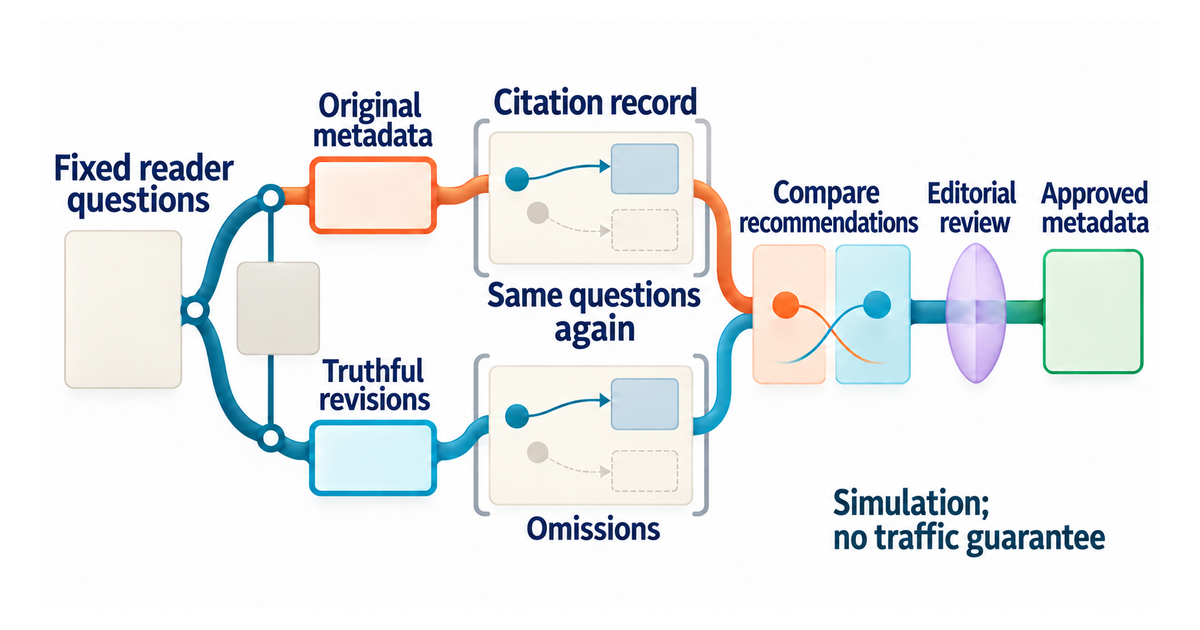
Summary: Every reports 2,484 simulated sessions testing which articles AI assistants recommend, then describes headline and description changes intended to improve retrieval. The study is not live traffic and cannot establish general ranking effects. A reusable workflow freezes reader questions, records citations and omissions, changes metadata narrowly, reruns the same tests and preserves editorial review.
Why it matters: Editorial teams can distinguish discoverability from persuasion: hold the query set constant, compare before-and-after recommendations, verify every cited article and keep only metadata that remains accurate for people. The Skill produces evidence without promising traffic gains.
Source: How to Get AI Agents to Recommend Your Articles
3. Project ProtoStar asks scientists to publish AI-ready artifacts
Focus: Applied Generative AI for Knowledge Workers
Date: October 29, 2026
Topics: Open science, Dataset provenance, Reusable artifacts
Evidence: Publisher Authored
Availability: Available
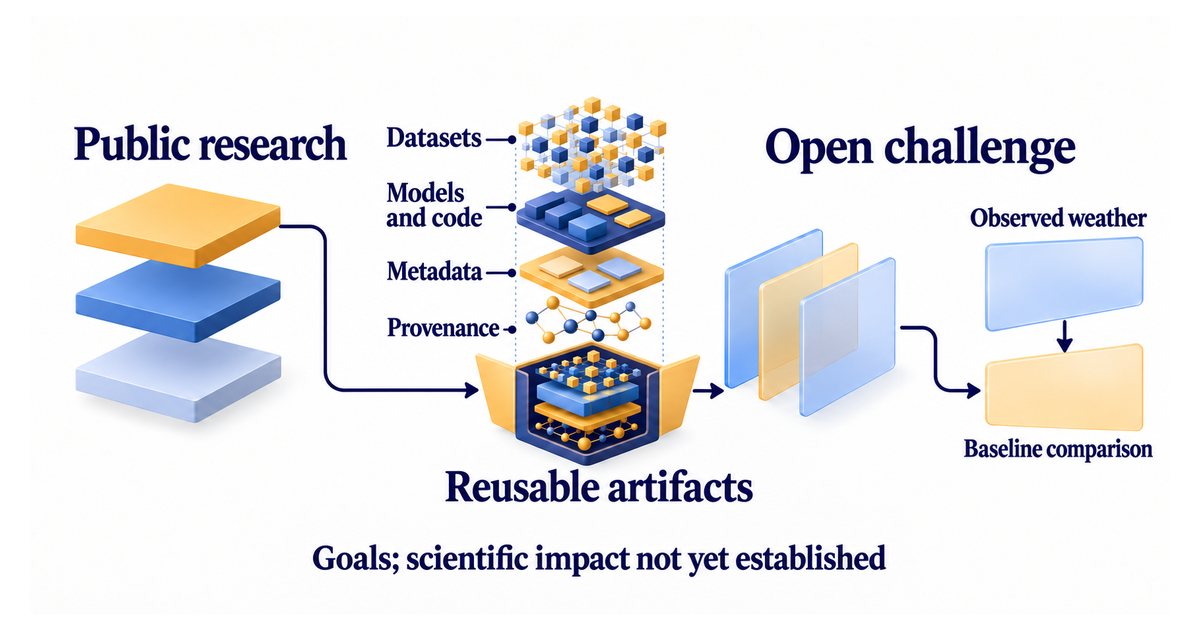
Summary: Hugging Face’s Project ProtoStar challenge asks participants to turn publicly funded scientific outputs into reusable datasets, models and baselines with clearer metadata and provenance. Running November 2–13, the effort emphasizes public artifacts that others can inspect and extend. The announcement defines participation goals, but it does not yet establish downstream scientific impact.
Why it matters: Research teams can inventory one public project, document licenses and lineage, publish a reproducible baseline and record what remains missing. That creates a reviewable handoff for future AI experiments without overstating a challenge as validated discovery.
Source: Announcing Project ProtoStar: Making Publicly Funded Science AI-Ready
4. Gemini now lets knowledge workers edit files inside the chat
Focus: Applied Generative AI for Knowledge Workers
Date: October 29, 2026
Topics: File previews, Inline editing, Export review
Evidence: Publisher Authored
Availability: Available
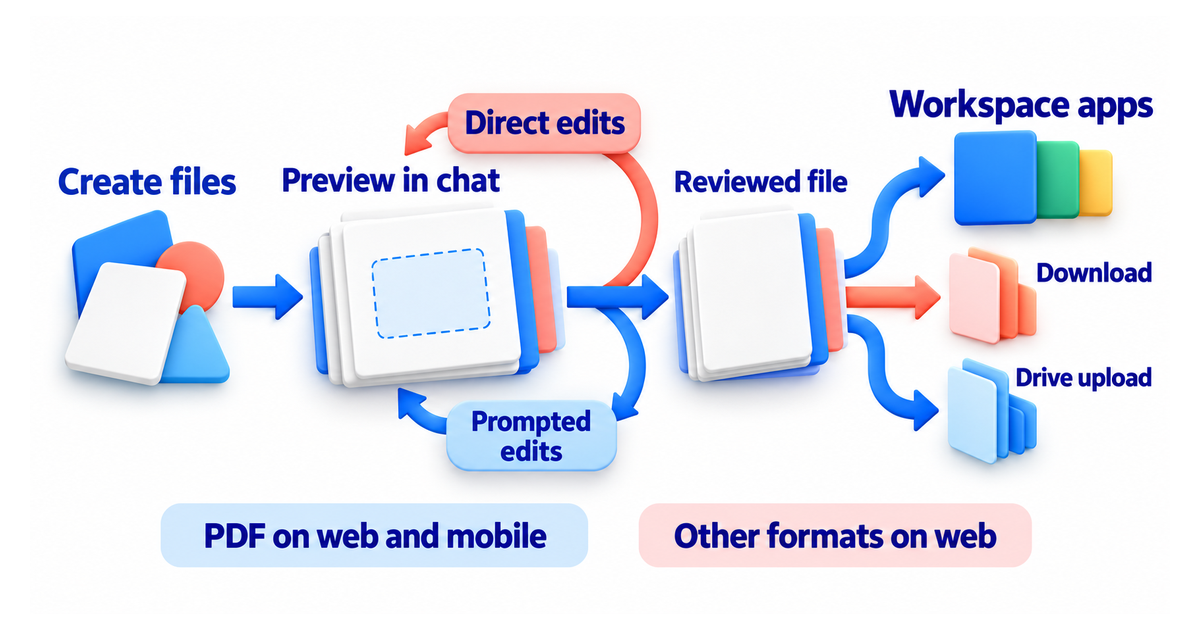
Summary: Google says Gemini users can now generate, preview and edit documents, PDFs, presentations, spreadsheets and other files inside the app. Web users can type or prompt inline changes, then open supported outputs in Workspace apps, export them or upload them to Drive. The release is broadly available, with no dedicated administrator control.
Why it matters: Teams can test one bounded file workflow by comparing the prompt, inline edits and exported result against source requirements before moving it into Drive. That preserves human review while evaluating whether chat-based creation reduces handoff friction.
Source: Create, preview, and edit files directly in the Gemini app
5. NVIDIA maps a local voice-and-vision pipeline with Nemotron
Focus: Technical AI Engineering
Date: October 30, 2026
Topics: Voice pipeline, Local inference, State orchestration
Evidence: Publisher Authored
Availability: Available
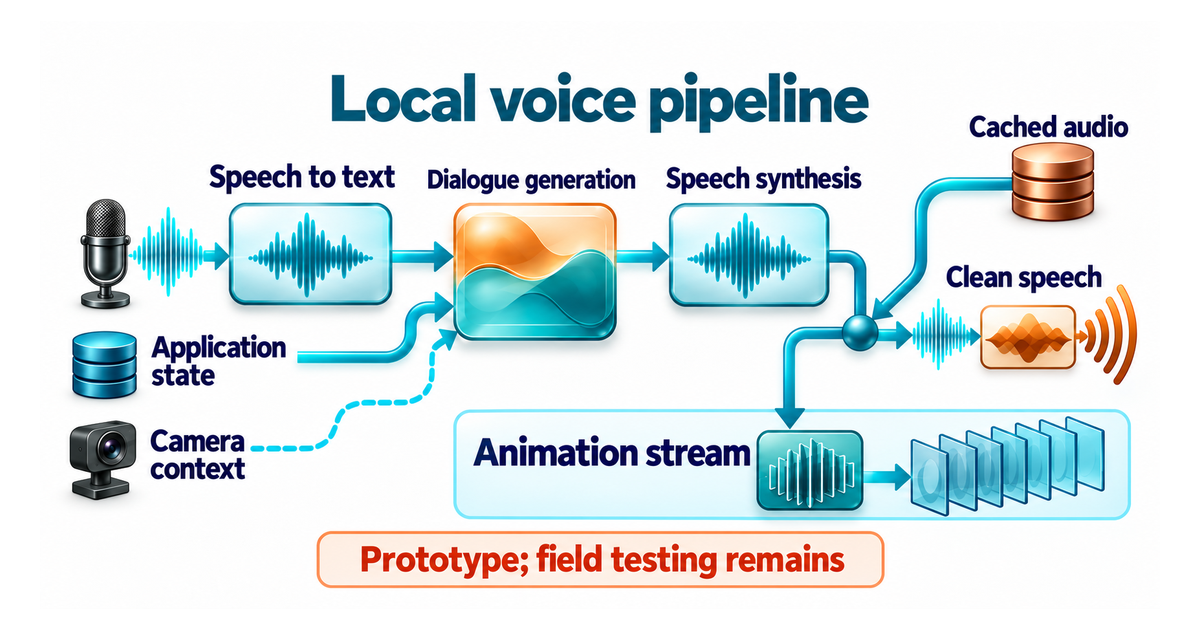
Summary: NVIDIA’s Halloween prototype combines Nemotron speech recognition, an orchestrator, Magpie speech synthesis, Audio2Face animation and vision models on a local workstation. The build explains how application state, caching and lightweight tuning keep the experience responsive. It also records practical limits, including latency, noisy audio and the need to coordinate several independently failing components.
Why it matters: Engineering teams can use the architecture as a systems checklist: measure every model boundary, cache repeatable work, preserve state explicitly and test microphone, vision and animation failures before presenting a multimodal prototype as reliable.
Source: Building a Haunted House with NVIDIA Nemotron Open Models
6. Behavioral evals catch model changes provenance cannot
Focus: Technical AI Engineering
Date: October 30, 2026
Topics: Activation steering, Behavioral evals, Model provenance
Evidence: Publisher Authored
Availability: Available
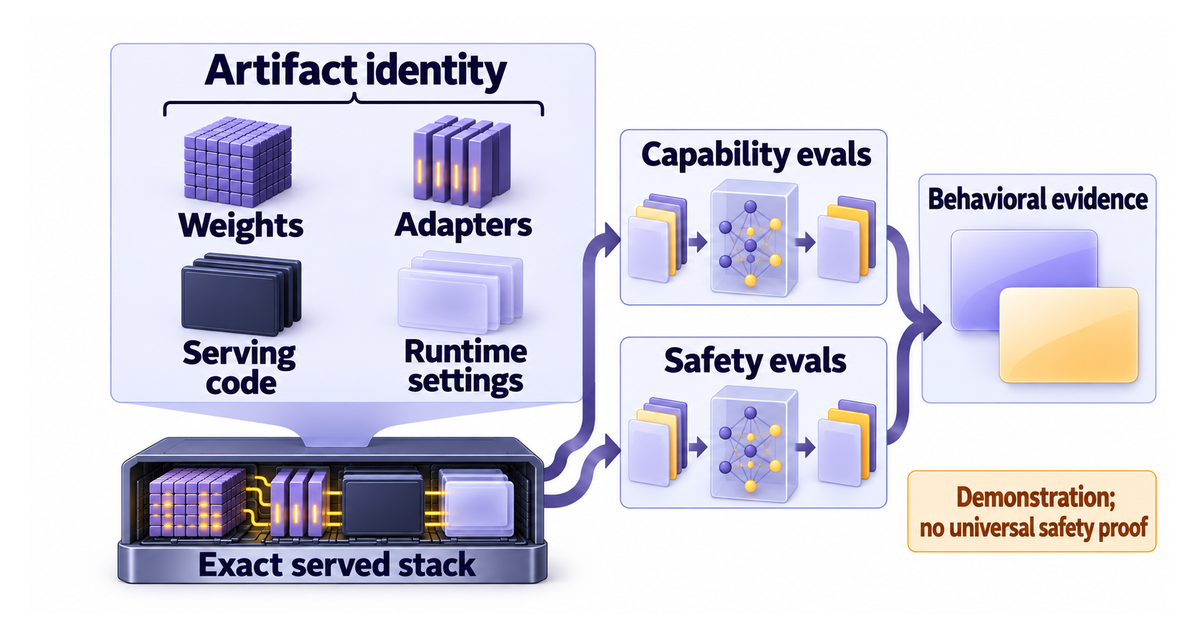
Summary: Arize tests activation steering that changes a small model’s refusal behavior while leaving much of its capability intact. The article maps how altered weights, adapters or serving code can bypass provenance checks. It argues that SBOMs and signatures establish identity, while paired safety and capability evaluations must test the exact served stack and runtime configuration.
Why it matters: Engineering teams can pin every artifact, record adapters and runtime settings, then run safety and capability checks together on the deployed combination. That catches behavioral drift a valid signature or component inventory cannot reveal.
Source: Evil Qwen and activation steering: why SBOMs aren’t enough
Worth Watching
7. General
How AI is breaking the internet (and what to do about it)
Open the permanent video page
Channel: TED
Date: April 1, 2026
Duration: 12:41 · Longer selection today: no suitable video of 10 minutes or less was found.
Format: Video
Summary: Cloudflare chief Matthew Prince argues that AI crawlers weaken the advertising and referral economics that funded much of the open web. The full TED talk distinguishes training access from ordinary search traffic and proposes technical and market responses. Its April publication date and consecutive-day TED publisher exposure are disclosed as editorial advisories.
Why it matters: Publishers and platform teams can examine crawler permissions, referral losses and compensation proposals separately, then decide which evidence would justify access rules without treating one infrastructure executive’s preferred market design as neutral consensus.
Source: Watch on TED
8. Agents for Everyone
What AI industry leaders in Boston think of doomsday fears
Open the permanent video page
Channel: CBS Boston
Date: October 6, 2026
Duration: 3:53
Format: Video
Summary: CBS Boston reports from an AI industry summit where founders and investors argue that the technology can improve work, while a Harvard Business School fellow warns that near-term cyberattacks deserve immediate safeguards. The complete report also asks whether dramatic risk claims can strengthen dominant firms. Its October 6 age and consecutive-day CBS exposure are disclosed.
Why it matters: Leaders can separate near-term operational risks from extinction rhetoric, ask who benefits from each forecast and require evidence for both optimistic and catastrophic claims before changing policy, investment or workforce plans.
Source: Watch on CBS Boston
Worth Listening — Podcasts
9. Taking on ServiceNow: Coding Agents the Rest of Us
Open the permanent podcast page
Show: No Priors
Focus: Agents for Everyone
Date: October 29, 2026
Duration: 38:00
Summary: No Priors interviews the founders of an enterprise-automation company about using coding-agent techniques for business workflows, legacy systems and service operations. The exact Apple episode page provides a complete chapter map through 37:05 and verified 38-minute runtime. Vendor claims remain attributed, and no independent audio-playback claim is made.
Why it matters: Operations leaders can compare the proposed agent pattern with their own system boundaries, exception handling and approval needs before assuming that code-generation methods transfer cleanly into enterprise service workflows or regulated decisions.
Coverage: Selected for this edition.
Listen / watch: No Priors
10. AI:AM: Carbon in the Arena, Mistral's Le Chonk, the Agent-Run Economy, Ferroelectric RAM + New Hacks
Open the permanent podcast page
Show: The Cognitive Revolution
Focus: Agents for Everyone
Date: October 31, 2026
Duration: 1:28:00
Summary: The Cognitive Revolution synthesizes five live interviews on production alignment traces, ferroelectric memory, agent-run companies, AI-enabled cyberattacks and Mistral’s large open model. The official episode page provides extensive sourced notes and a complete chapter sequence; Apple verifies the 88-minute runtime. Sponsor sections are excluded, and no audio-playback claim is made.
Why it matters: The episode lets technical leaders compare claims across evaluation, chips, labor, security and open weights while preserving which evidence is published, unpublished telemetry, company assertion or host interpretation before acting on it.
Coverage: Selected for this edition.
Listen / watch: The Cognitive Revolution
Emerging AI Watchlist
1 new today · 0 updated · 39 carried forward. 2 archived / dropped recently.
New today:
- AI-ready public science artifacts
Updated today: None
Carried forward: 39
Archived / dropped recently:
- Native multimodal world simulation — Carried forward after the October 29 review found no material evidence change requiring a new assessment.
- Product-grounded agentic commerce — Google and NielsenIQ proposed combining large-scale product listings with retail identity, local availability and measurement data for purchase agents.
Help choose what we investigate next. Explore emerging ideas and tell us which interest you.
Editorial takeaway
Engineering teams can use the architecture as a systems checklist: measure every model boundary, cache repeatable work, preserve state explicitly and test microphone, vision and animation failures before presenting a multimodal prototype as reliable.