Daily Generative AI Brief — November 4, 2026
Published: November 4, 2026
Coverage period: November 1–3, 2026
IN THIS EDITION · 6 ARTICLES / 2 VIDEOS / 2 PODCASTS
Choose what matters to your work
- Meet can show policy notices before Gemini notesArticle · about 3 min source read
- Use a three-check brief before delegating to an agentArticle · about 9 min source read
- OpenAI’s hardware agent designs a device in weeksArticle · about 7 min source read
- Palette trains a small model to build branded decksArticle · about 7 min source read
- Astra edits model weights without retrainingArticle · about 10 min source read
- StateBench exposes long-horizon tracking failuresArticle · about 8 min source read
- How people are using AI to grieve, love and connectVideo · 14:01
- The Push for AI Regulations Intensifies. What Is the Path Forward?Video · 10:11
- #249: Anthropic Files for IPO, The Self-Driving Company, AI and the Meaning of Work & Microsoft’s 60,000-Employee Buyout OfferPodcast · 1:31:00
- AI Agents Will Take 50% of Your Traffic — Is Your Data Ready? | Jeff Lunsford, CEO of TealiumPodcast · 56:11
1. Meet can show policy notices before Gemini notes
Focus: Agents for Everyone
Date: November 3, 2026
Topics: Meeting notices, AI note-taking, Admin policy
Evidence: Publisher Authored
Availability: Available
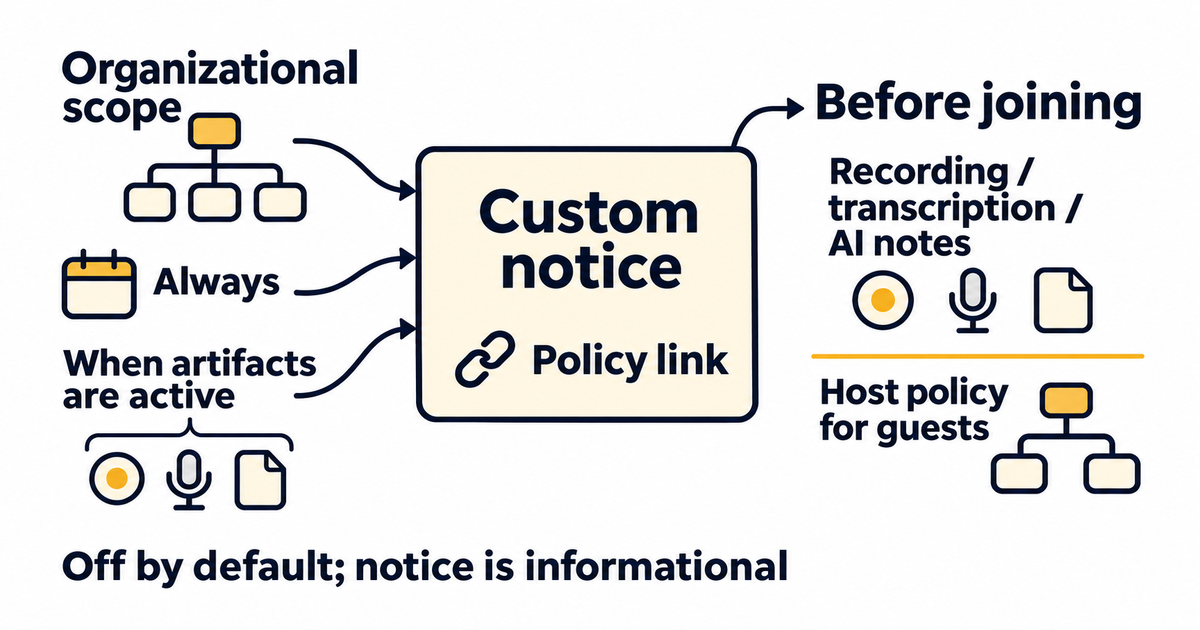
Summary: Google Workspace now lets administrators show custom policy text before users join Google Meet calls, either always or only when recording, transcription or Gemini note-taking is active. The setting is off by default, can include a policy link and can be applied by organizational unit during the extended rollout.
Why it matters: A visible pre-join notice puts governance at the moment an AI meeting feature is used. Administrators can pair the message with a durable policy page, choose the right organizational scope and confirm that guests see the host’s notice.
Source: Display custom policy before Google Meet calls
2. Use a three-check brief before delegating to an agent
Focus: Agents for Everyone
Date: November 1, 2026
Topics: Agent briefing, Source checks, Output formats
Evidence: Publisher Authored
Availability: Available
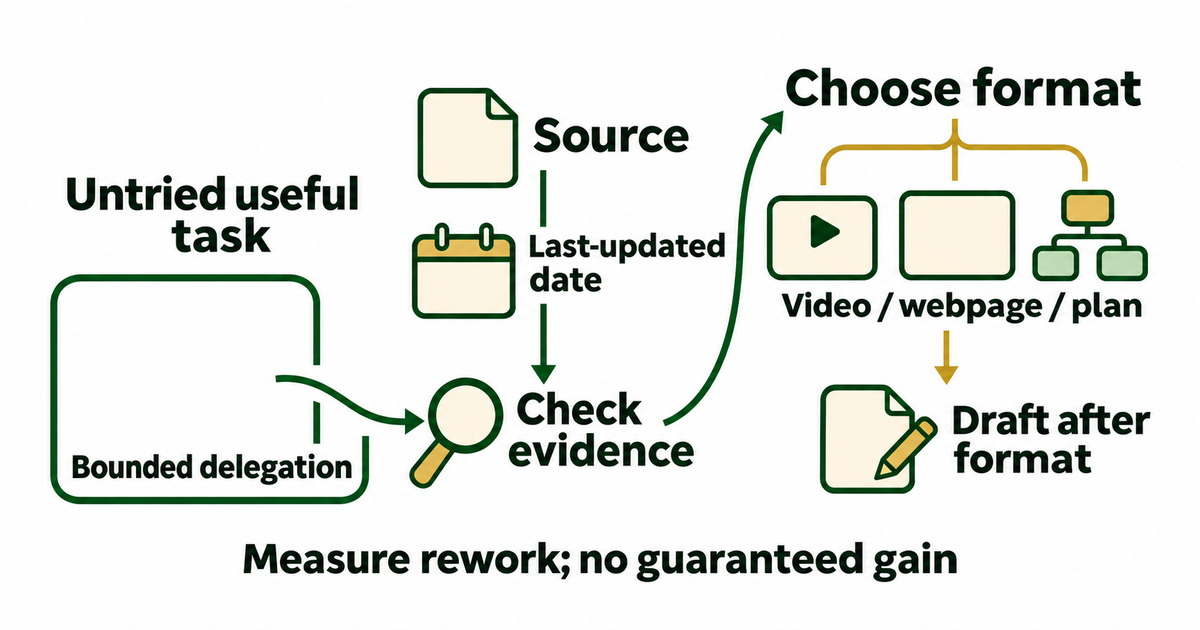
Summary: Every’s November 1 roundup turns a week of agent experiments into practical delegation habits: ask what useful work the agent can do that you have not tried, require the source and last-updated date for its answer, and choose the final format before drafting. The sequence creates a reusable agent briefing skill.
Why it matters: This skill helps uncover overlooked delegation opportunities without accepting unsupported output. Run the three checks on one bounded task, record the evidence and requested format, then compare whether the result reduced rework or surfaced a genuinely useful workflow.
Source: Agents Choose What You Read Now
3. OpenAI’s hardware agent designs a device in weeks
Focus: Applied Generative AI for Knowledge Workers
Date: November 3, 2026
Topics: Hardware design, Autonomous engineering, Manufacturing review
Evidence: Publisher Authored
Availability: Available
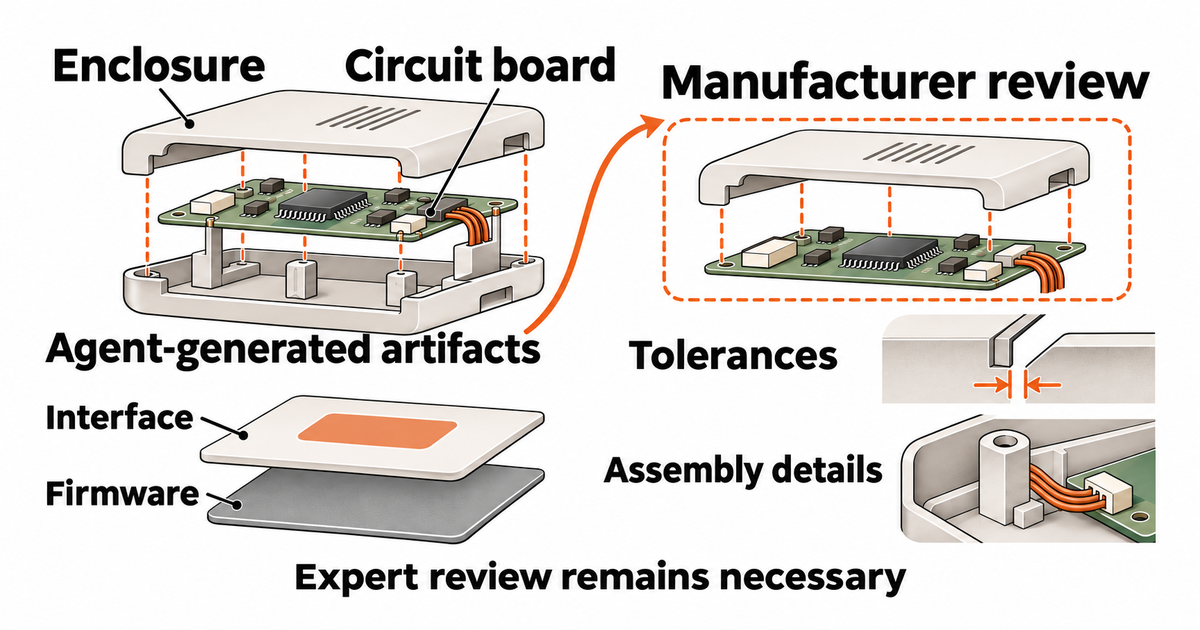
Summary: OpenAI says its Astra engineering agent produced an enclosure, circuit board, interface and firmware for a portable device without direct human edits. A prototype arrived in under a week and a small batch within a month, but manufacturer review still found tolerance, assembly and verification gaps that required expert judgment.
Why it matters: The case shows where autonomous engineering may compress iteration and where it still needs manufacturing review. Hardware teams can separate agent-generated artifacts from approval checkpoints, then measure rework, safety findings and prototype lead time against a conventional process.
Source: Accelerating engineering for the physical world
4. Palette trains a small model to build branded decks
Focus: Applied Generative AI for Knowledge Workers
Date: November 3, 2026
Topics: Presentation design, Small models, Visual QA
Evidence: Publisher Authored
Availability: Available
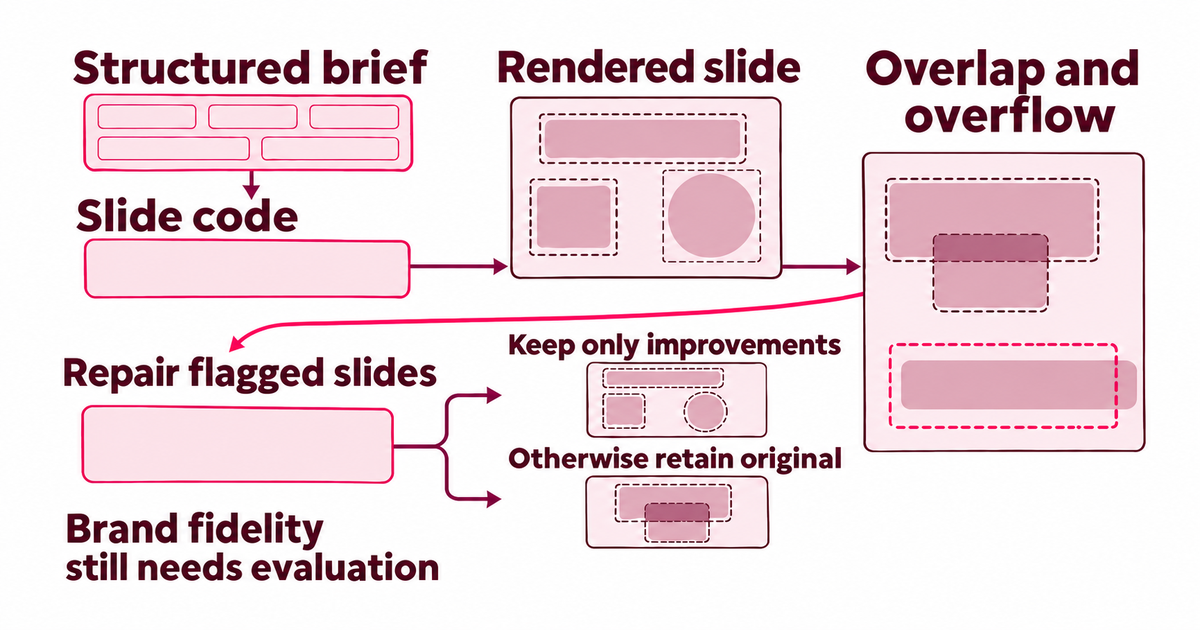
Summary: IBM Research describes Palette, a 20-billion-parameter open model trained on about 1,000 presentations and 10,000 slides. A designer component emits structured plans, a coder writes PptxGenJS, and automated overlap and overflow checks trigger repairs. On PresentBench, IBM reports the checking harness improved results by 3.5 points.
Why it matters: Presentation automation becomes more useful when layout errors are treated as test failures instead of cosmetic surprises. Teams can borrow the planner–coder–checker pattern, but should evaluate brand fidelity, accessibility and complex-chart handling on their own deck library.
Source: Palette: A Small Open Model for Creating Presentation Slides
5. Astra edits model weights without retraining
Focus: Technical AI Engineering
Date: November 2, 2026
Topics: Weight editing, Reasoning loops, Gradient-free repair
Evidence: Publisher Authored
Availability: Available
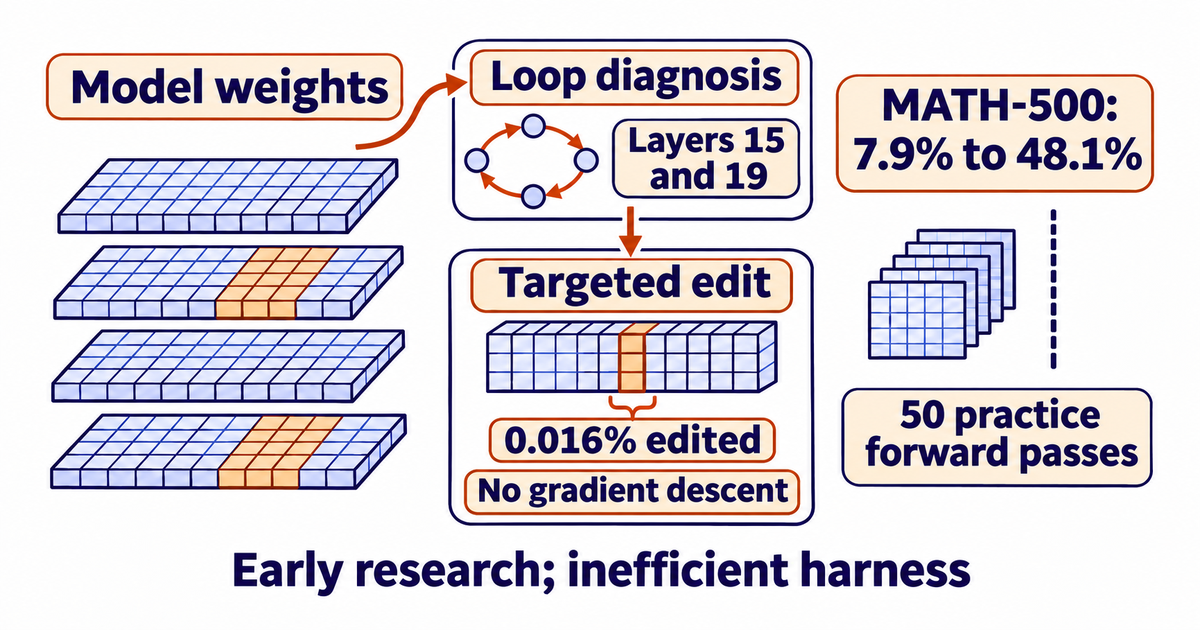
Summary: MIT CSAIL researchers report that GPT-6 Astra can inspect, write and repair neural-network weights directly. In one experiment, it changed 0.016% of Qwen3.5-0.8B’s weights, reducing reasoning loops and raising reported MATH-500 accuracy from 7.9% to 48.1% without gradient descent, while the authors stress the work remains early and inefficient.
Why it matters: Direct weight editing could become a targeted repair tool, but the evidence is still a controlled research result. Teams should reproduce the claimed gains, inspect regressions and compare compute costs before treating it as an alternative to training.
Source: The First AI Scientist That Writes Into Weight Space
6. StateBench exposes long-horizon tracking failures
Focus: Technical AI Engineering
Date: November 3, 2026
Topics: State tracking, Finite systems, Long horizons
Evidence: Publisher Authored
Availability: Available
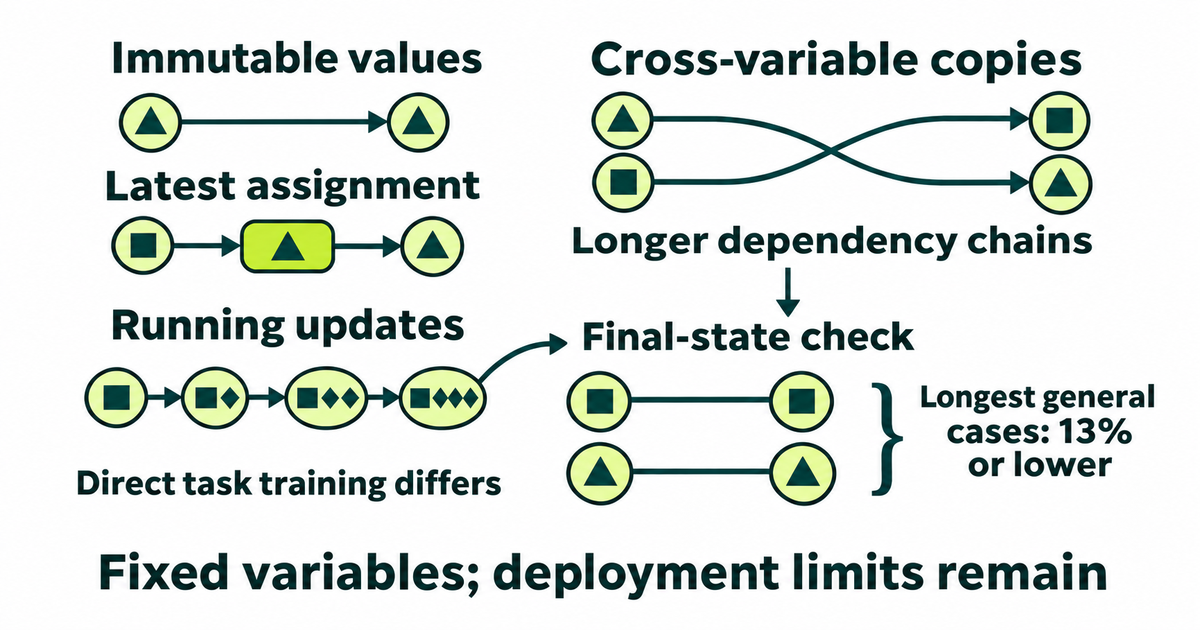
Summary: Ai2’s StateBench tests whether language models can track evolving states across long sequences in six finite-system tasks. The authors report that frontier models fall to 13% accuracy or less on the longest general cases, while directly trained recurrent and hybrid models generalize farther under the benchmark’s fixed-variable conditions.
Why it matters: Long tool chains and agent workflows depend on remembering what changed, not merely generating plausible next steps. Use this benchmark pattern to stress-test state transitions, while noting that fixed variable counts and numerical precision leave important deployment conditions untested.
Source: StateBench: A Benchmark for State Tracking
Worth Watching
7. General
How people are using AI to grieve, love and connect
Open the permanent video page
Channel: TED
Date: April 1, 2026
Duration: 14:01 · Longer selection today: no suitable video of 10 minutes or less was found.
Format: Video
Summary: Digital anthropologist Jennifer Cearns draws on hundreds of interviews to examine how people use AI for grief, love and friendship. The complete fourteen-minute TED talk challenges a simple isolation narrative without selling an AI product. Its April 2026 original date and recent TED publisher exposure are retained as editorial advisories.
Why it matters: Readers can use the talk to identify the human needs behind AI-companion use, then evaluate consent, dependency, disclosure and real-world support instead of treating synthetic relationships as uniformly helpful or harmful.
Source: Watch on TED
8. Agents for Everyone
The Push for AI Regulations Intensifies. What Is the Path Forward?
Open the permanent video page
Channel: PBS / WTTW Chicago Tonight
Date: September 17, 2026
Duration: 10:11 · Longer selection today: no suitable video of 10 minutes or less was found.
Format: Video
Summary: WTTW’s Chicago Tonight convenes university experts to distinguish catastrophic AI warnings from present harms and to debate practical regulation. The complete 10-minute report attributes competing views, discusses institutional incentives and avoids product promotion. Its September 17 original date and recent PBS publisher exposure are disclosed as editorial advisories.
Why it matters: Policy and business readers can separate dramatic forecasts from concrete harms, then ask which testing, liability, transparency and enforcement mechanisms match the evidence instead of accepting either blanket reassurance or undifferentiated fear.
Source: Watch on PBS / WTTW Chicago Tonight
Worth Listening — Podcasts
9. #249: Anthropic Files for IPO, The Self-Driving Company, AI and the Meaning of Work & Microsoft’s 60,000-Employee Buyout Offer
Open the permanent podcast page
Show: The Artificial Intelligence Show
Focus: Agents for Everyone
Date: November 3, 2026
Duration: 1:31:00
Summary: The Artificial Intelligence Show analyzes Anthropic’s IPO filing, autonomous-driving claims, AI’s effect on work and recent security incidents. The exact first-party page supplies a 91-minute identity, full transcript and timeline. Sponsor and product-promotion segments are disclosed, and company predictions remain attributed rather than treated as independent evidence.
Why it matters: The episode helps strategy teams connect financing, labor and security questions without collapsing them into one trend. Use its timecodes to open the original filings and incident sources before adopting the hosts’ forecasts.
Coverage: Selected for this edition.
Listen / watch: The Artificial Intelligence Show
10. AI Agents Will Take 50% of Your Traffic — Is Your Data Ready? | Jeff Lunsford, CEO of Tealium
Open the permanent podcast page
Show: Eye on AI
Focus: Agents for Everyone
Date: October 30, 2026
Duration: 56:11
Summary: Eye on AI interviews Tealium CEO Jeff Lunsford about agent traffic, real-time customer data, consent, identity and agentic commerce. The exact 56:11 episode page provides a timecoded transcript and show notes. Adoption, conversion and traffic projections are guest claims from a vendor executive, not independent market measurements.
Why it matters: Data and commerce teams can use the discussion to inventory identity, consent and freshness assumptions before agents act on customer context. Treat forecast percentages as hypotheses and test one bounded workflow with auditable data lineage.
Coverage: Selected for this edition.
Listen / watch: Eye on AI
Emerging AI Watchlist
1 new today · 0 updated · 41 carried forward. 1 archived / dropped recently.
New today:
- Weight-space model repair
Updated today: None
Carried forward: 41
Archived / dropped recently:
- Native multimodal world simulation — Carried forward after the October 29 review found no material evidence change requiring a new assessment.
Help choose what we investigate next. Explore emerging ideas and tell us which interest you.
Editorial takeaway
Direct weight editing could become a targeted repair tool, but the evidence is still a controlled research result. Teams should reproduce the claimed gains, inspect regressions and compare compute costs before treating it as an alternative to training.