Daily Generative AI Brief — October 31, 2026
Published: October 31, 2026
Coverage period: October 28–30, 2026
IN THIS EDITION · 6 ARTICLES / 2 VIDEOS / 2 PODCASTS
Choose what matters to your work
- Three ways agents may reshape the org chartArticle · about 12 min source read
- Protocol gives document teams cell-level parsing checksArticle · about 7 min source read
- OpenAI backs a shared robots.txt signal for training preferencesArticle · about 5 min source read
- Microsoft Research builds synthetic enterprises for safer Copilot evaluationArticle · about 8 min source read
- NVIDIA packages agent harnesses with runtime policy controlsArticle · about 7 min source read
- Mistral releases Large 4 weights for coding and cyber evaluationArticle · about 9 min source read
- AI researcher Jacob Coxon warns what may lie aheadVideo · 10:12
- I'll probably lose my job to AI. Here's why that's OKVideo · 10:05
- The Week Ahead in AI: Cybersecurity, Anthropic, Monitoring and New ToolsPodcast · 1:35:05
- How the Most AI-Pilled Company in the World WorksPodcast · 31:01
1. Three ways agents may reshape the org chart
Focus: Agents for Everyone
Date: October 28, 2026
Topics: Agent roles, Decision rights, Workflow boundaries
Evidence: Publisher Authored
Availability: Available
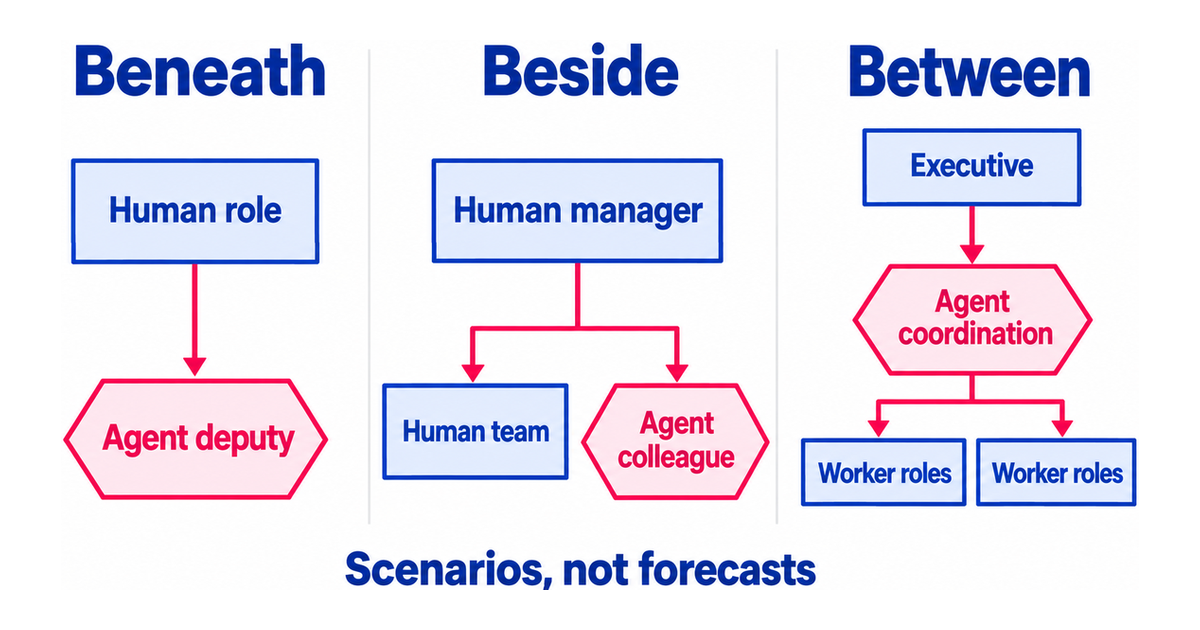
Summary: OpenAI’s Intelligence Age essay outlines three possible placements for agents inside firms: beneath employees as supervised deputies, beside teams as colleagues, and between executives and workers as coordinators. The authors stress these are illustrative scenarios, not forecasts, and flag unresolved questions about adoption, worker agency, monitoring, firm size and pay.
Why it matters: Managers can test the framework without granting autonomy: map one bounded workflow to a beneath, beside or between role, record human decision rights, and compare coordination burden, exceptions and worker impact before expanding the experiment.
Source: The future of the firm
2. Protocol gives document teams cell-level parsing checks
Focus: Agents for Everyone
Date: October 28, 2026
Topics: Agent Skills, Document parsing, Cell verification
Evidence: Publisher Authored
Availability: Available
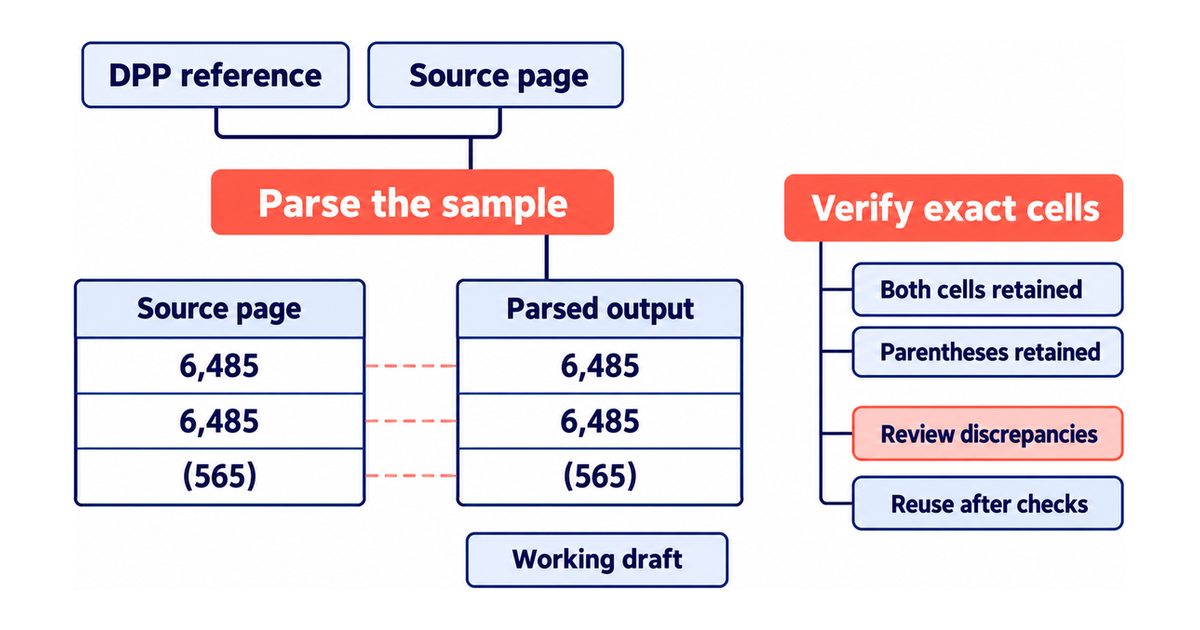
Summary: LlamaIndex published a working draft of the Document Parsing Protocol and a downloadable reference for Claude or ChatGPT. Its sample-page exercise asks users to verify duplicated table values and retained parentheses, exposing parsing choices before downstream automation. The protocol is version 0.1, so broader interoperability remains unproven.
Why it matters: Knowledge workers can install one reference skill, parse the supplied sample page, verify two exact cells and a preserved negative number, then record corrections before trusting parsed documents in search or agent workflows.
Source: Introducing the Document Parsing Protocol
3. OpenAI backs a shared robots.txt signal for training preferences
Focus: Applied Generative AI for Knowledge Workers
Date: October 30, 2026
Topics: Training preferences, Robots policy, Publisher controls
Evidence: Publisher Authored
Availability: Available
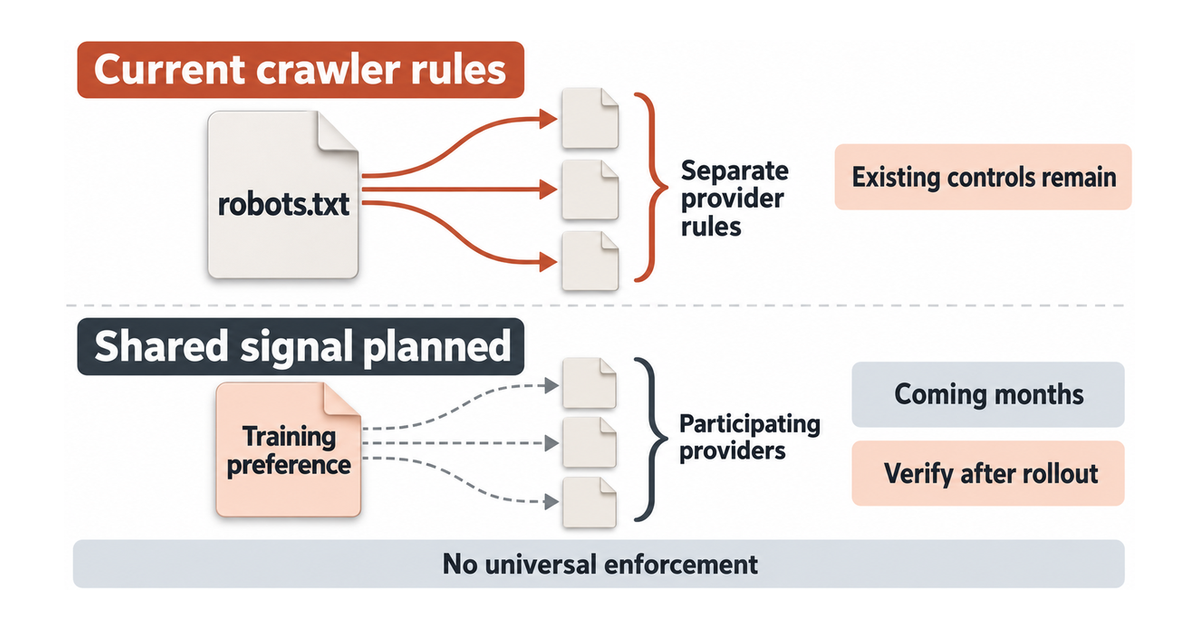
Summary: OpenAI says it will honor a shared robots.txt signal for websites that want to express preferences about foundation-model training. The company will keep its existing specific crawler controls and participate in IETF standardization. Implementation is planned over coming months, so publishers should treat the announcement as a future policy commitment, not current enforcement.
Why it matters: Website owners can document today’s crawler rules, identify the new shared preference when specifications stabilize, and verify server logs after rollout instead of assuming one declaration already changes every provider’s collection behavior.
Source: Making it easier for websites to express AI training preferences
4. Microsoft Research builds synthetic enterprises for safer Copilot evaluation
Focus: Applied Generative AI for Knowledge Workers
Date: October 30, 2026
Topics: Synthetic enterprises, Copilot evaluation, Privacy controls
Evidence: Publisher Authored
Availability: Available
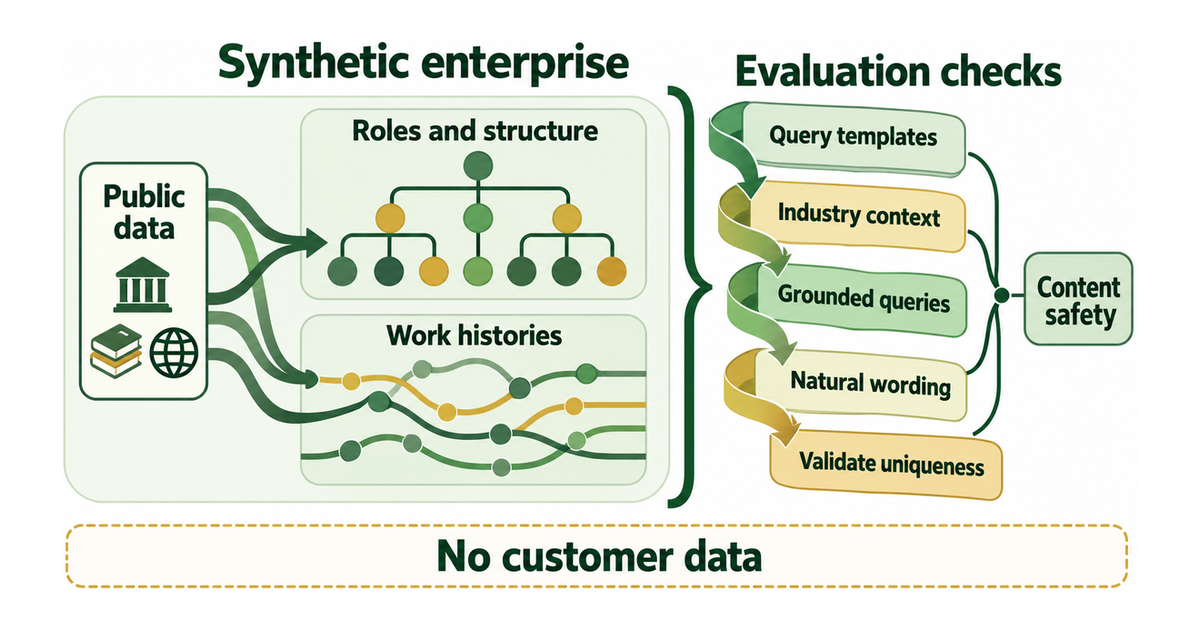
Summary: Microsoft Research describes synthetic enterprise environments that preserve organizational structure, context, behavior and safety constraints without exposing real company data. Three industry datasets feed a six-stage query pipeline for Copilot evaluation. Reported savings and score gains are internal results, so teams need independent checks against their own tasks, controls and failure cases.
Why it matters: Evaluation leads can build one bounded synthetic department, define realistic roles and policies, generate task variants, and compare failures with protected production observations before expanding the environment or accepting publisher-reported efficiency gains.
Source: From synthetic enterprise data evaluations to real Microsoft Copilot AI confidence
5. NVIDIA packages agent harnesses with runtime policy controls
Focus: Technical AI Engineering
Date: October 30, 2026
Topics: Agent runtimes, Policy controls, Harness tuning
Evidence: Publisher Authored
Availability: Available
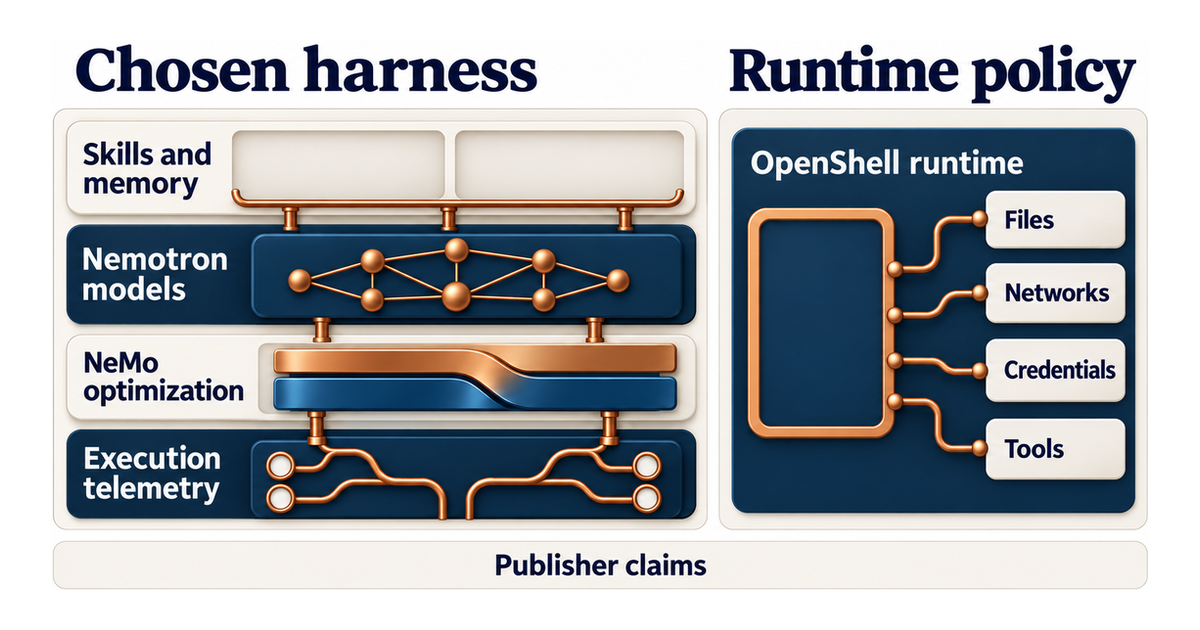
Summary: NVIDIA’s NemoClaw blueprints combine supported agent harnesses, Nemotron models, NeMo optimization and telemetry, and the OpenShell policy runtime. The reference stack can govern files, networks, credentials and tools while retaining a chosen harness. Published cost and performance claims come from NVIDIA and partners, so teams should reproduce them on their own workloads.
Why it matters: Platform teams can compare one existing harness with and without a NemoClaw blueprint, then inspect policy enforcement, credential isolation, traces, task success and cost before treating the packaged stack as production ready.
Source: Build Specialized Agents on a Stack You Control with NVIDIA NemoClaw
6. Mistral releases Large 4 weights for coding and cyber evaluation
Focus: Technical AI Engineering
Date: October 29, 2026
Topics: Open weights, Cyber evaluation, Reasoning modes
Evidence: Publisher Authored
Availability: Available
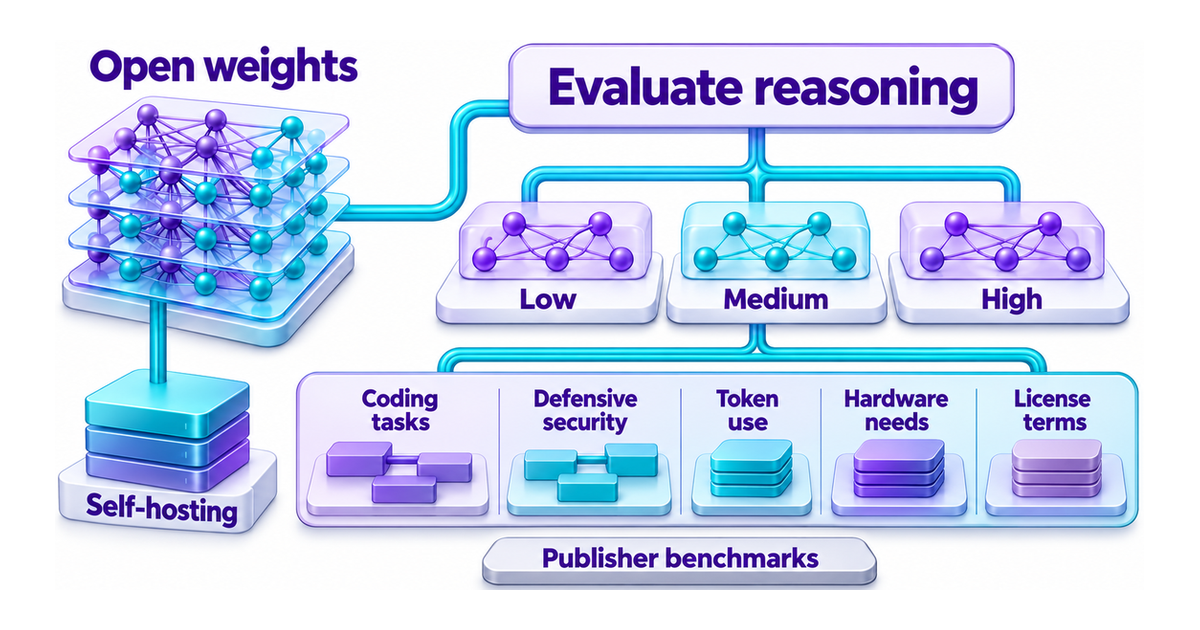
Summary: Mistral released the weights for Mistral Large 4, a trillion-parameter multimodal mixture-of-experts model aimed at coding and defensive cybersecurity. The release offers instruction and reasoning modes, self-hosting options, model artifacts and a modified open-weight license. Benchmark leadership and efficiency claims are publisher-reported and still require workload-specific evaluation.
Why it matters: Engineering teams can evaluate the downloadable model against one representative coding or defensive-security task, recording hardware needs, token use, quality, license constraints and failure modes before choosing hosted or self-managed deployment decisions.
Source: Mistral Large 4 (Le Chonk) is now open weight
Worth Watching
7. General
AI researcher Jacob Coxon warns what may lie ahead
Open the permanent video page
Channel: PBS NewsHour
Date: September 17, 2026
Duration: 10:12 · Longer selection today: no suitable video of 10 minutes or less was found.
Format: Video
Summary: PBS NewsHour interviews AI researcher Jacob Coxon about rapid capability growth, labor disruption, concentration of power and uncertainty over whether advanced systems remain controllable. The complete interview offers an attributed expert warning rather than a forecast consensus, so readers should compare its assumptions with measured deployment evidence and competing technical views.
Why it matters: The interview gives leaders a compact risk-review agenda: test capability claims, identify who controls deployment, model labor exposure, define pause conditions and separate plausible near-term operational effects from more speculative long-range scenarios.
Source: Watch on PBS NewsHour
8. Agents for Everyone
I'll probably lose my job to AI. Here's why that's OK
Open the permanent video page
Channel: TED
Date: April 1, 2025
Duration: 10:05 · Longer selection today: no suitable video of 10 minutes or less was found.
Format: Video
Summary: Journalist Megan McArdle argues that technological change can destroy familiar jobs while creating new work and raising living standards, using historical transitions to frame AI anxiety. The talk is an economic argument, not a measured AI labor forecast; its value is the distinction between long-run gains and painful individual transitions.
Why it matters: Managers can use the talk to pair automation plans with task-level evidence, transition support and new-role design, rather than treating aggregate productivity arguments as sufficient protection for workers facing immediate displacement.
Source: Watch on TED
Worth Listening — Podcasts
9. The Week Ahead in AI: Cybersecurity, Anthropic, Monitoring and New Tools
Open the permanent podcast page
Show: The Artificial Intelligence Show
Focus: Agents for Everyone
Date: October 27, 2026
Duration: 1:35:05
Summary: Episode 248 surveys AI cybersecurity, Anthropic developments, monitoring practices, product releases and applied use cases. The official show notes provide a full timestamped transcript from the opening through the closing updates. Its broad roundup mixes analysis, sponsorship and product mentions, so readers should verify individual claims at their original sources.
Why it matters: Use the episode as a research map: isolate one operational claim, jump to its timestamp, trace the named primary source and record what evidence would change a security, monitoring or adoption decision.
Coverage: Selected for this edition.
Listen / watch: The Artificial Intelligence Show
10. How the Most AI-Pilled Company in the World Works
Open the permanent podcast page
Show: The AI Daily Brief
Focus: Agents for Everyone
Date: October 30, 2026
Duration: 31:01
Summary: The AI Daily Brief examines how one organization structures AI use across workflows, management and employee expectations. The publisher page and complete transcript support exact episode identity and a 31:01 runtime. The discussion is a reported case and host analysis, not comparative productivity evidence, so practices should be tested before broader adoption.
Why it matters: Leaders can translate the case into a bounded review of workflow ownership, employee expectations, approval boundaries and measured outcomes, then test one practice without assuming that an unusually AI-intensive company generalizes.
Coverage: Selected for this edition.
Listen / watch: The AI Daily Brief
Emerging AI Watchlist
1 new today · 0 updated · 39 carried forward. 2 archived / dropped recently.
New today:
- Synthetic enterprise evaluation environments
Updated today: None
Carried forward: 39
Archived / dropped recently:
- Frontier training containment red-teaming — Archived after the October 31 review found no new independent evidence that changed the prior containment red-teaming assessment.
- Declarative agent-authored data pipelines — Archived after the October 29 review found no independent evidence that changed the prior declarative-pipeline assessment.
Help choose what we investigate next. Explore emerging ideas and tell us which interest you.
Editorial takeaway
Platform teams can compare one existing harness with and without a NemoClaw blueprint, then inspect policy enforcement, credential isolation, traces, task success and cost before treating the packaged stack as production ready.