Daily Generative AI Brief — October 26, 2026
Published: October 26, 2026
Coverage period: October 21–23, 2026
IN THIS EDITION · 6 ARTICLES / 2 VIDEOS / 2 PODCASTS
Choose what matters to your work
- Microsoft publishes a reusable Skill-authoring lab for business workflowsArticle · about 12 min source read
- Oracle adds human-approved command centers for recruiting and workforce operationsArticle · about 4 min source read
- UT Austin builds a cross-disciplinary sports analytics lab on Google CloudArticle · about 6 min source read
- Salesforce outlines conversational agents for hardware-asset lifecycle workArticle · about 6 min source read
- Databricks tests declarative pipelines as a safer target for coding agentsArticle · about 7 min source read
- OpenAI explains how Habitat rebalanced storage for more than one billion usersArticle · about 10 min source read
- How responsible AI can prepare you for regulationsVideo · 9:23
- From pilot to production: Driving ROI with genAIVideo · 9:53
- Karpathy’s AI gap, free Adobe clones, and AI’s effect on persistencePodcast · 27:00
- METR Red-Teams Internal OpenAI Monitors as CoT Trainability Breakthroughs EmergePodcast · 5:51
1. Microsoft publishes a reusable Skill-authoring lab for business workflows
Focus: Agents for Everyone
Date: October 23, 2026
Topics: Skill authoring, Workflow reuse, Maker testing
Evidence: Publisher Authored
Availability: Available
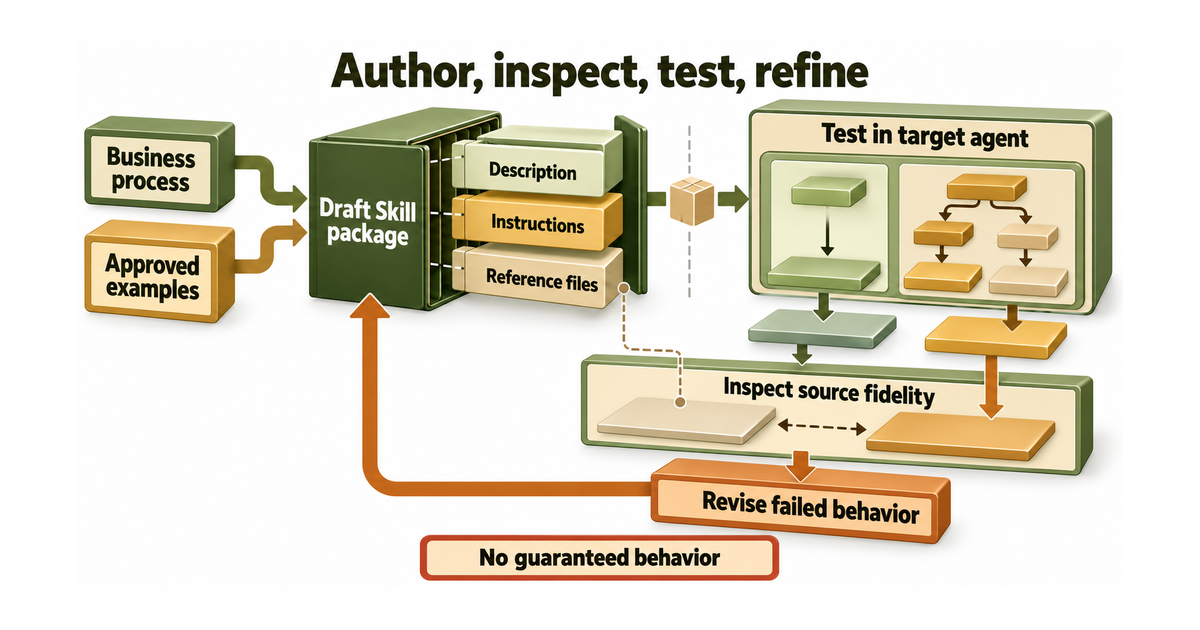
Summary: Microsoft’s updated 30-minute Copilot Agents Lab teaches makers to attach, inspect and test an existing Skill, call it from a workflow, or generate one from a business process. Examples cover guided project intake and supplier-proposal comparison. The lab emphasizes scoped instructions, supporting files, explicit outputs and iterative testing before reuse.
Why it matters: You will learn a reusable noncoding procedure: choose one stable business process, collect approved examples, generate a Skill, inspect its files and instructions, test normal and adverse cases, compare the artifact with source evidence, correct failures and version the result.
Source: Skills and Skill Authoring
2. Oracle adds human-approved command centers for recruiting and workforce operations
Focus: Agents for Everyone
Date: October 21, 2026
Topics: Recruiting workflow, Human approval, HR governance
Evidence: Publisher Authored
Availability: Available
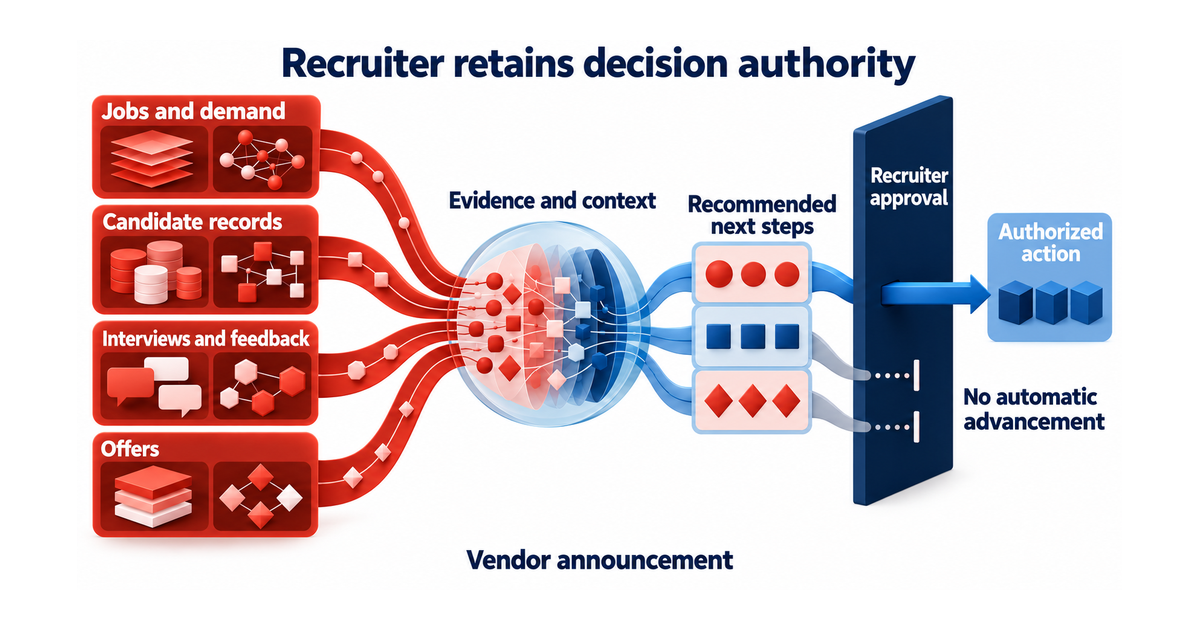
Summary: Oracle announced Fusion Claw-powered HR applications that combine workforce records with governed execution. Its Recruiting Command Center gathers job, candidate, interview, feedback, offer and demand data, highlights recruiter actions and prepares next steps for consideration and approval. Related applications address sourcing, workforce planning, compensation and payroll while retaining organizational oversight.
Why it matters: You will learn how to bound a noncoding recruiting-agent pilot: choose one hiring stage, name the records it may read, require evidence beside every recommendation, reserve candidate advancement for a recruiter and audit accepted, rejected and corrected suggestions.
Source: Oracle Introduces Claw-Powered Fusion Agentic Applications for HR
3. UT Austin builds a cross-disciplinary sports analytics lab on Google Cloud
Focus: Applied Generative AI for Knowledge Workers
Date: October 23, 2026
Topics: Sports analytics, Data stewardship, Student teams
Evidence: Publisher Authored
Availability: Available
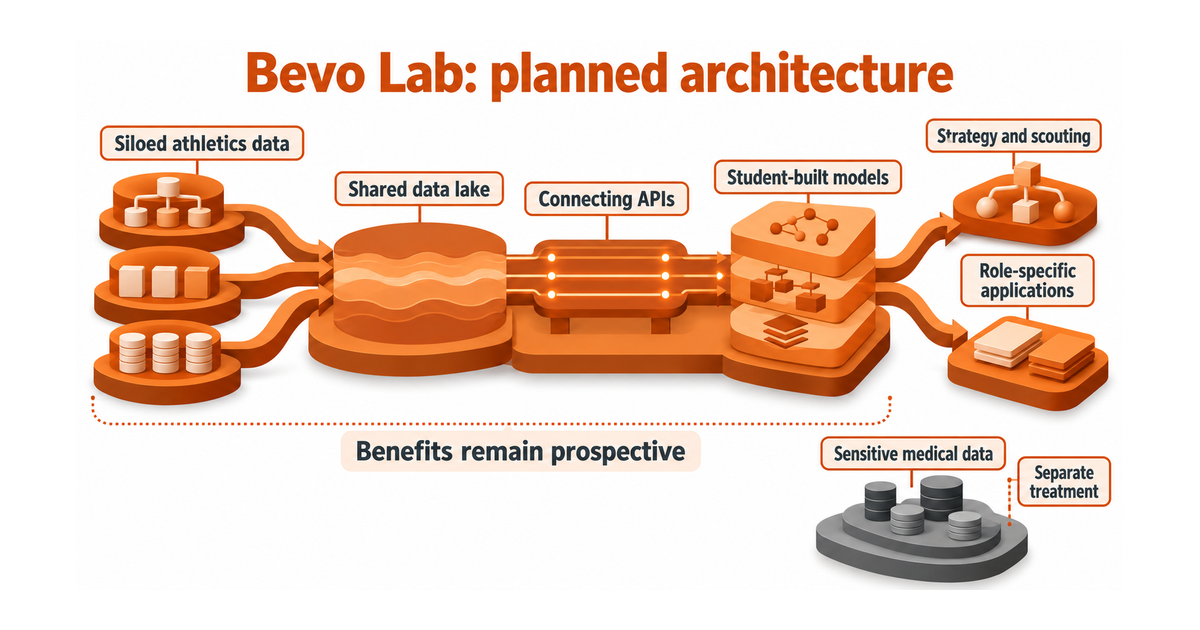
Summary: Google Cloud profiles Bevo Lab, a University of Texas initiative combining cloud services, Gemini and student teams to unify siloed athletics data. The planned work starts with a governed data lake and APIs, then supports analysis across performance, recovery and team decisions. Sensitive medical data is explicitly separated, and claimed benefits remain prospective.
Why it matters: You will learn how to stage an applied analytics program before chasing model demos: establish data stewardship, connect systems through APIs, separate sensitive domains and define decision owners. The lab offers a useful operating design while its outcomes are still unproven.
Source: Steering AI: Inside Bevo Lab, U. Texas’ plans for “the best analytics platform in all of sports”
4. Salesforce outlines conversational agents for hardware-asset lifecycle work
Focus: Applied Generative AI for Knowledge Workers
Date: October 22, 2026
Topics: Asset lifecycle, Conversational IT, Exception queues
Evidence: Publisher Authored
Availability: Available
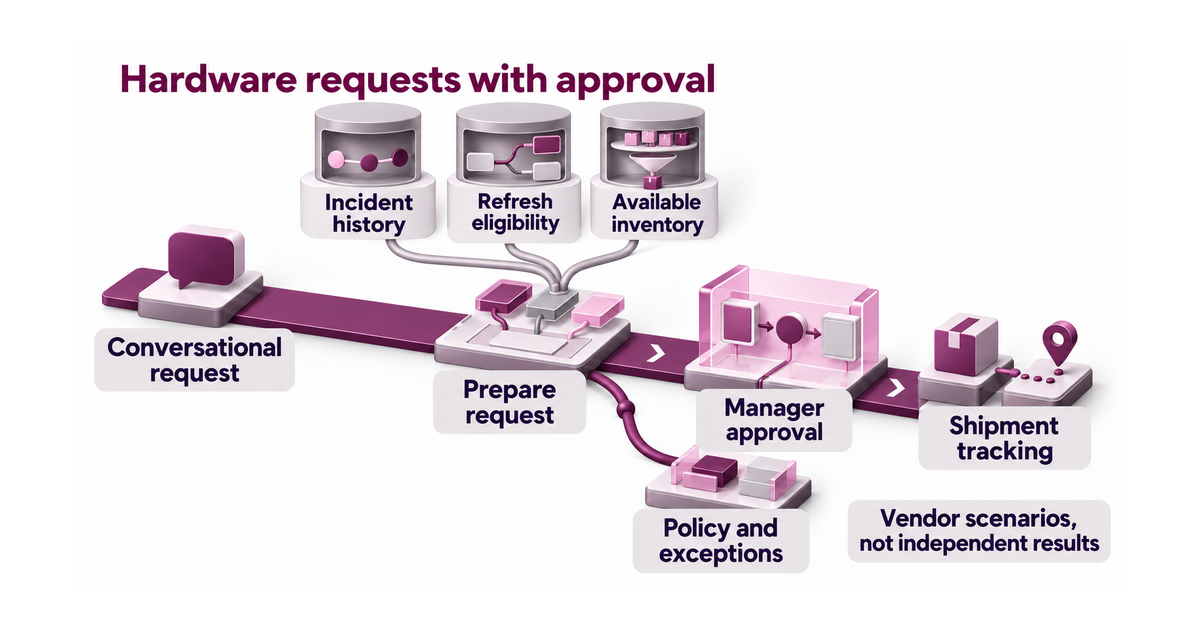
Summary: Salesforce describes replacing hardware request portals and manual refresh campaigns with conversational agents that check eligibility, inventory and incident history, prepare requests, route approvals and track fulfillment. Asset managers shift toward policy and exception review. The scenarios are product-led examples, and the reported autonomous completion figures are not independently verified.
Why it matters: You will learn to redesign one asset workflow around intent, authoritative records, approval gates and exception queues instead of adding a chatbot to a portal. Use the examples to map controls and measurements before accepting vendor efficiency claims.
Source: Entering the Agentic and Conversational Era of Hardware Asset Management
5. Databricks tests declarative pipelines as a safer target for coding agents
Focus: Technical AI Engineering
Date: October 23, 2026
Topics: Declarative pipelines, Agent validation, Compute efficiency
Evidence: Publisher Authored
Availability: Available
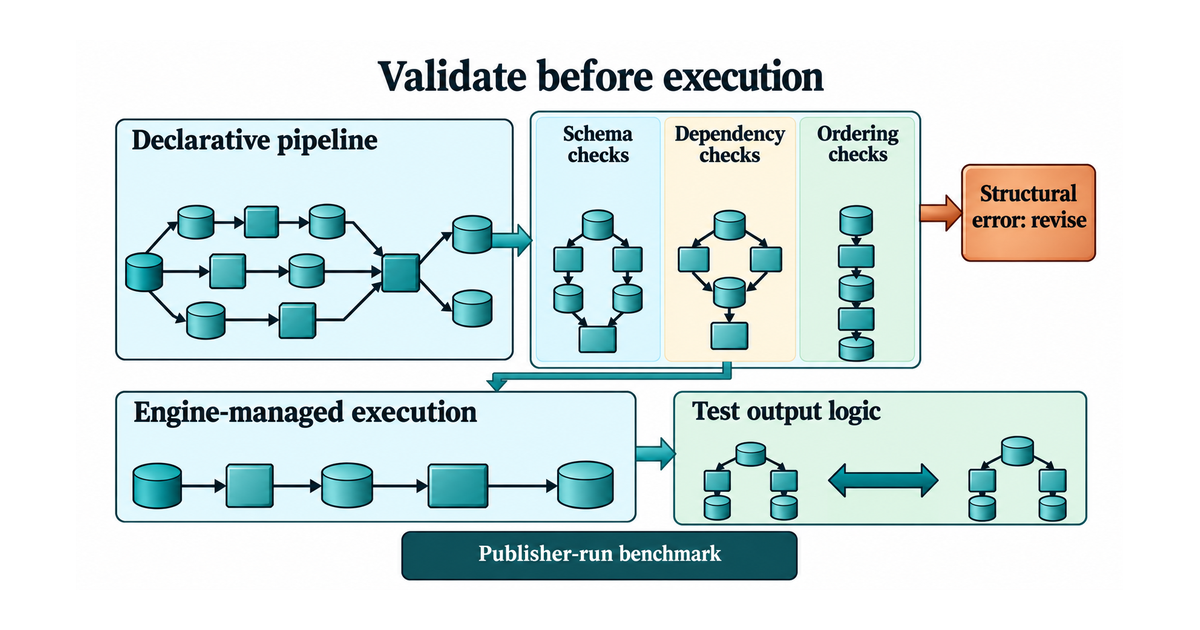
Summary: Databricks benchmarked 528 agent-built Spark pipelines and reports that declarative authoring used about one-thirty-fourth the compute time of procedural attempts while producing 51 percent less code. Structural dry runs caught schema, dependency and ordering errors before execution. The measurements are publisher-run and do not establish behavior across other engines or agents.
Why it matters: You will learn why declarative interfaces can reduce an agent’s costly trial-and-error loop: validate structure before execution, delegate scheduling boilerplate to the engine and measure review burden alongside compute. Apply the pattern to one bounded pipeline before generalizing.
Source: Built for Agents: The Case for Spark Declarative Pipelines
6. OpenAI explains how Habitat rebalanced storage for more than one billion users
Focus: Technical AI Engineering
Date: October 23, 2026
Topics: Storage scaling, Tenant isolation, Regional latency
Evidence: Publisher Authored
Availability: Available
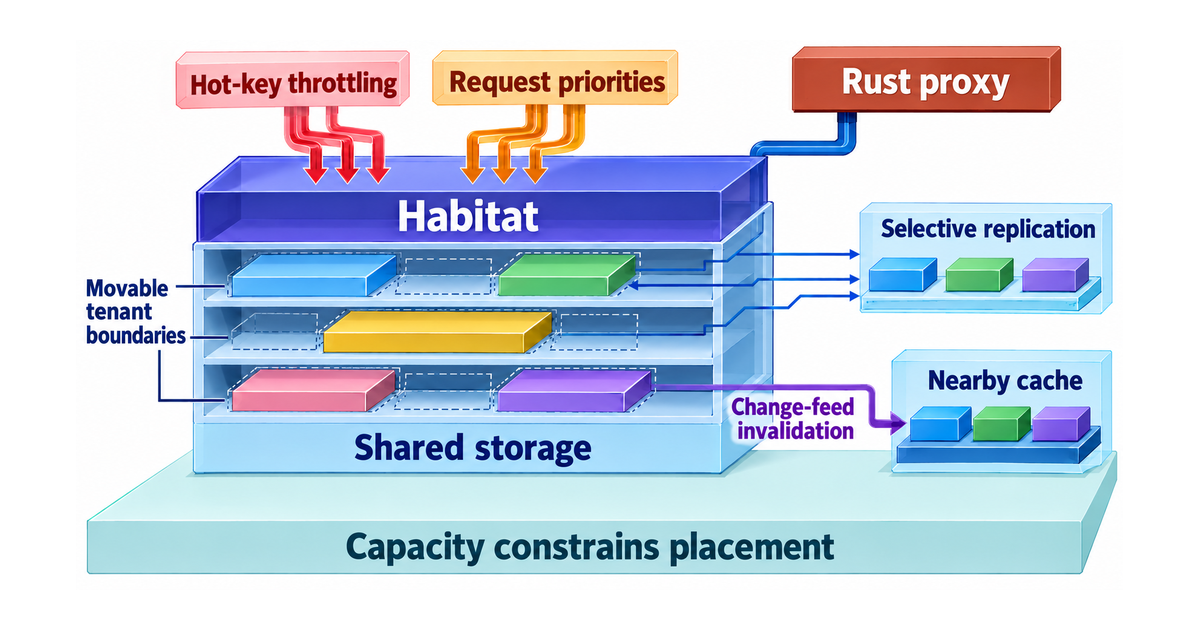
Summary: OpenAI describes evolving Habitat, its application-storage platform, to serve more than one billion users across 40 regions on Azure Cosmos DB. The team moved from fixed tenant placement toward multi-tenancy with data movement, hot-key controls, quality-of-service policies, selective replication, integrated caching and a Rust proxy, while documenting tradeoffs rather than a universal blueprint.
Why it matters: You will learn a staged response to uneven AI-product growth: measure noisy neighbors, preserve movable tenant boundaries, place latency-sensitive data selectively and reduce proxy overhead only after workload evidence. The architecture offers decisions to test, not a copy-ready configuration.
Source: Rapidly scaling online storage to serve over 1 billion ChatGPT users (Part II)
Worth Watching
7. General
How responsible AI can prepare you for regulations
Open the permanent video page
Channel: IBM AI Academy
Date: June 1, 2024
Duration: 9:23
Format: Video
Summary: IBM AI Academy’s Christina Montgomery explains why enterprise AI governance should cover intended use, accountability, privacy and operational controls rather than treating compliance as a final checklist. The publisher companion lesson states three objectives and an exact 9:23 runtime. This is an evergreen instructional selection, not current October 2026 research.
Why it matters: Use the lesson to turn a proposed AI use case into a governance review: name the responsible owner, intended and prohibited uses, privacy constraints, monitoring signals and the evidence required before release.
Source: Watch on IBM AI Academy
8. Agents for Everyone
From pilot to production: Driving ROI with genAI
Open the permanent video page
Channel: IBM AI Academy
Date: June 1, 2024
Duration: 9:53
Format: Video
Summary: IBM AI Academy’s Matt Candy frames generative-AI scale around productivity, an AI control center and operating-model redesign. The publisher companion lesson provides an exact 9:53 runtime and three teaching objectives. It is selected as a concise planning exercise, while its value claims remain vendor-authored and require organization-specific measurement.
Why it matters: Use the episode to challenge a pilot before scaling: identify the business process that changes, define the control owner, select a measurable baseline and stop if adoption, quality or cost evidence does not improve.
Source: Watch on IBM AI Academy
Worth Listening — Podcasts
9. Karpathy’s AI gap, free Adobe clones, and AI’s effect on persistence
Open the permanent podcast page
Show: Possible with Reid Hoffman
Focus: Agents for Everyone
Date: October 21, 2026
Duration: 27:00
Summary: Reid Hoffman and Aria Finger examine the widening gap between everyday AI use and frontier access, cheaper software creation and a randomized study linking brief AI assistance with lower persistence after removal. The complete transcript presents these as open strategic and design questions rather than settled forecasts.
Why it matters: Listeners get a practical product question: does an assistant merely accelerate completion, or help users retain judgment and persistence? Apply that lens to one workflow by measuring unsupported dependence, recovery after tool removal and the human decisions that remain.
Coverage: Selected for this edition.
Listen / watch: Possible with Reid Hoffman
10. METR Red-Teams Internal OpenAI Monitors as CoT Trainability Breakthroughs Emerge
Open the permanent podcast page
Show: The Observability Layer
Focus: Agents for Everyone
Date: October 23, 2026
Duration: 5:51
Summary: The Observability Layer summarizes a METR and Redwood red-team of OpenAI’s historical agent-monitoring system, research on trainable chain-of-thought legibility and methods for diagnosing multi-agent failures. Its complete transcript clearly identifies AI hosts and human editorial direction, while distinguishing patched claims from independently assessed historical behavior.
Why it matters: Listeners get four audit prompts for agent monitoring: enforce time-bounded checks, isolate execution from tools, hide monitor details from the agent and evaluate verifiers on controlled failure distributions. Each recommendation still requires the underlying primary research before implementation.
Coverage: Selected for this edition.
Listen / watch: The Observability Layer
Emerging AI Watchlist
1 new today · 0 updated · 37 carried forward. 2 archived / dropped recently.
New today:
- Declarative agent-authored data pipelines
Updated today: None
Carried forward: 37
Archived / dropped recently:
- Desktop-scale frontier model clusters — The October 22 cluster demonstration remains technically notable, but no independent comparable follow-up changed its publisher-run baseline during this refresh.
- Multi-turn outcome-trained agents — AWS’s October 23 training pipeline remains useful, but no independent comparable replication was reviewed during this refresh.
Help choose what we investigate next. Explore emerging ideas and tell us which interest you.
Editorial takeaway
You will learn why declarative interfaces can reduce an agent’s costly trial-and-error loop: validate structure before execution, delegate scheduling boilerplate to the engine and measure review burden alongside compute. Apply the pattern to one bounded pipeline before generalizing.