Daily Generative AI Brief — October 23, 2026
Published: October 23, 2026
Coverage period: October 21–22, 2026
IN THIS EDITION · 6 ARTICLES / 2 VIDEOS / 2 PODCASTS
Choose what matters to your work
- ServiceNow Arc brings a governed personal enterprise agent to ordinary office workArticle · about 7 min source read
- Metis turns an agent Skill into a short, testable and governed work procedureArticle · about 9 min source read
- OpenAI coordinates thousands of agents across a whole-brain CRISPR atlasArticle · about 10 min source read
- Volkswagen expands Copilot access across 330,000 employees and tracks active agent useArticle · about 6 min source read
- Eight DGX Spark nodes run a 753-billion-parameter model with measured topology trade-offsArticle · about 12 min source read
- Cohere Rerank 5 adds passage-level context focus and two serving tiersArticle · about 8 min source read
- Trust, transparency and governance in AIVideo · 9:38
- Select the right AI use case for your businessVideo · 3:50
- OpenAI’s Jalapeño chip, NVIDIA’s $279B push and Anthropic’s Claude DuetPodcast · 8:16
- Sundar Pichai: Google’s Frontier Imperative, Compute Scarcity Dilemmas, Future AI Products and BusinessesPodcast · 46:59
1. ServiceNow Arc brings a governed personal enterprise agent to ordinary office work
Focus: Agents for Everyone
Date: October 21, 2026
Topics: Personal enterprise agents, Policy enforcement, Office workflows
Evidence: Publisher Authored
Availability: Available
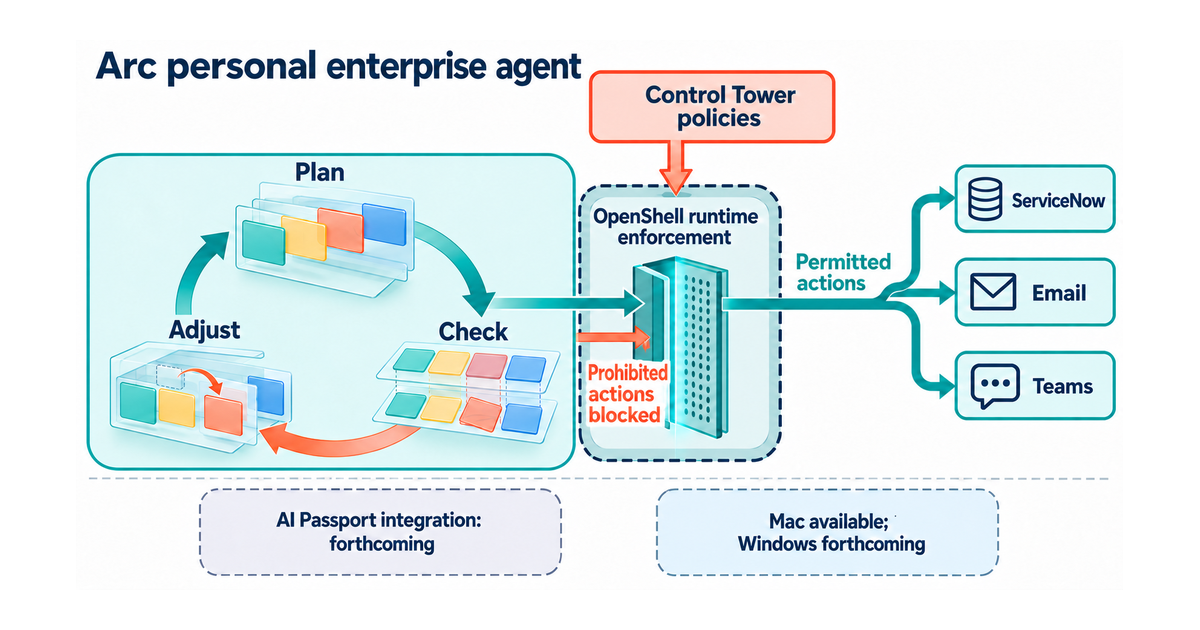
Summary: ServiceNow announced general availability of Arc, a personal enterprise agent that works across ServiceNow, email and Teams and can plan, check and adjust tasks. The company describes policy enforcement through Control Tower and NVIDIA OpenShell, while several passport and hardware controls remain forthcoming. Availability starts on Mac, with Windows promised within weeks.
Why it matters: Operations managers can pilot one low-risk coordination task by naming allowed sources, approval points and prohibited actions before connecting the agent. Readers gain a noncoding test for whether policy controls, audit history and human handoffs remain visible across familiar workplace applications.
2. Metis turns an agent Skill into a short, testable and governed work procedure
Focus: Agents for Everyone
Date: October 21, 2026
Topics: Agent Skills, Workflow testing, Skill governance
Evidence: Publisher Authored
Availability: Available
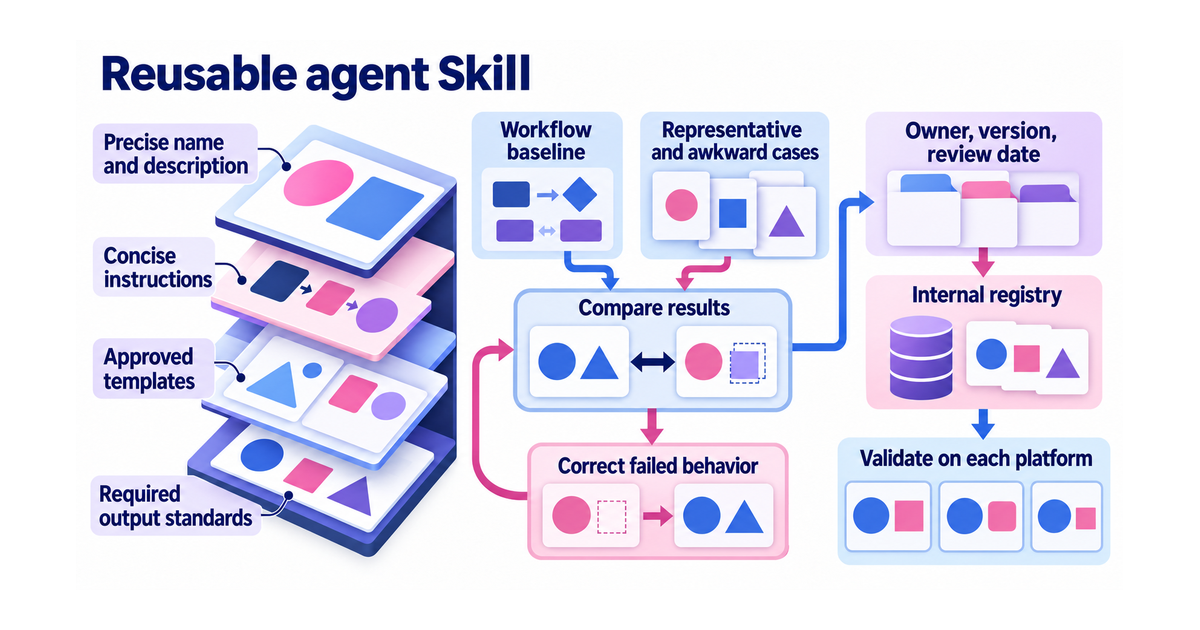
Summary: Metis Strategy explains how organizations can package a repeated workflow as a portable agent Skill using a concise SKILL.md, supporting templates and explicit output standards. The procedure emphasizes precise naming, minimal instructions, representative tests, version ownership and a registry. Portability still requires platform-specific validation, and enterprise surfaces are at different maturity levels.
Why it matters: Proposal leaders can convert one recurring review routine into a reusable Skill without programming: define the baseline, write concise instructions, attach approved templates, test normal and awkward cases, compare results, assign an owner and review date, then register the approved version.
Source: AI agent skills: Beyond the platform
3. OpenAI coordinates thousands of agents across a whole-brain CRISPR atlas
Focus: Applied Generative AI for Knowledge Workers
Date: October 21, 2026
Topics: Distributed research, CRISPR atlas, Expert validation
Evidence: Publisher Authored
Availability: Available
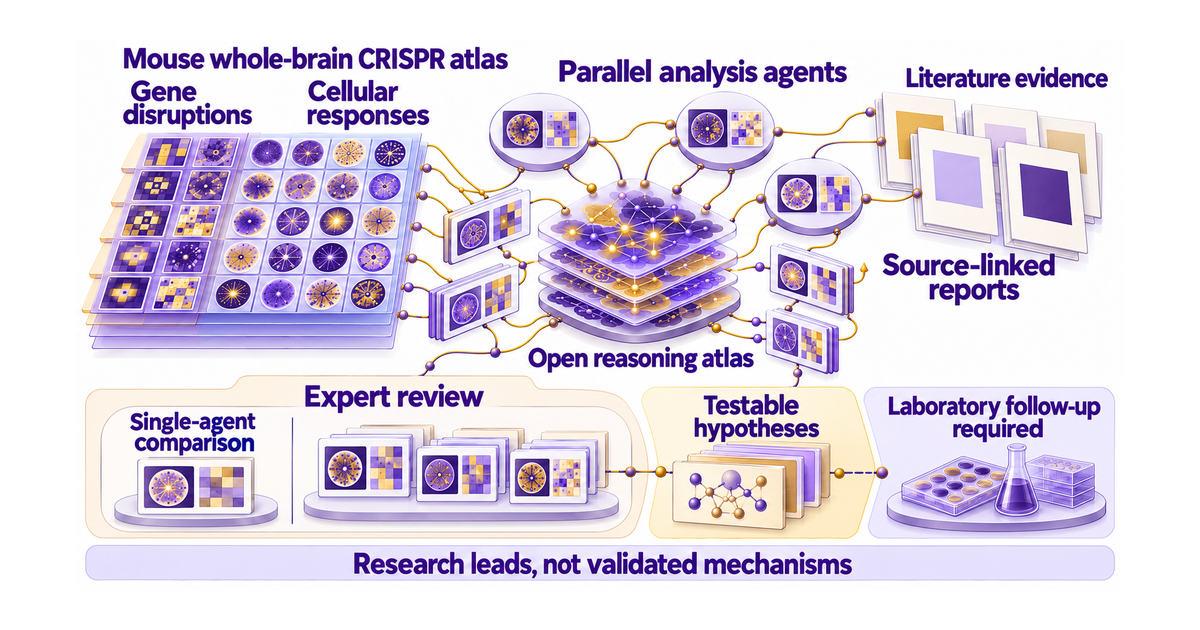
Summary: OpenAI reports that thousands of distributed agents analyzed millions of cells in a whole-brain CRISPR atlas in 32 minutes, linking gene disruptions with literature and producing an open reasoning atlas. Human experts preferred distributed interpretations to a single-agent baseline. The results generate research leads, not validated biological conclusions, and require laboratory follow-up.
Why it matters: Research teams can study the workflow as a pattern for dividing evidence-heavy analysis into traceable subtasks, then requiring expert review. Readers should preserve source links, compare against a single-agent baseline and label every synthesized mechanism as a hypothesis awaiting experimental validation.
Source: Using thousands of AI agents to uncover new leads in biological data
4. Volkswagen expands Copilot access across 330,000 employees and tracks active agent use
Focus: Applied Generative AI for Knowledge Workers
Date: October 21, 2026
Topics: Enterprise adoption, Agent usage, Phased rollout
Evidence: Publisher Authored
Availability: Available
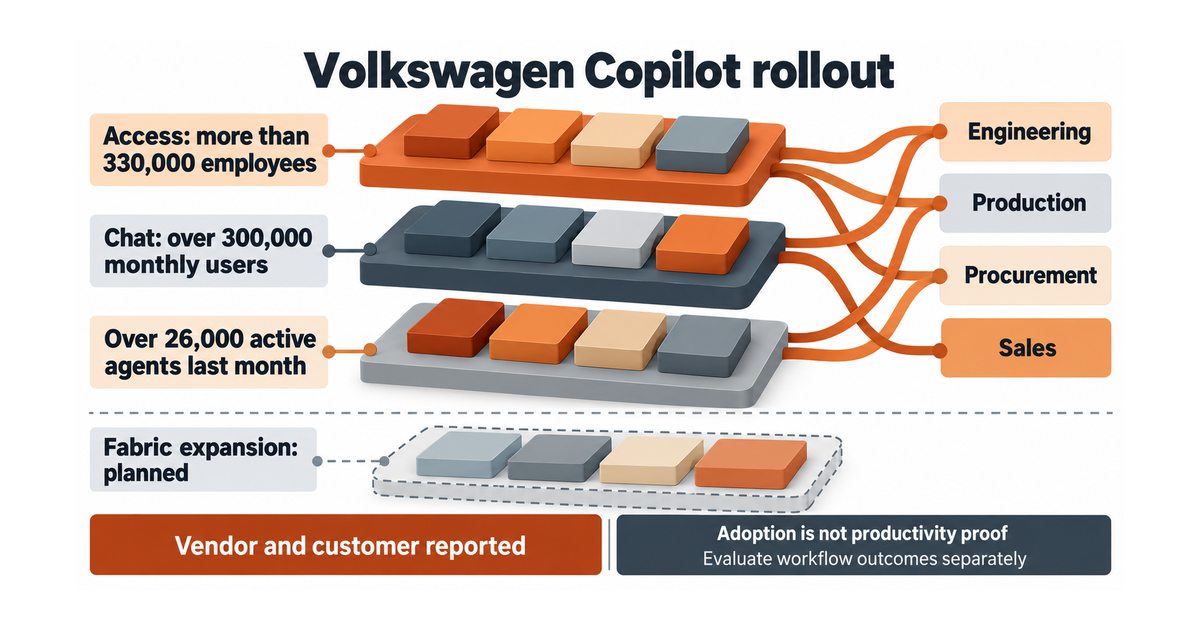
Summary: Microsoft says Volkswagen Group has made Copilot available to more than 330,000 employees, with 300,000 monthly active chat users and 26,000 agents active in the prior month. The phased program spans engineering, production, procurement and sales, with a planned Fabric data foundation. All adoption and workflow claims are vendor-and-customer reported.
Why it matters: Enterprise leaders can borrow the phased rollout pattern without treating access counts as productivity proof. Readers should pair adoption metrics with workflow-level measures such as review time, error rates, source quality, user retention and escalation frequency before expanding agents across additional functions.
Source: Microsoft empowers more than 330,000 Volkswagen Group employees with Copilot
5. Eight DGX Spark nodes run a 753-billion-parameter model with measured topology trade-offs
Focus: Technical AI Engineering
Date: October 22, 2026
Topics: Desktop AI clusters, Distributed inference, Network topology
Evidence: Publisher Authored
Availability: Available
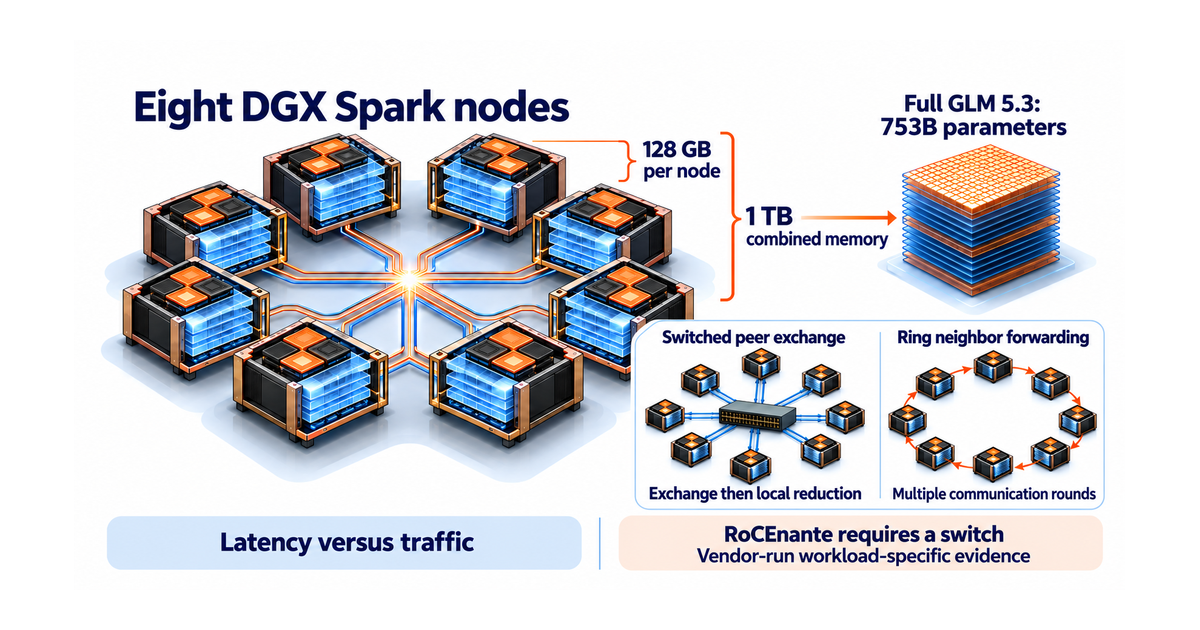
Summary: NVIDIA linked eight DGX Spark systems into a one-terabyte-memory cluster and ran the full 753-billion-parameter GLM 5.3 model. Its published tests show multi-node decode gains and different scaling for switch and ring topologies. The measurements are vendor-run, workload-specific and accompanied by networking, synchronization and memory caveats.
Why it matters: Engineering teams can use the disclosed topology and measurements to design a bounded cluster trial. Readers should compare switch and ring layouts on their own model, recording decode throughput, synchronization overhead, network utilization, memory headroom and failure behavior.
Source: Running Frontier-Class AI Models Across 8 NVIDIA DGX Spark Nodes
6. Cohere Rerank 5 adds passage-level context focus and two serving tiers
Focus: Technical AI Engineering
Date: October 21, 2026
Topics: Passage reranking, Context Focus, Retrieval throughput
Evidence: Publisher Authored
Availability: Available
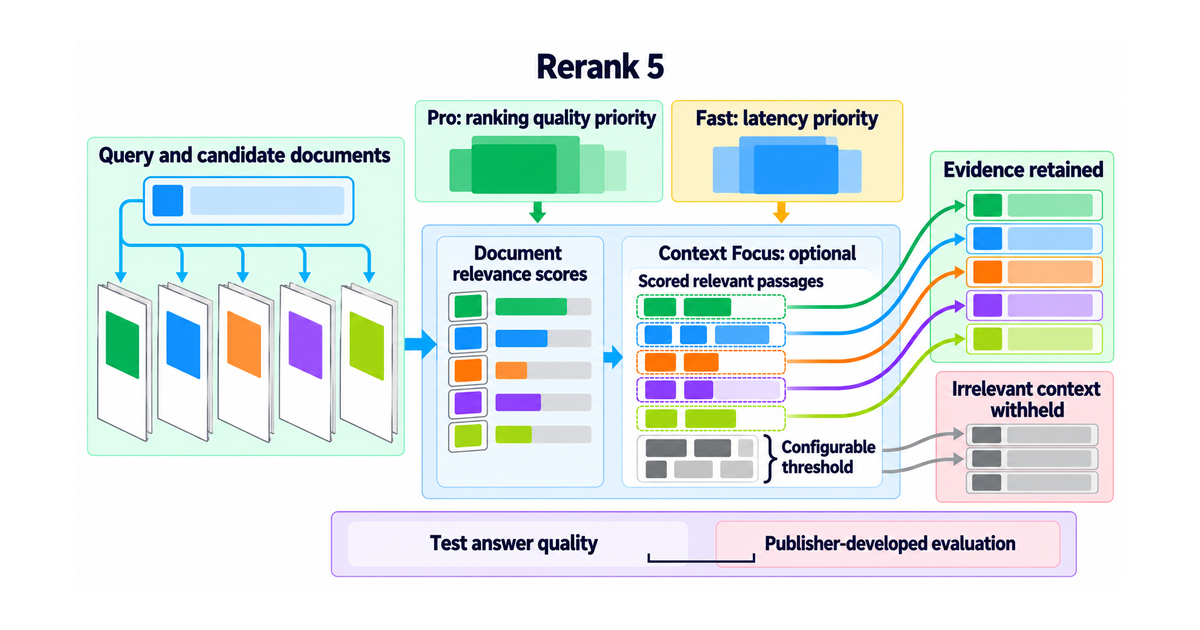
Summary: Cohere introduced Rerank 5 Pro and Fast for enterprise retrieval, including Context Focus output that returns relevant passages from long documents. The company reports leading composite results across 39 of 46 datasets and 187 one-thousand-token documents per second for Fast on an A100. These evaluations and the RCP-nDCG metric are publisher-developed.
Why it matters: Retrieval teams can test whether passage-level output reduces downstream context without losing answer quality. Readers should compare Pro and Fast on representative documents, measuring ranking relevance, passage coverage, latency, throughput, token consumption and performance on parsed tables or scanned pages.
Source: Introducing Rerank 5: precise, efficient enterprise document retrieval
Worth Watching
7. General
Trust, transparency and governance in AI
Open the permanent video page
Channel: IBM AI Academy
Date: November 9, 2023
Duration: 9:38
Format: Video
Summary: IBM AI Academy explains how hallucination, bias and unmanaged risk affect enterprise AI, then connects transparency, ethics, guardrails and accountable governance to trustworthy use.
Why it matters: Readers can map one proposed AI workflow to its evidence, foreseeable harms, responsible owner, review controls and escalation path before approval.
Source: Watch on IBM AI Academy
8. Agents for Everyone
Select the right AI use case for your business
Open the permanent video page
Channel: IBM AI Academy
Date: February 23, 2024
Duration: 3:50
Format: Video
Summary: IBM AI Academy offers four considerations for deciding whether a business problem fits generative AI, another machine-learning method or a non-AI approach, while accounting for total cost and integration.
Why it matters: Readers can score one proposed workflow against fit, cost, existing systems and measurable outcomes before choosing a model or agent.
Source: Watch on IBM AI Academy
Worth Listening — Podcasts
9. OpenAI’s Jalapeño chip, NVIDIA’s $279B push and Anthropic’s Claude Duet
Open the permanent podcast page
Show: AIskimIQ Daily Brief
Focus: Agents for Everyone
Date: October 22, 2026
Duration: 8:16
Summary: AIskimIQ’s complete timecoded transcript surveys agent hijacking, evaluation tooling, model routing costs, workplace and retail agents, safety controls, real-time generation monitoring, enterprise adoption and compute investment. The publisher clearly discloses synthetic narration and links the discussion as a daily editorial digest rather than original primary evidence.
Why it matters: Readers can use the episode as a compact discovery map, then follow its underlying primary sources before acting. The practical lesson is to separate the digest’s connective analysis from verified claims about security incidents, product availability, adoption, funding and hardware capacity.
Coverage: Selected for this edition.
Listen / watch: AIskimIQ Daily Brief
10. Sundar Pichai: Google’s Frontier Imperative, Compute Scarcity Dilemmas, Future AI Products and Businesses
Open the permanent podcast page
Show: Big Technology Podcast
Focus: Agents for Everyone
Date: October 20, 2026
Duration: 46:59
Summary: Big Technology’s complete publisher transcript covers Google’s frontier-model strategy, compute allocation, safety monitoring, world models, personal agents, product interfaces and long-horizon infrastructure. Pichai’s claims are primary executive perspective rather than independent validation, and the exact episode runtime is confirmed by its Apple distribution page.
Why it matters: Readers can compare model ambition with operational constraints and extract decision questions about compute allocation, monitoring, independent evaluation and agent authority. The episode is most useful as a strategy case, not neutral proof of Google’s benchmark, adoption or productivity claims.
Coverage: Selected for this edition.
Listen / watch: Big Technology Podcast
Emerging AI Watchlist
1 new today · 1 updated · 35 carried forward. 2 archived / dropped recently.
New today:
- Desktop-scale frontier model clusters
Updated today:
- Reusable agent skills become observable
Carried forward: 35
Archived / dropped recently:
- Open-weight agentic coding infrastructure — The single October 16 AWS deployment guide remains useful reference material but no longer warrants an active daily Watchlist position.
- Priority-aware inference operations — The October 20 llm-d release remains useful reference evidence but no longer warrants an active daily Watchlist position.
Help choose what we investigate next. Explore emerging ideas and tell us which interest you.
Editorial takeaway
Engineering teams can use the disclosed topology and measurements to design a bounded cluster trial. Readers should compare switch and ring layouts on their own model, recording decode throughput, synchronization overhead, network utilization, memory headroom and failure behavior.