Daily Generative AI Brief — October 22, 2026
Published: October 22, 2026
Coverage period: October 19–22, 2026
IN THIS EDITION · 6 ARTICLES / 2 VIDEOS / 2 PODCASTS
Choose what matters to your work
- Claude Duet tests proactive briefs with approval gates for consequential actionsArticle · about 5 min source read
- Salesforce turns a repeated office workflow into a reviewable reusable SkillArticle · about 4 min source read
- Yorkshire Ambulance Service keeps Copilot on the administrative side of careArticle · about 6 min source read
- Asana puts prebuilt AI Teammates inside ordinary project handoffsArticle · about 5 min source read
- NVIDIA splits agent retrieval into embedding, reranking and document parsingArticle · about 10 min source read
- CrowdStrike documents threat actors experimenting with agentic attack workflowsArticle · about 8 min source read
- Why foundation models are a paradigm shift for AIVideo · 8:29
- Choose the right AI model for your use caseVideo · 4:14
- Tool Integration Triggers Severe Safety Refusal DegradationPodcast · 3:57
- AI in the AM: Where’s the Steering Wheel?Podcast · 1:25:09
1. Claude Duet tests proactive briefs with approval gates for consequential actions
Focus: Agents for Everyone
Date: October 21, 2026
Topics: Proactive assistants, Approval gates, Daily briefs
Evidence: Publisher Authored
Availability: Available
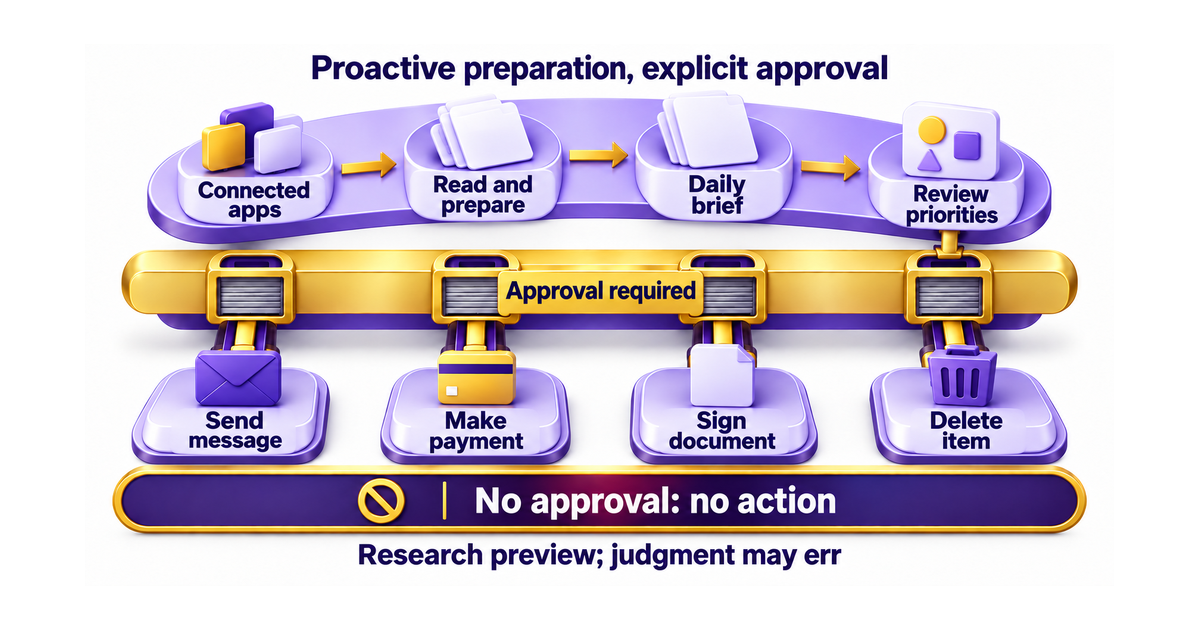
Summary: Anthropic introduced Claude Duet as a research-preview proactive assistant that prepares briefs and can work across connected services in a managed virtual environment. The company says it asks approval before messaging, paying, signing or deleting. Access is limited to a US Pro and Max waitlist, and its recommendations may still be miscalibrated.
Why it matters: Small-business owners can use the preview’s approval boundaries as a checklist for any proactive assistant: specify allowed sources, require confirmation for consequential actions, and review daily briefs for omissions. Readers gain a noncoding framework for testing initiative without surrendering control.
Source: Introducing Claude Duet
2. Salesforce turns a repeated office workflow into a reviewable reusable Skill
Focus: Agents for Everyone
Date: October 19, 2026
Topics: Reusable Skills, Skill Builder, Workflow review
Evidence: Publisher Authored
Availability: Available
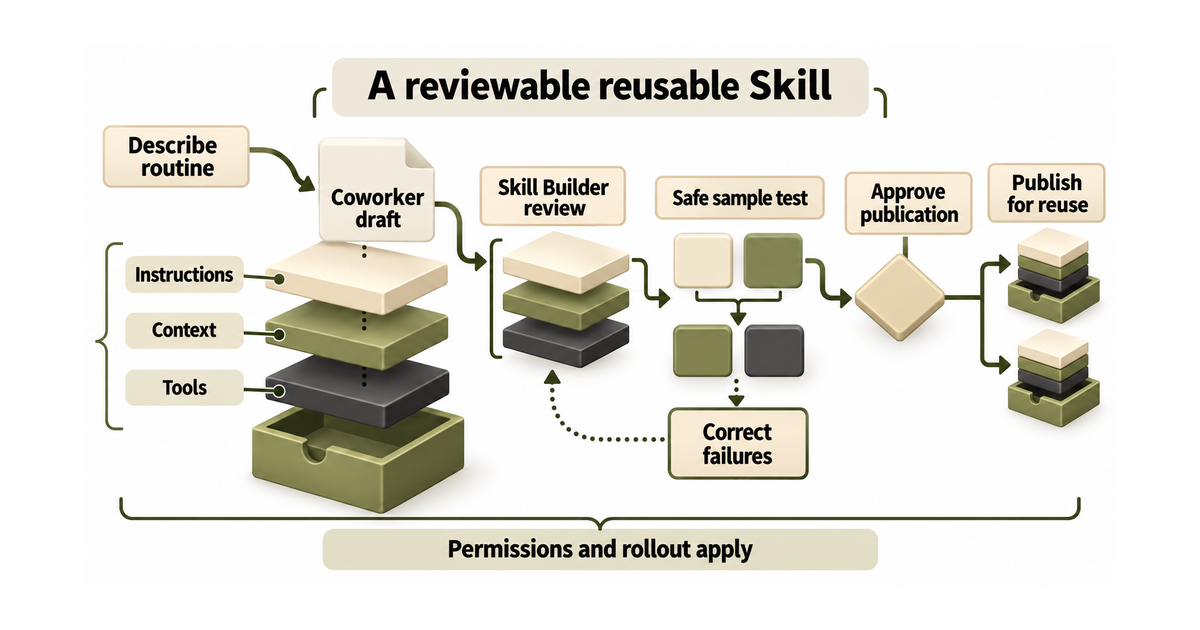
Summary: Salesforce’s Winter ’27 release adds reusable Skills that package instructions, context and tools for agent workflows. Official help describes drafting a skill through Coworker, reviewing it in Skill Builder, testing its behavior and publishing it for reuse. Availability is rolling, and the reviewed documentation provides no independent effectiveness comparison.
Why it matters: Sales operations managers can turn one repeated account-review routine into a draft Skill, inspect every instruction and tool, test it on a safe record set, then publish only after human approval. Readers receive a reusable noncoding procedure with explicit review gates.
Source: Build and Use Reusable Agentforce Skills
3. Yorkshire Ambulance Service keeps Copilot on the administrative side of care
Focus: Applied Generative AI for Knowledge Workers
Date: October 21, 2026
Topics: Administrative AI, Human review, Healthcare governance
Evidence: Publisher Authored
Availability: Available
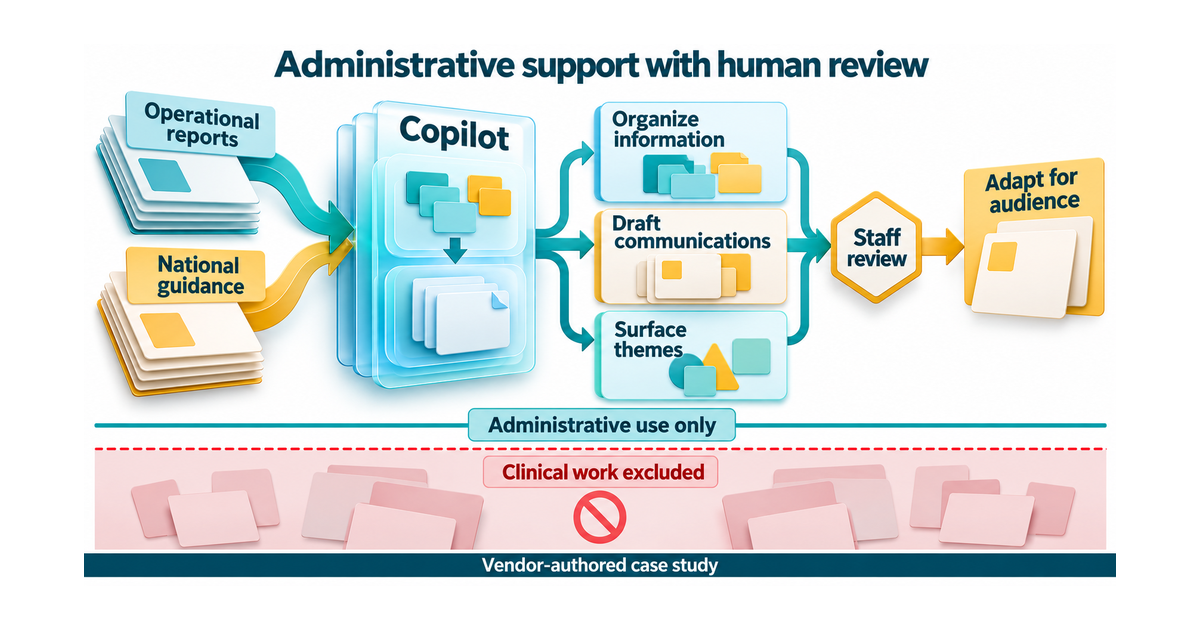
Summary: Yorkshire Ambulance Service staff use Microsoft Copilot to organize reports, draft communications and surface themes from operational data, while retaining human review. Microsoft says NHS safeguards limit the tool to administrative rather than clinical work. The account includes staff experiences and reported trial savings, but it is a vendor-authored case study.
Why it matters: Knowledge-work leaders can pilot one bounded administrative workflow, define prohibited clinical or consequential uses, and require source review before sharing outputs. Readers get a concrete pattern for pairing time-saving drafts with governance, accessibility needs and accountable human judgment.
Source: Before the ambulance arrives: How AI is helping the NHS rethink patient care
4. Asana puts prebuilt AI Teammates inside ordinary project handoffs
Focus: Applied Generative AI for Knowledge Workers
Date: October 22, 2026
Topics: AI teammates, Workflow handoffs, Shared context
Evidence: Publisher Authored
Availability: Available
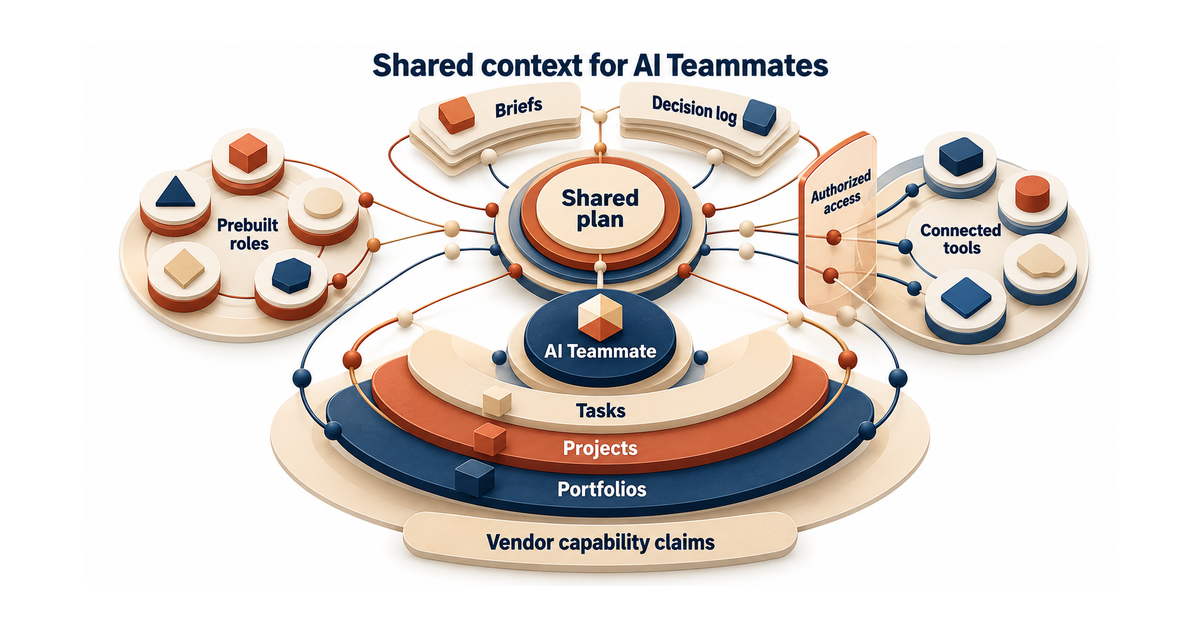
Summary: Asana’s third-quarter release adds more than 30 prebuilt AI Teammates, shared context, connectors and a visual automation builder inside work-management flows. Teams can assign bounded roles and route work without building a separate agent stack. The announcement describes product capabilities, not independently measured productivity or quality gains.
Why it matters: Operations teams can compare one existing handoff with a narrowly configured AI Teammate, documenting inputs, permissions, review points and failure cases. Readers can test whether embedded agents reduce coordination work without assuming that vendor-described automation produces better outcomes.
Source: Asana Q3 2026 Release: AI Built Into Your Workflow
5. NVIDIA splits agent retrieval into embedding, reranking and document parsing
Focus: Technical AI Engineering
Date: October 21, 2026
Topics: Multimodal retrieval, Evidence reranking, Document parsing
Evidence: Publisher Authored
Availability: Available
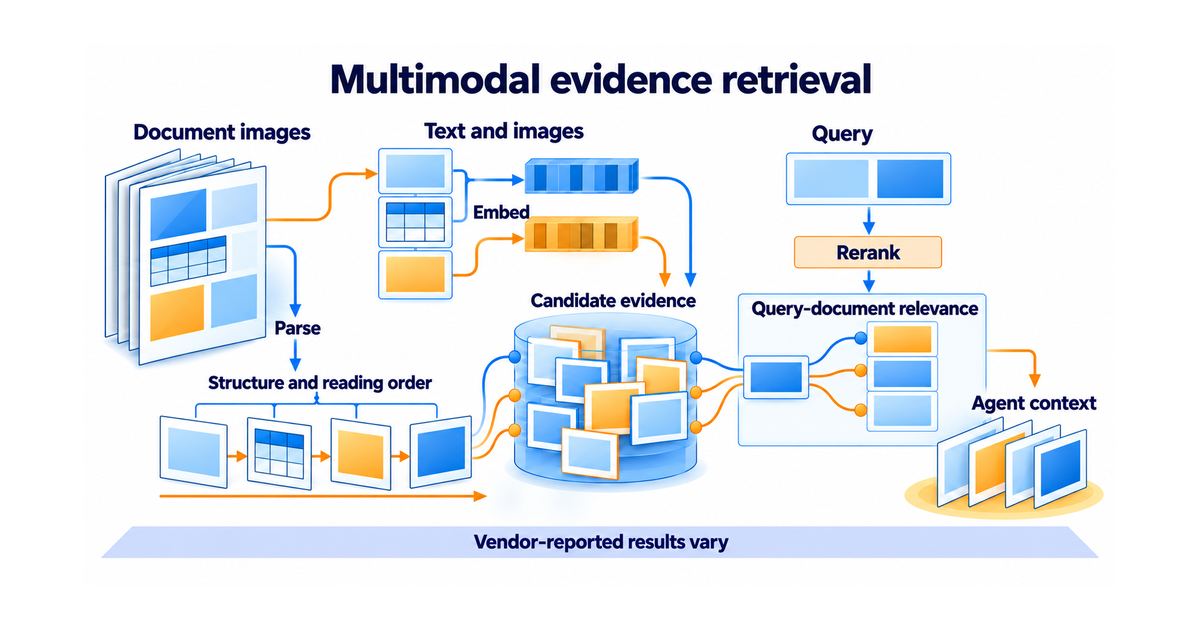
Summary: NVIDIA released open Nemotron 3.5 models for embedding, reranking and document parsing across text and images. The publisher reports that adding its reranker cut agent inference tokens by about 13–14 percent in controlled tasks, while the parser converts document images into structured content. Results remain vendor-reported and workload-dependent.
Why it matters: Readers can separate retrieval, reranking and parsing responsibilities, then benchmark each stage on their own charts, tables and scanned documents. The useful takeaway is an evaluation plan: measure evidence relevance, task success, token use and throughput together.
Source: NVIDIA Nemotron 3.5 Embed, Rerank, and Parse: Advancing Agents with World-Class Retrieval Models
6. CrowdStrike documents threat actors experimenting with agentic attack workflows
Focus: Technical AI Engineering
Date: October 21, 2026
Topics: Agentic threats, Tool permissions, Attack harnesses
Evidence: Publisher Authored
Availability: Available
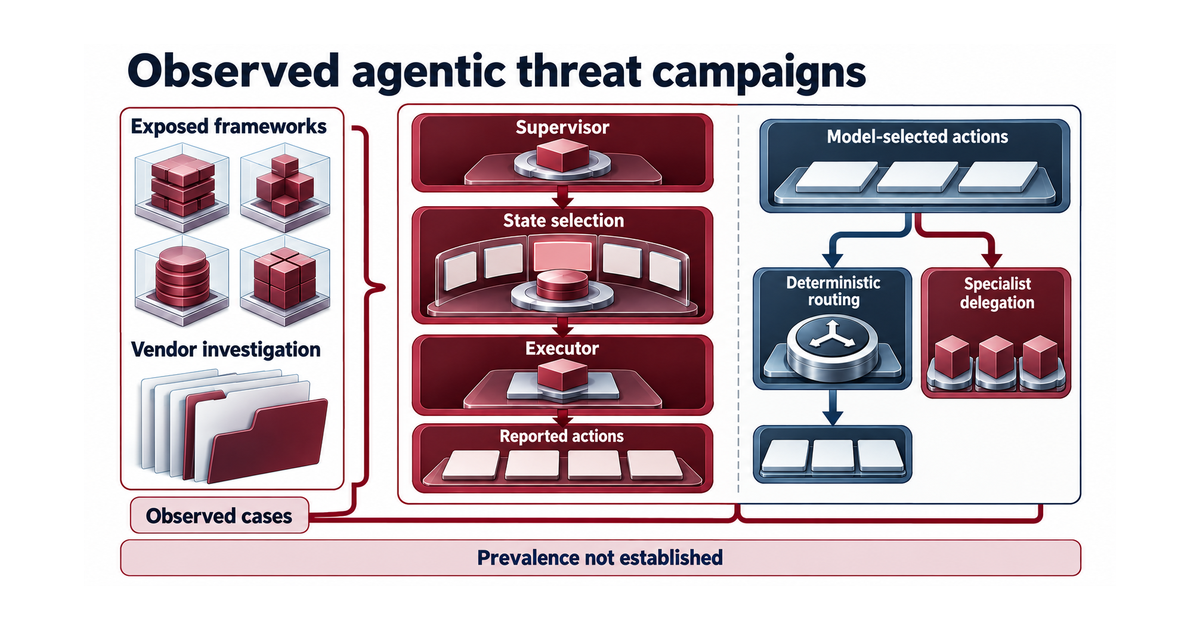
Summary: CrowdStrike describes four newly observed threat actors using exposed agent frameworks for reconnaissance and offensive workflows. The campaigns combined deterministic steps with model-selected actions or specialist agents, according to the vendor’s incident analysis. The evidence shows concrete attacker experimentation, but it comes from one security company and does not establish prevalence.
Why it matters: Security teams can inventory exposed agent interfaces, restrict tool permissions and log every action before testing detection rules against the described patterns. The practical lesson is to evaluate an agent’s surrounding harness and access paths, not only its language model.
Source: CrowdStrike Uncovers New Agentic AI Campaigns
Worth Watching
7. General
Why foundation models are a paradigm shift for AI
Open the permanent video page
Channel: IBM AI Academy
Date: November 9, 2023
Duration: 8:29
Format: Video
Summary: IBM AI Academy contrasts task-specific machine learning with flexible foundation models, then explains reuse, adaptation and the platform choices needed to manage them. Its chaptered companion material gives readers a concise vocabulary for discussing where a broad pretrained model helps and where selection still depends on the business task.
Why it matters: Readers can classify one proposed AI workflow, decide whether a reusable foundation model fits, and document the data, governance and platform criteria that should drive selection rather than defaulting to scale.
Source: Watch on IBM AI Academy
8. Agents for Everyone
Choose the right AI model for your use case
Open the permanent video page
Channel: IBM AI Academy
Date: May 17, 2024
Duration: 4:14
Format: Video
Summary: IBM AI Academy presents a compact model-selection framework that compares use-case fit, performance, risk and deployment constraints instead of treating the largest model as the automatic choice.
Why it matters: Readers can turn the lesson into a short candidate scorecard and test smaller and larger models against the same task before committing budget or infrastructure.
Source: Watch on IBM AI Academy
Worth Listening — Podcasts
9. Tool Integration Triggers Severe Safety Refusal Degradation
Open the permanent podcast page
Show: The Observability Layer
Host / guest: Not listed
Focus: Agents for Everyone
Date: October 20, 2026
Duration: 3:57
Summary: This complete transcript reviews evidence that tool access changes agent safety behavior, then connects monitoring limits, capability boundaries, policy and evaluation fragility into a compact governance briefing.
Why it matters: Readers can translate the episode into a test plan that evaluates prompts, tools, permissions and monitoring together instead of assuming model-only safety transfers unchanged.
Coverage: Selected for this edition.
Listen / watch: The Observability Layer
10. AI in the AM: Where’s the Steering Wheel?
Open the permanent podcast page
Show: The Cognitive Revolution
Host / guest: Not listed
Focus: Agents for Everyone
Date: October 17, 2026
Duration: 1:25:09
Summary: The full transcript examines control over connected agents, evaluation-aware models, hidden internal signals, formal verification, training data provenance and adoption trust, with clearly marked sponsor breaks.
Why it matters: Readers can compare several control layers and extract a practical rule: preserve human steering, fallback access and verifiable evidence as agents gain more operational authority.
Coverage: Selected for this edition.
Listen / watch: The Cognitive Revolution
Emerging AI Watchlist
1 new today · 2 updated · 34 carried forward. 2 archived / dropped recently.
New today:
- Multimodal evidence retrieval for agents
Updated today:
- Consumer agent task permissions
- Reusable agent skills become observable
Carried forward: 34
Archived / dropped recently:
- Open-weight agentic coding infrastructure — The single October 16 AWS deployment guide remains useful reference material but no longer warrants an active daily Watchlist position.
- SQL-native predictive workflows — The topic moves to history because no independent workload evaluation has followed the October 14 beta release.
Help choose what we investigate next. Explore emerging ideas and tell us which interest you.
Editorial takeaway
Readers can separate retrieval, reranking and parsing responsibilities, then benchmark each stage on their own charts, tables and scanned documents. The useful takeaway is an evaluation plan: measure evidence relevance, task success, token use and throughput together.