Daily Generative AI Brief — October 21, 2026
Published: October 21, 2026
Coverage period: October 15–20, 2026
IN THIS EDITION · 6 ARTICLES / 2 VIDEOS / 2 PODCASTS
Choose what matters to your work
- Orchestra Bio brings agent coordination to drug programsArticle · about 4 min source read
- Turn meeting review into one reusable Plaud SkillArticle · about 7 min source read
- Zoom proposes a governed context layer for conversation workArticle · about 13 min source read
- Gemini for Government Services centers citations and controlsArticle · about 7 min source read
- llm-d v1.0 makes inference operations the productArticle · about 14 min source read
- Meta narrows the agent orchestrator to routing and handoffsArticle · about 12 min source read
- Large Language Models explained brieflyVideo · 7:58
- RAG vs Fine-Tuning vs Prompt Engineering: Optimizing AI ModelsVideo · 13:10
- Report: AI agents helped breach 100+ websites — how?Podcast · 7:00
- Is Education Failing our Students in this AI-Driven World?Podcast · 43:51
1. Orchestra Bio brings agent coordination to drug programs
Focus: Agents for Everyone
Date: October 20, 2026
Topics: Drug program planning, Evidence coordination, Human approval
Evidence: Publisher Authored
Availability: Available
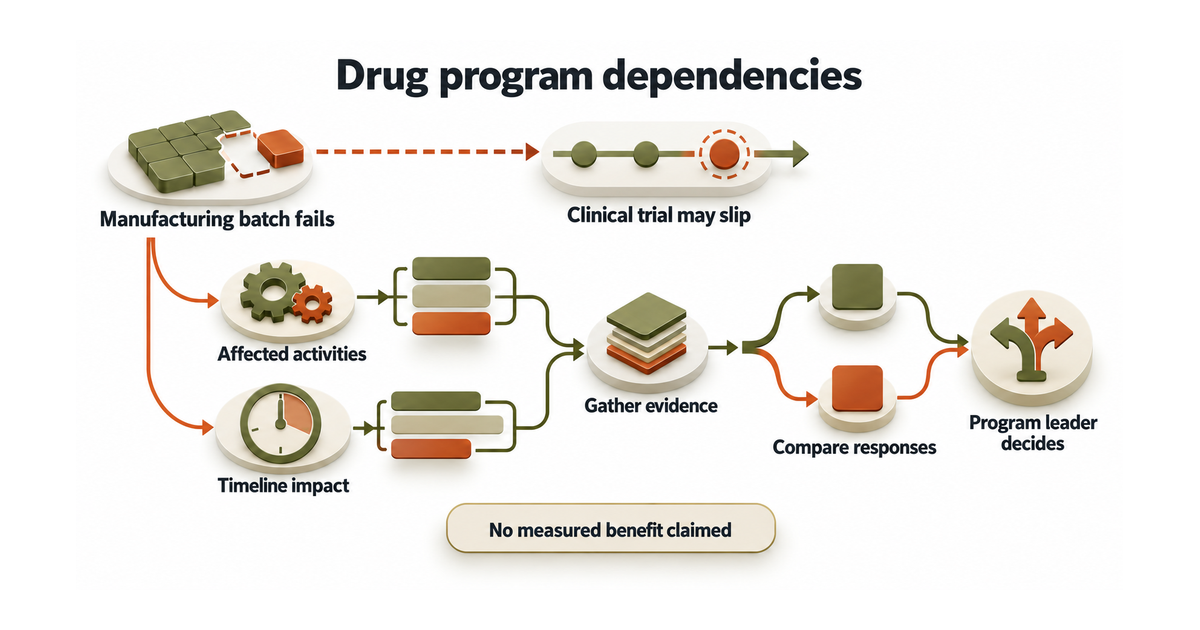
Summary: OpenAI agreed to acquire Orchestra Bio, whose agents coordinate evidence across studies, manufacturing dependencies and drug-program timelines. The system is intended to surface downstream effects and response options while program leaders retain decisions. OpenAI did not disclose transaction terms or independent outcome measurements, so the announcement establishes direction rather than demonstrated benefit.
Why it matters: Program leaders can evaluate this pattern without coding: choose one disruption, ask for affected studies, milestones and response options, then verify every source and accountable owner. Keep final schedule or manufacturing changes behind named human approval.
Source: OpenAI to acquire Orchestra Bio
2. Turn meeting review into one reusable Plaud Skill
Focus: Agents for Everyone
Date: October 20, 2026
Topics: Reusable skills, Decision briefs, Transcript review
Evidence: Publisher Authored
Availability: Available
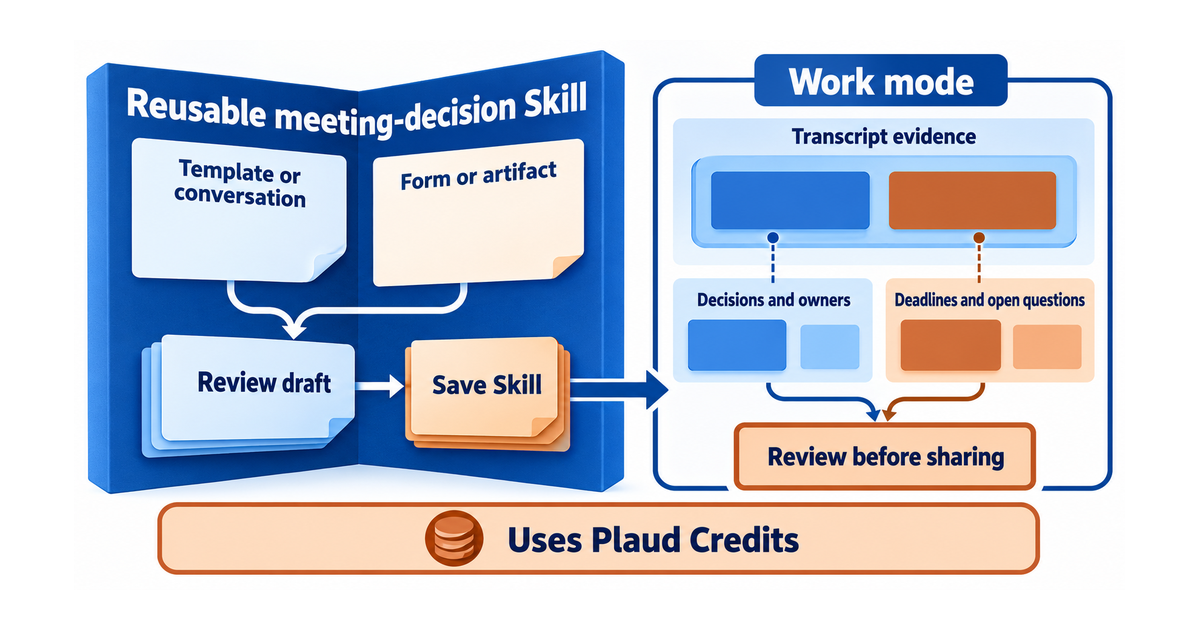
Summary: Plaud’s Skills feature saves reusable instruction sets that can be created from templates, conversations, files, forms or artifacts, then invoked automatically in Work mode. Users review a draft before saving, and the platform limits each workspace to 100 skills. Usage consumes Plaud Credits, so repeatability still needs cost and quality checks.
Why it matters: Create one meeting-decision skill that extracts decisions, owners, deadlines and open questions with transcript evidence. Test it on three varied recordings, compare every claim with the source, and require human approval before saving the skill or sharing its brief.
Source: Skills: save your workflows for reuse (for v4.0.x or later)
3. Zoom proposes a governed context layer for conversation work
Focus: Applied Generative AI for Knowledge Workers
Date: October 20, 2026
Topics: Unified context, Meeting workflows, Permission boundaries
Evidence: Publisher Authored
Availability: Available
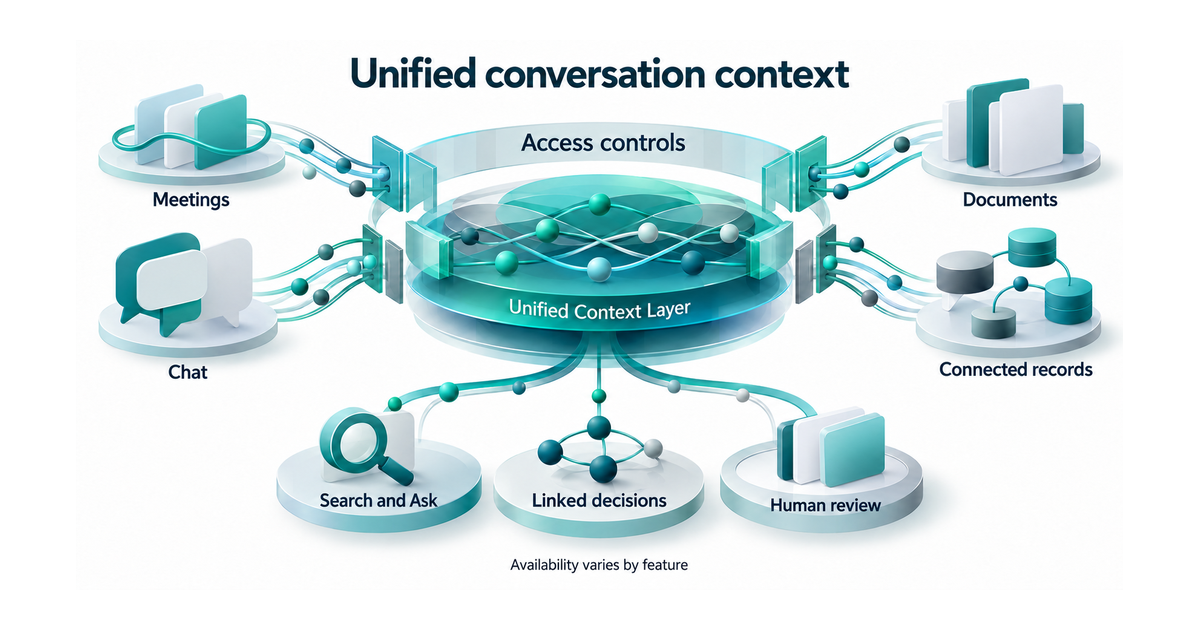
Summary: Zoom’s Unified Context Layer is designed to connect meeting, chat, document and third-party records so people and agents can retrieve the thread behind a decision. Announced capabilities include Search & Ask APIs, configurable access and My Notes workflows. Availability varies by feature, and productivity claims are not independent outcome evidence.
Why it matters: Before adopting a conversation layer, inventory which records may be joined, who can retrieve them and how corrections propagate. Pilot one meeting-to-action workflow with permission checks, source links and human review instead of granting broad cross-system context.
4. Gemini for Government Services centers citations and controls
Focus: Applied Generative AI for Knowledge Workers
Date: October 20, 2026
Topics: Government workflows, Cited answers, Audit controls
Evidence: Publisher Authored
Availability: Available
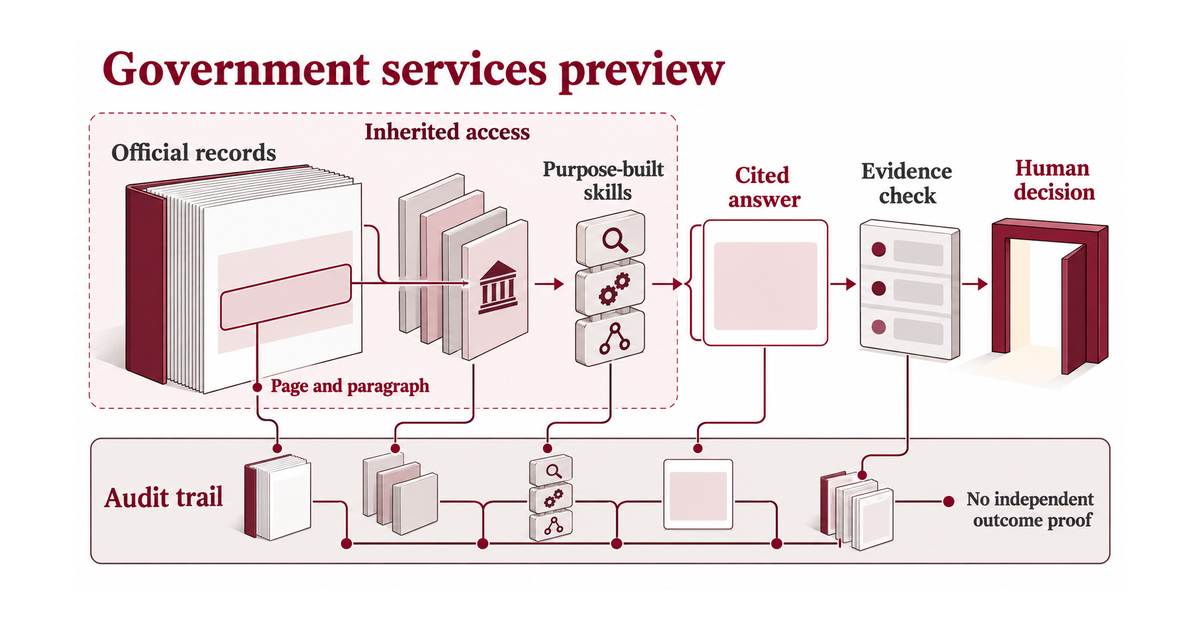
Summary: Google Public Sector introduced Gemini for Government Services in preview, combining prebuilt public-sector skills, connectors and cited answers with existing identity controls. Examples include document review, procurement analysis and freedom-of-information redaction. The release describes page-and-paragraph grounding and audit logging, but performance and adoption claims are supplied by Google and early partners.
Why it matters: Use the preview to build an evaluation rubric, not a procurement shortcut. Require citation accuracy, inherited permissions, complete audit trails and human approval for redaction or policy decisions, then test against representative records before expanding access.
Source: Google Public Sector Launches Gemini for Government Services
5. llm-d v1.0 makes inference operations the product
Focus: Technical AI Engineering
Date: October 20, 2026
Topics: Inference operations, KV cache routing, Day-two reliability
Evidence: Publisher Authored
Availability: Available
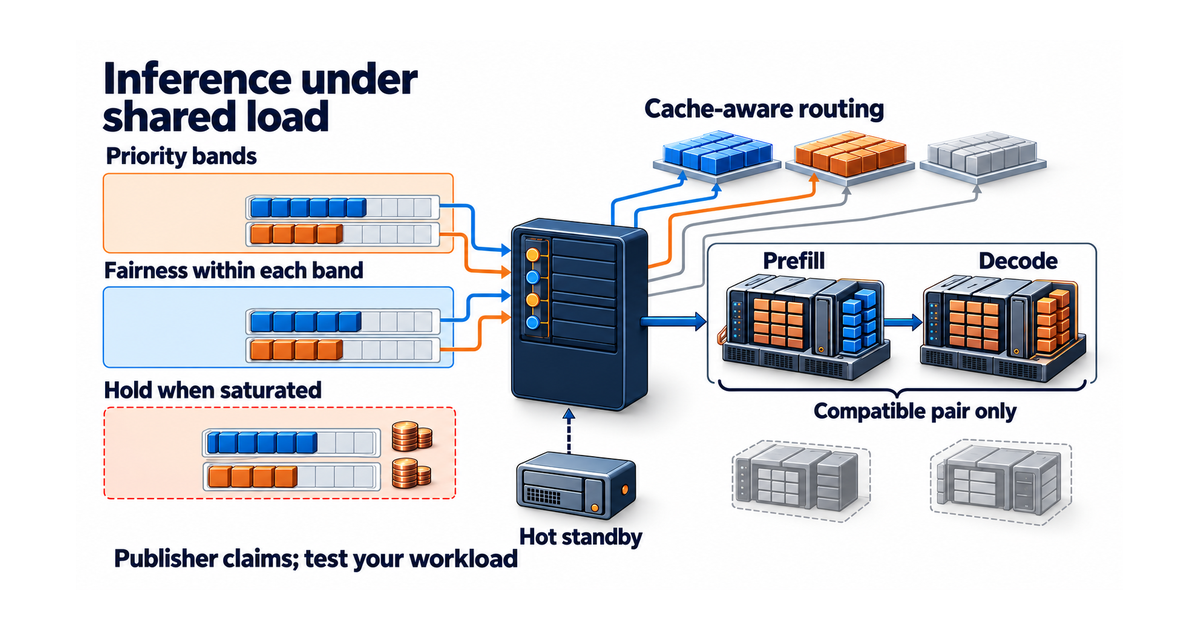
Summary: llm-d v1.0 packages distributed inference for operational use with priority-aware scheduling, multi-tenant fairness, cache-aware routing and zero-downtime updates. The project reports cache-hit improvements from 35% to 70% in one large-scale deployment, while its day-two features focus on predictable service behavior. The figures remain publisher-reported and workload-specific.
Why it matters: Use the release as an operations checklist: test priority fairness, cache routing, rollout safety and failure recovery against your own traffic. Treat the reported cache gains as a hypothesis until reproduced under comparable prompts, hardware and service-level objectives.
Source: llm-d v1.0: State-of-the-Art Inference Ready for Day 2
6. Meta narrows the agent orchestrator to routing and handoffs
Focus: Technical AI Engineering
Date: October 19, 2026
Topics: Thin orchestration, Context isolation, Typed handoffs
Evidence: Publisher Authored
Availability: Available
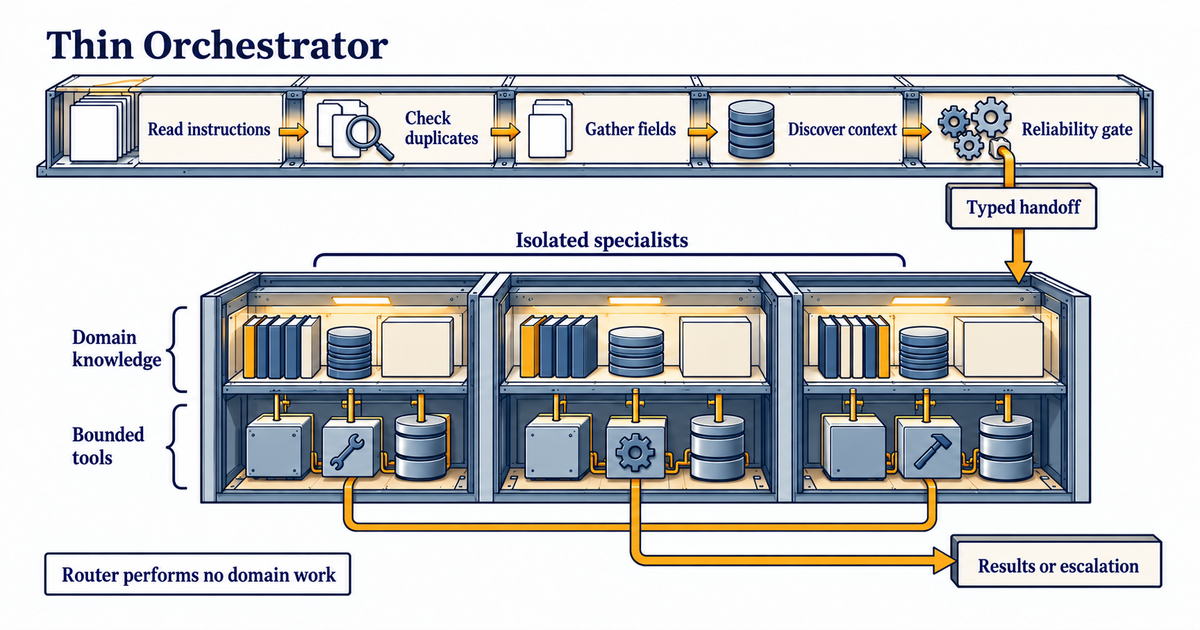
Summary: Meta describes replacing a broad agent with a roughly 1,300-line orchestrator that routes requests to 14 context-isolated specialists across more than 20 workflows. The design uses deterministic routing, typed handoffs and narrow tool access. Meta reports much faster delivery and fewer edits, but the results come from its internal engineering environment.
Why it matters: Separate coordination from domain work when one agent’s context becomes noisy. Define explicit routes, minimal handoff fields and bounded tools, then compare completion quality and human revision rates before assuming that additional specialists improve reliability.
Source: Thin Orchestrator: The AI agent architecture that made our internal tools more reliable
Worth Watching
7. General
Large Language Models explained briefly
Open the permanent video page
Channel: 3Blue1Brown
Date: November 20, 2024
Duration: 7:58
Format: Video
Summary: Grant Sanderson visually explains next-token prediction, model parameters, pretraining, human-feedback tuning and the transformer attention mechanism. The lesson shows how language models produce fluent output without independently checking facts. A detailed companion lesson supports these concepts; this is an evergreen explanation, not a current product launch or October 2026 news clip.
Why it matters: Use the explanation to distinguish fluent text generation from reliable evidence. Ask how an answer was grounded and checked instead of treating confident or plausible wording as proof of correctness.
Source: Watch on YouTube
8. Agents for Everyone
RAG vs Fine-Tuning vs Prompt Engineering: Optimizing AI Models
Open the permanent video page
Channel: IBM Technology
Date: April 14, 2025
Duration: 13:10
Format: Video
Summary: Martin Keen compares three ways to improve AI responses: clearer prompting, retrieval-augmented generation and fine-tuning. The lesson distinguishes situations needing up-to-date or proprietary facts from those needing better instructions or more specialized model behavior. It explains the different infrastructure, latency and training implications; this is an evergreen methods lesson, not an independent vendor benchmark.
Why it matters: Diagnose the failure before selecting a tool. Start with clearer instructions, retrieve trusted current documents when knowledge is missing, and only consider fine-tuning when a measured specialization problem justifies its training cost.
Source: Watch on YouTube
Worth Listening — Podcasts
9. Report: AI agents helped breach 100+ websites — how?
Open the permanent podcast page
Show: AI in 10
Host / guest: Not listed
Focus: Agents for Everyone
Date: October 20, 2026
Duration: 7:00
Topics:
Summary: Chuck Goetschel’s seven-minute episode separates the reported scale of an AI-assisted intrusion campaign from the technical details that remain undisclosed. Its episode notes focus on how agentic chaining could change targeting, testing and retrying, and what defenders should watch. Apple’s individual episode page establishes title, publication time and runtime. Notes were reviewed; audio was not played.
Why it matters: Use the episode as a threat-model prompt, then return to primary incident reporting before changing controls. Ask which steps were automated, what evidence supports attribution and where human authorization still mattered.
Connection to the brief: Use the episode as a threat-model prompt, then return to primary incident reporting before changing controls. Ask which steps were automated, what evidence supports attribution and where human authorization still mattered.
Coverage: Selected for this edition.
Listen / watch: AI in 10
10. Is Education Failing our Students in this AI-Driven World?
Open the permanent podcast page
Show: Practical AI
Host / guest: Daniel Whitenack and Chris Benson
Focus: Agents for Everyone
Date: October 15, 2026
Duration: 43:51
Topics:
Summary: Daniel Whitenack and Chris Benson discuss how pervasive AI changes the foundational knowledge students need, how personalized learning might work, and why schools struggle to adapt. They explore opportunities for educators while preserving critical thinking, creativity and problem-solving skills. The publisher's episode-specific transcript establishes that AI, rather than general world news, is the sustained subject. Audio playback was not performed.
Why it matters: Apply the discussion to professional AI education: teach verification, judgment and problem framing alongside tool proficiency. Pilot AI-supported learning with human oversight, and measure learner understanding rather than merely completed assignments.
Connection to the brief: Apply the discussion to professional AI education: teach verification, judgment and problem framing alongside tool proficiency. Pilot AI-supported learning with human oversight, and measure learner understanding rather than merely completed assignments.
Coverage: Selected for this edition.
Listen / watch: Practical AI
Emerging AI Watchlist
2 new today · 1 updated · 34 carried forward. 2 archived / dropped recently.
New today:
- Priority-aware inference operations
- Thin orchestration boundaries
Updated today:
- Reusable agent skills become observable
Carried forward: 34
Archived / dropped recently:
- Composable decision adapters — The topic moves to history because no independent deployment evaluation has followed the October 15 publisher release.
- SQL-native predictive workflows — The topic moves to history because no independent workload evaluation has followed the October 14 beta release.
Help choose what we investigate next. Explore emerging ideas and tell us which interest you.
Editorial takeaway
Use the release as an operations checklist: test priority fairness, cache routing, rollout safety and failure recovery against your own traffic. Treat the reported cache gains as a hypothesis until reproduced under comparable prompts, hardware and service-level objectives.