Daily Generative AI Brief — October 18, 2026
Published: October 18, 2026
Coverage period: October 7–16, 2026
IN THIS EDITION · 6 ARTICLES / 2 VIDEOS / 2 PODCASTS
Choose what matters to your work
- Layered controls reserve human judgment for real ambiguityArticle · about 12 min source read
- Package a read-only expense precheck as an Agent SkillArticle · about 31 min source read
- AI readiness is measured in connected business processesArticle · about 5 min source read
- Boards need decision-ready evidence for AI riskArticle · about 9 min source read
- A nine-stage evaluation loop catches silent agent failuresArticle · about 26 min source read
- Open-weight coding models make infrastructure choices explicitArticle · about 13 min source read
- Navigating AI automation in Looker: Essential developer tools for agentsVideo · 5:55
- Production Monitoring with Codex: Grafana, Kubernetes, & SecurityVideo · 7:59
- Can Open Models Keep Up With the AI Frontier? | Nathan LambertPodcast · 1:00:00
- The AGORÀ Briefing — Friday, October 16, 2026Podcast · 9:54
1. Layered controls reserve human judgment for real ambiguity
Focus: Agents for Everyone
Date: October 15, 2026
Topics: Agent boundaries, External policy, Human judgment
Evidence: Publisher Authored
Availability: Available
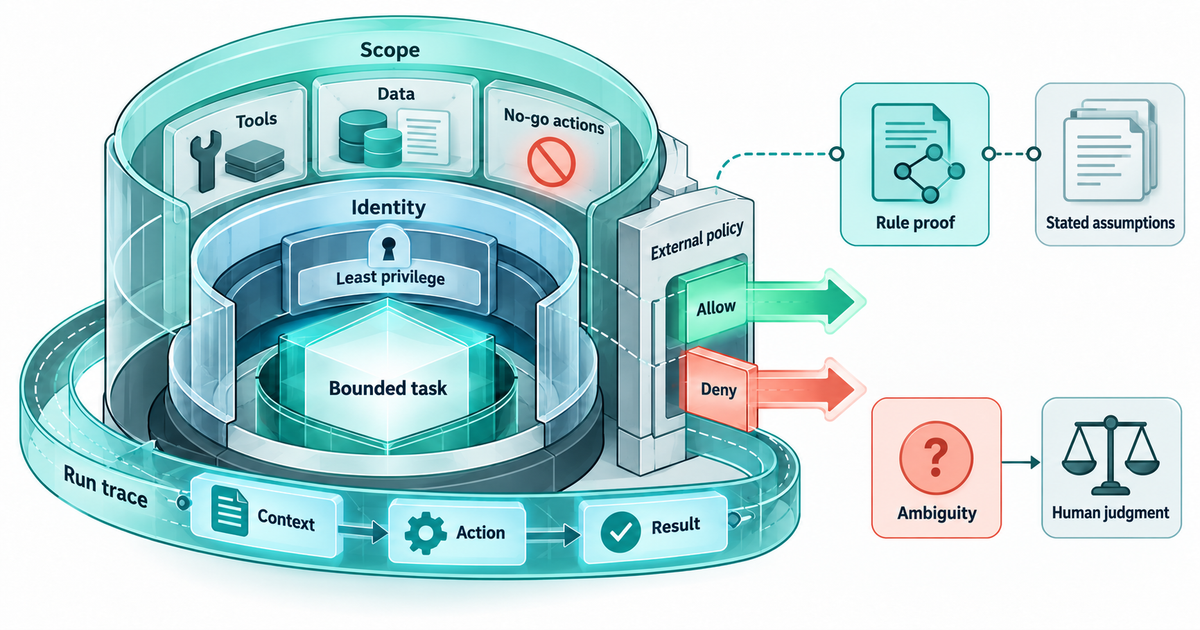
Summary: AWS proposes five reinforcing layers for agent autonomy: scope the job, identify every acting agent, enforce boundaries outside its reasoning, observe each run and prove rules that can be stated precisely. The guidance separates mechanically verifiable policies from contextual judgments, reserving people for genuine ambiguity rather than approving every routine action.
Why it matters: Choose one bounded task and classify each control as provable, observable or judgment-based. Give the agent its own identity and least privilege, enforce tool policy externally, reconstruct every run and escalate only decisions whose correctness cannot be expressed as a precise rule.
Source: Trust in Depth: Giving agents more autonomy without losing control
2. Package a read-only expense precheck as an Agent Skill
Focus: Agents for Everyone
Date: October 15, 2026
Topics: Agent Skills, Expense checks, Script approval
Evidence: Publisher Authored
Availability: Available
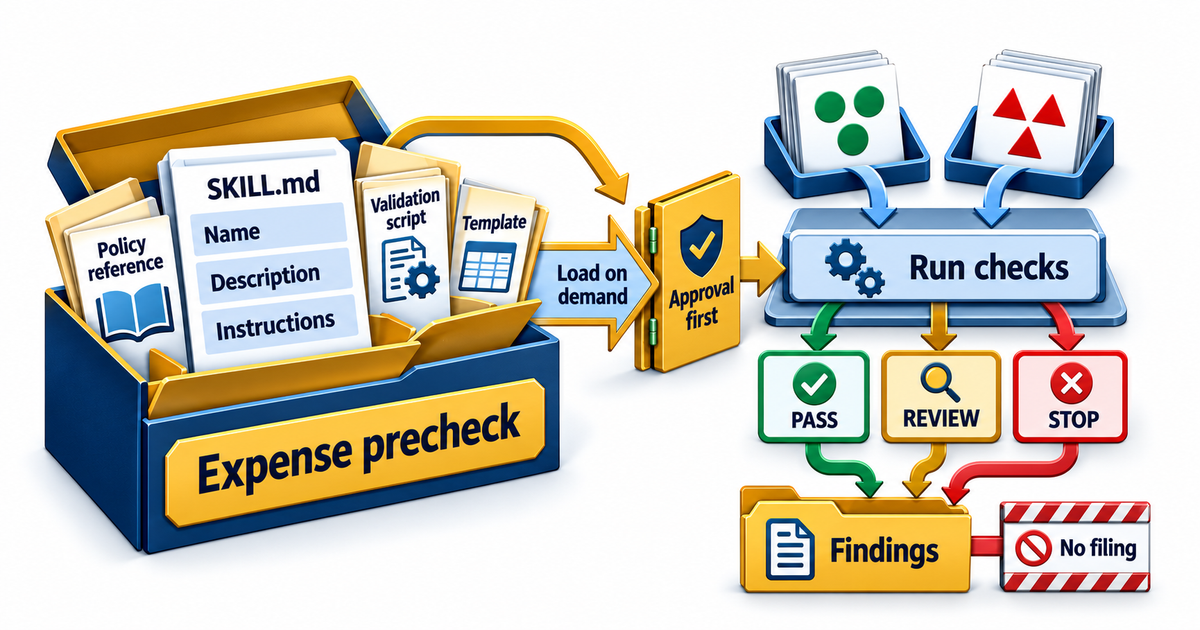
Summary: Microsoft's Agent Framework documentation defines Skills as portable folders containing SKILL.md instructions plus optional scripts, references and assets loaded progressively. Its expense-report example separates policy guidance, a validation script and a reusable template, while approval guidance warns that scripts execute source-supplied code and should remain gated unless the source is trusted.
Why it matters: Build one read-only expense precheck Skill: declare its trigger and compatibility, keep policy details in a reference, validate a fixture with a deterministic script and return findings without filing anything. Test success and rejection cases, then require approval before every script run.
Source: Agent Skills
3. AI readiness is measured in connected business processes
Focus: Applied Generative AI for Knowledge Workers
Date: October 14, 2026
Topics: Process readiness, Governed data, Workflow outcomes
Evidence: Publisher Authored
Availability: Available
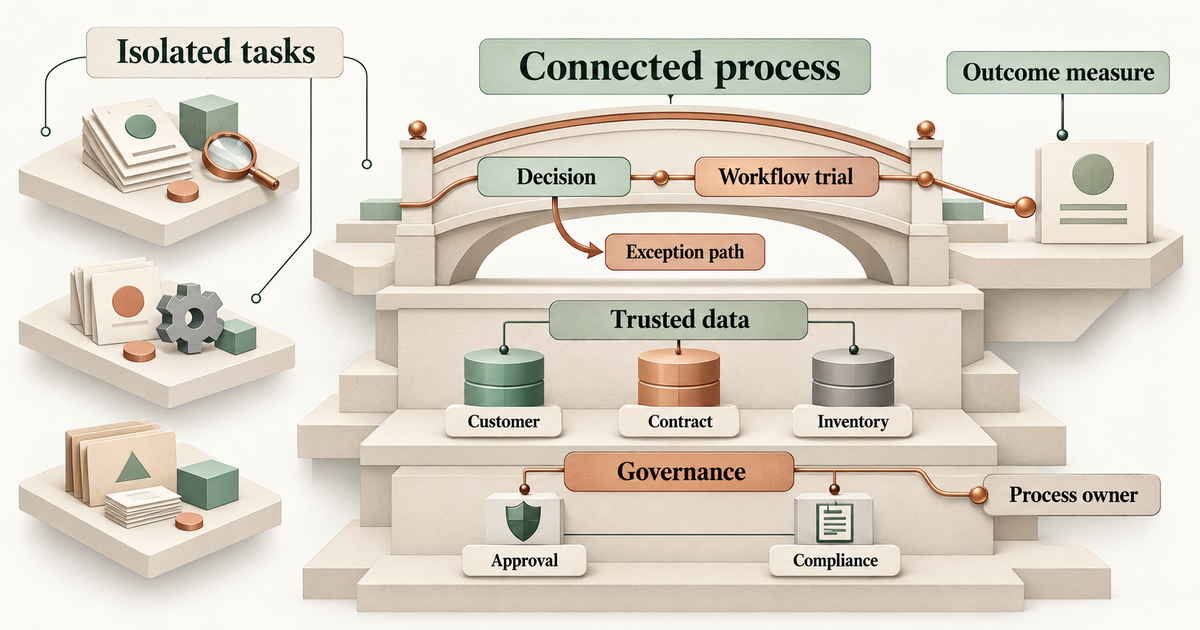
Summary: SAP's vendor-sponsored research with Oxford Economics says surveyed organizations use AI across roughly one quarter of business tasks, while nine percent have fundamentally adapted operations around it. The article argues that scaling depends on connecting AI to trusted data, governed processes, approval policies and regulatory context, not merely adding assistants to individual applications.
Why it matters: Map one end-to-end process before expanding licenses. Identify the governing data, contract, inventory, approval and compliance conditions; establish an owner and measurable outcome; then test whether AI improves the whole workflow without weakening controls or hiding manual exceptions.
Source: Fast-Growth Companies Have the Biggest AI Opportunity, Few Are Capturing It
4. Boards need decision-ready evidence for AI risk
Focus: Applied Generative AI for Knowledge Workers
Date: October 15, 2026
Topics: Board oversight, Risk evidence, Incident readiness
Evidence: Publisher Authored
Availability: Available
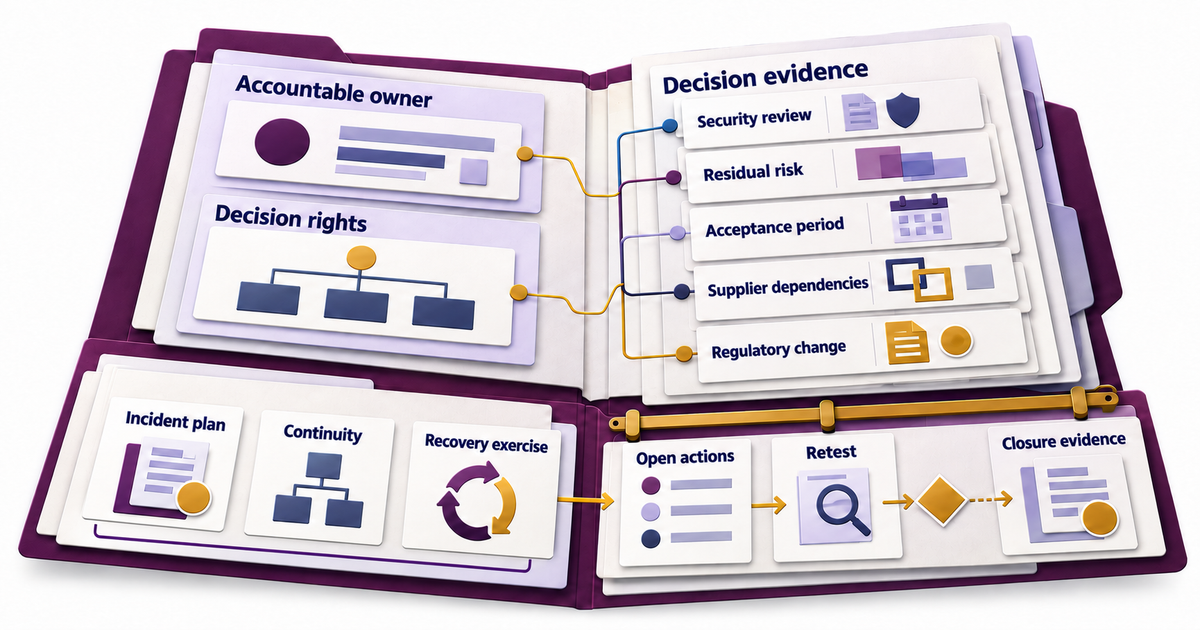
Summary: SAP offers boards ten evidence-oriented questions covering accountability, strategic review, decision-ready risk, regulatory change, third-party assurance, resilience and incident recovery. The framework positions security and compliance as shared business governance rather than a specialist report, asking leaders to request clear decision rights, tested plans, residual-risk views and proof that remediation actions close.
Why it matters: Convert one AI initiative into a board-ready evidence pack. Name accountable owners, record the security review that shaped the decision, show residual risk and supplier dependencies, and include the latest combined incident, continuity and recovery exercise with unresolved actions.
Source: 10 Questions Board Members Should Be Asking About Security and Compliance
5. A nine-stage evaluation loop catches silent agent failures
Focus: Technical AI Engineering
Date: October 16, 2026
Topics: Agent evaluation, Release gates, Quality drift
Evidence: Publisher Authored
Availability: Available
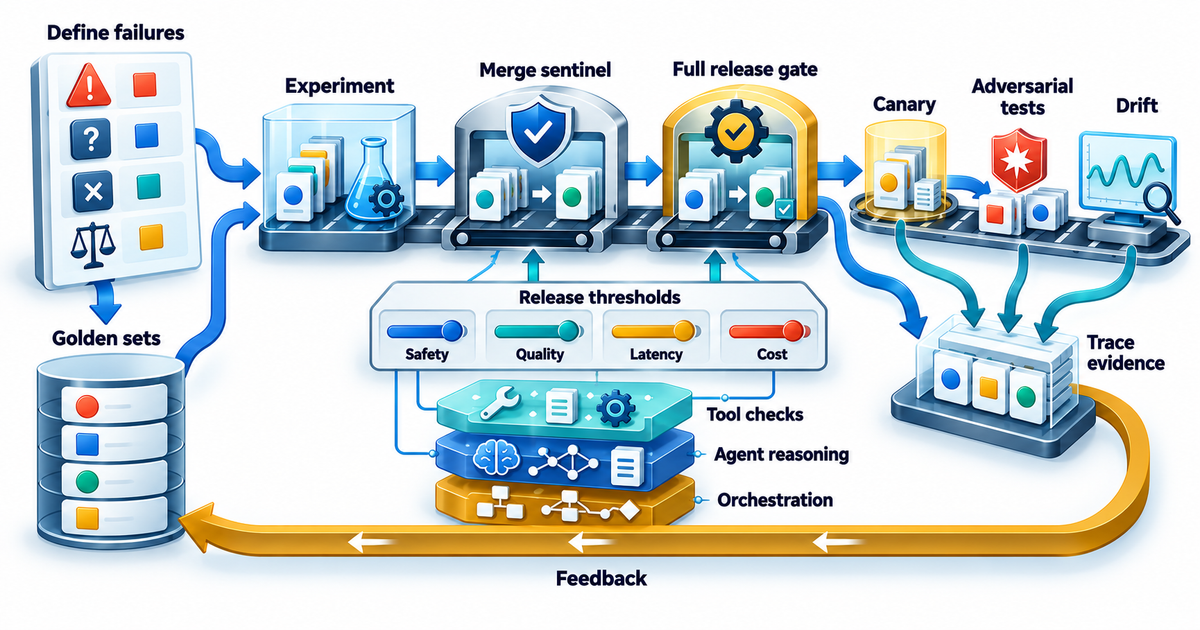
Summary: An AWS production team describes a nine-stage evaluation loop for multi-agent sales analytics, spanning golden sets, merge gates, full release gates, canaries, adversarial tests, drift monitoring and feedback. The team reports that ordinary uptime monitoring missed fluent factual errors, including wrong units, swapped metrics and unsupported calculations, while staged evaluators exposed them before or after release.
Why it matters: Define business failures before choosing evaluators. Build deterministic checks for known facts, task-specific rubrics for ambiguous reasoning and separate tool, agent and orchestration test sets; then block releases when safety, quality, latency or cost crosses an agreed threshold.
Source: Building trust in AI agents: A production-ready evaluation framework with Amazon Bedrock AgentCore
6. Open-weight coding models make infrastructure choices explicit
Focus: Technical AI Engineering
Date: October 16, 2026
Topics: Open-weight models, Inference infrastructure, Load testing
Evidence: Publisher Authored
Availability: Available
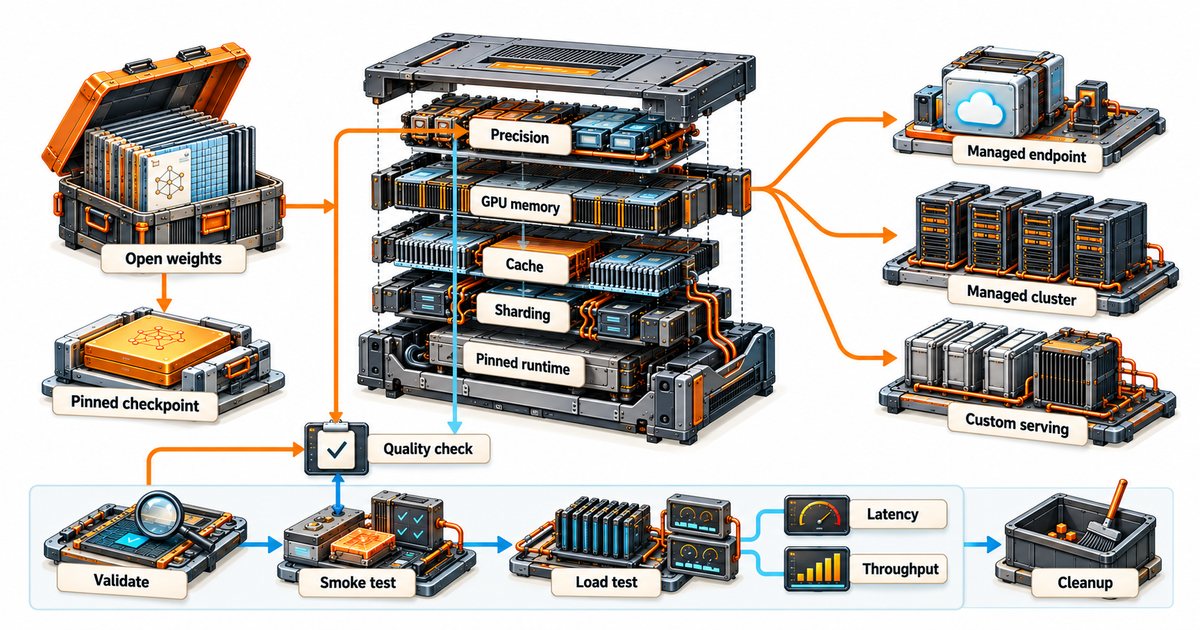
Summary: AWS documents three deployment paths for Reflection Beam, an open-weight mixture-of-experts model intended for coding and long-horizon tool use. The guide connects checkpoint precision, GPU memory, sharding and runtime choice to managed JumpStart endpoints or Kubernetes-based HyperPod deployments, then requires pinned artifacts, configuration validation, smoke tests, performance measurement and resource cleanup.
Why it matters: Treat model availability as the start of engineering, not proof of suitability. Record checkpoint, image, precision, hardware, cache and parallelism; load-test expected concurrency, recheck output quality after quantization changes and delete costly resources when evaluation ends.
Source: Introducing Reflection Beam: an open-weight model for agentic coding on AWS
Worth Watching
7. General
Navigating AI automation in Looker: Essential developer tools for agents
Open the permanent video page
Channel: Google Cloud Tech official video
Date: October 8, 2026
Duration: 5:55
Format: Video
Summary: Google Cloud developer advocate Chrissie Goodrich distinguishes five pieces of an agent-ready Looker developer stack: Looker Skills, command-line access, a managed MCP server, a database MCP toolbox and the VS Code extension. The video outlines how metadata-driven instructions can limit context load while service-account permissions govern tool access. Its practical lesson is to separate reusable analytic procedures from actual data authorization and independently verify calculations in LookML. The synopsis uses published caption-derived analysis, not playback.
Why it matters: Use narrow service accounts, explicit schemas and validation when adding Looker business intelligence tools to AI agents.
Source: Watch on YouTube
8. Agents for Everyone
Production Monitoring with Codex: Grafana, Kubernetes, & Security
Open the permanent video page
Channel: OpenAI official YouTube video
Date: October 7, 2026
Duration: 7:59
Format: Video
Summary: OpenAI presenters walk through three bounded production-response scenarios: a checkout failure correlated with Grafana and recent changes, a Kubernetes rollout with out-of-memory restarts, and shared-worker exhaustion treated as an availability issue. The segment emphasizes reconstructing evidence before proposing patches, human review before high-impact changes, and replay-based validation after remediation. These are demonstrations, not independent incident-resolution benchmarks; summary derives from a complete indexed original-language transcript, not watched playback.
Why it matters: Use telemetry and change history as controlled context, then review and regression-test each suggested operational patch.
Source: Watch on YouTube
Worth Listening — Podcasts
9. Can Open Models Keep Up With the AI Frontier? | Nathan Lambert
Open the permanent podcast page
Show: The a16z Show / Andreessen Horowitz
Host / guest: Not listed
Focus: Agents for Everyone
Date: October 14, 2026
Duration: 1:00:00
Topics:
Summary: In a discussion hosted by a16z partner Lisha Li, researcher Nathan Lambert contrasts closed frontier labs' infrastructure and capital advantages with open-model builders' ability to adapt techniques. They examine compute constraints, distillation, reinforcement-learning environments and the changing economics of post-training. Lambert also explains Trillium's ambition to make training environments and evaluations more accessible, while acknowledging uncertainty about self-improvement. The episode helps practitioners assess customization costs rather than treating open-weight availability as equivalent to frontier reliability; audio was not played.
Why it matters: Frame model choices around compute, maintainability, adaptation budgets and independent task-specific evaluation, not benchmark rankings alone.
Connection to the brief: Frame model choices around compute, maintainability, adaptation budgets and independent task-specific evaluation, not benchmark rankings alone.
Coverage: Selected for this edition.
Listen / watch: The a16z Show / Andreessen Horowitz
10. The AGORÀ Briefing — Friday, October 16, 2026
Open the permanent podcast page
Show: AGORÀ Intelligence — The Briefing
Host / guest: Not listed
Focus: Agents for Everyone
Date: October 16, 2026
Duration: 9:54
Topics:
Summary: AGORÀ Intelligence's October 16 briefing summarizes reported developments in financial-sector AI guidance, app-store consent risks, enterprise document permissions, workplace automation, customer-facing assistants, infrastructure power, medical evaluation and a voice-support case. The publisher page supplies a complete 1,526-word transcript and links its underlying articles. Practitioners can use it as a rapid issue map, then inspect the primary links before relying on any claim. The scripted voices are disclosed as AI-generated; audio was not played.
Why it matters: Use the transcript to triage governance, access and evaluation questions, then verify consequential figures at the linked primary source.
Connection to the brief: Use the transcript to triage governance, access and evaluation questions, then verify consequential figures at the linked primary source.
Coverage: Selected for this edition.
Listen / watch: AGORÀ Intelligence — The Briefing
Emerging AI Watchlist
3 new today · 2 updated · 29 carried forward. 2 archived / dropped recently.
New today:
- Continuous multi-level agent evaluation
- Open-weight agentic coding infrastructure
- Process-grounded AI readiness
Updated today:
- Agent safeguards tailored to the task
- Reusable agent skills become observable
Carried forward: 29
Archived / dropped recently:
- Third-party Agent Skill license provenance — No new licensing audit was verified; the October 10 sample moves to monitored history while implementation guidance is tracked separately.
- Governed public-service process agents — The topic moves to history because its current support remains a vendor experience-center demonstration without independent operational outcomes.
Help choose what we investigate next. Explore emerging ideas and tell us which interest you.
Editorial takeaway
Define business failures before choosing evaluators. Build deterministic checks for known facts, task-specific rubrics for ambiguous reasoning and separate tool, agent and orchestration test sets; then block releases when safety, quality, latency or cost crosses an agreed threshold.