Daily Generative AI Brief — October 15, 2026
Published: October 15, 2026
Coverage period: October 7–14, 2026
IN THIS EDITION · 6 ARTICLES / 2 VIDEOS / 2 PODCASTS
Choose what matters to your work
- Create a reusable Agent Skill to audit app permissions before installationArticle · about 4 min source read
- ShipStation's Slack helpdesk shows how agents can escalate safelyArticle · about 9 min source read
- An AWS reference design turns cited enterprise documents into slide decksArticle · about 11 min source read
- A document-processing agent learns from failed extraction checksArticle · about 12 min source read
- GitHub tests multi-model critique and repair in Copilot workflowsArticle · about 2 min source read
- Workflow lockfiles give agent CI a reproducible dependency boundaryArticle · about 2 min source read
- Navigating AI automation in Looker: Essential developer tools for agentsVideo · 5:55
- Production Monitoring with Codex: Grafana, Kubernetes, & SecurityVideo · 7:59
- Can Open Models Keep Up With the AI Frontier? | Nathan LambertPodcast · 1:00:00
- The AGORÀ Briefing — Wednesday, October 14, 2026Podcast · 8:00
1. Create a reusable Agent Skill to audit app permissions before installation
Focus: Agents for Everyone
Date: October 13, 2026
Topics: Agent Skills, Least privilege, Installation review
Evidence: Publisher Authored
Availability: Available
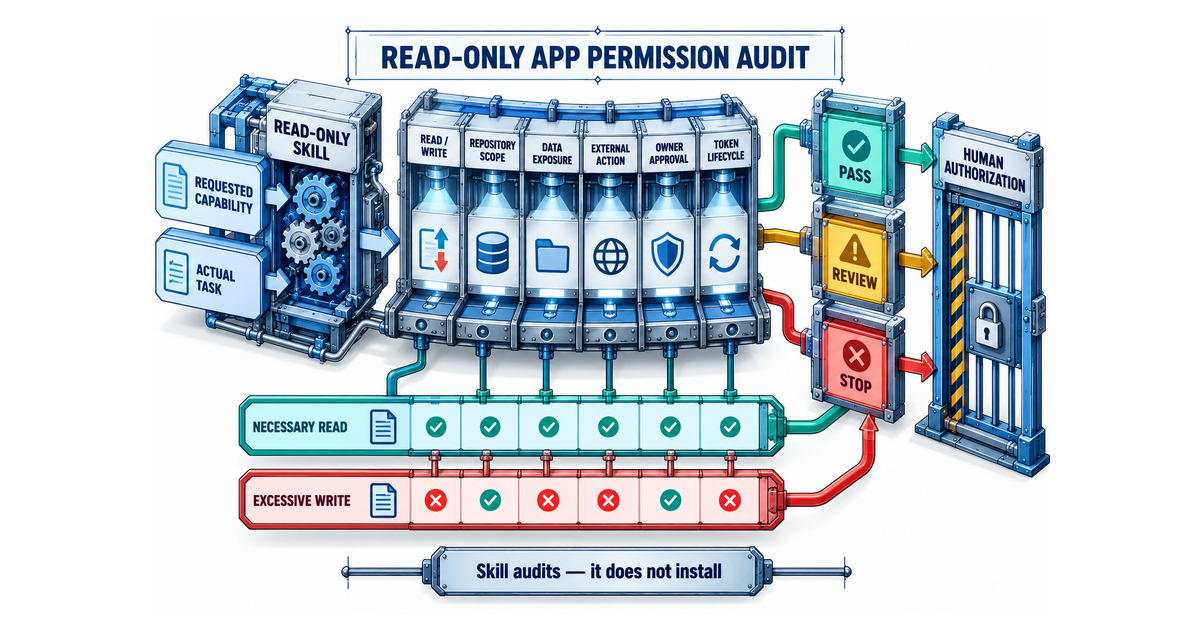
Summary: GitHub added narrower App permissions for repository creation and installation expansion, alongside offline-access credential improvements. Those controls create a useful teaching case for an Agent Skill that inventories requested access without changing settings. The reusable procedure should compare current and proposed scopes, identify owner approvals, document token handling and stop when consequences remain unclear.
Why it matters: Before authorizing any integration, use a read-only permission review that lists data exposure, external actions and approval owners. Test both harmless and excessive requests, retain the report and require human sign-off. A Skill documents checks; it cannot grant assurance automatically.
Source: GitHub App improvements for least privilege and management
2. ShipStation's Slack helpdesk shows how agents can escalate safely
Focus: Agents for Everyone
Date: October 13, 2026
Topics: Helpdesk agents, Human escalation, Permission boundaries
Evidence: Publisher Authored
Availability: Available
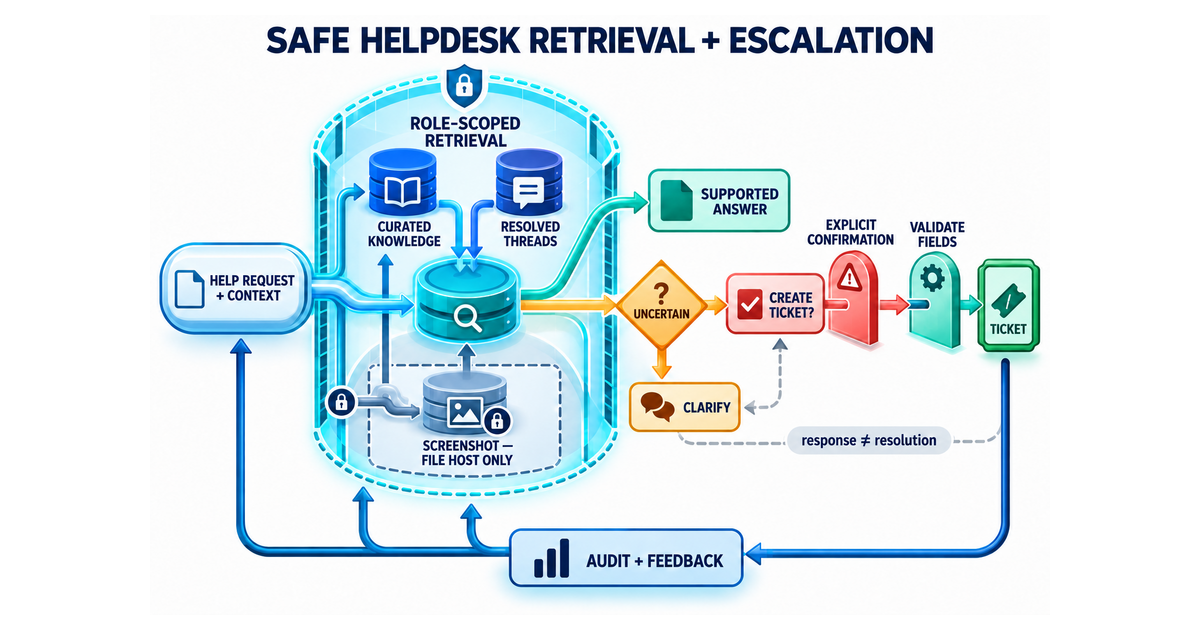
Summary: AWS describes ShipStation Global's Deckhand helpdesk agent in Slack, combining permission-scoped knowledge retrieval, screenshot analysis and Jira ticket escalation. The case study reports message volume and user feedback from an early deployment; a high reply rate must not be mistaken for resolution. Ticket creation requires an explicit user selection and downstream validation.
Why it matters: Small teams can adapt this pattern by letting agents answer approved questions while reserving account changes and tickets for confirmation. Test private-document access, unanswered questions and escalation evidence before deployment. Evaluate user outcomes rather than headline response rates.
Source: How ShipStation Global built an AI IT help desk on Amazon Bedrock AgentCore
3. An AWS reference design turns cited enterprise documents into slide decks
Focus: Applied Generative AI for Knowledge Workers
Date: October 14, 2026
Topics: Grounded presentations, Document retrieval, Slide verification
Evidence: Publisher Authored
Availability: Available
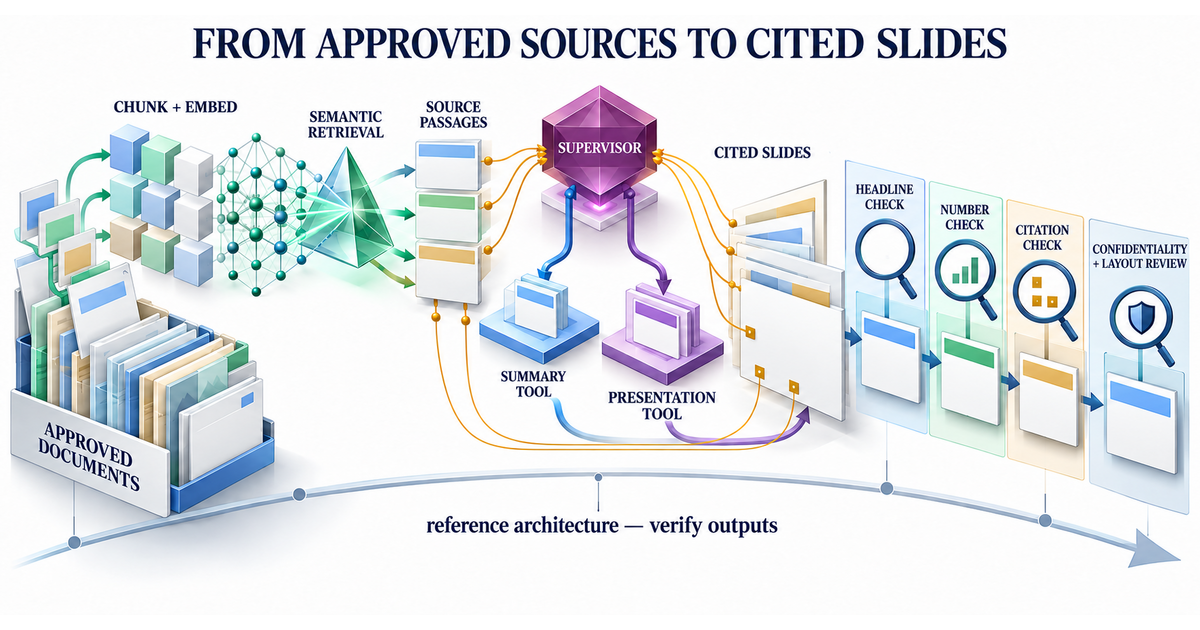
Summary: AWS describes an AgentCore reference architecture that ingests enterprise files, retrieves relevant passages, and coordinates summarization with PowerPoint generation. The design uses a supervisor, document embeddings, OpenSearch retrieval and guardrails to build cited slides. An illustrative annual-report test produced a short deck, but the example is not an independently validated business productivity benchmark.
Why it matters: For client briefings, start with approved source documents and an explicit slide outline. Verify every headline, number and citation against retrieved pages, then perform human layout and confidentiality review. Treat the sample workflow as an architecture to evaluate, not turnkey accuracy.
Source: Generate presentations with Amazon Bedrock AgentCore
4. A document-processing agent learns from failed extraction checks
Focus: Applied Generative AI for Knowledge Workers
Date: October 14, 2026
Topics: Document extraction, Validation loops, Instruction memory
Evidence: Publisher Authored
Availability: Available
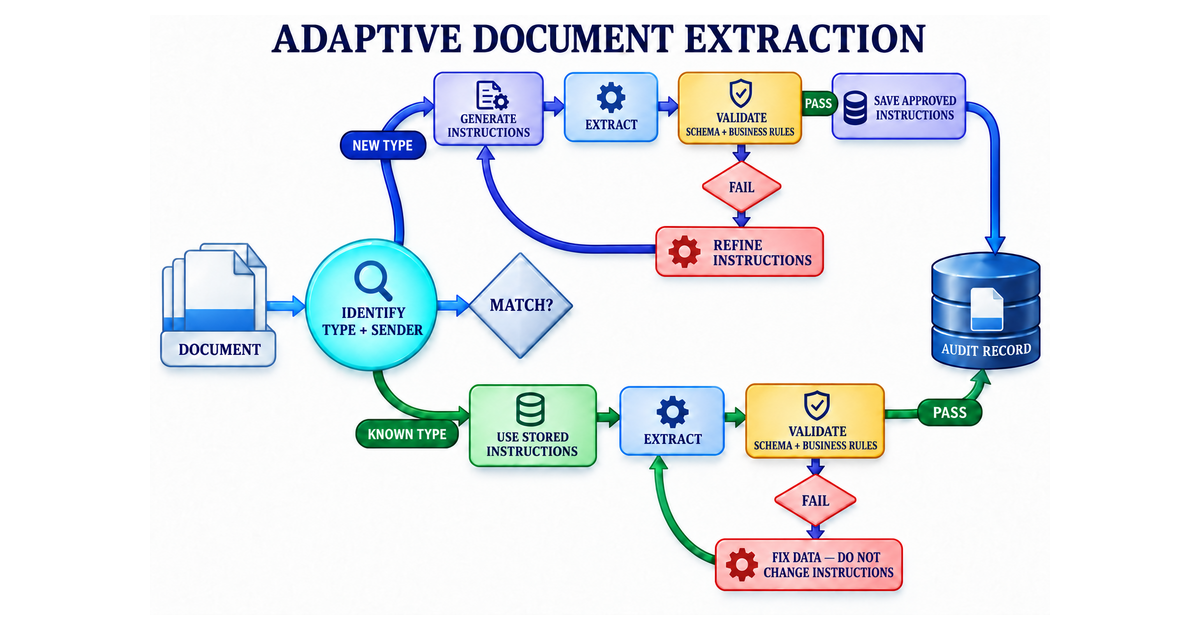
Summary: An AWS walkthrough coordinates eight specialized agents for document identification, extraction, validation and instruction updates. Textract supplies document content; database checks detect mismatches, while a repair agent revises stored extraction guidance for later examples. Its purchase-order timing comparisons come from illustrative runs, not a representative benchmark, and successful adaptation still depends on reliable rules.
Why it matters: Finance or operations teams can pilot one recurring document type with a fixed truth set. Track field-level errors, approve instruction changes before reuse, and retain original files for audit. Measure exceptions and regressions, not just faster second-pass processing.
Source: Build self-improving document processing using Amazon Bedrock AgentCore
5. GitHub tests multi-model critique and repair in Copilot workflows
Focus: Technical AI Engineering
Date: October 14, 2026
Topics: Multi-model evaluation, Critique tools, Agent repair loops
Evidence: Publisher Authored
Availability: Available
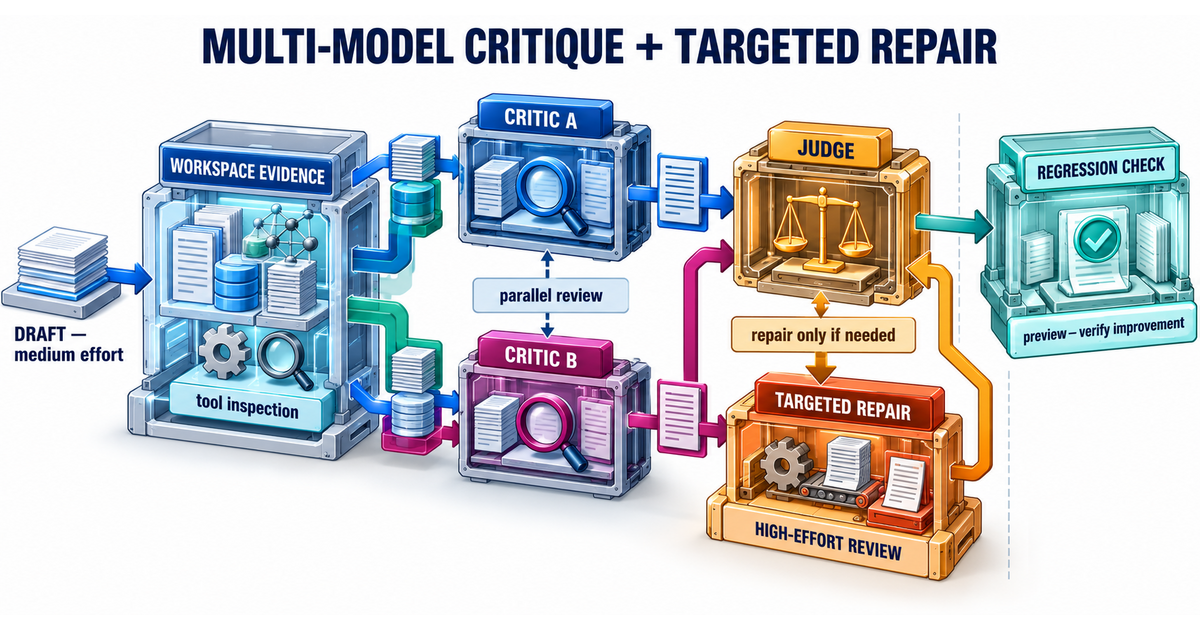
Summary: GitHub has expanded the HydraFusion research preview across VS Code, Copilot and its command line. Cascade now introduces a judging stage that can request targeted repairs, while Critique uses workspace tools and parallel critics to challenge draft outputs. Medium-effort drafting and higher-effort review are separate choices; these preview controls do not independently demonstrate reliable results.
Why it matters: A second model is not automatically a trustworthy reviewer. Compare its critiques against known failures, capture the evidence behind tool-assisted judgments, and measure whether requested repairs truly improve outcomes before adding this preview to production workflows.
Source: HydraFusion updates and new Max option
6. Workflow lockfiles give agent CI a reproducible dependency boundary
Focus: Technical AI Engineering
Date: October 14, 2026
Topics: Dependency provenance, Workflow security, Reproducible CI
Evidence: Publisher Authored
Availability: Available
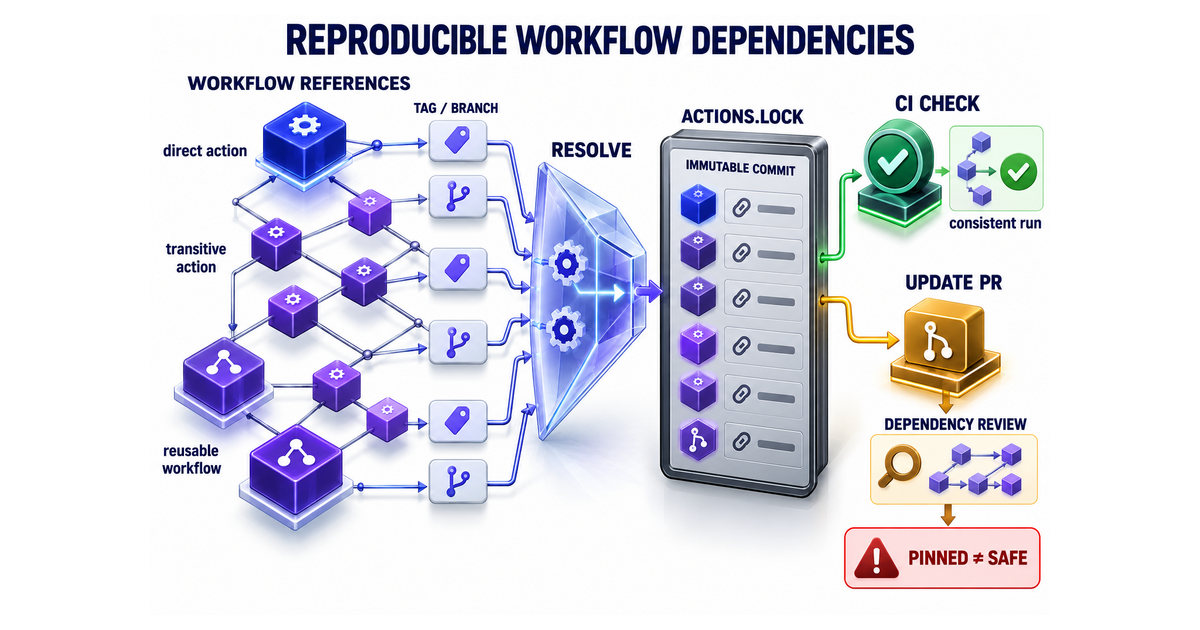
Summary: GitHub introduced public-preview workflow lockfiles that record immutable commit identifiers for Actions dependencies, including reusable workflows. Its gh actions-lock extension can create and check the lockfile, and Dependabot can update pinned entries through reviewable pull requests. For AI-generated code and agent-driven automation, the mechanism narrows unreviewed dependency drift but does not certify that pinned code is safe.
Why it matters: Ask agents to propose dependency upgrades rather than silently changing action versions. Review pinned code and permissions, test the resulting workflow, and require lockfile consistency in continuous integration. Reproducibility helps incident analysis but cannot replace supplier security assessment.
Source: GitHub Actions workflow lockfiles in public preview
Worth Watching
7. General
Navigating AI automation in Looker: Essential developer tools for agents
Open the permanent video page
Channel: Google Cloud Tech official video
Date: October 8, 2026
Duration: 5:55
Format: Video
Summary: Google Cloud developer advocate Chrissie Goodrich distinguishes five pieces of an agent-ready Looker developer stack: Looker Skills, command-line access, a managed MCP server, a database MCP toolbox and the VS Code extension. The video outlines how metadata-driven instructions can limit context load while service-account permissions govern tool access. Its practical lesson is to separate reusable analytic procedures from actual data authorization and independently verify calculations in LookML. The synopsis uses published caption-derived analysis, not playback.
Why it matters: Use narrow service accounts, explicit schemas and validation when adding Looker business intelligence tools to AI agents.
Source: Watch on YouTube
8. Agents for Everyone
Production Monitoring with Codex: Grafana, Kubernetes, & Security
Open the permanent video page
Channel: OpenAI official YouTube video
Date: October 7, 2026
Duration: 7:59
Format: Video
Summary: OpenAI presenters walk through three bounded production-response scenarios: a checkout failure correlated with Grafana and recent changes, a Kubernetes rollout with out-of-memory restarts, and shared-worker exhaustion treated as an availability issue. The segment emphasizes reconstructing evidence before proposing patches, human review before high-impact changes, and replay-based validation after remediation. These are demonstrations, not independent incident-resolution benchmarks; summary derives from a complete indexed original-language transcript, not watched playback.
Why it matters: Use telemetry and change history as controlled context, then review and regression-test each suggested operational patch.
Source: Watch on YouTube
Worth Listening — Podcasts
9. Can Open Models Keep Up With the AI Frontier? | Nathan Lambert
Open the permanent podcast page
Show: The a16z Show / Andreessen Horowitz
Host / guest: Not listed
Focus: Agents for Everyone
Date: October 14, 2026
Duration: 1:00:00
Topics:
Summary: In a discussion hosted by a16z partner Lisha Li, researcher Nathan Lambert contrasts closed frontier labs' infrastructure and capital advantages with open-model builders' ability to adapt techniques. They examine compute constraints, distillation, reinforcement-learning environments and the changing economics of post-training. Lambert also explains Trillium's ambition to make training environments and evaluations more accessible, while acknowledging uncertainty about self-improvement. The episode helps practitioners assess customization costs rather than treating open-weight availability as equivalent to frontier reliability; audio was not played.
Why it matters: Frame model choices around compute, maintainability, adaptation budgets and independent task-specific evaluation, not benchmark rankings alone.
Connection to the brief: Frame model choices around compute, maintainability, adaptation budgets and independent task-specific evaluation, not benchmark rankings alone.
Coverage: Selected for this edition.
Listen / watch: The a16z Show / Andreessen Horowitz
10. The AGORÀ Briefing — Wednesday, October 14, 2026
Open the permanent podcast page
Show: AGORÀ Intelligence — The Briefing
Host / guest: Not listed
Focus: Agents for Everyone
Date: October 14, 2026
Duration: 8:00
Topics:
Summary: AGORÀ Intelligence's October 14 briefing assembles five reported developments spanning economic conditions for AI investment, a customer-service bot designed as an agent, workplace trust questions, AI gateway access weaknesses and Asia-Pacific enterprise partnership announcements. Its publisher notes list these as individual topics without establishing the underlying claims as independently verified here. For knowledge workers the useful exercise is to separate announcements, operational risks and macroeconomic forecasts, then follow each primary source before adopting a workflow. No listening claimed.
Why it matters: Scan varied AI business risks rapidly, but verify each individual reported incident or commercial claim at its original source.
Connection to the brief: Scan varied AI business risks rapidly, but verify each individual reported incident or commercial claim at its original source.
Coverage: Selected for this edition.
Listen / watch: AGORÀ Intelligence — The Briefing
Emerging AI Watchlist
3 new today · 2 updated · 23 carried forward. 2 archived / dropped recently.
New today:
- Reproducible agent workflow dependencies
- Source-grounded presentation generation
- Document extraction instruction feedback
Updated today:
- Permission-filtered enterprise conversation memory
- Audited long-form business reasoning
Carried forward: 23
Archived / dropped recently:
- Rack-scale agent orchestration resources — No incremental October 14 dated infrastructure reference was identified; current edition concentrates on verifiable runtime safeguards.
- Consumer agent task permissions — Carry forward the October 13 application controls in the archive without a new day-specific product confirmation.
Help choose what we investigate next. Explore emerging ideas and tell us which interest you.
Editorial takeaway
A second model is not automatically a trustworthy reviewer. Compare its critiques against known failures, capture the evidence behind tool-assisted judgments, and measure whether requested repairs truly improve outcomes before adding this preview to production workflows.