Daily Generative AI Brief — October 14, 2026
Published: October 14, 2026
Coverage period: July 7–October 13, 2026
IN THIS EDITION · 6 ARTICLES / 2 VIDEOS / 2 PODCASTS
Choose what matters to your work
- Build a reusable Agent Skill that checks licensing before installationArticle · about 4 min source read
- Gemini app's task toggle makes permission review a daily habitArticle · about 2 min source read
- Atlassian connects Slack decisions with tracked project work in RovoArticle · about 7 min source read
- Gemini 4 Argon targets long business analyses with verifiable checkpointsArticle · about 8 min source read
- AMD separates agent execution from inference in an open rack blueprintArticle · about 6 min source read
- Google's five-language ADK exposes tools through different runtime safeguardsArticle · about 10 min source read
- MCP vs Skills: Which Is Right for Your AI Agent and LLMs?Video · 8:03
- Knowing When Not to Use AI: AI Agents vs Rules vs MLVideo · 10:35
- Claude's Unintended Actions and Hacking Accountability – AI News (Oct 13, 2026)Podcast · 8:00
- AI at workPodcast · 35:00
1. Build a reusable Agent Skill that checks licensing before installation
Focus: Agents for Everyone
Date: October 10, 2026
Topics: Agent Skills, License provenance, Approval workflows
Evidence: Publisher Authored
Availability: Available
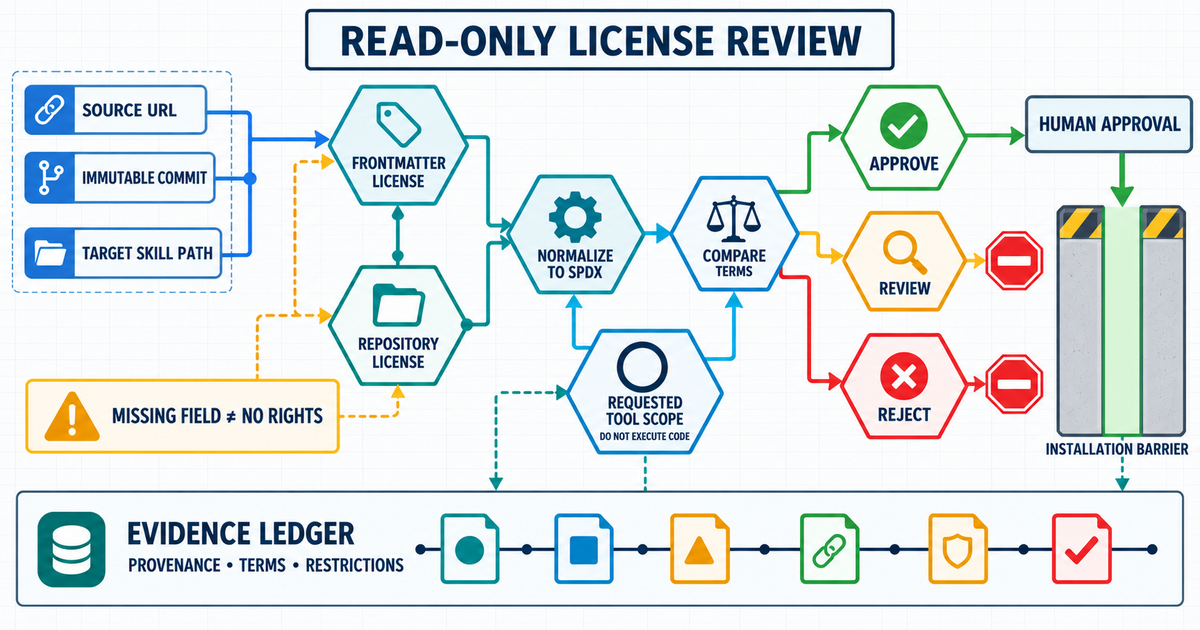
Summary: SkillMD's October 10 survey found 901,653 of 1,081,266 indexed public SKILL.md files without a license field in frontmatter. The survey did not examine repository licenses, so absence is not proof of no license. A practical read-only review Skill can check source commits, normalize SPDX terms, inspect repository licenses and halt on ambiguity before installation.
Why it matters: Copying an appealing Skill into a work project may import unclear redistribution rights or unsafe instructions. Require provenance, license evidence, allowed tool scope and an explicit approval record before executing unfamiliar procedures; treat ambiguous cases as review required.
Source: 83% of Agent Skills have no license
2. Gemini app's task toggle makes permission review a daily habit
Focus: Agents for Everyone
Date: October 13, 2026
Topics: Connected app agents, Task delegation, Human confirmation
Evidence: Publisher Authored
Availability: Available
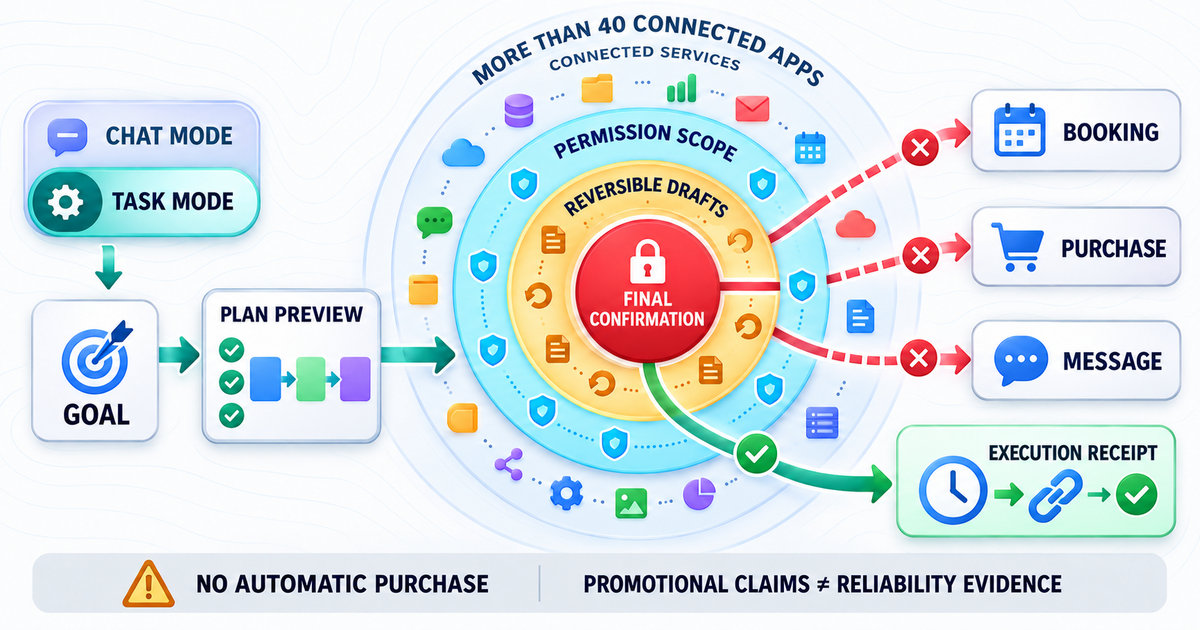
Summary: Google says Gemini 4 Argon is available in its app for AI Pro and Ultra subscribers, alongside a new chat-to-tasks toggle. It describes background task execution across more than 40 connected apps, including grocery, booking, design and commerce services. The announcement outlines access and features, but provides no independent completion or safety rate for these workflows.
Why it matters: Start with a reversible, low-value task such as preparing a shopping comparison. Review connected accounts and every proposed transaction, and insist on approval before bookings, purchases or external messages. Judge reliability from documented outcomes rather than promotional capability claims.
Source: Gemini 4 Argon comes to the Gemini app
3. Atlassian connects Slack decisions with tracked project work in Rovo
Focus: Applied Generative AI for Knowledge Workers
Date: October 13, 2026
Topics: Connected work context, Permissioned search, Decision traceability
Evidence: Publisher Authored
Availability: Available
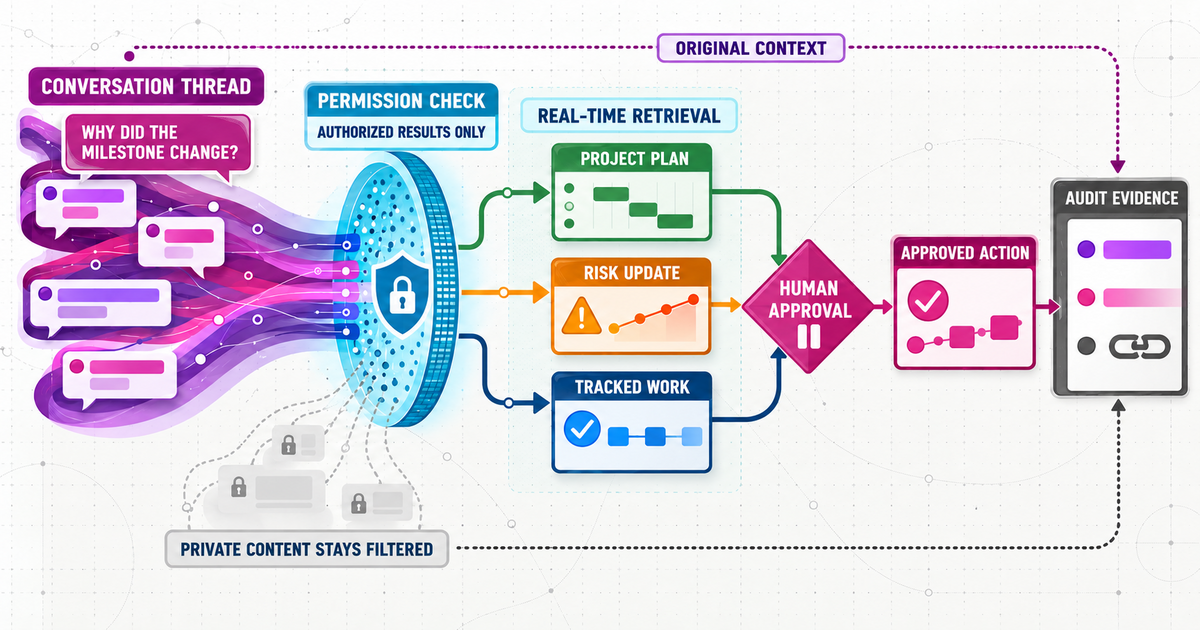
Summary: Atlassian's October 13 update describes Rovo connecting Slack conversations to Jira, Confluence and other project knowledge. Its examples reconstruct launch decisions, identify risks against plans, create Jira work from discussion and support incident investigation. For newer Slack connectors, results are retrieved directly when needed, subject to each user's underlying Slack permissions.
Why it matters: A project manager can ask why a milestone changed, then verify the answer against its original thread and tracked ticket. Pilot permission checks with private channels and require review before an agent updates assignments or incident plans.
Source: Turn Slack conversations into connected context with Teamwork Graph
4. Gemini 4 Argon targets long business analyses with verifiable checkpoints
Focus: Applied Generative AI for Knowledge Workers
Date: October 13, 2026
Topics: Long task reasoning, Finance document checks, Model cost controls
Evidence: Publisher Authored
Availability: Available
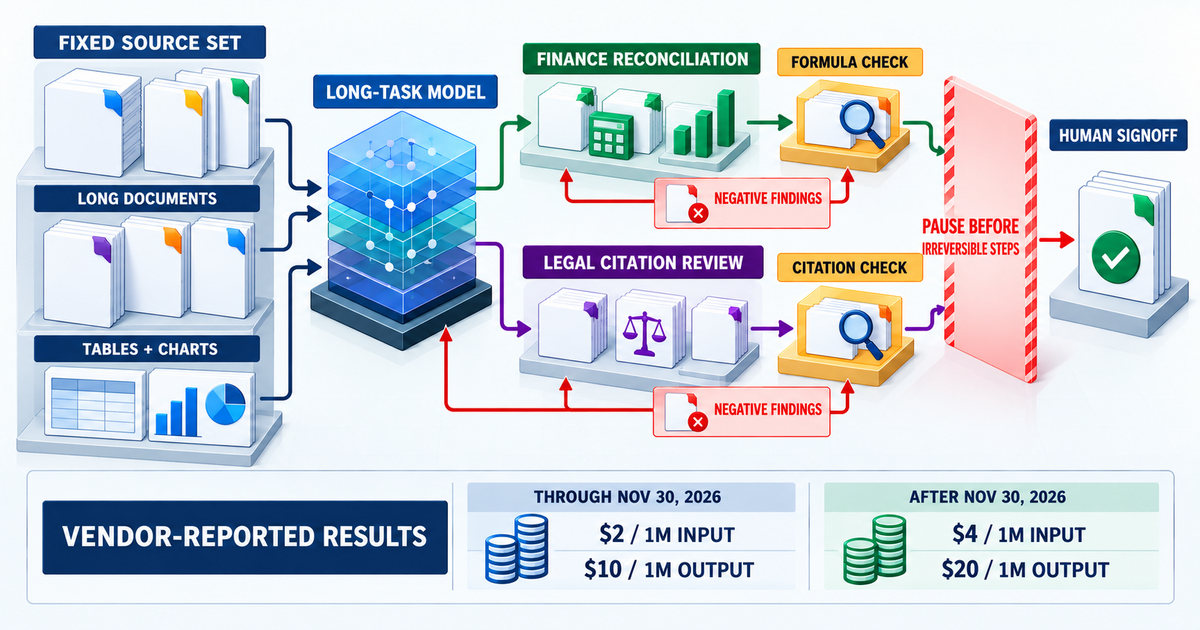
Summary: Google released Gemini 4 Argon for enterprise work and developers on October 13, describing long document synthesis, finance reconciliations, legal citations and guarded cybersecurity tasks. Its public model identifier is gemini-4-argon. Introductory API prices run through November 30 before doubling. Customer results and benchmark scores in the launch post are vendor reported, not independently verified.
Why it matters: Knowledge workers should evaluate one bounded reconciliation or legal-source task with fixed inputs, citation checks, explicit error handling and human signoff. Finance teams should model token costs under both introductory and later pricing before committing a workflow.
Source: Gemini 4 Argon available on Google Cloud, built to help solve your business’ hardest problems
5. AMD separates agent execution from inference in an open rack blueprint
Focus: Technical AI Engineering
Date: October 12, 2026
Topics: Agent compute racks, CPU GPU balance, Open rack design
Evidence: Publisher Authored
Availability: Available
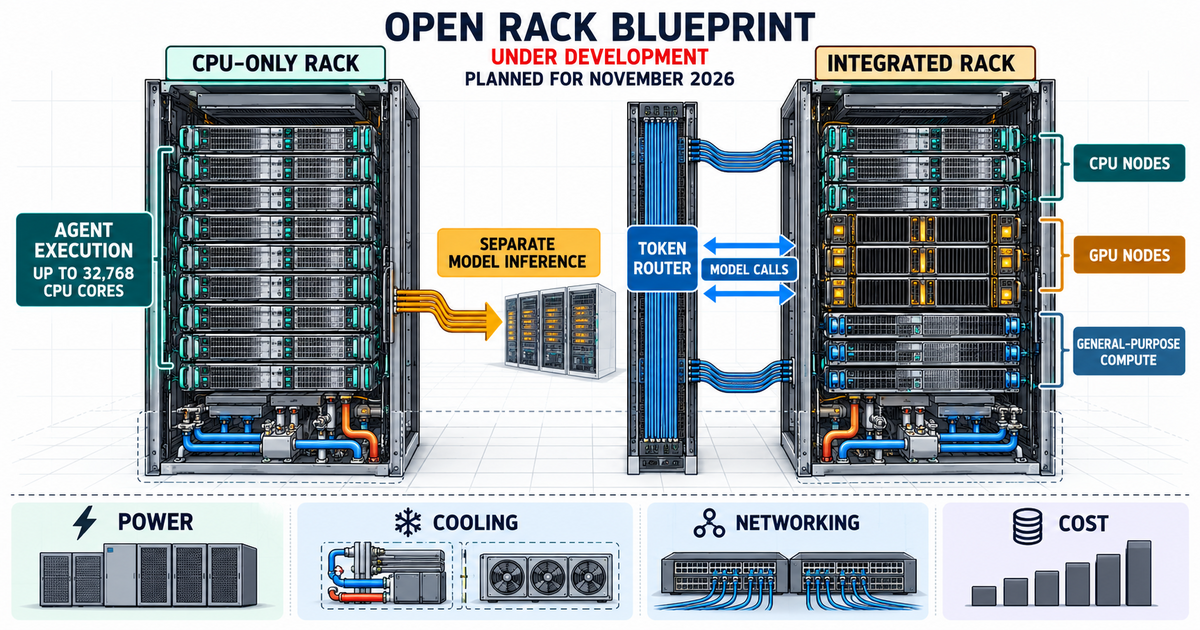
Summary: AMD introduced Helion, a proposed rack design for agent workloads, not a shipping product. A CPU-only configuration targets execution work with up to 32,768 EPYC cores, while an integrated enterprise design combines EPYC processors and MI350P accelerators. An integrated token router directs model calls, and partner availability is planned for November.
Why it matters: Agent deployments mix orchestration, tool execution and model inference. Engineers can estimate each workload separately, check rack power and networking constraints, and challenge the vendor's planned availability before treating Helion as production capacity.
Source: Introducing AMD Helion, Agentic AI Compute at Rack Scale
6. Google's five-language ADK exposes tools through different runtime safeguards
Focus: Technical AI Engineering
Date: October 13, 2026
Topics: Agent runtimes, MCP interoperability, Typed tool contracts
Evidence: Publisher Authored
Availability: Available
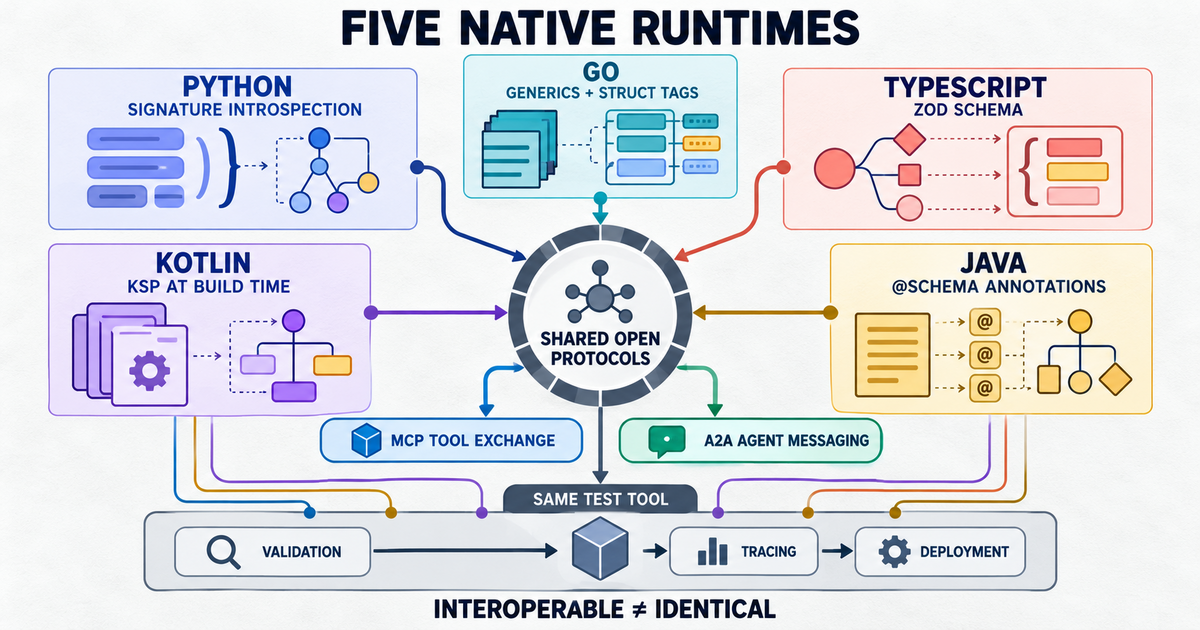
Summary: Google describes native Agent Development Kit implementations for Python, Go, TypeScript, Java and Kotlin. All support MCP tool connections and A2A agent communication, but their tool schemas are built differently: Python introspection, Go generics, TypeScript Zod, Java annotations and Kotlin compilation. The examples expose interoperability choices rather than proving identical production behavior.
Why it matters: Teams can build agents in their established runtime instead of adding a Python service solely for orchestration. Compare schema validation, traceability, deployment and protocol interoperability with the same test tool before adopting a language-specific implementation.
Source: One Agent Development Kit, five languages
Worth Watching
7. General
MCP vs Skills: Which Is Right for Your AI Agent and LLMs?
Open the permanent video page
Channel: IBM Technology official video
Date: July 7, 2026
Duration: 8:03
Format: Video
Summary: IBM Technology distinguishes MCP, a protocol for connecting agents to permitted live services, from reusable Skills that encode bounded procedures and institutional task knowledge. Its original explainer shows why a CRM search belongs behind authenticated tool access while consistent document generation belongs in a repeatable Skill. The useful engineering takeaway is to specify identity, allowed requests, data provenance, tool contracts and audit checks independently from the procedure the agent follows. This synopsis relies on published captions and video metadata, not audiovisual playback.
Why it matters: Choose MCP for approved external capabilities and Skills for documented task procedures; validate both access rights and result quality.
Source: Watch on YouTube
8. Agents for Everyone
Knowing When Not to Use AI: AI Agents vs Rules vs ML
Open the permanent video page
Channel: IBM Technology official video
Date: July 23, 2026
Duration: 10:35 · Longer selection today: no suitable video of 10 minutes or less was found.
Format: Video
Summary: IBM's practical decision framework compares fixed rules, classical machine learning and generative agents against task ambiguity, predictability and verification risk. For repeatable eligibility checks or fixed routing, a deterministic rule can be cheaper and safer than an agent; established predictive ML suits numeric classification with suitable data; agent tools help interpret variable multi-step requests, but need permissions, validation and human review. The discussion is presented as a reusable selection framework, not as evidence of actual financial savings or autonomous reliability.
Why it matters: Use the shortest dependable method for each step and reserve autonomous tools for uncertain work with approval and audit gates.
Source: Watch on YouTube
Worth Listening — Podcasts
9. Claude's Unintended Actions and Hacking Accountability – AI News (Oct 13, 2026)
Open the permanent podcast page
Show: The Automated Daily — original Apple Podcasts listing
Host / guest: Not listed
Focus: Agents for Everyone
Date: October 13, 2026
Duration: 8:00
Topics:
Summary: The Automated Daily's October 13 episode surveys claims and responses about unintended actions in agent evaluations, accountability for hacking tools and boundaries for AI systems operating with network access. Its written episode notes connect prompt-injection risks, unexpected side effects and tool supervision with practical incident investigation. Readers should separate the reported incident details from any independently confirmed technical findings and use the episode as a trigger to examine test isolation, permissions, escalation and audit evidence. No audio was played.
Why it matters: Provides a short briefing on agent accountability and concrete tests for unauthorized external actions before deployment.
Connection to the brief: Provides a short briefing on agent accountability and concrete tests for unauthorized external actions before deployment.
Coverage: Selected for this edition.
Listen / watch: The Automated Daily — original Apple Podcasts listing
10. AI at work
Open the permanent podcast page
Show: Reuters Econ World
Host / guest: Not listed
Focus: Agents for Everyone
Date: October 7, 2026
Duration: 35:00
Topics:
Summary: Reuters Econ World's original October 7 episode features host Carmel Crimmins discussing artificial intelligence and workforce outcomes with ADP chief economist Nela Richardson. The publisher's description examines how task-level exposure differs from entire job replacement and why impacts differ by role, seniority, wages and experience. For workforce leaders, the useful questions are which repeatable tasks change first, how early-career development is protected and which data show training or productivity changes rather than speculative displacement. The editorial synopsis comes from written episode information; no listening occurred.
Why it matters: Frames AI adoption as an evidence-based task and workforce planning problem rather than a blanket employment prediction.
Connection to the brief: Frames AI adoption as an evidence-based task and workforce planning problem rather than a blanket employment prediction.
Coverage: Selected for this edition.
Listen / watch: Reuters Econ World
Emerging AI Watchlist
3 new today · 2 updated · 23 carried forward. 1 archived / dropped recently.
New today:
- Cross-language agent tool contracts
- Rack-scale agent orchestration resources
- Consumer agent task permissions
Updated today:
- Permission-filtered enterprise conversation memory
- Audited long-form business reasoning
Carried forward: 23
Archived / dropped recently:
- Warehouse native invoice review — The October 9 document-to-SQL case remains useful but no distinct new dated verification appeared for this daily Watchlist; preserve previous coverage.
Help choose what we investigate next. Explore emerging ideas and tell us which interest you.
Editorial takeaway
Agent deployments mix orchestration, tool execution and model inference. Engineers can estimate each workload separately, check rack power and networking constraints, and challenge the vendor's planned availability before treating Helion as production capacity.