Microsoft's Maia 300 shifts the inference bottleneck toward data movement
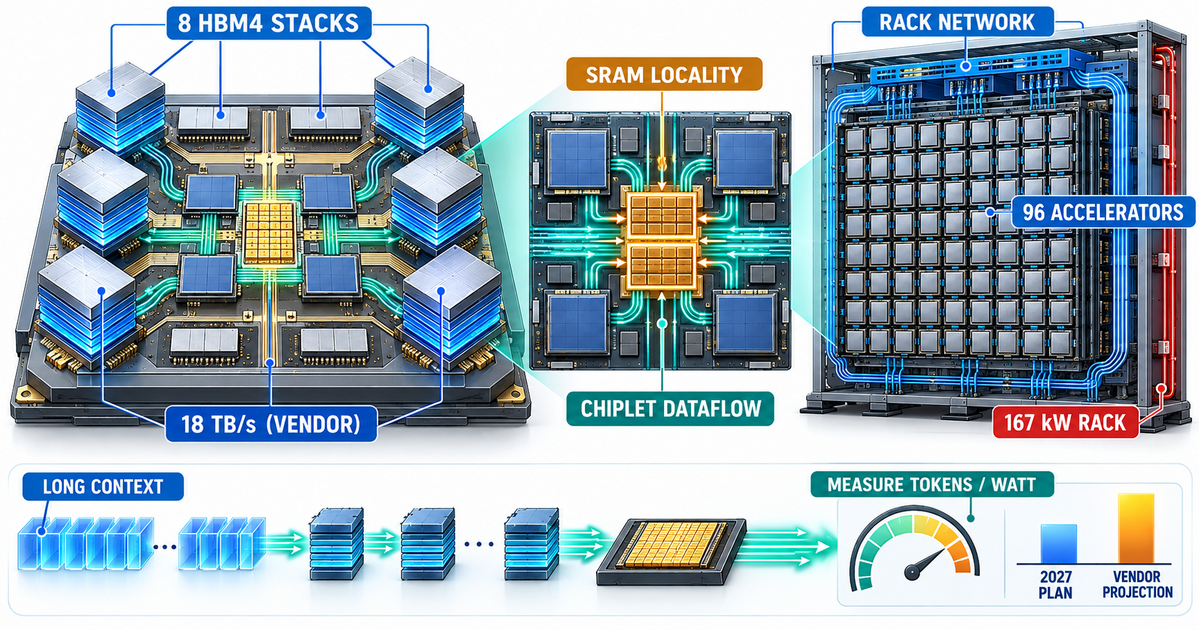
Microsoft says Maia 200 already serves production Copilot workloads and plans multigigawatt deployments of its accelerator family starting in 2027. Its announced Maia 300 emphasizes data locality, HBM4 bandwidth, chiplets, and rack networking for long context and agent workloads. Claimed efficiency and throughput improvements come from Microsoft's projections, not independent testing.
Microsoft's Maia 300 shifts the inference bottleneck toward data movement
Focus: Technical AI Engineering Date: October 12, 2026 Topics: Inference architecture, Memory bandwidth, Power efficiency Evidence: Publisher Authored Availability: Available
Summary: Microsoft says Maia 200 already serves production Copilot workloads and plans multigigawatt deployments of its accelerator family starting in 2027. Its announced Maia 300 emphasizes data locality, HBM4 bandwidth, chiplets, and rack networking for long context and agent workloads. Claimed efficiency and throughput improvements come from Microsoft's projections, not independent testing.
Why it matters: Infrastructure teams should measure tokens per watt, memory traffic, latency, and model compatibility together instead of comparing accelerator peak compute alone. Treat Maia 300 figures as planning inputs, then request workload matched benchmarks before any capacity or procurement decision.