Daily Generative AI Brief — November 3, 2026
Published: November 3, 2026
Coverage period: October 30–November 2, 2026
IN THIS EDITION · 6 ARTICLES / 2 VIDEOS / 2 PODCASTS
Choose what matters to your work
- LifeVal tests AI help on everyday planning decisionsArticle · about 7 min source read
- A decision-review Skill keeps AI initiatives tied to evidenceArticle · about 8 min source read
- Anthropic’s S-1 exposes the economics behind enterprise AIArticle · about 3 min source read
- Mistral adds managed search indexes for grounded knowledge workArticle · about 7 min source read
- GDPx tests frontier agents on 206 professional tasksArticle · about 8 min source read
- NVIDIA turns Cosmos models into interactive simulation pipelinesArticle · about 9 min source read
- Why are AI data centers using so much electricity?Video · 6:16
- Who's keeping AI in check?Video · 4:30
- AI Is Moving Too Fast. Two New Models In Two Weeks?!Podcast · 51:00
- The Brutal Reality of Building Agentic Products Today with Daniel JeffriesPodcast · 54:00
1. LifeVal tests AI help on everyday planning decisions
Focus: Agents for Everyone
Date: November 2, 2026
Topics: Everyday planning, Outcome evaluation, Verified decisions
Evidence: Publisher Authored
Availability: Available
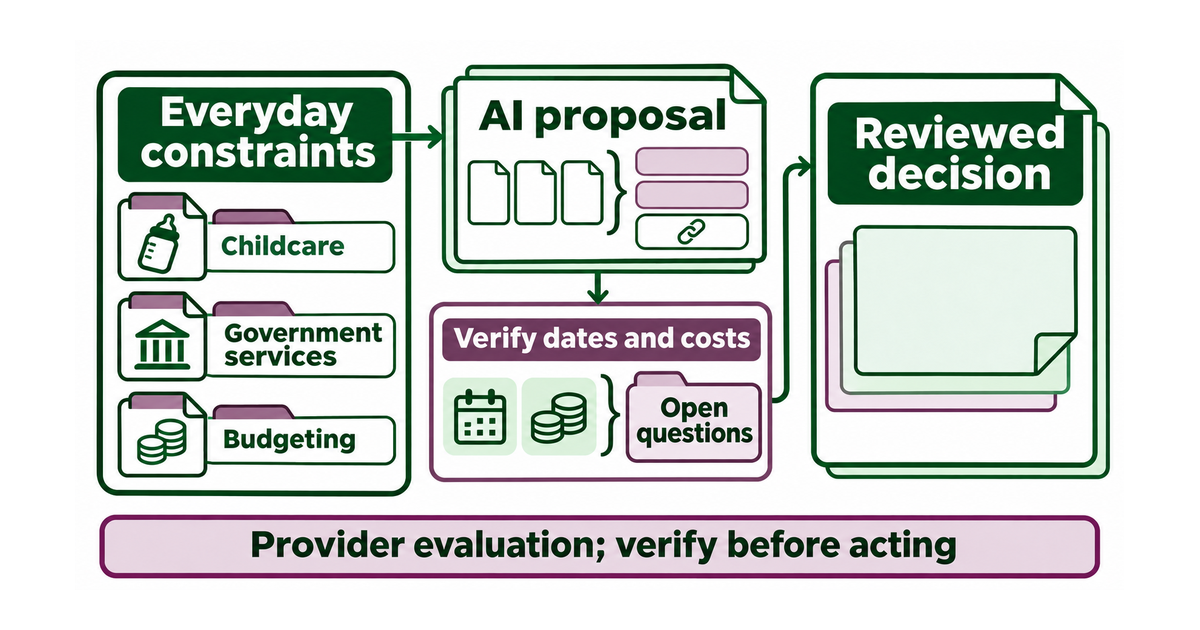
Summary: OpenAI’s LifeVal builds everyday assistance tasks from a 3,995-person survey covering childcare, government services, budgets and similar decisions. The benchmark evaluates whether models help people reach useful actions over time. Because the task set and evaluation come from the model provider, it should guide bounded testing rather than prove broad consumer benefit or reliability.
Why it matters: People can adapt the evaluation idea to one low-stakes task: state constraints, require source links, verify dates and costs and record unresolved questions before acting. The useful output is a reviewed decision note, not trust in a benchmark score.
Source: Introducing LifeVal
2. A decision-review Skill keeps AI initiatives tied to evidence
Focus: Agents for Everyone
Date: October 30, 2026
Topics: Agent Skills, Decision review, Evidence discipline
Evidence: Publisher Authored
Availability: Available
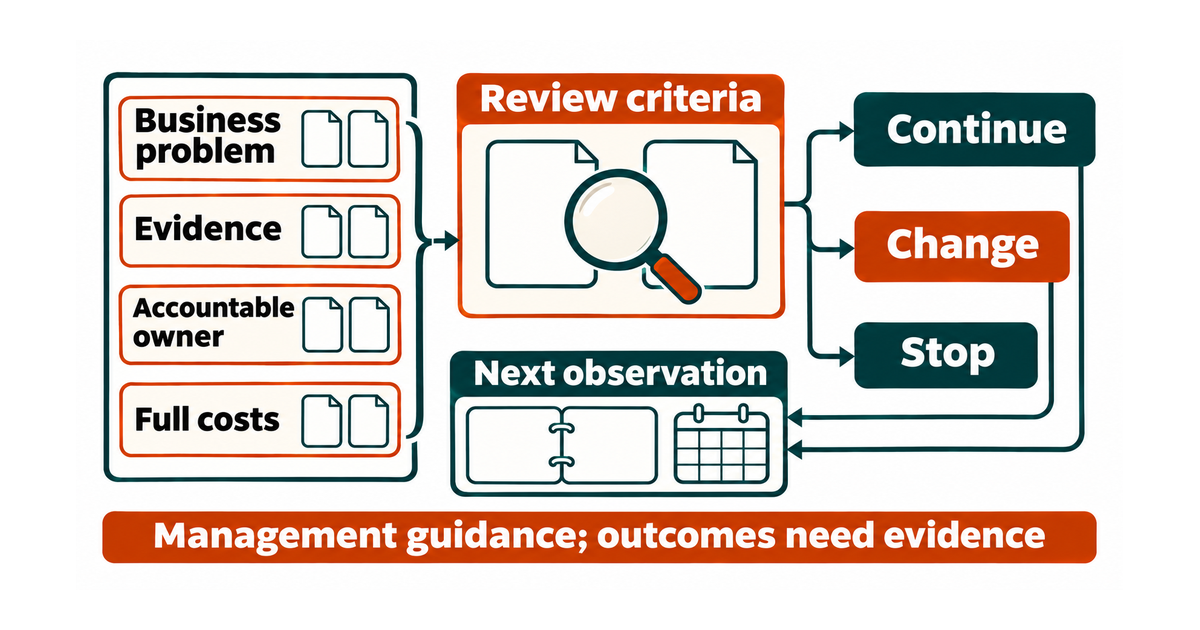
Summary: Databricks proposes five disciplines for enterprise AI decisions: define the business problem, use evidence, assign ownership, count full costs and preserve flexibility. The article is management guidance, not outcome proof. A reusable Skill converts those prompts into a one-page review with cited assumptions, explicit stop-or-expand criteria, a recorded decision and a dated next observation.
Why it matters: Teams can use the Skill before buying or scaling anything: challenge the evidence, name the accountable owner, include integration and review costs and decide what result would stop the initiative. That makes learning inspectable and reversible.
Source: Deliberate Decisions and Enterprise AI Value
3. Anthropic’s S-1 exposes the economics behind enterprise AI
Focus: Applied Generative AI for Knowledge Workers
Date: November 2, 2026
Topics: AI economics, Compute costs, Filing analysis
Evidence: Independent Reporting
Availability: Available
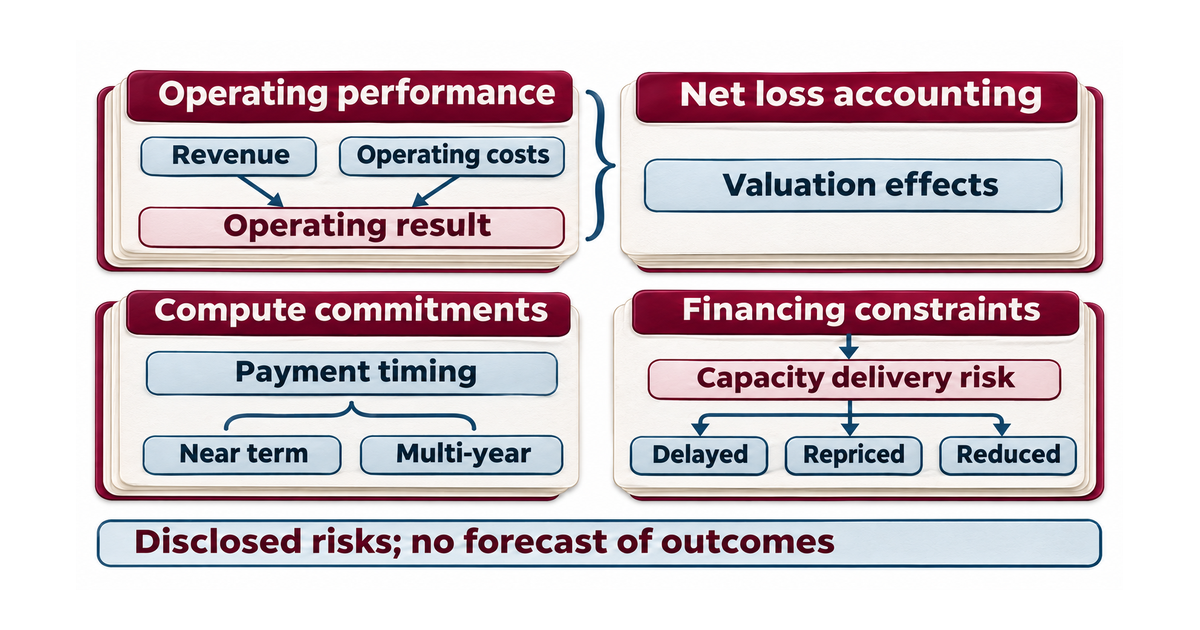
Summary: Reuters reports that Anthropic’s November 2 amended S-1 shows third-quarter revenue rising to $16.96 billion while operating results swung back to a $567 million loss. The filing also discloses $895.4 billion in compute commitments and financing-dependent capacity risks. The article separates operating performance from much larger fair-value-driven net losses and records slowing quarterly growth.
Why it matters: Finance, strategy and procurement teams can use the disclosure as a review checklist: compare revenue growth with operating results, separate valuation accounting from operations, inspect compute commitments and test capacity-financing dependencies before accepting headline growth claims.
Source: Anthropic revenue growth slows, compute financing risks mount ahead of IPO
4. Mistral adds managed search indexes for grounded knowledge work
Focus: Applied Generative AI for Knowledge Workers
Date: October 30, 2026
Topics: Managed search, Grounded retrieval, Knowledge indexes
Evidence: Publisher Authored
Availability: Available
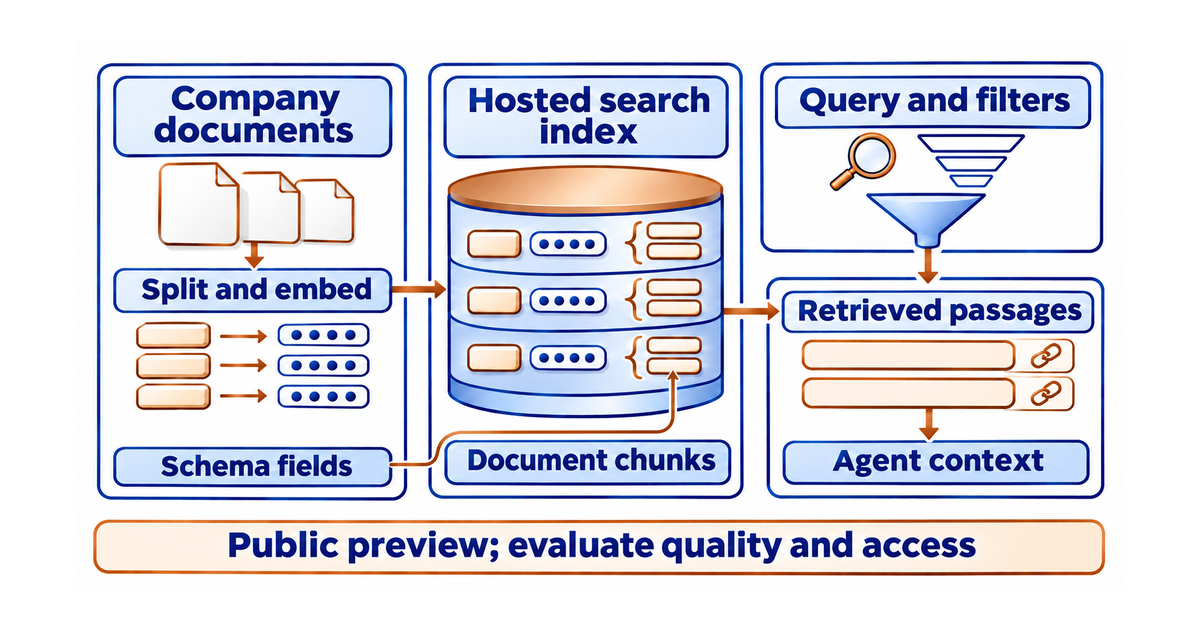
Summary: Mistral’s October 30 release notes introduce managed search indexes in public preview, with hosted schema definition, document ingestion and retrieval through its SDK. The feature can reduce infrastructure work around grounded assistants, but the release provides limited independent evidence about retrieval quality, permission behavior, update latency or production reliability. Those properties still need local evaluation.
Why it matters: Knowledge teams can pilot one bounded corpus: define allowed fields, test permission-sensitive queries, record missing and stale results and compare citations against source documents. Preview convenience should not replace retrieval evaluation or access controls.
Source: Mistral AI release notes — Managed Search Index public preview
5. GDPx tests frontier agents on 206 professional tasks
Focus: Technical AI Engineering
Date: November 2, 2026
Topics: Professional tasks, Agent benchmarks, Expert grading
Evidence: Publisher Authored
Availability: Available
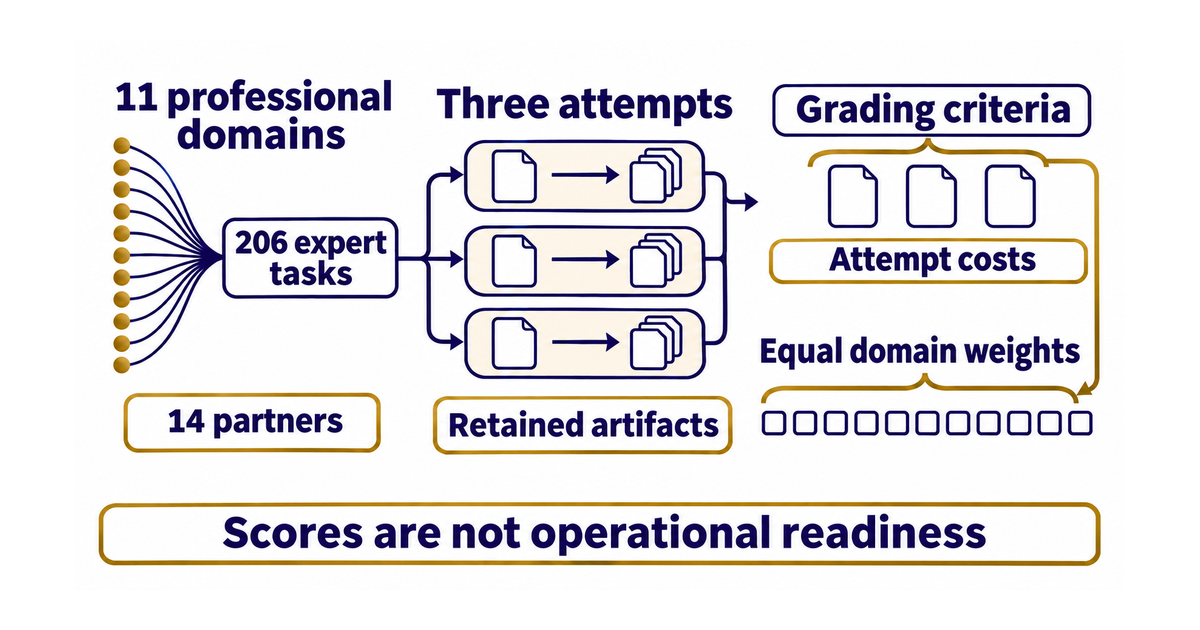
Summary: SemiAnalysis’ GDPx evaluates frontier agents on 206 professional tasks across 11 domains with artifacts designed by experts from 14 organizations. Models receive three attempts, and domain scores are weighted equally. The benchmark adds cost reporting and reviewable deliverables, but its results still depend on task construction, grader procedures and each vendor’s configured model.
Why it matters: Evaluation teams can borrow the structure without copying the leaderboard: define realistic deliverables, retain attempts and costs, publish grading criteria and report domain results separately before treating one aggregate score as operational readiness.
Source: GDPx — Measuring Frontier Model Capabilities in Real-World Professional Tasks
6. NVIDIA turns Cosmos models into interactive simulation pipelines
Focus: Technical AI Engineering
Date: November 2, 2026
Topics: World models, Sensor conditioning, Simulation pipelines
Evidence: Publisher Authored
Availability: Available
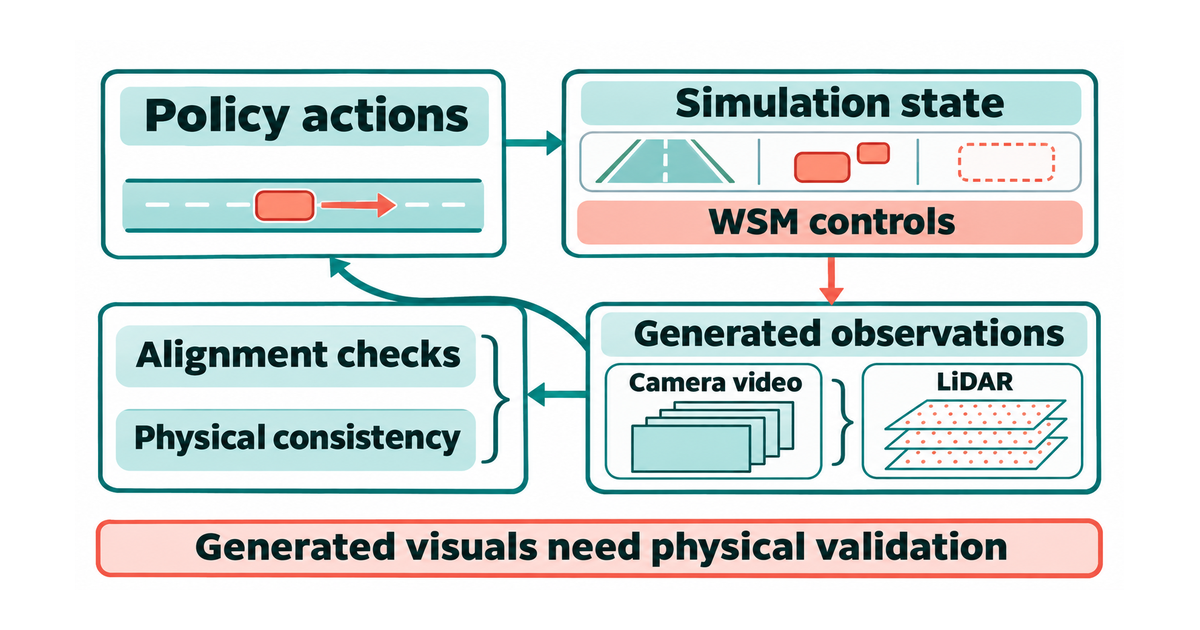
Summary: NVIDIA’s Cosmos framework combines predictive and transfer world models with camera paths, control signals and sensor-conditioned generation for interactive simulation. The technical post shows skills, NIM deployment and camera-plus-LiDAR recipes, while disclosing substantial GPU memory needs. These vendor demonstrations establish a build pattern, not independent proof that generated scenes are physically reliable.
Why it matters: Simulation teams can separate visual generation from engineering assurance: record every conditioning signal, measure latency and memory, preserve sensor alignment and test physical consistency before generated environments influence robotics training or safety decisions.
Source: Build World Models for Interactive Simulation with NVIDIA Cosmos
Worth Watching
7. General
Why are AI data centers using so much electricity?
Open the permanent video page
Channel: TED-Ed
Date: September 1, 2026
Duration: 6:16
Format: Video
Summary: TED-Ed explains why training and serving large AI models requires dense clusters of accelerators, networking, electricity and cooling. The complete six-minute program connects compute demand with water, grid and siting constraints without selling an AI product. TED lists the original publication only as September 2026, so month-level date precision is retained as an advisory.
Why it matters: Infrastructure and sustainability teams can separate model capability from the physical systems that make it possible, then ask which workload, power, cooling and siting measurements are needed before accepting broad efficiency or environmental claims.
Source: Watch on TED-Ed
8. Agents for Everyone
Who's keeping AI in check?
Open the permanent video page
Channel: CBS News
Date: October 21, 2026
Duration: 4:30
Format: Video
Summary: CBS News reporter Jo Ling Kent examines how technology leaders describe AI safeguards while competing for commercial and geopolitical advantage. The complete four-and-a-half-minute report attributes claims, distinguishes company positions from reporter framing and avoids a product demonstration. Its October 21 original date and consecutive-day CBS publisher exposure are disclosed as editorial advisories.
Why it matters: Policy and business readers can compare stated safeguards with the incentives of the people proposing them, then require concrete governance, testing and incident evidence before treating competitive positioning as proof that fast-moving AI risks are controlled.
Source: Watch on CBS News
Worth Listening — Podcasts
9. AI Is Moving Too Fast. Two New Models In Two Weeks?!
Open the permanent podcast page
Show: AI for Humans
Focus: Agents for Everyone
Date: October 30, 2026
Duration: 51:00
Summary: AI for Humans reviews Gemini 4 Carbon, Genie 4, GPT-6.1 Terra, local speech models and several AI-science claims. The exact Apple page supplies chapters through 46:41 and a 51-minute runtime. Commentary and demonstrations are clearly framed as the hosts’ analysis; third-party benchmarks and vendor claims remain attributed.
Why it matters: The chaptered survey helps readers compare a crowded release week without treating every demo as equivalent evidence. Use it to identify original sources, separate available products from previews and choose which claims deserve deeper verification.
Coverage: Selected for this edition.
Listen / watch: AI for Humans
10. The Brutal Reality of Building Agentic Products Today with Daniel Jeffries
Open the permanent podcast page
Show: TWIML AI Podcast
Focus: Agents for Everyone
Date: October 28, 2026
Duration: 54:00
Summary: TWIML interviews Daniel Jeffries about building personal and collaborative agents with persistent memory, private context, deterministic tools and local-versus-cloud model routing. The exact Apple episode page verifies episode 782 and 54 minutes; the first-party page plus timecoded outline covers the substantive discussion. Guest product claims remain attributed.
Why it matters: Product and platform teams can compare opinionated agent design choices rather than assuming more agents mean better software. The discussion highlights privacy, memory, narrow tools and model routing as explicit tradeoffs to test in one bounded workflow.
Coverage: Selected for this edition.
Listen / watch: TWIML AI Podcast
Emerging AI Watchlist
1 new today · 0 updated · 40 carried forward. 1 archived / dropped recently.
New today:
- Professional-task agent benchmarks
Updated today: None
Carried forward: 40
Archived / dropped recently:
- Native multimodal world simulation — Carried forward after the October 29 review found no material evidence change requiring a new assessment.
Help choose what we investigate next. Explore emerging ideas and tell us which interest you.
Editorial takeaway
Evaluation teams can borrow the structure without copying the leaderboard: define realistic deliverables, retain attempts and costs, publish grading criteria and report domain results separately before treating one aggregate score as operational readiness.