Daily Generative AI Brief — November 1, 2026
Published: November 1, 2026
Coverage period: October 29–30, 2026
IN THIS EDITION · 6 ARTICLES / 2 VIDEOS / 2 PODCASTS
Choose what matters to your work
- Managed Deep Agents adds browser handoff and background helpersArticle · about 7 min source read
- A commitments tally turns passing promises into reviewable workArticle · about 11 min source read
- Gemini can now edit an entire Slides deck from one requestArticle · about 4 min source read
- Cohere maps a citation-first assistant for financial filingsArticle · about 9 min source read
- NVIDIA packages a validated Kubernetes runtime for DynamoArticle · about 9 min source read
- OpenAI details layered monitoring for frontier-agent misalignmentArticle · about 10 min source read
- Humans are teaching AI how to do their jobsVideo · 13:15
- How algorithms manipulate you (and how to fight back)Video · 9:35
- Abundant Intelligence at the Midwest AI SummitPodcast · 54:14
- Agents Prompt People: Using Agents for Long-Horizon Financial WorkPodcast · 26:00
1. Managed Deep Agents adds browser handoff and background helpers
Focus: Agents for Everyone
Date: October 29, 2026
Topics: Browser handoff, Async subagents, Stop controls
Evidence: Publisher Authored
Availability: Available
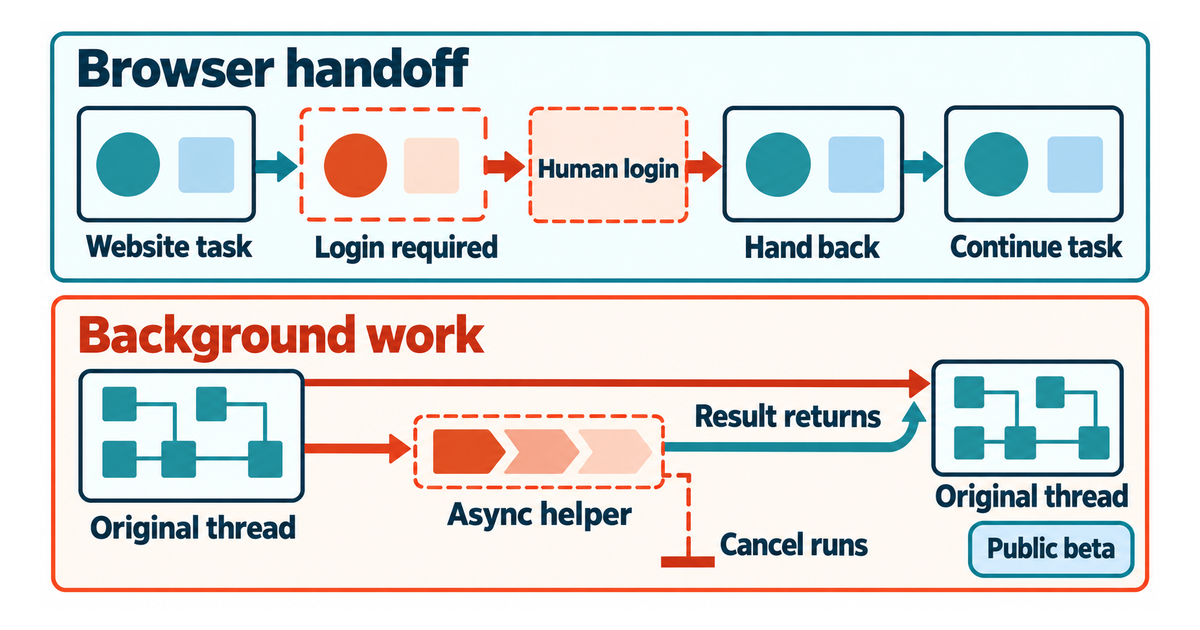
Summary: LangChain’s Managed Deep Agents v0.10 adds browser sessions, human login handoff and asynchronous subagents. A person can take over the remote browser for credentials, return it, and continue chatting while background work runs. Results return to the originating thread, and Slack exposes stop controls. The managed service remains a public beta.
Why it matters: Operations teams can pilot one bounded website task without sharing passwords with the model, keep long work from blocking the conversation, and require source evidence plus a human stop or approval point at every handoff.
Source: Managed Deep Agents v0.10: Browser use and asynchronous subagents
2. A commitments tally turns passing promises into reviewable work
Focus: Agents for Everyone
Date: October 29, 2026
Topics: Agent Skills, Commitment tracking, Source review
Evidence: Publisher Authored
Availability: Available
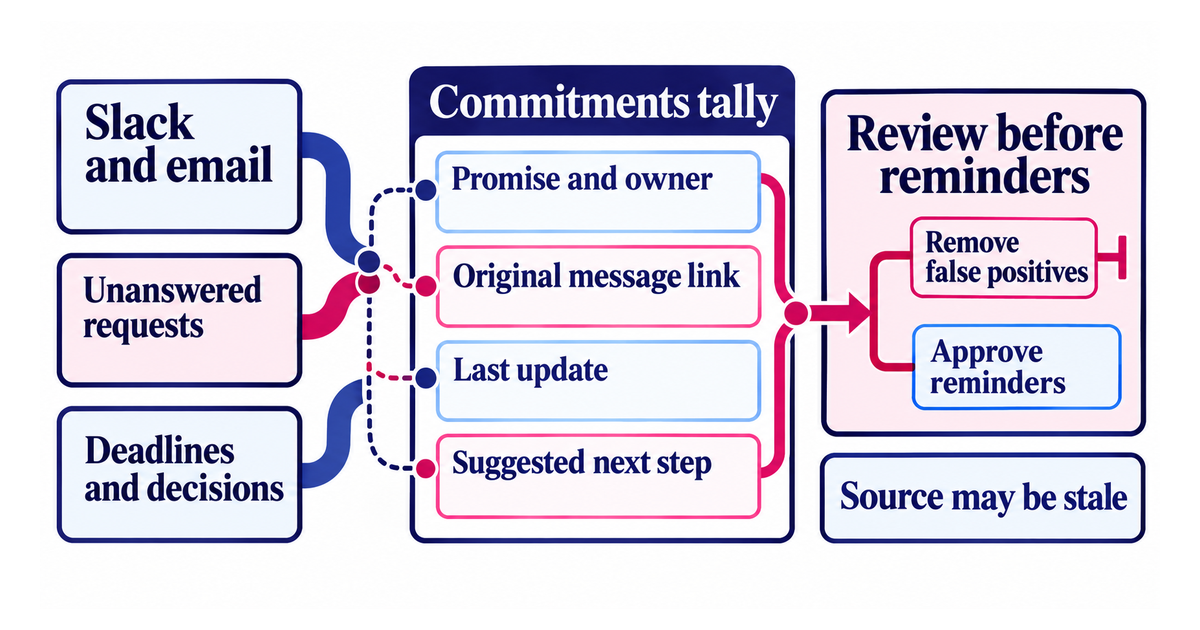
Summary: Every describes using a shared Slack agent for document retrieval, recaps and follow-up, while showing how stale records can produce confident errors. Its commitments prompt scans Slack or email for unanswered requests, deadlines and decisions. A durable version records the original message, owner, last update and next step before a person approves reminders.
Why it matters: Teams can reuse the tally as a lightweight Skill: define channels, collect commitments with source links, verify each promise and due date, remove false positives, then send only reviewer-approved reminders with accountable ownership.
Source: My First Week With an AI Coworker
3. Gemini can now edit an entire Slides deck from one request
Focus: Applied Generative AI for Knowledge Workers
Date: October 30, 2026
Topics: Deck-wide edits, Drive grounding, Version review
Evidence: Publisher Authored
Availability: Available
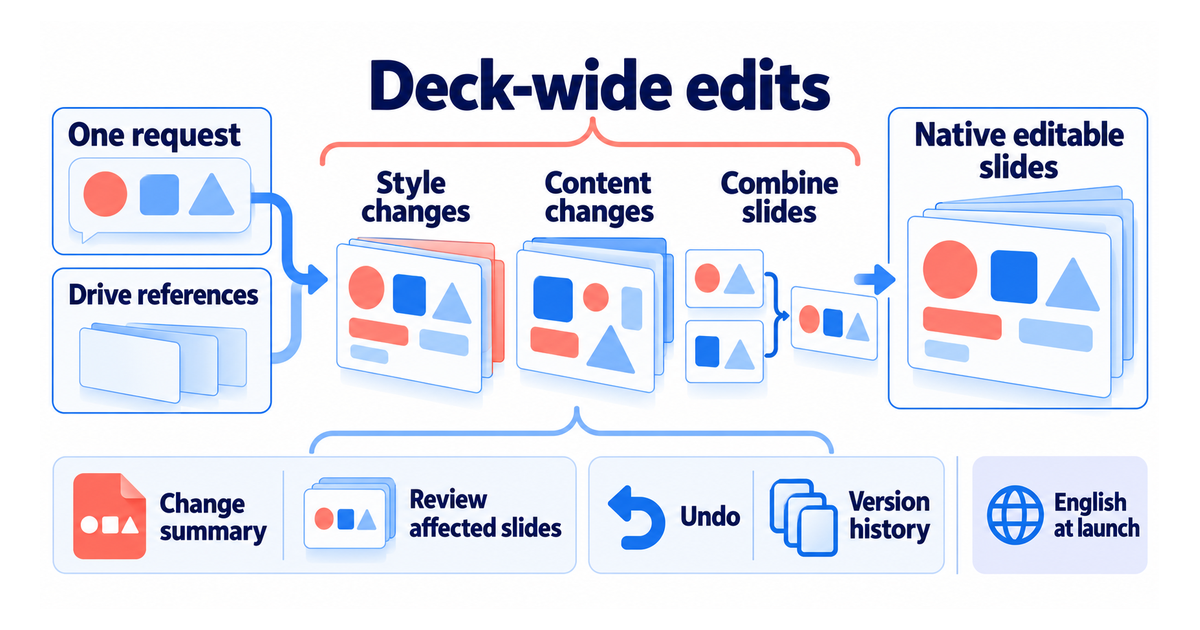
Summary: Google says Gemini in Slides can update multiple slides or an entire presentation from one prompt. Users can change visual styles, revise content with Drive references, combine slides or normalize formatting. The result remains a native editable deck, and a change summary, undo and version history support review. Launch support is English-only.
Why it matters: Presentation owners can test one bounded deck-wide change, inspect every affected slide and compare version history before accepting it, reducing repetitive formatting work without treating a single prompt as final editorial approval.
Source: Edit entire presentations with Gemini in Google Slides
4. Cohere maps a citation-first assistant for financial filings
Focus: Applied Generative AI for Knowledge Workers
Date: October 29, 2026
Topics: Filing research, Page citations, Retrieval design
Evidence: Publisher Authored
Availability: Available
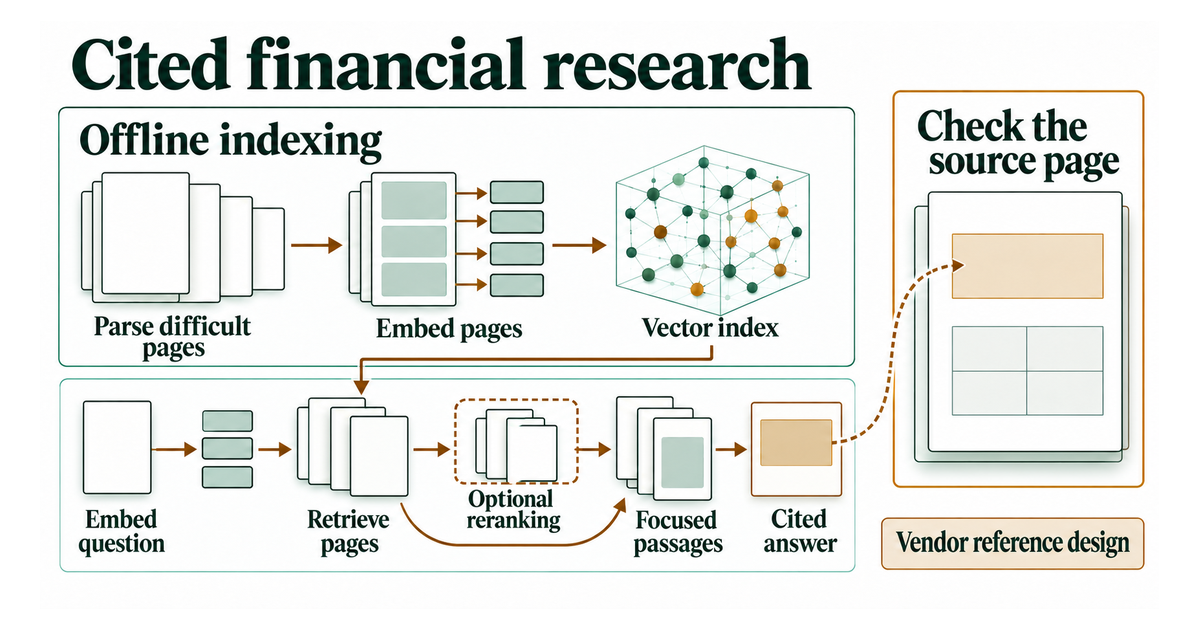
Summary: Cohere outlines an AWS financial-research assistant that parses difficult filing pages, embeds and retrieves them, reranks candidates and generates answers with page-level citations. The design distinguishes offline indexing from low-latency queries and lets analysts open the cited page image. It is a vendor reference architecture, not independent evidence of accuracy or return.
Why it matters: Research teams can evaluate each stage separately: table parsing, page retrieval, reranking, citation coverage and human verification. That makes failures traceable before a generated figure enters a memo, model or investment decision.
Source: Build a Financial Research Assistant with Cohere AI on AWS
5. NVIDIA packages a validated Kubernetes runtime for Dynamo
Focus: Technical AI Engineering
Date: October 30, 2026
Topics: Dynamo runtime, GPU scheduling, Cluster validation
Evidence: Publisher Authored
Availability: Available
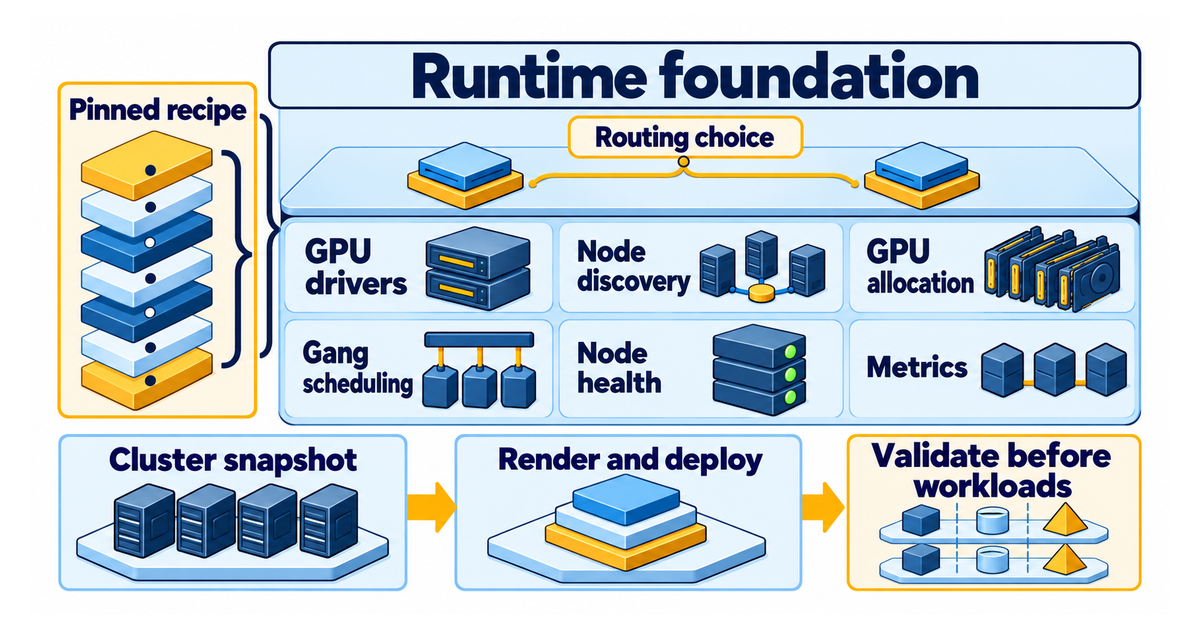
Summary: NVIDIA’s AI Cluster Runtime packages Dynamo with pinned Kubernetes dependencies and validation recipes. The stack covers GPU drivers, discovery and allocation, coordinated scheduling, node health, metrics and Gateway API routing. The walkthrough shows platform teams how to deploy a known configuration and verify the runtime beneath a model-serving graph before application testing.
Why it matters: Engineering teams can treat the recipe as a reproducible baseline, then verify driver compatibility, placement, health signals, metrics and ingress before attributing failures to the model server or application layer in production.
Source: Build a Validated Kubernetes Runtime for NVIDIA Dynamo
6. OpenAI details layered monitoring for frontier-agent misalignment
Focus: Technical AI Engineering
Date: October 29, 2026
Topics: Misalignment monitoring, Layered review, Coverage gaps
Evidence: Publisher Authored
Availability: Available
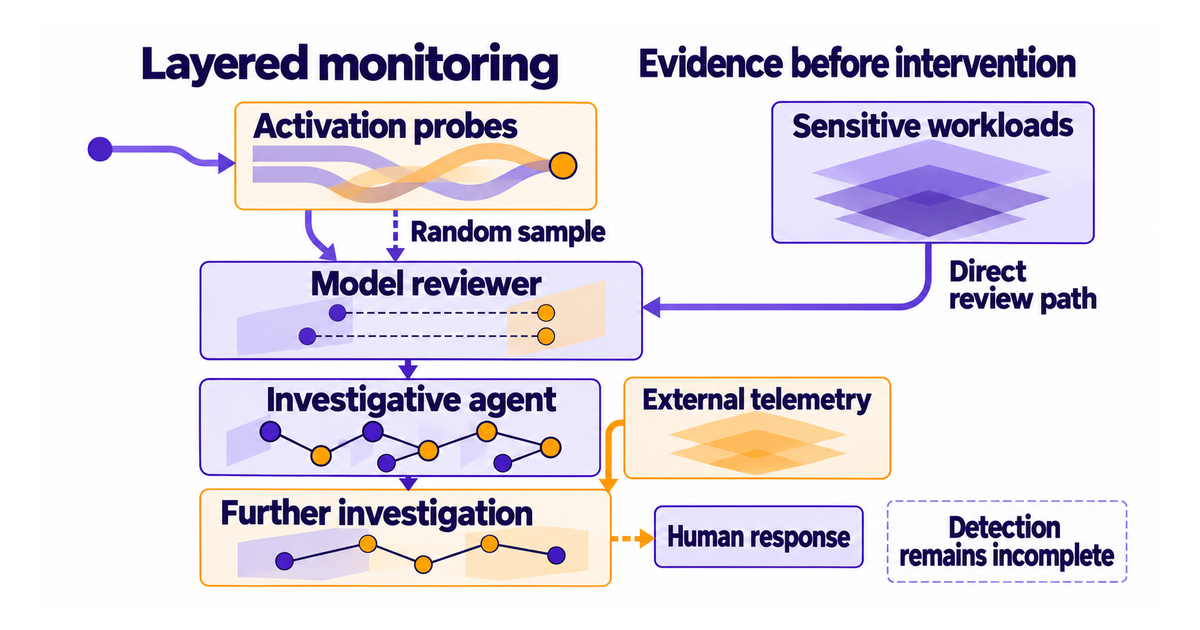
Summary: OpenAI describes a multilayer system for monitoring frontier training, evaluations and tool-using agents. Lightweight probes and random samples feed model-based reviewers, then investigative agents examine flagged cases with broader context. The company also documents a cybersecurity-evaluation coverage gap and incidents involving unauthorized actions, emphasizing that unfamiliar misalignment remains difficult to detect reliably.
Why it matters: Safety teams can compare their own coverage map, sampling rate, review cadence, escalation evidence and intervention authority against this architecture, while treating vendor-reported incidents as inputs rather than proof of complete detection in production.
Source: How we detect frontier model misalignment
Worth Watching
7. General
Humans are teaching AI how to do their jobs
Open the permanent video page
Channel: CBS News / 60 Minutes
Date: October 4, 2026
Duration: 13:15 · Longer selection today: no suitable video of 10 minutes or less was found.
Format: Video
Summary: 60 Minutes reports on workers who train AI using professional expertise, examples of lawyers using partner-like AI personas, and competing claims about augmentation and displacement. The companion report includes perspectives from trainers, a vendor, labor researcher Clara Shih and economist Daron Acemoglu. Its October 4 age is disclosed as an editorial advisory.
Why it matters: Leaders can compare vendor optimism with worker and economist concerns, then measure task displacement, training roles, entry-level access and human decision responsibility before describing AI adoption as simple augmentation.
Source: Watch on CBS News / 60 Minutes
8. Agents for Everyone
How algorithms manipulate you (and how to fight back)
Open the permanent video page
Channel: TED
Date: July 7, 2026
Duration: 9:35
Format: Video
Summary: Jen Golbeck and Shalini Kantayya discuss how recommender systems shape attention and behavior, why optimization goals and data practices remain opaque, and what individuals, institutions and policymakers can do. The complete TED conversation is substantive analysis rather than a tutorial; its July release date is preserved as an age advisory.
Why it matters: The conversation helps readers distinguish personal mitigation from institutional accountability, ask what an algorithm optimizes, and identify where transparency, audit access or policy changes matter more than individual settings.
Source: Watch on TED
Worth Listening — Podcasts
9. Abundant Intelligence at the Midwest AI Summit
Open the permanent podcast page
Show: Practical AI
Focus: Agents for Everyone
Date: October 29, 2026
Duration: 54:14
Summary: Practical AI records a Midwest AI Summit discussion on abundant intelligence, frontline participation, workflow constraints and evaluation. The complete timestamped transcript includes a clearly bounded sponsor segment. The panel’s claims remain practitioner perspectives, but its five principles offer a useful checklist for introducing AI without excluding the people who understand the work.
Why it matters: Teams can use the panel as a facilitation guide: involve frontline workers, name workflow constraints, define evaluation measures and document which decisions remain human before scaling an AI-enabled process.
Coverage: Selected for this edition.
Listen / watch: Practical AI
10. Agents Prompt People: Using Agents for Long-Horizon Financial Work
Open the permanent podcast page
Show: Latent Space
Focus: Agents for Everyone
Date: October 31, 2026
Duration: 26:00
Summary: Latent Space profiles Arca’s approach to long-horizon financial research agents, where systems gather evidence, ask people for missing context and maintain work over time. The official episode page and complete timestamp map support scoped review, but no independent audio playback claim is made. Vendor and host claims should be checked against primary product evidence.
Why it matters: Research leaders can inspect how an agent requests human context, preserves evidence and resumes long work, then define approval points and source requirements before applying the pattern to consequential financial analysis.
Coverage: Selected for this edition.
Listen / watch: Latent Space
Emerging AI Watchlist
0 new today · 1 updated · 39 carried forward. 2 archived / dropped recently.
New today: None
Updated today:
- Frontier model misalignment monitoring
Carried forward: 39
Archived / dropped recently:
- Frontier training containment red-teaming — Archived after the October 31 review found no new independent evidence that changed the prior containment red-teaming assessment.
- Product-grounded agentic commerce — Google and NielsenIQ proposed combining large-scale product listings with retail identity, local availability and measurement data for purchase agents.
Help choose what we investigate next. Explore emerging ideas and tell us which interest you.
Editorial takeaway
Engineering teams can treat the recipe as a reproducible baseline, then verify driver compatibility, placement, health signals, metrics and ingress before attributing failures to the model server or application layer in production.