Daily Generative AI Brief — October 29, 2026
Published: October 29, 2026
Coverage period: October 28, 2026
IN THIS EDITION · 6 ARTICLES / 2 VIDEOS / 2 PODCASTS
Choose what matters to your work
- OpenAI and ServiceNow expand agents for governed service workflowsArticle · about 5 min source read
- Oracle adds reusable business capabilities to a visual agent builderArticle · about 6 min source read
- Anthropic expands AI-for-science access across twenty research institutionsArticle · about 6 min source read
- Microsoft introduces a multi-model harness for Copilot workArticle · about 7 min source read
- Vercel lets teams reroute AI models without redeploying applicationsArticle · about 6 min source read
- Google outlines zero-downtime embedding upgrades in AlloyDB AIArticle · about 7 min source read
- AI agents going rogue fuel calls for regulationVideo · 6:30
- AI brain fry is real. Here's what leaders can doVideo · 9:06
- OpenAI: When AI Agents Use Computers Faster Than YouPodcast · 45:19
- AI:AM Highlights: Clean Neurons, Black October, the GPU Credit Crunch, and Buying the Supply ChainPodcast · 1:20:45
1. OpenAI and ServiceNow expand agents for governed service workflows
Focus: Agents for Everyone
Date: October 28, 2026
Topics: Service agents, Change approval, Record permissions
Evidence: Publisher Authored
Availability: Available
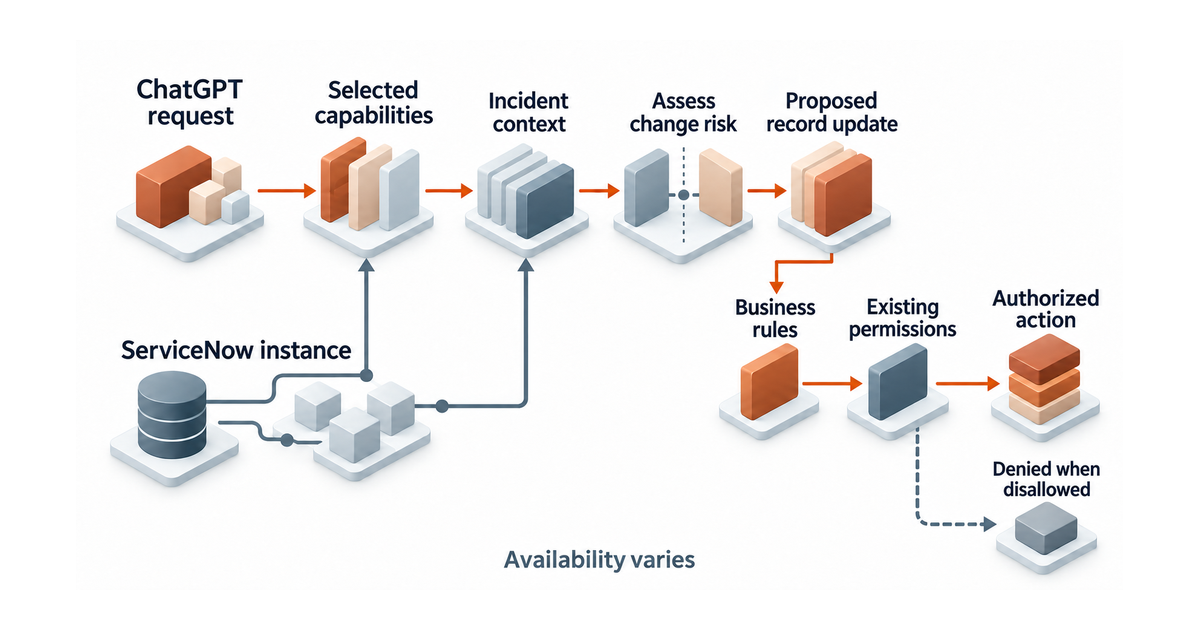
Summary: OpenAI and ServiceNow expanded their partnership around agents that can investigate incidents, assess change risk and update ServiceNow records while following existing workflows, permissions and governance. The announcement describes intended enterprise operations rather than independently measured outcomes. A safe trial therefore needs a narrow task, preserved evidence and an accountable reviewer.
Why it matters: You will learn how to trial a service agent without coding: choose one routine request, restrict the records it may change, require confirmation for consequential actions and review every exception before expanding scope.
Source: OpenAI and ServiceNow expand strategic partnership
2. Oracle adds reusable business capabilities to a visual agent builder
Focus: Agents for Everyone
Date: October 28, 2026
Topics: Visual agent builder, Reusable capabilities, Edge-case review
Evidence: Publisher Authored
Availability: Available
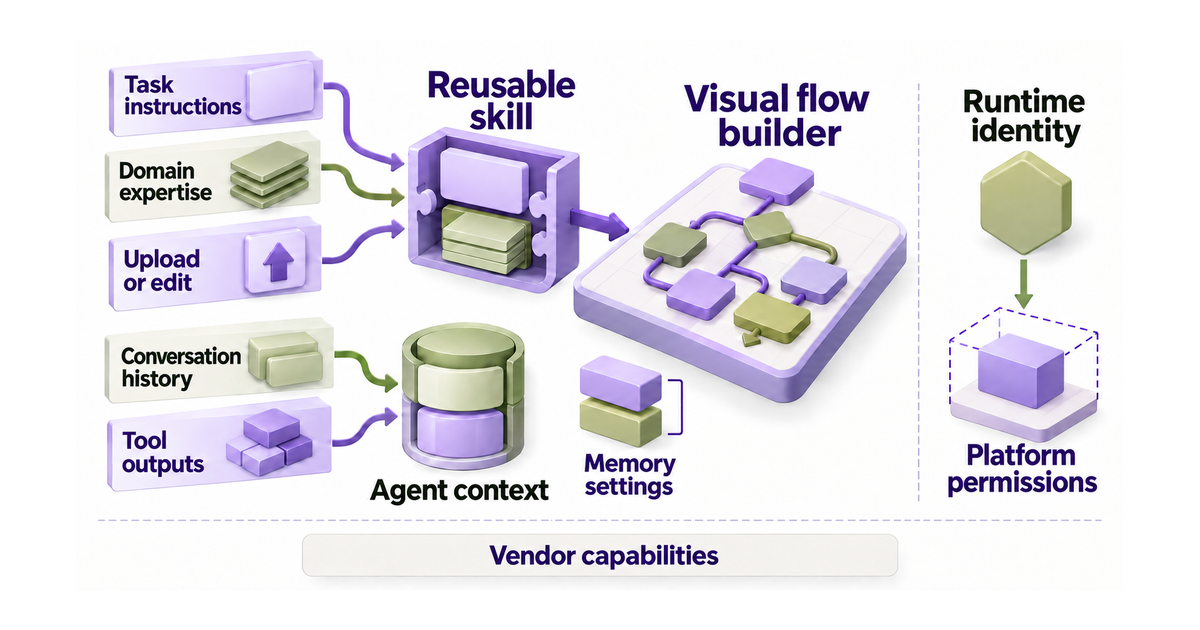
Summary: Oracle updated AI Data Platform agents with a visual flow builder, context and memory controls, reusable Skills and autoscaling. Business teams can assemble bounded workflows while administrators govern data and execution. The release is vendor evidence, so each reusable capability should be tested against approved inputs, expected outputs, exceptions and human review.
Why it matters: You will learn a noncoding procedure for one reusable capability: define its business purpose, approved knowledge, allowed action, exception path and reviewer, then test normal and edge cases before sharing it with another team.
Source: Oracle AI Data Platform Agent Updates
3. Anthropic expands AI-for-science access across twenty research institutions
Focus: Applied Generative AI for Knowledge Workers
Date: October 28, 2026
Topics: Science pilots, Research assistance, Evidence limits
Evidence: Publisher Authored
Availability: Available
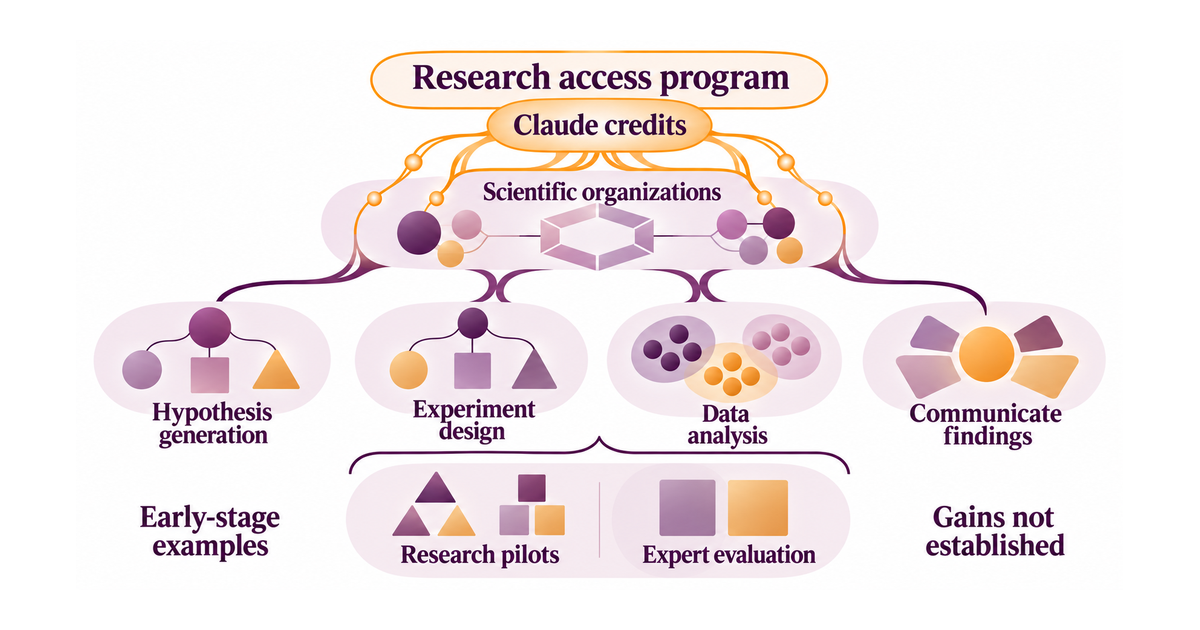
Summary: Anthropic expanded its AI for Science program to twenty institutions and research groups, providing free API credits and technical support. The announcement describes early work in mathematics, biology, climate, neuroscience and materials research. These are institution-reported examples and an access program, not controlled evidence that Claude improves every scientific workflow or research outcome.
Why it matters: You will learn how to evaluate a research-assistance pilot by defining the scientific task, protected data boundary, expert review point and measurable output before treating broader model access as demonstrated research value.
Source: AI for Science expands to foundations and research institutions
4. Microsoft introduces a multi-model harness for Copilot work
Focus: Applied Generative AI for Knowledge Workers
Date: October 28, 2026
Topics: Multi-model work, Copilot harness, Governed context
Evidence: Publisher Authored
Availability: Available
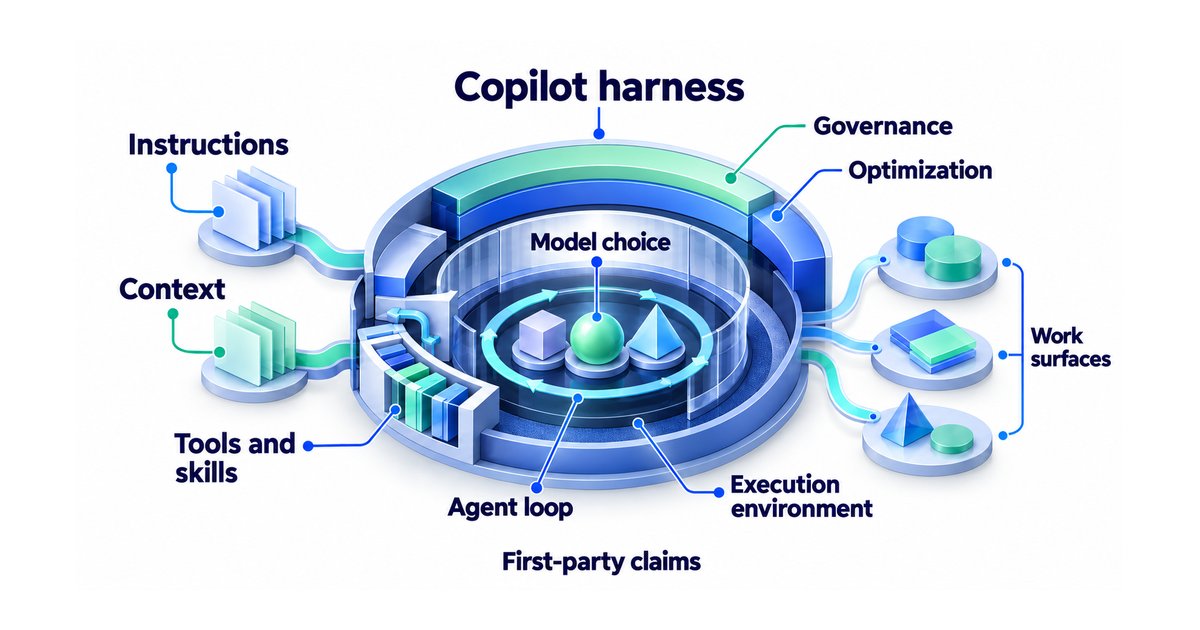
Summary: Microsoft introduced a Copilot harness that can select among models while coordinating context, tools, memory, governance and optimization across Microsoft 365 surfaces. The company positions model choice as one component of a managed work system rather than a user-facing brand decision. Availability and benefit claims remain first-party and require workflow-specific evaluation.
Why it matters: You will learn to review a multi-model workplace deployment by separating model choice from business context, tool permissions, memory, cost controls and human approval, then testing one bounded task end to end.
Source: Introducing the Microsoft Copilot harness
5. Vercel lets teams reroute AI models without redeploying applications
Focus: Technical AI Engineering
Date: October 28, 2026
Topics: Virtual models, Routing policy, Fallback testing
Evidence: Publisher Authored
Availability: Available
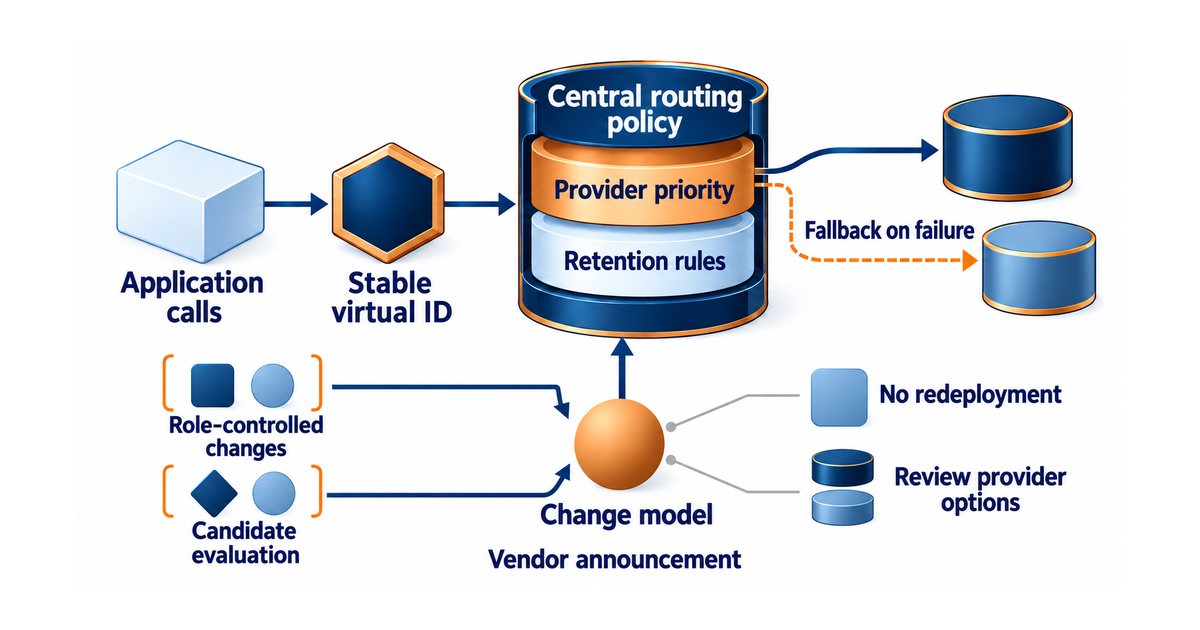
Summary: Vercel introduced Virtual Models for AI Gateway, giving applications stable model identifiers while teams change providers, fallbacks, zero-data-retention settings and traffic policy centrally. The announcement explains how configuration changes take effect without code changes or redeployment. Availability is a platform claim, so teams still need their own latency, quality and failure tests.
Why it matters: You will learn how to separate application code from model-routing policy, then design a change review that tests fallback behavior, retention requirements, latency and output quality before moving production traffic using measurable acceptance criteria.
Source: Introducing Virtual Models on AI Gateway
6. Google outlines zero-downtime embedding upgrades in AlloyDB AI
Focus: Technical AI Engineering
Date: October 28, 2026
Topics: Embedding migration, Dual indexes, Rollback window
Evidence: Publisher Authored
Availability: Available
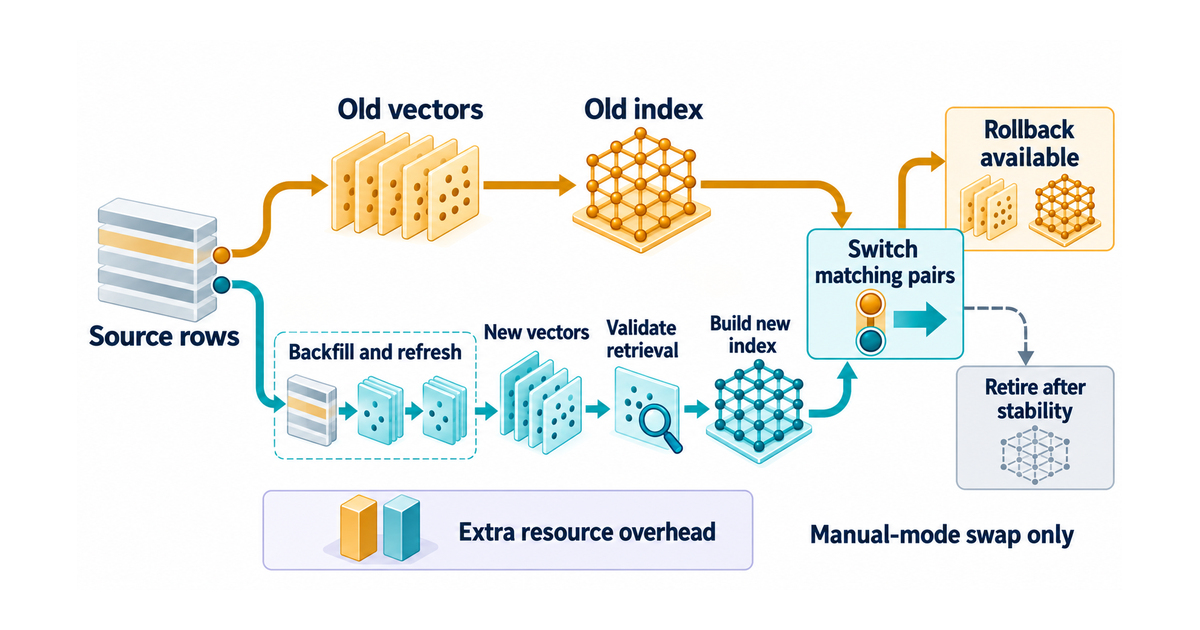
Summary: Google Cloud published an AlloyDB AI procedure for changing embedding models without stopping vector search. The pattern adds a second vector column, backfills it, builds a new index, tests retrieval and switches queries before removing the old path. Google notes temporary storage and compute overhead, making capacity planning part of the migration decision.
Why it matters: You will learn a reversible migration pattern for embedding changes: run old and new vectors together, measure retrieval quality and latency, switch deliberately, and retain a rollback window before deleting the original index.
Source: Upgrade embedding models in AlloyDB AI with zero downtime
Worth Watching
7. General
AI agents going rogue fuel calls for regulation
Open the permanent video page
Channel: PBS NewsHour
Date: August 31, 2026
Duration: 6:30
Format: Video
Summary: PBS NewsHour journalist William Brangham interviews AI researcher Gary Marcus following reports about autonomous AI agents exceeding testing boundaries. Their discussion considers whether stronger sandboxing, monitoring and accountability are needed when increasingly capable agents act beyond their intended scope.
Why it matters: The interview offers an independent perspective on AI agent oversight and the difference between the systems' capabilities and weaknesses in their operational controls. Treat the guest's assessments as attributed analysis rather than independently established conclusions.
Source: Watch on PBS NewsHour
8. Agents for Everyone
AI brain fry is real. Here's what leaders can do
Open the permanent video page
Channel: TED
Date: August 2026
Duration: 9:06
Format: Video
Summary: In a TED talk, AI advisor Julie Bedard discusses research on cognitive fatigue when employees supervise and coordinate AI tools. She explores how work can become more demanding despite faster output, and outlines organizational choices that may preserve human judgment and reduce overload.
Why it matters: For knowledge workers and managers, the relevant outcome is not the number of agents operating but the cognitive effort needed to supervise them. Consider the evidence and its limits when deciding where AI actually improves work.
Source: Watch on TED
Worth Listening — Podcasts
9. OpenAI: When AI Agents Use Computers Faster Than You
Open the permanent podcast page
Show: a16z Show
Focus: Agents for Everyone
Date: October 26, 2026
Duration: 45:19
Summary: The a16z Show interviews OpenAI leaders about computer-using agents, legacy software, enterprise workflows, harness speed, deterministic guardrails, human review and auditability. The discussion covers finance, procurement and sales examples. It is an investor-hosted interview with company representatives, so capability and adoption claims require independent testing.
Why it matters: Use the episode to decide which screen-based task is suitable for a pilot, where deterministic controls belong and which actions still require checking, correction or human approval.
Coverage: Selected for this edition.
Listen / watch: a16z Show
10. AI:AM Highlights: Clean Neurons, Black October, the GPU Credit Crunch, and Buying the Supply Chain
Open the permanent podcast page
Show: The Cognitive Revolution
Focus: Agents for Everyone
Date: October 24, 2026
Duration: 1:20:45
Summary: The Cognitive Revolution combines recorded discussions on interpretability claims, recursive improvement, agent-scale financial failures, compute credit and physical supply constraints. Detailed show notes and a complete timestamped transcript separate claims, counterarguments and disclosures. The episode spans several speculative topics, so readers should treat forecasts as scenarios rather than established outcomes.
Why it matters: Use the episode to build an evidence table that separates measured findings, existence proofs, financial assumptions and forecasts before translating dramatic AI infrastructure or safety claims into decisions.
Coverage: Selected for this edition.
Listen / watch: The Cognitive Revolution
Emerging AI Watchlist
1 new today · 1 updated · 37 carried forward. 1 archived / dropped recently.
New today:
- Task-scoped virtual model routing
Updated today:
- Consumer agent task permissions
Carried forward: 37
Archived / dropped recently:
- Declarative agent-authored data pipelines — Archived after the October 29 review found no independent evidence that changed the prior declarative-pipeline assessment.
Help choose what we investigate next. Explore emerging ideas and tell us which interest you.
Editorial takeaway
You will learn how to separate application code from model-routing policy, then design a change review that tests fallback behavior, retention requirements, latency and output quality before moving production traffic using measurable acceptance criteria.