Daily Generative AI Brief — October 28, 2026
Published: October 28, 2026
Coverage period: October 27, 2026
IN THIS EDITION · 6 ARTICLES / 2 VIDEOS / 2 PODCASTS
Choose what matters to your work
- Oracle puts approved business workflows behind a ChatGPT workspaceArticle · about 6 min source read
- IBM turns agent identity and short-lived access into a reusable review procedureArticle · about 7 min source read
- Anthropic reports early Claude-assisted results across six drug-development partnersArticle · about 11 min source read
- Salesforce survey finds isolated AI work creates duplication and handoff delaysArticle · about 5 min source read
- Google DeepMind adds native audio and steering to Genie 4 world simulationArticle · about 8 min source read
- Salesforce links continuous agent evaluation to quarantine and cost limitsArticle · about 5 min source read
- Driving Business Forward with AI InsightsVideo · 7:01
- Todd’s Take: Securing identity in the age of AIVideo · 6:32
- Exploit Development, Agentic Vulnerability Discovery, and Fake PoCsPodcast · 45:13
- How Anthropic ships the #1 LLM in the World safely: Separating the Brain from the HandsPodcast · 1:46:40
1. Oracle puts approved business workflows behind a ChatGPT workspace
Focus: Agents for Everyone
Date: October 27, 2026
Topics: Business goals, Approved workflows, Human approval
Evidence: Publisher Authored
Availability: Available
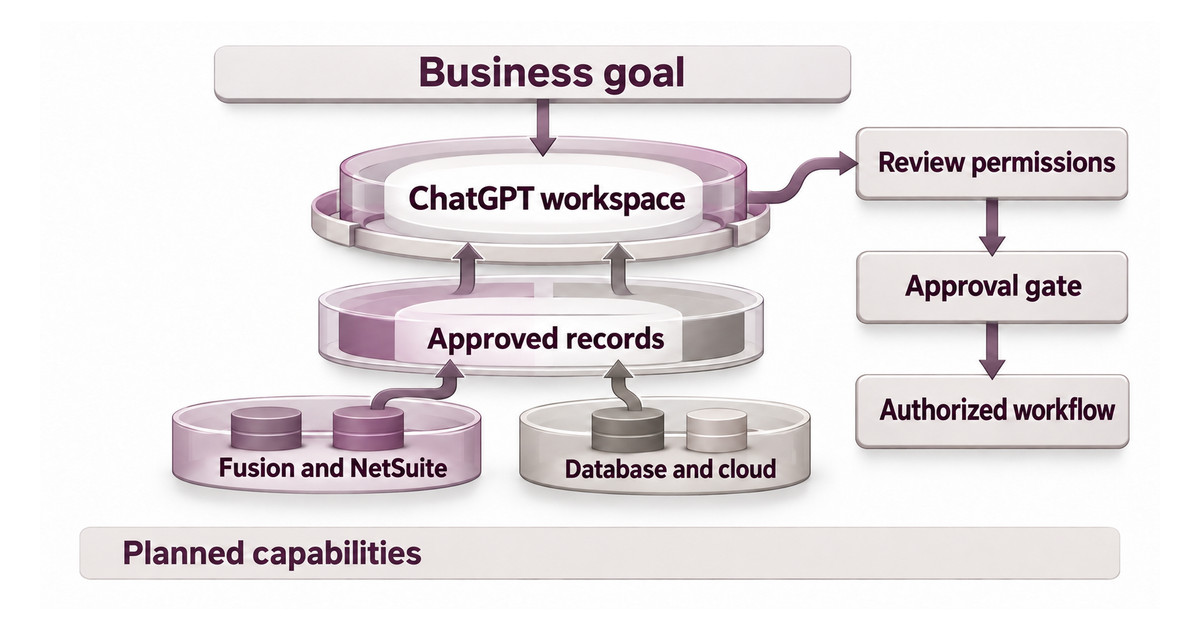
Summary: Oracle says AI Workspace will connect ChatGPT with Fusion Applications, NetSuite, its database, cloud services and approved enterprise data. Employees can describe business goals, retrieve information and complete authorized workflows while existing governance, permissions and approvals remain in force. The announcement describes planned product capabilities; customer outcomes and broad availability are not independently established.
Why it matters: You will learn how to frame a noncoding agent request around a business goal, permitted records and approval boundaries. Before action, review the selected systems, evidence, permissions and exception route, then keep the accountable owner in control.
Source: Oracle Reinvents Enterprise Computing for the AI Era with OpenAI
2. IBM turns agent identity and short-lived access into a reusable review procedure
Focus: Agents for Everyone
Date: October 27, 2026
Topics: Agent identity, Least privilege, Access review Skill
Evidence: Publisher Authored
Availability: Available
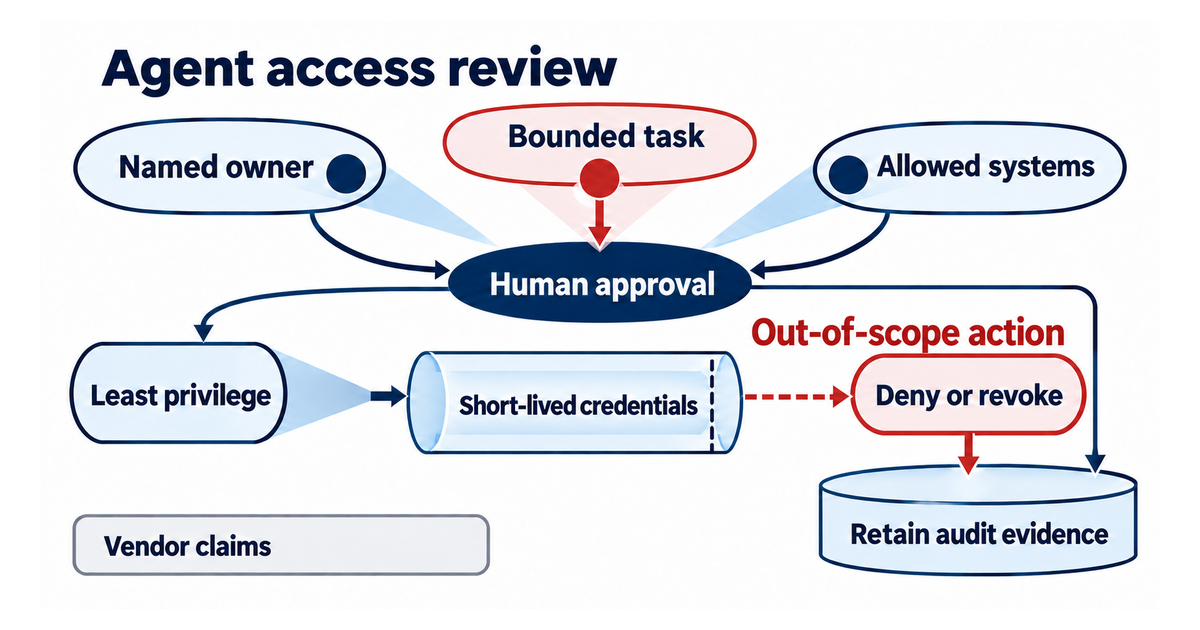
Summary: IBM announced Agent Identity and expanded Vault controls for AI agents, including ownership records, least-privilege permissions, short-lived credentials and real-time revocation. Watsonx Orchestrate is also positioned to discover and evaluate agents across several platforms. These are vendor product claims, but they support a reusable access-review procedure before any business agent receives authority.
Why it matters: You will learn one reusable Agent Skill: record the agent owner, task, allowed systems, credential lifetime, approval rule and revocation trigger; have a human reviewer approve that access card before activation and retain its audit evidence.
Source: IBM Introduces Identity and Control for AI Agents
3. Anthropic reports early Claude-assisted results across six drug-development partners
Focus: Applied Generative AI for Knowledge Workers
Date: October 27, 2026
Topics: Drug development, Lab iteration, Preclinical evidence
Evidence: Publisher Authored
Availability: Available
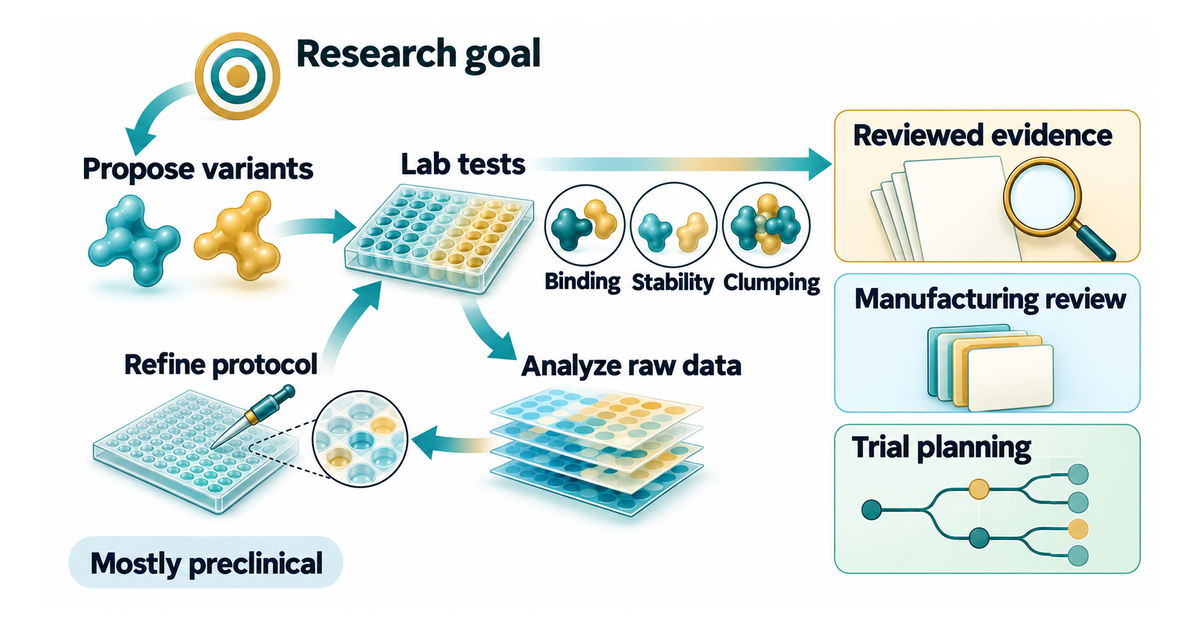
Summary: Anthropic describes work with six drug-development organizations across molecule design, laboratory iteration and operational research. Partner cases include a shorter CAR-T genetic design, thousands of antibody candidates and automated lab loops. The results are early, largely preclinical and partner-reported, so they demonstrate workflow possibilities rather than validated medicines or general scientific reliability.
Why it matters: You will learn where AI can assist multidisciplinary research without replacing evidence: translate goals into designs, connect proposals to laboratory tests, preserve iteration records and keep scientific reviewers responsible for interpreting early findings and deciding what advances.
Source: Early progress on accelerating drug development with Claude
4. Salesforce survey finds isolated AI work creates duplication and handoff delays
Focus: Applied Generative AI for Knowledge Workers
Date: October 27, 2026
Topics: Workflow isolation, Duplicate work, Team handoffs
Evidence: Publisher Authored
Availability: Available
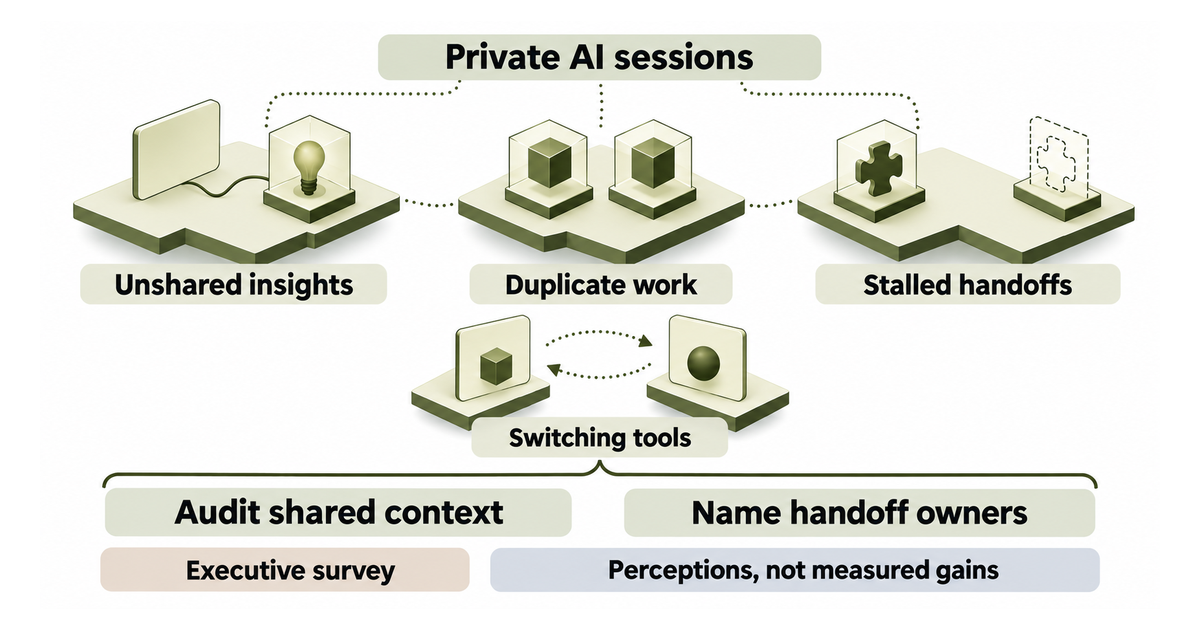
Summary: A Salesforce survey of 250 U.S. executives reports that privately used AI tools often leave outputs unshared, duplicate colleagues’ work and stall handoffs. Respondents also described time lost switching among tools. The small, vendor-sponsored sample measures executive perceptions rather than observed productivity, but it offers concrete questions for workflow audits and collaboration design.
Why it matters: You will learn to audit AI work as a team process: record where prompts, evidence and outputs live, identify duplicated effort, define handoff owners and measure switching time before purchasing another isolated assistant or declaring productivity gains.
Source: Work Stalls When AI Tools Stay Isolated
5. Google DeepMind adds native audio and steering to Genie 4 world simulation
Focus: Technical AI Engineering
Date: October 27, 2026
Topics: World simulation, Native audio, Coherence limits
Evidence: Publisher Authored
Availability: Available
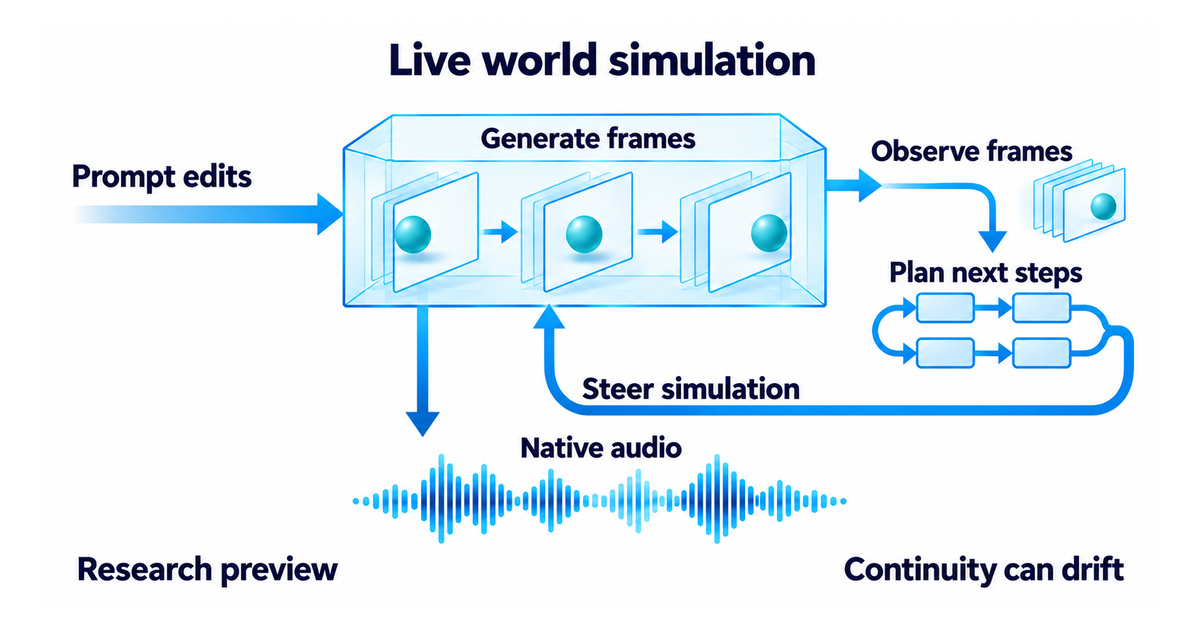
Summary: Google DeepMind says Genie 4 generates interactive worlds with native audio, dialogue and real-time steering while using Gemini models to improve coherence. The research preview targets trusted testers and possible training environments for robots and agents. Google also documents limits in object permanence, spatial consistency, readable text and sustained long-session behavior.
Why it matters: You will learn which engineering checks matter before using generated worlds: measure interaction latency, continuity, object permanence, audio alignment and long-session drift, then separate an impressive research preview from a dependable simulation environment.
Source: Genie 4: A new generation of world simulation
6. Salesforce links continuous agent evaluation to quarantine and cost limits
Focus: Technical AI Engineering
Date: October 27, 2026
Topics: Continuous evaluation, Agent quarantine, Cost controls
Evidence: Publisher Authored
Availability: Available
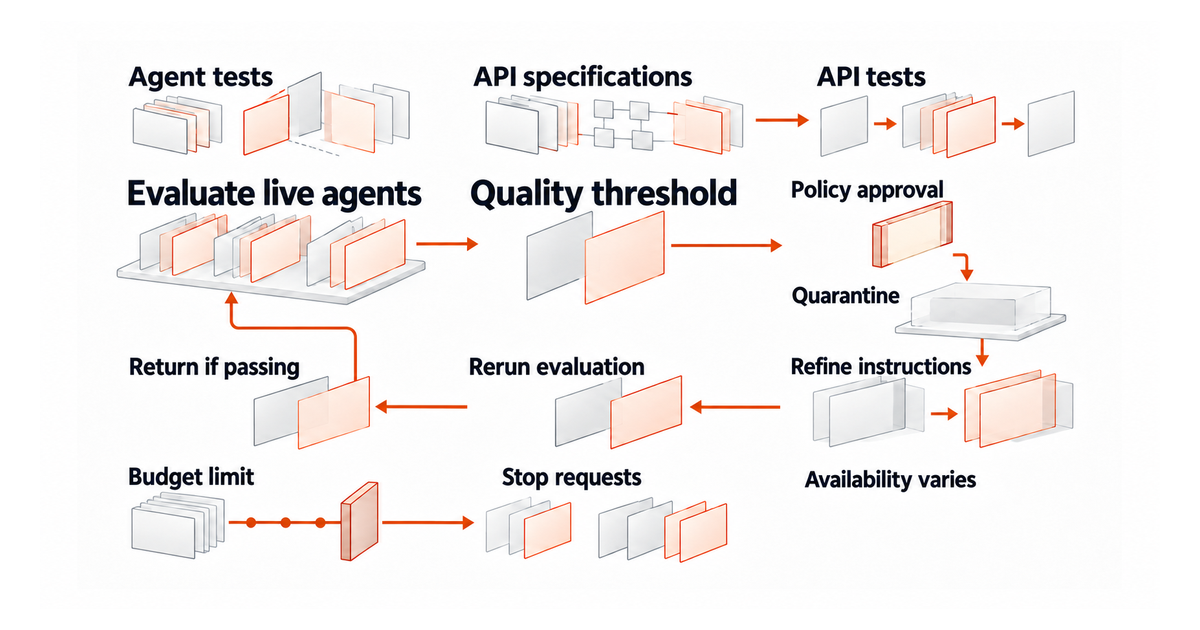
Summary: Salesforce announced Agent Evals, API Evals and spending controls for Agent Fabric, its cross-platform control plane. The company says tests can run before deployment and against production thresholds, trigger approval-based quarantine or a kill switch, and stop requests at budget limits. Product availability and performance claims remain vendor-reported rather than independently benchmarked.
Why it matters: You will learn a production control pattern that connects quality tests, API-change checks and spending thresholds to named interventions. Use it to design ownership, approval, quarantine and recovery steps before a live agent drifts or overspends.
Source: Salesforce Expands Agent Fabric to Automatically Stop Runaway Costs and AI Agent Failures
Worth Watching
7. General
Driving Business Forward with AI Insights
Open the permanent video page
Channel: Salesforce
Date: September 17, 2026
Duration: 7:01
Format: Video
Summary: Salesforce presents Box and Engine leaders discussing practical lessons from early agent deployments. The companion story emphasizes that organizational change is difficult even when teams find efficiency and customer-experience opportunities. The evidence is publisher-hosted customer discussion, so readers should treat benefits as reported experience rather than independent comparative proof.
Why it matters: Use the discussion to separate a promising agent use case from the operating changes required to support it. Ask who owns the workflow, which customer outcome is measured and what evidence would justify broader deployment.
Source: Watch on Salesforce
8. Agents for Everyone
Todd’s Take: Securing identity in the age of AI
Open the permanent video page
Channel: Okta
Date: August 6, 2025
Duration: 6:32
Format: Video
Summary: Okta CEO Todd McKinnon explains why agents create identity risk when they use service accounts, machine identities and sensitive resources across systems. The companion article covers visibility, access control, threat monitoring and Cross App Access. The lesson reflects Okta’s product perspective, so its architecture claims require independent evaluation in each environment.
Why it matters: Use the lesson to inventory every identity an agent can assume, the resources each identity reaches and the evidence retained for review. That turns an abstract agent-security concern into a bounded access-control and lifecycle exercise.
Source: Watch on Okta’s official YouTube channel
Worth Listening — Podcasts
9. Exploit Development, Agentic Vulnerability Discovery, and Fake PoCs
Open the permanent podcast page
Show: Practical AI
Focus: Agents for Everyone
Date: October 22, 2026
Duration: 45:13
Summary: Practical AI interviews VulnCheck’s Spencer McIntyre about the difference between finding a vulnerability and demonstrating attacker utility. The transcript covers exploit validation, unreliable proof-of-concept code, prioritization, guardrails and human judgment. It is a practitioner interview, not a controlled comparison of AI security tools.
Why it matters: Use the episode to separate an AI-generated vulnerability claim from a validated exploit, business exposure and remediation priority. Require reproducible evidence before escalating headlines into emergency work.
Coverage: Selected for this edition.
Listen / watch: Practical AI
10. How Anthropic ships the #1 LLM in the World safely: Separating the Brain from the Hands
Open the permanent podcast page
Show: Latent Space
Focus: Agents for Everyone
Date: October 27, 2026
Duration: 1:46:40
Summary: Latent Space interviews Anthropic product and engineering leaders about separating model intelligence from the production harness, authorizing access, preserving safeguards and managing model launches. The complete transcript also includes business and performance claims that remain company or host assertions, so the practical value lies in architecture and decision tradeoffs rather than rankings.
Why it matters: Use the discussion to map which safety decisions belong in the model, harness, authorization layer and launch process. That separation helps teams review controls without assuming model behavior alone determines deployment safety.
Coverage: Selected for this edition.
Listen / watch: Latent Space
Emerging AI Watchlist
1 new today · 1 updated · 36 carried forward. 2 archived / dropped recently.
New today:
- Native multimodal world simulation
Updated today:
- Continuous multi-level agent evaluation
Carried forward: 36
Archived / dropped recently:
- Multimodal evidence retrieval for agents — The October 21 NVIDIA release remains technically useful, but the active list now prioritizes a newly measurable agent restriction-respect question.
- Declarative agent-authored data pipelines — Archived after the October 28 review found no new independent result that changed the prior declarative-pipeline assessment.
Help choose what we investigate next. Explore emerging ideas and tell us which interest you.
Editorial takeaway
You will learn which engineering checks matter before using generated worlds: measure interaction latency, continuity, object permanence, audio alignment and long-session drift, then separate an impressive research preview from a dependable simulation environment.