Daily Generative AI Brief — October 8, 2026
Published: October 8, 2026
Coverage period: October 1–7, 2026
IN THIS EDITION · 6 ARTICLES / 2 VIDEOS / 2 PODCASTS
Choose what matters to your work
- RealAssist turns client signals into reviewable agent actionsArticle · about 4 min source read
- Windows adds a containment layer for local and cloud AI actionsArticle · about 5 min source read
- Webex brings digital teammates into shared collaboration contextArticle · about 5 min source read
- Jump Trading scales long-horizon research without removing human acceptanceArticle · about 5 min source read
- Google packages fresh developer documentation as a reusable agent skillArticle · about 5 min source read
- GitHub separates durable storage from compute for agent-scale Git trafficArticle · about 6 min source read
- BigQuery Graph measures explained (Why your AI agents get metrics wrong and how measures fix it)Video · 8:48
- How to build an agentic C-Suite with Google Cloud ADK and Cloud RunVideo · 6:26
- AI at workPodcast · 36:00
- The New, New Kingmakers: Agents, Developers, and the Future of Software with Stephen O'GradyPodcast · 43:03
1. RealAssist turns client signals into reviewable agent actions
Focus: Agents for Everyone
Date: October 6, 2026
Topics: agentic actions, professional workflow, human approval
Evidence: Publisher Authored
Availability: Available
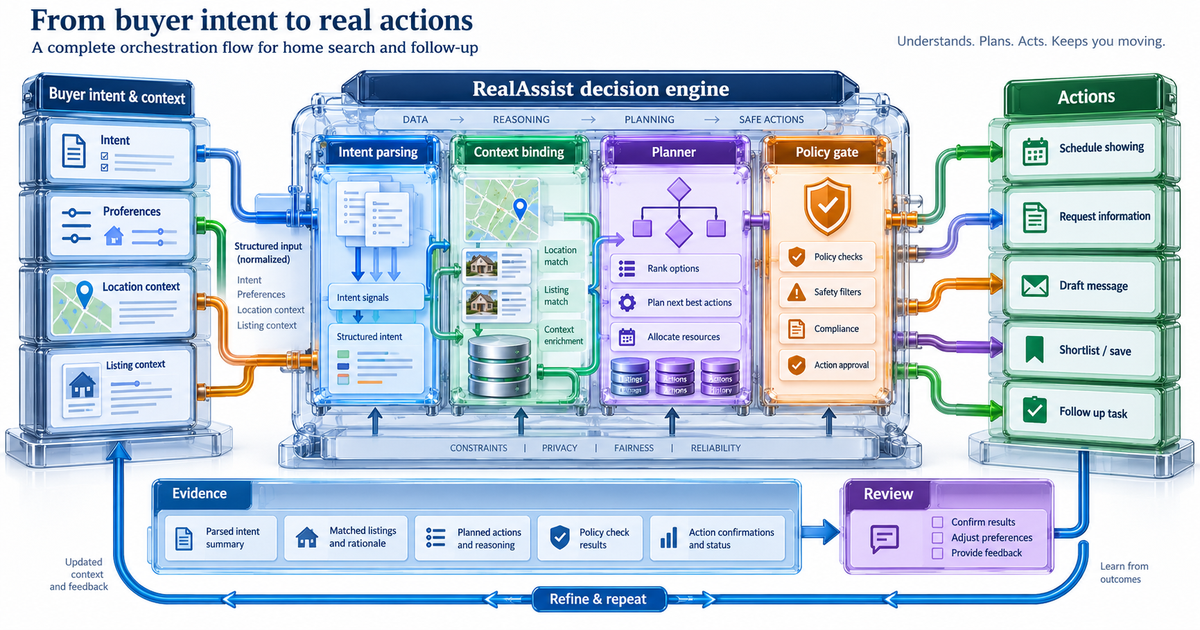
Summary: Realtor.com+ introduced RealAssist as an AI workspace for real-estate agents. It combines client activity into a daily digest and can recommend or prepare follow-up actions such as refined searches and drafted messages, while keeping the agent in the approval loop before anything is sent or acted on.
Why it matters: This is a practical pattern for nontechnical agent use: AI gathers scattered signals, proposes a next step, and hands the consequential decision back to the professional. The value comes from reducing coordination work without silently transferring authority.
Source: Realtor.com+ Unveils RealAssist AI for Agents to Power a More Intelligent Workspace
2. Windows adds a containment layer for local and cloud AI actions
Focus: Agents for Everyone
Date: October 7, 2026
Topics: hybrid intelligence, agent containment, local context
Evidence: Publisher Authored
Availability: Available
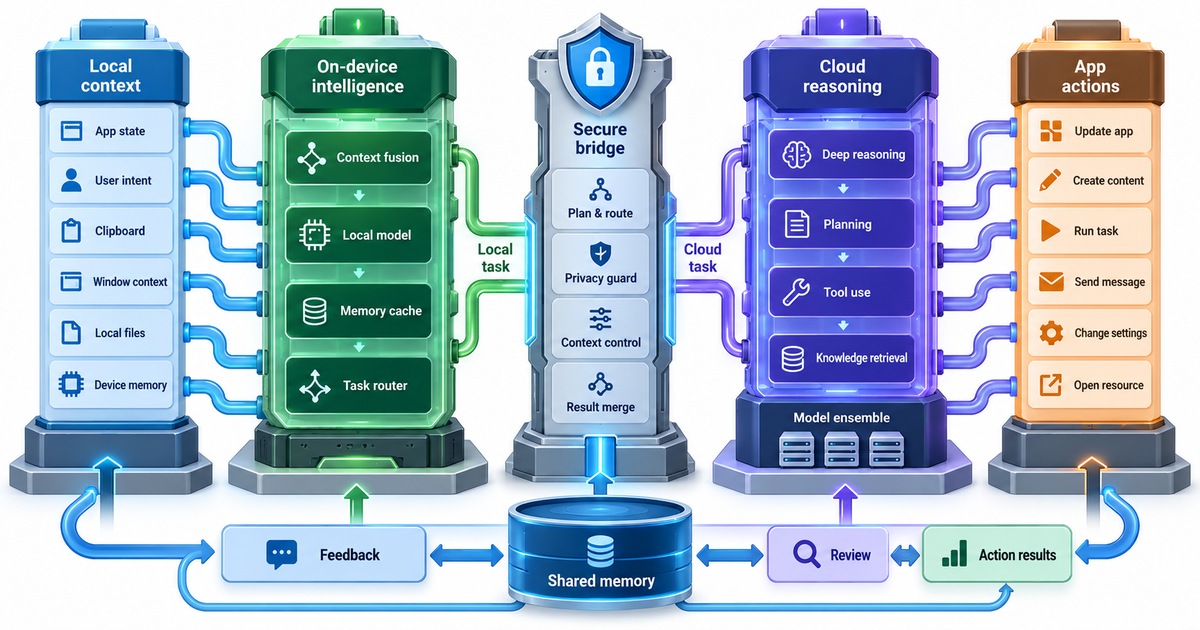
Summary: Microsoft is positioning Windows as a hybrid-intelligence layer that can route AI work between local and cloud resources. Microsoft Execution Containers are generally available on Windows 11 to isolate agent activity with file and network boundaries, while broader Copilot abilities to use local PC context and act on a user’s behalf are described as capabilities that will expand over time.
Why it matters: Desktop agents become more useful when they can see relevant local context, but that same access raises the cost of mistakes. Treating isolation, identity, permissions, and routing as platform primitives makes delegated computer use easier to constrain and audit.
Source: Building Windows for hybrid intelligence
3. Webex brings digital teammates into shared collaboration context
Focus: Applied Generative AI for Knowledge Workers
Date: October 7, 2026
Topics: collaborative agents, shared context, enterprise governance
Evidence: Publisher Authored
Availability: Available
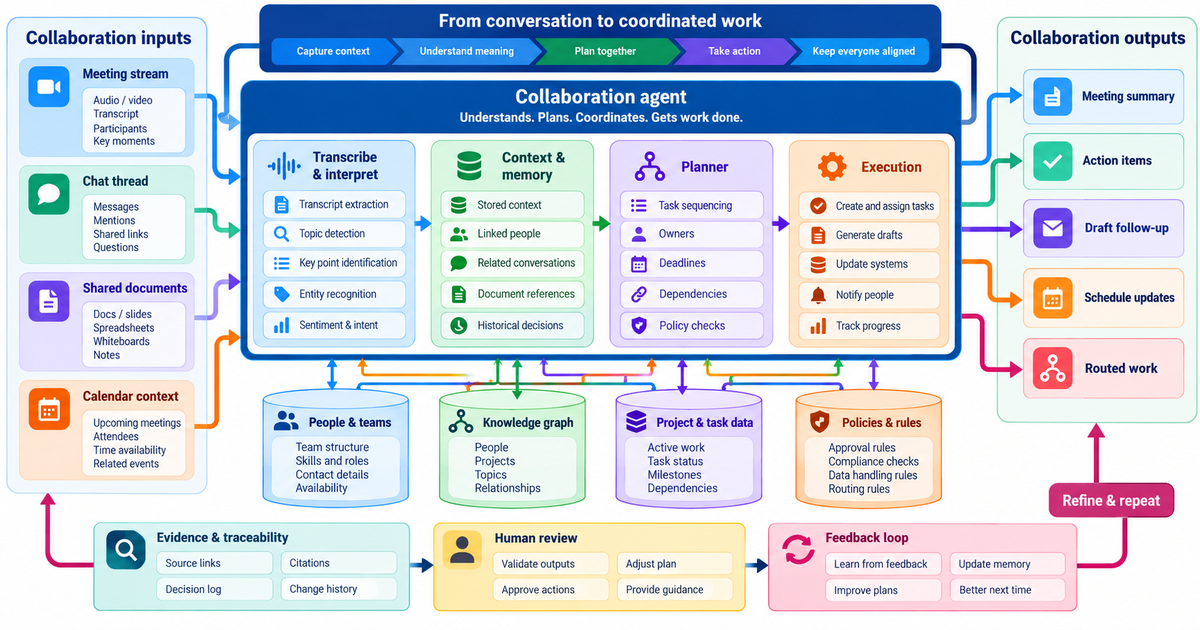
Summary: Cisco announced new Webex experiences built around digital teammates that can participate in spaces, meetings, and calls with shared team context. Examples include one agent gathering analytics while another updates a presentation, with identity, security, AI Defense guardrails, and Splunk telemetry around the workflow. Several capabilities are described as upcoming rather than universally available today.
Why it matters: Knowledge work rarely happens in a single prompt. Agents that can enter the same conversational context as a team, coordinate specialized steps, and remain visible to governance systems point toward AI that participates in ongoing work instead of sitting beside it.
Source: Cisco Unveils New Agentic Collaboration Experiences
4. Jump Trading scales long-horizon research without removing human acceptance
Focus: Applied Generative AI for Knowledge Workers
Date: October 6, 2026
Topics: long-horizon research, evaluation, human review
Evidence: Publisher Authored
Availability: Available
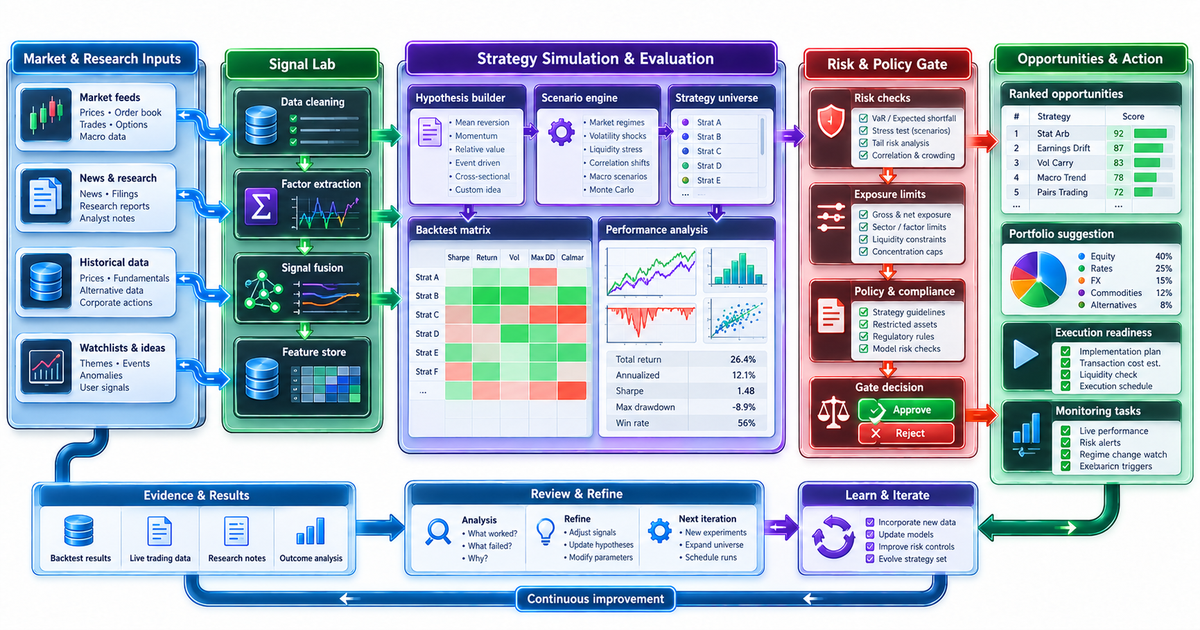
Summary: Jump Trading describes using GPT-6 Astra for longer, ambiguous research tasks by defining the problem, the working environment, and how output quality and significance will be evaluated. Agents can work for extended periods and be redirected, while consequential outputs such as trading signals remain subject to controlled human review.
Why it matters: Long-running research agents are most credible when autonomy is paired with explicit evaluation and an acceptance boundary. The pattern is useful well beyond quantitative finance: specify the environment, observe the work, evaluate evidence, and keep the final judgment with a responsible human.
Source: How Jump Trading is scaling quant research with ChatGPT
5. Google packages fresh developer documentation as a reusable agent skill
Focus: Technical AI Engineering
Date: October 7, 2026
Topics: Agent Skills, developer knowledge, MCP, grounding
Evidence: Publisher Authored
Availability: Available
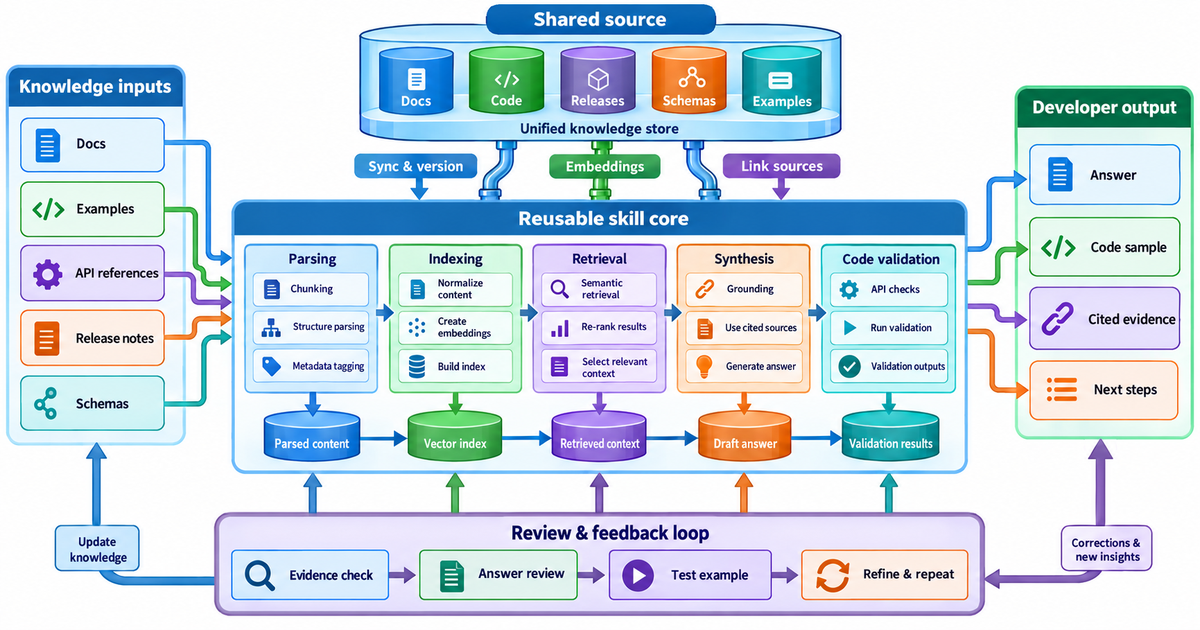
Summary: Google introduced a Developer Knowledge API ecosystem that exposes current technical documentation as fresh Markdown and includes a reusable skill for compatible coding agents. The skill uses a multi-step retrieval pattern—searching for relevant snippets before pulling fuller documentation—and can connect through MCP across several agent environments.
Why it matters: This is a genuine reusable Agent Skill: durable retrieval behavior can be installed once and invoked across supported assistants instead of being reconstructed in every prompt. It also demonstrates why retrieval policy is part of skill design, not just a back-end detail.
Source: Supercharge your development with the Google Developer Knowledge API ecosystem
6. GitHub separates durable storage from compute for agent-scale Git traffic
Focus: Technical AI Engineering
Date: October 6, 2026
Topics: agentic development, Git infrastructure, storage architecture
Evidence: Publisher Authored
Availability: Available
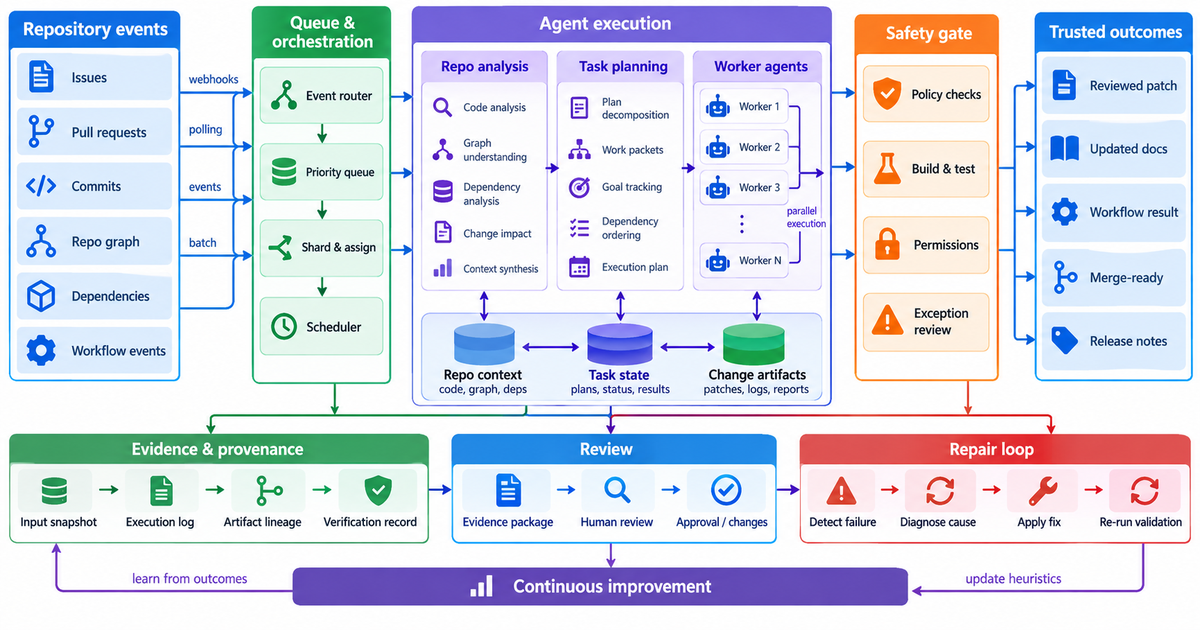
Summary: GitHub says agentic development is sharply increasing pushes, branch activity, merge-queue pressure, and CI read fan-out. Its evolving Git architecture separates durable authoritative repository data in blob storage from lightweight compute and cache workers so read and write capacity can scale more independently while preserving branch protections, auditability, and review controls.
Why it matters: Agentic coding changes infrastructure economics because one human request can trigger many machine-speed repository operations. Systems designed for human-paced Git traffic need different storage, concurrency, and cache boundaries when agents continuously create, revise, and validate work.
Source: Building Git infrastructure for agent-scale development
Worth Watching
7. General
BigQuery Graph measures explained (Why your AI agents get metrics wrong and how measures fix it)
Open the permanent video page
Channel: Google Cloud Tech
Date: October 6, 2026
Duration: 8:48
Format: Video
Summary: An 8:48 walkthrough of BigQuery Graph measures that shows why ordinary joins can double-count metrics and how reusable measures can give agentic analytics a more trustworthy semantic layer.
Why it matters: Agents that query business data need metric definitions that survive changing groupings and relationships; otherwise fluent answers can still return the wrong number.
Source: Watch on YouTube
8. Agents for Everyone
How to build an agentic C-Suite with Google Cloud ADK and Cloud Run
Open the permanent video page
Channel: Google Cloud Tech
Date: October 1, 2026
Duration: 6:26
Format: Video
Summary: A 6:26 end-to-end demonstration of specialized agents passing context through decision loops and running as an application on Cloud Run.
Why it matters: The short build makes multi-agent orchestration concrete: split responsibilities, pass context deliberately, and keep the workflow inspectable rather than treating 'multi-agent' as a label.
Source: Watch on YouTube
Worth Listening — Podcasts
9. AI at work
Open the permanent podcast page
Show: Reuters Econ World
Host / guest: Not listed
Focus: Agents for Everyone
Date: October 7, 2026
Duration: 36:00
Topics:
Summary: Carmel Crimmins speaks with ADP chief economist Nela Richardson about how AI is changing tasks inside jobs, why career-stage effects differ, and why experience may remain more resilient than simple automation narratives suggest.
Why it matters: The episode grounds workplace-AI discussion in labor-market evidence rather than only product launches, helping readers separate task change from claims about wholesale job replacement.
Connection to the brief: The episode grounds workplace-AI discussion in labor-market evidence rather than only product launches, helping readers separate task change from claims about wholesale job replacement.
Coverage: Selected for this edition.
Listen / watch: Reuters Econ World
10. The New, New Kingmakers: Agents, Developers, and the Future of Software with Stephen O'Grady
Open the permanent podcast page
Show: The Enterprise AI Show
Host / guest: Not listed
Focus: Agents for Everyone
Date: October 7, 2026
Duration: 43:03
Topics:
Summary: Brandon Whichard interviews RedMonk co-founder Stephen O'Grady about how software developers gained influence over technology choices and how coding agents may now reshape that relationship between developers, platforms, and software creation.
Why it matters: It provides a useful strategic lens for the GitHub infrastructure story: agentic development changes not only coding speed but also who or what drives tool selection, workflow design, and software demand.
Connection to the brief: It provides a useful strategic lens for the GitHub infrastructure story: agentic development changes not only coding speed but also who or what drives tool selection, workflow design, and software demand.
Coverage: Selected for this edition.
Listen / watch: The Enterprise AI Show
Emerging AI Watchlist
2 new today · 2 updated · 19 carried forward. 2 archived / dropped recently.
New today:
- Agent-scale repository infrastructure
- Review-before-action in professional AI
Updated today:
- Reusable agent skills become observable
- Trusted enterprise context becomes machine-readable for agents
Carried forward: 19
Archived / dropped recently:
- Agentic workloads move toward measured edge inference — No selected October 8 evidence materially advances yesterday’s latency signal, so it is removed from the active daily watch until a new mechanism or measurement changes the picture.
- Multimodal retrieval moves on-device — The signal remains technically important, but today’s selected evidence adds stronger new information about agent infrastructure, skills, collaboration, and governed action. It is dropped from the daily watch rather than carried without a fresh change.
Help choose what we investigate next. Explore emerging ideas and tell us which interest you.
Editorial takeaway
This is a practical pattern for nontechnical agent use: AI gathers scattered signals, proposes a next step, and hands the consequential decision back to the professional. The value comes from reducing coordination work without silently transferring authority.